
Peer-Reviewed Geology, No Reserves: What First Phosphate's Ore Geology Reviews Paper Settles
The journal paper is genuine independent confirmation of how Bégin-Lamarche's phosphate formed and how clean it is, and it says nothing about tonnage classification, recovery, capital cost or the price of rock.
First Phosphate Corp. (CSE: PHOS) announced on 21 September 2026 that a study of its Bégin-Lamarche deposit has been published in Ore Geology Reviews, and the shares closed at C$2.38, up 6.3 per cent. The paper is the strongest independent evidence the company has produced: the phosphate is magmatic, continuous across three zones, and unusually low in the trace elements that spoil sedimentary rock. It is also seven months old, and two of the four conclusions in the release are not findings of the paper.
By Priya Sandhu10 min read
本文目前仅提供英文版本。
Close, 2026-09-21
C$2.38
up 6.3 per cent on CSE volume of 821,889 shares against an average near 866,300; exchange data read after the close, 15-minute delayed, secondary market data.
Bégin-Lamarche mineral resource
6.2 Mt Measured at 7.70 per cent P₂O₅, 198.5 Mt Indicated at 6.00 per cent, 89.5 Mt Inferred at 6.16 per cent
effective 2026-05-01, filed 2026-08-24, at a 2.5 per cent cut-off; no mineral reserves exist.
Preliminary economic assessment
after-tax NPV C$1.590 billion at 8 per cent, initial capital C$675 million
effective 2024-12-04, built over the superseded resource and assuming US$350 per tonne phosphate.
SERV letter of support
up to US$212.5 million
85 per cent of an assumed US$250 million Swiss export contract value; SERV is "prepared to consider" cover, and no supplier, lender or signed contract is named (release, 2026-09-16).
Frankfurt line
FSE KD0, WKN A3DQCH, ISIN CA33611D1033
Deutsche Börse instrument page read 2026-09-21, showing no last price or volume.
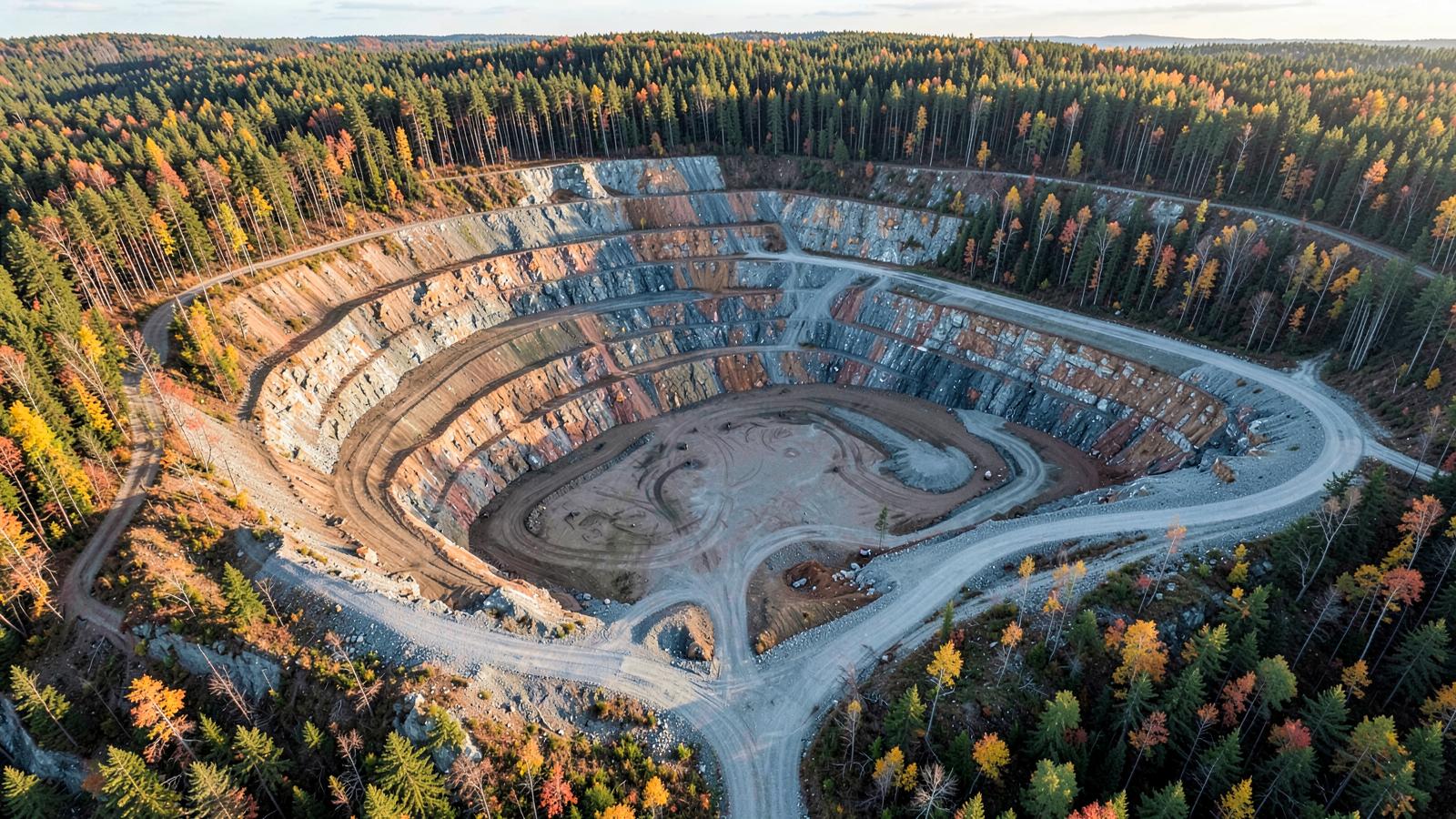
Arianne Phosphate Inc. (TSXV: DAN) has a finished feasibility study on a phosphate deposit in Quebec's Saguenay-Lac-Saint-Jean region. It published the study on 24 October 2013. It reports proven and probable mineral reserves of 472.09 million tonnes at 6.88 per cent P₂O₅ at Lac à Paul, a pre-tax net present value of US$1,910.1 million at an 8 per cent discount rate, and a capital cost that an engineering update dated 30 March 2023 restated at roughly US$1.55 billion. Thirteen years on, there is no mine.
That is the correct frame for reading First Phosphate Corp. (CSE: PHOS), whose Bégin-Lamarche deposit sits in the same region and roughly two rungs lower on the same ladder. A feasibility study is what converts a mineral resource into a mineral reserve: an engineer has costed it, and a company can commit money against it. Arianne has cleared that bar and still cannot build. First Phosphate has not reached it.
On 21 September 2026 the company announced that Bégin-Lamarche has been the subject of a peer-reviewed study in Ore Geology Reviews. The shares closed at C$2.38, up 6.3 per cent, on Canadian Securities Exchange volume of 821,889 shares against an average near 866,300, which is slightly below an ordinary day. That and every other market figure here come from exchange data read after the close, on a 15-minute delay.
What a journal checks, and what a journal is never asked to check
Peer review means independent scientists in the same field read a paper before a journal publishes it and satisfy themselves that the observations support the conclusions drawn from them. It is not an audit, it is not a regulatory filing, and it says nothing about whether a business is viable. Within its scope it is the strongest evidence a junior explorer can table, because the reviewers have no relationship with the share price.
The paper is real, specific and better than the press release makes it sound. "Genesis of high-quality igneous phosphate ore from anorthosite-hosted mafic and ultramafic rocks of the newly discovered Bégin-Lamarche Fe-Ti-P deposit, Grenville Province, Canada", by Sandeep Banerjee, Peir K. Pufahl, Sarah A.S. Dare and Jean-Philippe Arguin, appears in volume 190, article 107138, DOI 10.1016/j.oregeorev.2026.107138. It is open access.
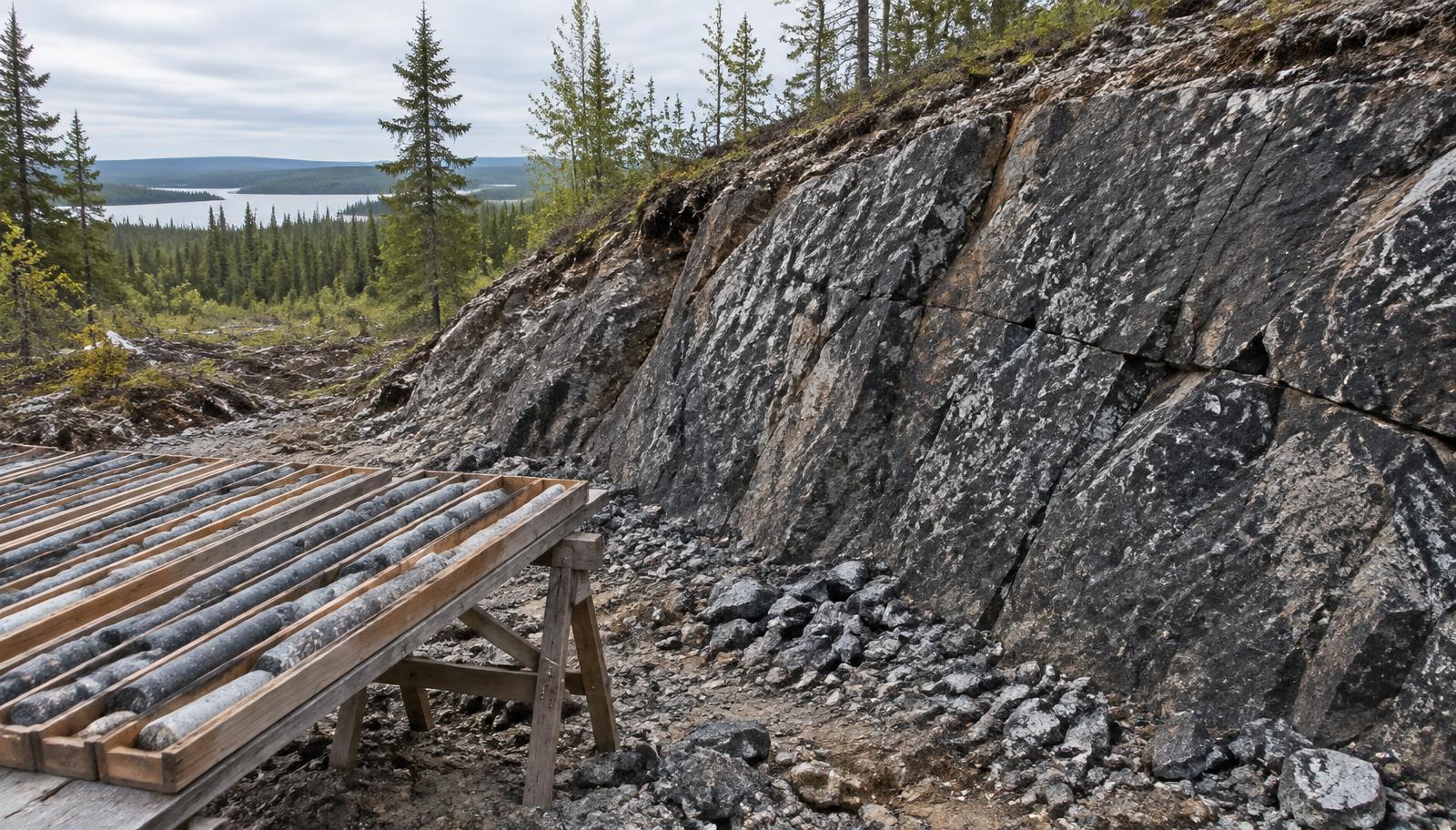
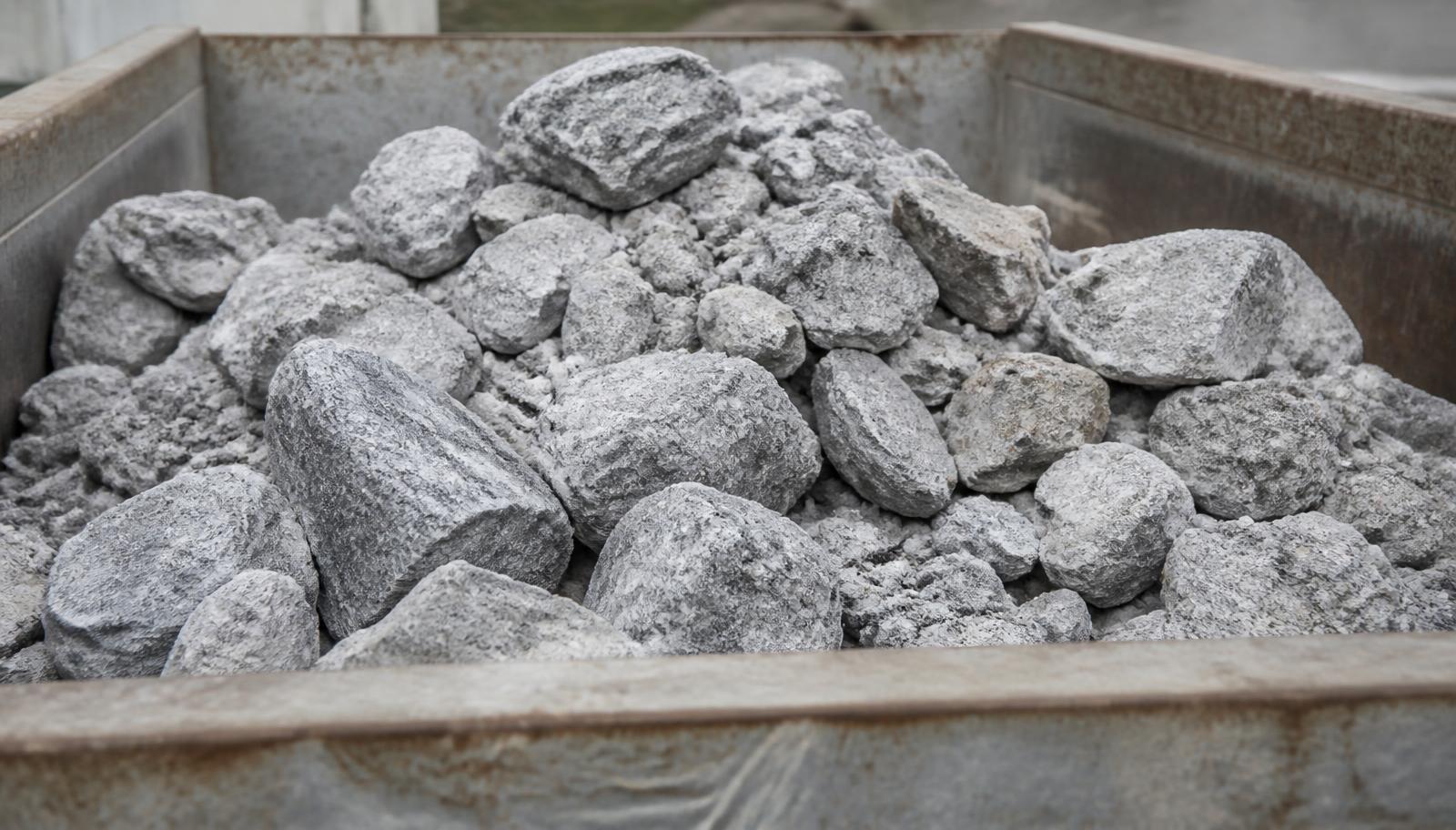
Its findings matter in three ways. The deposit runs about 2.5 kilometres along a north-northeast axis with a thickness of roughly 200 to 400 metres, and the phosphate is carried by fluorapatite that crystallised out of a cooling magma, reaching as much as 86 per cent by volume in the oxide-apatite ultramafic rocks. Because the mineral formed that way, it is clean: the paper reports less than 1 per cent sulfide minerals by volume, lead at or below 11 parts per million, thorium at or below 2 ppm and uranium at or below 2 ppm. Sedimentary phosphate, which is most of world supply, routinely carries far more of all of those, and removing them is the expensive part of making purified phosphoric acid for lithium iron phosphate battery cathodes.
The paper also produces a working tool: the magnesium number of coexisting orthopyroxene tracks the chlorine and rare-earth content of the apatite, so a mineral that is cheap to measure predicts where the low-chlorine ore sits.
Independent academics confirming that the mineralisation is magmatic in origin and continuous across the Mountain, North and South zones is the most substantive thing First Phosphate has published this year. It is also entirely a statement about rock.
Two of the release's four conclusions are not in the paper
The release lists four conclusions. Two of them are the paper's. Two are the company's, attached to the paper.
| Conclusion in the 21 September release | What the published paper supports | What it does not reach |
|---|---|---|
| Apatite is the primary phosphatic mineralisation, confirming magmatic origin and geological continuity across the Mountain, North and South zones | Yes; this is the paper's core finding, with fluorapatite reported at 18 to 86 per cent by volume in the ultramafic rocks | Tonnage, grade continuity for estimation purposes, or any resource classification |
| Geochemical characterisation shows low deleterious trace elements, enhancing the potential for high-purity purified phosphoric acid | Yes, as measured: sulfide under 1 per cent by volume, Pb ≤ 11 ppm, Th ≤ 2 ppm, U ≤ 2 ppm | That a purification circuit has been built or costed at any scale |
| Testing indicates concentrate levels around 40 per cent P₂O₅, above global averages for igneous phosphate concentrates | Nothing from this paper; the 40.4 per cent figure is separately attributed to metallurgical work in the August 2026 resource report | Recovery, mass pull, reagent cost, or a pilot result from this paper |
| Geometry, thickness and near-surface occurrence suggest favourable conditions for potential open-pit mining scenarios | The geometry and thickness measurements, yes | Any mining study; the release itself adds "subject to further engineering and mine planning studies" |
Two further facts belong beside the announcement. The paper was available online on 6 February 2026 and printed in the March 2026 volume; the 21 September release does not give a publication date, so the news is the announcement rather than the publication. And one of the four authors, Dr. Peir Pufahl, P.Geo., is listed as an Advisor on First Phosphate's own team page, read on 21 September 2026. The release describes the authorship as scientists from Queen's University and Université du Québec à Chicoutimi. Peer review screens a paper regardless of who wrote it, so this does not undo the finding. It is still a relationship the release omits.
The filings carry a resource, a study built over an older one, and no reserves
Bégin-Lamarche has a current mineral resource estimate with an effective date of 1 May 2026, filed 24 August 2026: 6.2 million tonnes Measured at 7.70 per cent P₂O₅, 198.5 million tonnes Indicated at 6.00 per cent, and 89.5 million tonnes Inferred at 6.16 per cent, pit-constrained at a 2.5 per cent P₂O₅ cut-off. The estimate assumes a US$225 per tonne price for a 32 per cent P₂O₅ concentrate, 88 per cent process recovery, a C$2.75 per tonne mining cost and 45-degree pit slopes.
Antoine Yassa, P.Geo., of P&E Mining Consultants Inc. is the independent qualified person, with Steeve Lavoie, P.Geo., the company's Chief Geologist. The estimate carries the standard caution that inferred material has a lower level of confidence and must not be converted to a mineral reserve.
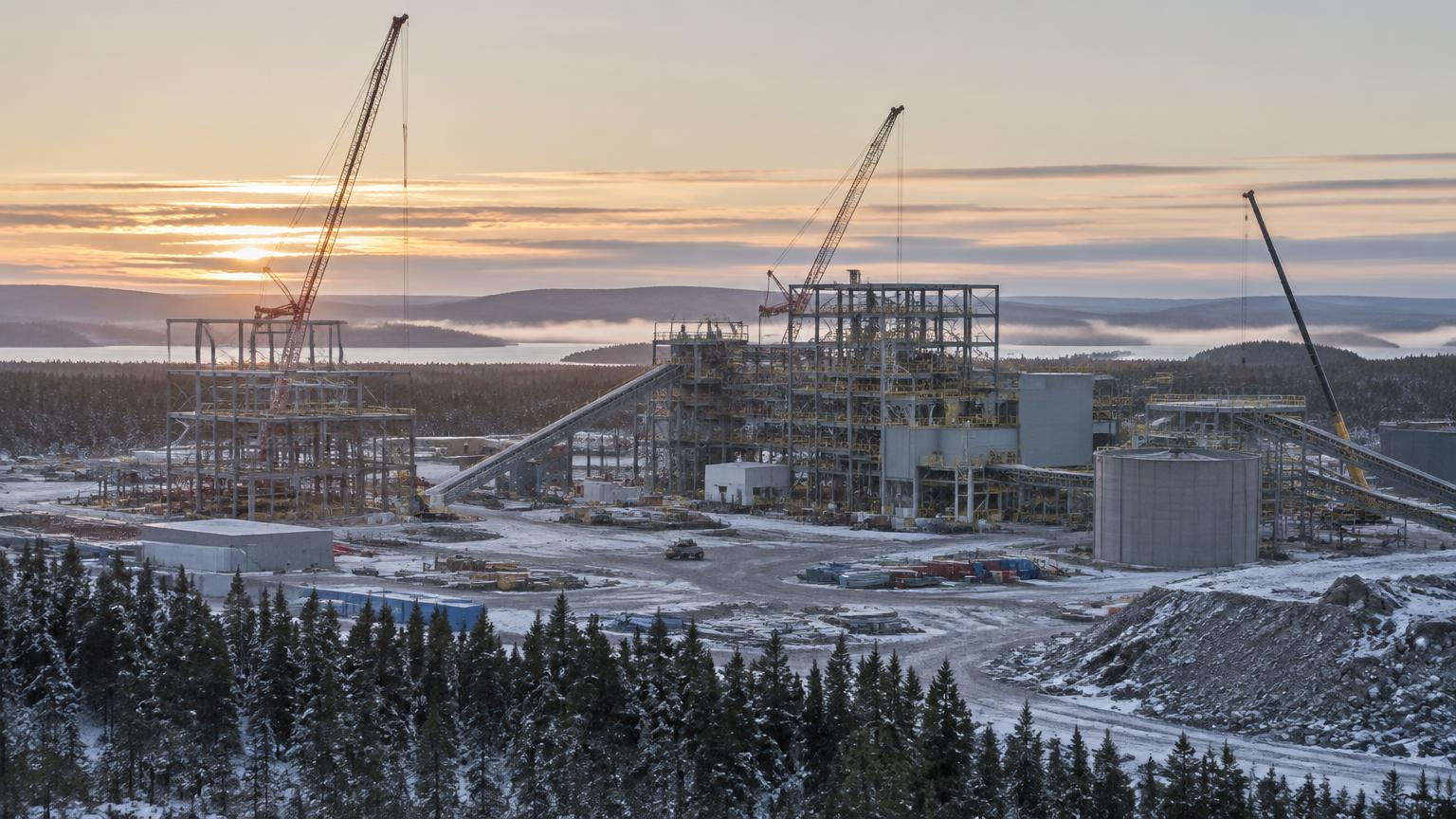
An economic study exists, and it is a preliminary economic assessment with an effective date of 4 December 2024, filed 17 January 2025. It reports an after-tax net present value of C$1.590 billion at an 8 per cent discount rate, initial capital of C$675 million, a 23-year life, and annual output of 900,000 tonnes of 40 per cent P₂O₅ concentrate plus 380,000 tonnes of magnetite.
Three things qualify that figure and the company discloses all of them. The assessment uses inferred resources in its calculations, so it cannot be relied on as a reserve. It was built over the older resource estimate and has not been restated on the 1 May 2026 numbers.
Its phosphate price assumption is US$350 per tonne, against the US$225 per tonne the company's own resource work uses and the US$100 per tonne average f.o.b. mine price that the United States Geological Survey published for domestic phosphate rock in 2025. The USGS figure is a bulk mine-price benchmark, not a like-for-like price for high-purity concentrate, so the comparison shows the size of an unverified spread rather than a direct markup. A net present value is a number divided by assumptions, and that one is the assumption doing the most work. The company's own Bégin-Lamarche project page, read on 21 September 2026, still displays the superseded resource rather than the filed May 2026 estimate.
A letter of support is not a guarantee, and it is the third one this year
The release of 16 September 2026 is headlined as SERV, Swiss Export Risk Insurance, supporting a guarantee of US$212.5 million toward capital costs. The instrument named in the body is a Letter of Support, and the wording is conditional twice over. SERV is described as "prepared to consider insurance/guarantees in support of a buyer credit financing based on an assumed eligible Swiss export contract value of USD 250 million where SERV would consider supporting a financed amount of approximately USD 212.5 million, corresponding to 85% of such contract value."
The chain that has to close before any of it is money runs like this. A Swiss export contract worth US$250 million has to exist; the release names no Swiss supplier and calls the value assumed. A commercial lender has to provide the buyer credit, because an export credit agency insures a loan rather than making one; no lender is named. And a sufficient portion of the project has to be Swiss-sourced to qualify, a threshold the release does not quantify. The 95 per cent figure in the release is the share of the financed amount SERV could cover under OECD guidelines, not an increase in it.
It is also the third such letter in 2026. The Export and Investment Fund of Denmark signed a letter of intent for up to C$275 million on 30 March 2026, and letters from Italy's SACE, Cassa Depositi e Prestiti and SIMEST were signed between 26 May and 4 June 2026. Three export agencies expressing interest in the same project says something real about how governments now view non-Chinese battery-grade phosphate. None of the three commits a franc, a krone or a euro.
The offtake language deserves the same care. A release of 17 June 2026 describes a definitive offtake agreement signed 5 January 2026 for a minimum of 200,000 tonnes a year of concentrate. The company's own release of 6 January 2026 describes that same 5 January transaction as an amendment to an existing arrangement "in the form of letter of intent", carrying a US$530,000 lump-sum prepayment that is refundable if First Phosphate decides not to advance to a feasibility study or makes a negative production decision. No release between the two announces a conversion. Neither counterparty is named in either document, and no price mechanism or tenor is disclosed. US$530,000, refundable, is the whole of the cash either offtake has produced.
C$450 million against C$16 million and a C$675 million capital cost
First Phosphate had 189,144,530 shares issued and outstanding on the Canadian Securities Exchange listing page read on 21 September 2026, and closed the day at a market value of about C$450.2 million. The shares are 14.4 per cent below their intraday all-time high of C$2.78, set on 27 August 2026, and well above the C$0.475 low of the past year.
Cash was C$16.0 million at 31 May 2026, the end of the company's first fiscal quarter. SEDAR+ was not readable when this was written, so that figure comes from the filed statements as carried by market data rather than read off the statements themselves. The final tranche of a C$17,698,290 private placement at C$2.00 closed on 10 July 2026, after that balance date, and non-repayable federal contributions of C$16.7 million and a further C$4.84 million signed 5 August 2026 sit outside the share count entirely.
Set that against C$675 million of initial capital in the company's own preliminary assessment. Even if every export credit letter converted in full, the equity still to be issued is the largest single fact about this company, and it is the one the peer-reviewed geology does not touch.
Two instrument details matter for anyone pricing the shares outside Canada. The Frankfurt listing is real: symbol KD0, WKN A3DQCH, ISIN CA33611D1033, as displayed on Deutsche Börse's own instrument page. That page shows no last price and no volume, so the German line is a way to locate and settle the security rather than a second market in it. And the Nasdaq listing, which began on 10 August 2026 with The Bank of New York Mellon as depositary, is an American depositary receipt at a ratio of ten common shares to one receipt. The receipt therefore represents ten Canadian common shares; comparing the two prices also requires the contemporaneous US-dollar exchange rate.
Lac à Paul, in the same region, has had a feasibility study since 2013 and no mine. The obstacle in Quebec phosphate has never been the rock, and First Phosphate has just published the best evidence yet that the rock is not its obstacle either.
Transparency note
Transparency note. This is an independent due-diligence analysis and editorial opinion piece produced by The Maple Markets editorial desk. It is not sponsored, promoted or commissioned, and no compensation of any kind has been received from First Phosphate Corp. (CSE: PHOS), Arianne Phosphate Inc. (TSXV: DAN) or any party acting on their behalf. The analysis is based on public disclosure available as of the publish date; every figure is attributed to its primary source. The Maple Markets and its authors may hold positions in securities mentioned; nothing here is a recommendation to buy, sell or hold any security, and readers should not treat it as investment advice. Past disclosure does not guarantee future results. Policies: Editorial Standards · Financial Disclaimer.
接着阅读
Auch auf Deutsch: Peer-Reviewed Geology, No Reserves: What First Phosphate's Ore Geology Reviews Paper Settles
 Mining and ResourcesFirst Phosphate (FSE: KD0) Trades on Three Kinds of Numbers, and Only One Describes the DepositFirst Phosphate Corp. (CSE: PHOS, FSE: KD0) told shareholders on September 1, 2026 that holders of record had risen 861 per cent since the 2025 meeting, three weeks after its ADRs began trading on Nasdaq and a week after it filed an updated NI 43-101 resource of 198.5 Mt indicated at 6.00 per cent P2O5. A September 2 flash report that cut the discount rates in its model was paid for by the company at US$1,500. Of the numbers in circulation, only the resource is a filed statement about the rock, and construction financing for Bégin-Lamarche has not been announced.Daniel Okoye · September 8, 2026 · 8 min
 Mining and ResourcesFirst Phosphate Has Two Binding Offtakes and Ottawa's Money; the Economic Study Is NextFirst Phosphate Corp. (CSE: PHOS, FSE: KD0) has signed two definitive offtake agreements covering 200,000 tonnes a year of phosphate concentrate and 60,000 tonnes a year of phosphoric acid, both confirmed independently in a Government of Canada backgrounder, and has C$21.54 million of non-repayable federal funding under contract. The indicated resource at Bégin-Lamarche has grown nearly fivefold since 2024. What is still missing is the economic study that would price the mine, and neither buyer is named.Daniel Okoye · September 15, 2026 · 9 min
 Mining and ResourcesA Swiss Letter of Support Puts US$212.5 Million Beside First Phosphate's Quebec MineFirst Phosphate Corp. (CSE: PHOS) said on 16 September 2026 that Swiss Export Risk Insurance had issued a Letter of Support covering roughly US$212.5 million for its Bégin-Lamarche phosphate project in Quebec. The sum is 85 per cent of an assumed US$250 million Swiss supply contract that has not been signed, and it sits against an initial capital cost the company's own 2024 economic study put at C$675 million.Daniel Okoye · September 21, 2026 · 8 min
Follow this story
Follow PHOS.CN — the next Maple piece on this company, plus the Maple Morning Debrief before the open.
Follow and ask
Get more of our Canadian market coverage in Google Top Stories.
观点
This article expresses the author's personal views, is separate from news reporting and is not investment advice.
披露声明
**Transparency note.** This is an independent due-diligence analysis and editorial opinion piece produced by The Maple Markets editorial desk. It is not sponsored, promoted or commissioned, and no compensation of any kind has been received from First Phosphate Corp. (CSE: PHOS), Arianne Phosphate Inc. (TSXV: DAN) or any party acting on their behalf. The analysis is based on public disclosure available as of the publish date; every figure is attributed to its primary source. The Maple Markets and its authors may hold positions in securities mentioned; nothing here is a recommendation to buy, sell or hold any security, and readers should not treat it as investment advice. Past disclosure does not guarantee future results. Policies: [Editorial Standards](https://themaplemarkets.ca/en/policies/editorial-standards) · [Financial Disclaimer](https://themaplemarkets.ca/en/policies/financial-disclaimer). See the Financial Disclaimer.
资料来源与参考 (10)
- First Phosphate news release, 21 September 2026, publication of the peer-reviewed Bégin-Lamarche study
- Banerjee, Pufahl, Dare and Arguin, Ore Geology Reviews volume 190, article 107138, March 2026
- First Phosphate news release, 16 September 2026, SERV letter of support
- First Phosphate news release, filing of the updated Bégin-Lamarche mineral resource technical report
- First Phosphate news release, 6 January 2026, amendment to the concentrate offtake arrangement
- First Phosphate news release, 17 June 2026, G7 investment and offtake summary
- Canadian Securities Exchange listing page, First Phosphate Corp.
- Deutsche Börse instrument page, First Phosphate Corp. (KD0)
- United States Geological Survey, Mineral Commodity Summaries 2026, phosphate rock
- Arianne Phosphate, Lac à Paul feasibility study announcement, 24 October 2013
引用本文分析
Please attribute The Maple Markets and link to the original page.
Priya Sandhu (September 22, 2026). Peer-Reviewed Geology, No Reserves: What First Phosphate's Ore Geology Reviews Paper Settles. The Maple Markets. https://themaplemarkets.ca/zh-hans/newsroom/first-phosphate-peer-review-is-not-economics-what-the-ore-geologyhttps://themaplemarkets.ca/zh-hans/newsroom/first-phosphate-peer-review-is-not-economics-what-the-ore-geology