
Myriad Uranium Slid 10.0 Per Cent While Only One Fund Filing Supported the Flow Story
The Sprott Junior Uranium Miners ETF reported 5,153,552 Myriad shares as at 18 September 2026; the other claims about index buying, institutional accumulation and a European roadshow remain unverified.
Myriad Uranium Corp. (CSE: M) closed down 10.0 per cent at C$0.4275 on 21 September 2026 with no filing behind the move and nothing released since 10 September. One part of the buying story is documented: a uranium ETF publishes a holding of 5,153,552 shares. The other claims are unverified. Underneath them sits real drilling at Copper Mountain, Wyoming, a historical estimate from 1979, and no current mineral resource estimate.
By Daniel Okoye9 min read
本文目前仅提供英文版本。
Close, 21 September 2026
C$0.4275
down 10.0 per cent from C$0.475 on CSE volume of 194,127 shares against an average near 162,000; exchange data read after the close on 2026-09-21, 15-minute delayed, secondary market data.
Market value
about C$60.2 million
against 140,773,948 shares issued and outstanding on the CSE listing page read 2026-09-21.
Best Gem interval
34.90 m at 210 ppm eU₃O₈ from 10.65 m
downhole length in GEM0002DD, a gamma-log equivalent grade rather than a chemical assay; true widths not determined (Myriad release, 2026-09-10).
Copper Mountain historical estimate
26.63 Mlbs eU₃O₈ in 48.95 Mt at 269 ppm
Southard et al., 1979, at a 100 ppm cut-off; not classified as a current mineral resource (Myriad release, 2026-09-10).
Sprott Junior Uranium Miners ETF holding
5,153,552 shares, US$1,749,651, 0.51 per cent of the fund
published holdings as at 2026-09-18.
Myriad Uranium Corp. lost 10.0 per cent of its share price on 21 September 2026. Nothing was filed behind the move, and the company's most recent news release is dated 10 September.
The shares closed at C$0.4275 on the Canadian Securities Exchange, down 10.0 per cent from C$0.475, on exchange volume of 194,127 shares. The volume-weighted average price on 21 September 2026 was C$0.4233, and the day's range ran from C$0.415 to C$0.445. At the close the company was worth about C$60.2 million using the 140,773,948 shares issued and outstanding shown by the exchange. All of those figures come from exchange market data read after the close, on a 15-minute delay, and are secondary market data rather than filings.
A Canadian issuer is not obliged to explain a day like that, and Myriad has not. What makes the day interesting is the story the market had been telling itself in the week before it, because exactly one strand of that story is checkable.
A uranium fund publishes what it owns, and that is the only buyer anyone can name
Retail discussion through the previous week attributed a Thursday volume spike to index buying, to a large American broker buying heavily, and to a European roadshow by the chief executive. Three claims, three different standards of proof.
An exchange-traded fund has to publish its holdings. The file is a daily list of every security the fund owns, how many shares, what they are worth and what share of the fund they represent, and it is the closest thing in this story to a document. The Sprott Junior Uranium Miners ETF publishes one. As at 18 September 2026 it held 5,153,552 Myriad shares worth US$1,749,651, or 0.51 per cent of the fund, ranking Myriad around thirty-first in a portfolio led by NexGen, Denison, Paladin and Energy Fuels.
So a fund does own Myriad, and the position is real. What a single day's holdings file cannot show is a change. To say the fund added about a million shares at Thursday's close, the two files either side of that date have to be compared, and that comparison is not in the September snapshot.
The second claim has no document at all. A holder crossing 10 per cent of a Canadian issuer must file an early warning report, and the only early warning announcement Myriad has made this year, dated 24 August 2026, is its own, covering the Rush Rare Metals shares it acquired. Nothing on file names a bank or broker as a large holder.
The third is checkable against the company's own website, and comes back empty. Myriad's media page lists no European event, conference or roadshow in 2026. The 2026 appearances it does list are North American or online.
One more piece of the week's discussion travelled widely and belongs to a different company. It concerned finished-goods inventory in a warehouse and a first-generation production module. Myriad has no product and no revenue.
What a probe measured at Gem, and what the word equivalent is carrying
The 10 September release reported the first three holes at the Gem deposit, part of the Copper Mountain project in Wyoming, for 507 metres of drilling. The numbers are good ones for a target this shallow. GEM0002DD returned 34.90 metres at 210 parts per million eU₃O₈ from 10.65 metres. GEM0003DD returned 33.22 metres at 235 ppm from 22.66 metres. GEM0001DD returned 29.41 metres at 295 ppm from 43.17 metres. Thick, continuous and starting within twenty metres of surface is a better shape than thin and deep, and the Lucky Cliff holes released on 20 August 2026 did something similar, including 19.96 metres at 269 ppm from 18.00 metres and 6.40 metres at 408 ppm.
Two qualifications sit on every one of those numbers, and both are the company's own.
The first is the letter e. These grades are eU₃O₈, not U₃O₈. A probe is lowered down the hole and measures the natural gamma radiation the rock gives off; software converts that measurement into an equivalent uranium grade. It is a calculation from a physical proxy, not a chemical assay of the rock itself, and the two can differ. Myriad's contractor used a downhole logging suite including natural gamma, resistivity, spontaneous potential and deviation probes. No chemical assay results for these holes have been reported.
The second is the company's own sentence: reported intervals are downhole lengths and do not represent true widths, which have not yet been determined. A hole drilled at an angle through a dipping layer measures more rock than the layer is thick. Until the geometry is known, 34.90 metres is how far the probe travelled through mineralised ground, not how thick that ground is.
Grade matters here more than length. At 210 ppm, a tonne of rock holds about 0.21 kilograms, or roughly 0.46 pounds, of uranium oxide equivalent. Against the US$81.55 per pound industry average spot price Cameco published for 31 August 2026, that is about US$38 of contained metal in a tonne of rock before a single dollar of mining, haulage, processing or recovery loss. Low-grade uranium works only when the material is shallow, wide and cheap to move, which is precisely why the near-surface geometry at Gem is the interesting part of the release and the peak value is not. The company quoted grades of up to 1,368 ppm; that is a single point inside an interval that averages 210.
The historical tonnage changed twice in four days
Copper Mountain's headline number is a historical estimate: 26.63 million pounds of eU₃O₈ in 48.95 million tonnes at 269 ppm, at a 100 ppm cut-off, attributed in the 10 September release to Southard et al., 1979. Gem's share of it is 1.44 million pounds in 3.07 million tonnes at 234 ppm.
That corrected figure replaced one published four days earlier. The 20 August release gave the same 26.63 million pounds in 44.1 million tonnes at 171 ppm, and the correction of 24 August restated the tonnage and the grade. Both releases attribute the 1979 compilation to the same source: internal Rocky Mountain Energy Company reports summarised in Southard, G.G., et al. (1979). Only the tonnage and grade changed, not the attribution. A headline tonnage and grade revised within four days is a disclosure event in its own right, whatever the direction of the revision.
The limit on the number is stated by Myriad in every release that carries it: a qualified person has not done sufficient work to classify the historical estimate as current mineral resources or mineral reserves, and the company is not treating it as such. Copper Mountain therefore has no current mineral resource estimate under National Instrument 43-101. An estimate is current only when a qualified person has taken responsibility for it under today's rules; forty-seven years of shelf life is not a technicality.
The qualified person on the 2026 drill releases is George van der Walt, MSc., Pr.Sci.Nat., FGSSA, described in the releases as a qualified person and elsewhere as a principal consultant with an independent consultancy. Myriad's own team page, read on 21 September 2026, also lists him as Senior Economic Geologist. The company has not addressed the two descriptions.
Owning all of it is newer than most of the drilling
The asset itself is better than it was a month ago, and the change is documented. Myriad optioned Copper Mountain from Rush Rare Metals Corp. under an agreement dated 18 October 2023, earned an initial 50 per cent in October 2024, and reached 75 per cent after more than C$5.5 million of eligible expenditures, which Rush confirmed on 8 December 2025. On 21 August 2026 Myriad completed the acquisition of Rush itself and with it the remaining quarter, issuing 24,983,671 shares at an exchange ratio of about 0.5405 for each Rush share. Its early warning release of 24 August values the 46,223,258 Rush shares acquired at a deemed C$0.42 each, or C$10,493,141.80 in total.
That matters for how the older releases read. Anything Myriad published on or before 20 August describes an earnable interest, not ownership. Since 21 August the project is wholly owned, which removes an earn-in clock and a partner from every future decision about it.
What sits underneath is genuinely unusual for a company this size. Union Pacific drilled roughly 2,000 boreholes across the district in the late 1970s and carried the work into mine planning before the uranium market collapsed in 1980, an effort Myriad estimates at about C$125 million in 2026 dollars. The Arrowhead Mine produced approximately 500,000 pounds of U₃O₈. A junior that can start with that much prior work has a real advantage in targeting, and the Gem and Lucky Cliff holes are what that advantage looks like when it works. It is an advantage in exploration efficiency. It is not a substitute for the estimate that does not exist.
The money runs on a shorter clock than the geology
Market data read after the close carries cash and equivalents of C$8.81 million and total liabilities of about C$366,000 from Myriad's most recent filed statements. SEDAR+ was not readable when this was written, so the cash figure is the market-data figure rather than one read off the interim statements. The Canadian Securities Exchange listing page shows 140,773,948 shares issued and outstanding with a further 50,942,283 reserved for issuance; the market-data provider carries about 135.7 million shares, and the two are roughly five million apart.
Myriad has not raised equity in 2026. Its last financing closed on 13 November 2025: C$8,603,000 from 21,507,500 units at C$0.40, each unit carrying a full warrant exercisable at C$0.60 until 13 November 2028. Non-dilutive money came from the sale of the Red Basin project in New Mexico for US$2.5 million, completed 19 May 2026, with a 10 per cent free-carried interest retained.
The arithmetic from here is plain. Those warrants are struck at C$0.60 against a C$0.425 close, so they are out of the money and no help this year; if the shares recover past the strike, exercise would bring in about C$12.9 million and add roughly 15 per cent to the share count. Absent that, an explorer with no revenue pays for drilling by issuing stock. Raising C$10 million at the 21 September price means issuing about 23.4 million shares, roughly 17 per cent of the current count, and every month the price stays lower makes that number larger. A fall of a tenth in a single session is not a valuation question for a company like this. It is a cost-of-capital question.
The shares are also listed in Frankfurt under the symbol C3Q, WKN A3D1E0, ISIN CA62857Y1097, confirmed on Deutsche Börse's instrument page and in the company's own release of 29 March 2023. The exchange page shows no last price for that line. The identifiers are what let an account outside Canada locate and settle the security; the trading happens on the CSE, and a Frankfurt quote should not be mistaken for a second market in it.
Copper Mountain has had uranium in it since 1979. What it has not had, in any of the forty-seven years since, is a qualified person's estimate of how much.
Transparency note
Transparency note. This is an independent due-diligence analysis and editorial opinion piece produced by The Maple Markets editorial desk. It is not sponsored, promoted or commissioned, and no compensation of any kind has been received from Myriad Uranium Corp (CSE: M), Rush Rare Metals Corp., Cameco Corporation, Sprott Inc. or any party acting on their behalf. The analysis is based on public disclosure available as of the publish date; every figure is attributed to its primary source. The Maple Markets and its authors may hold positions in securities mentioned; nothing here is a recommendation to buy, sell or hold any security, and readers should not treat it as investment advice. Past disclosure does not guarantee future results. Policies: Editorial Standards · Financial Disclaimer.
接着阅读
Auch auf Deutsch: Myriad Uranium Slid 10.0 Per Cent While Only One Fund Filing Supported the Flow Story
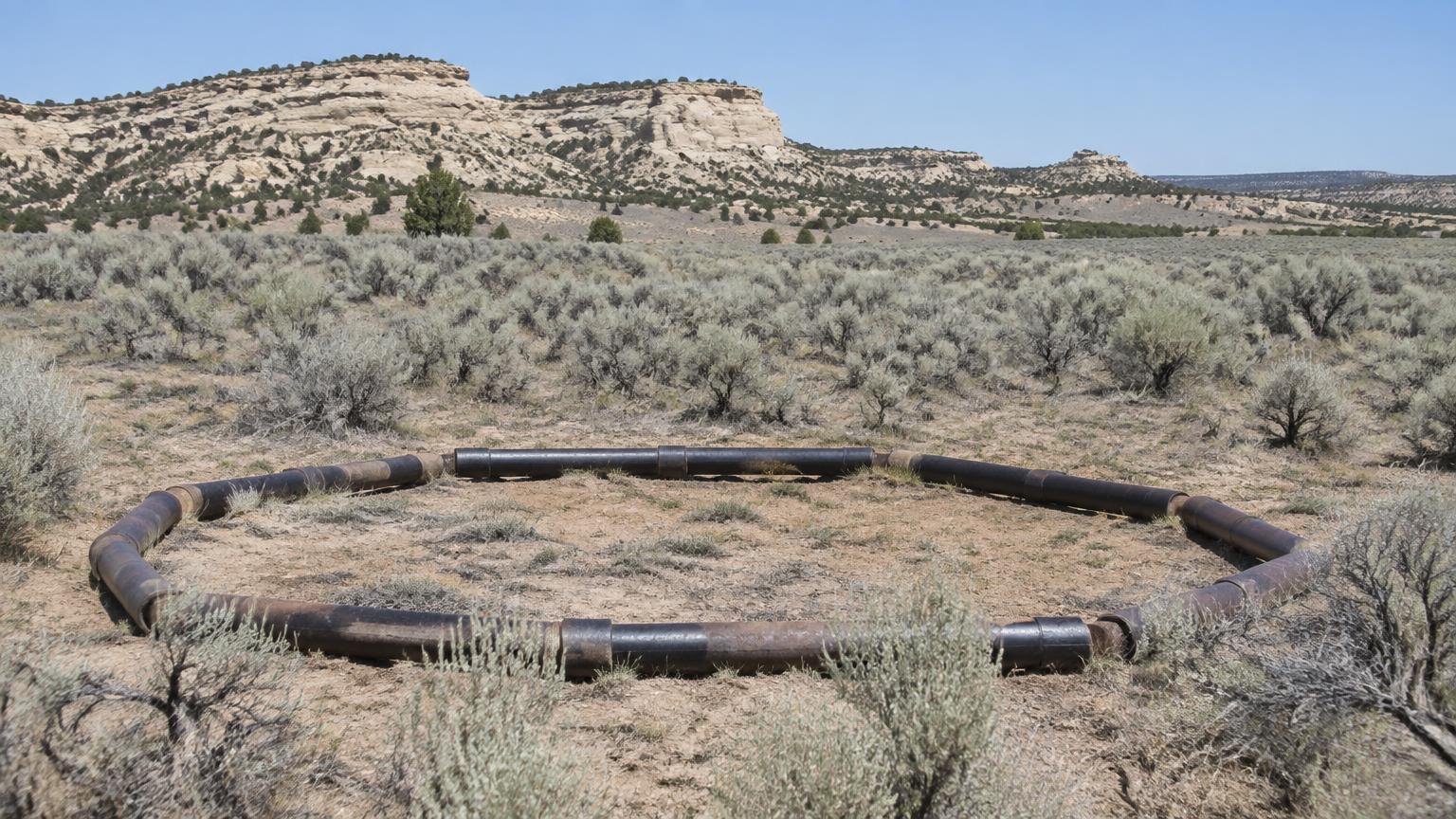 Mining and ResourcesMyriad Uranium's First Three Holes at Gem Are Shallower and Thicker Than Anything at Lucky CliffMyriad Uranium Corp. (CSE: M, OTCQB: MYRUF, FSE: C3Q) reported three holes for 507 metres at the Gem deposit on its Copper Mountain project in Wyoming on September 10, 2026, with 21 radiometric intervals above 100 ppm equivalent uranium oxide. The longest runs 34.90 metres at 210 ppm from 10.65 metres downhole. Every figure is a downhole gamma estimate awaiting laboratory verification, and the company has not said when those assays are due.Daniel Okoye · September 11, 2026 · 8 min
 Mining and ResourcesMyriad Uranium (CSE: M, FSE: C3Q) Now Owns All of Copper Mountain. It Still Has No Current ResourceMyriad Uranium finished buying out its partner on August 21, 2026 and now owns 100 per cent of the Copper Mountain uranium project in Wyoming. The day before, it reported early readings from four new drill holes. The project sits on roughly 2,000 holes drilled by a railway company in the late 1970s, plus a 1979 estimate that is not a current resource and does not add up on its own numbers. This is a plain-English look at what is proven, what is not, and what would settle it.Daniel Okoye · September 9, 2026 · 8 min
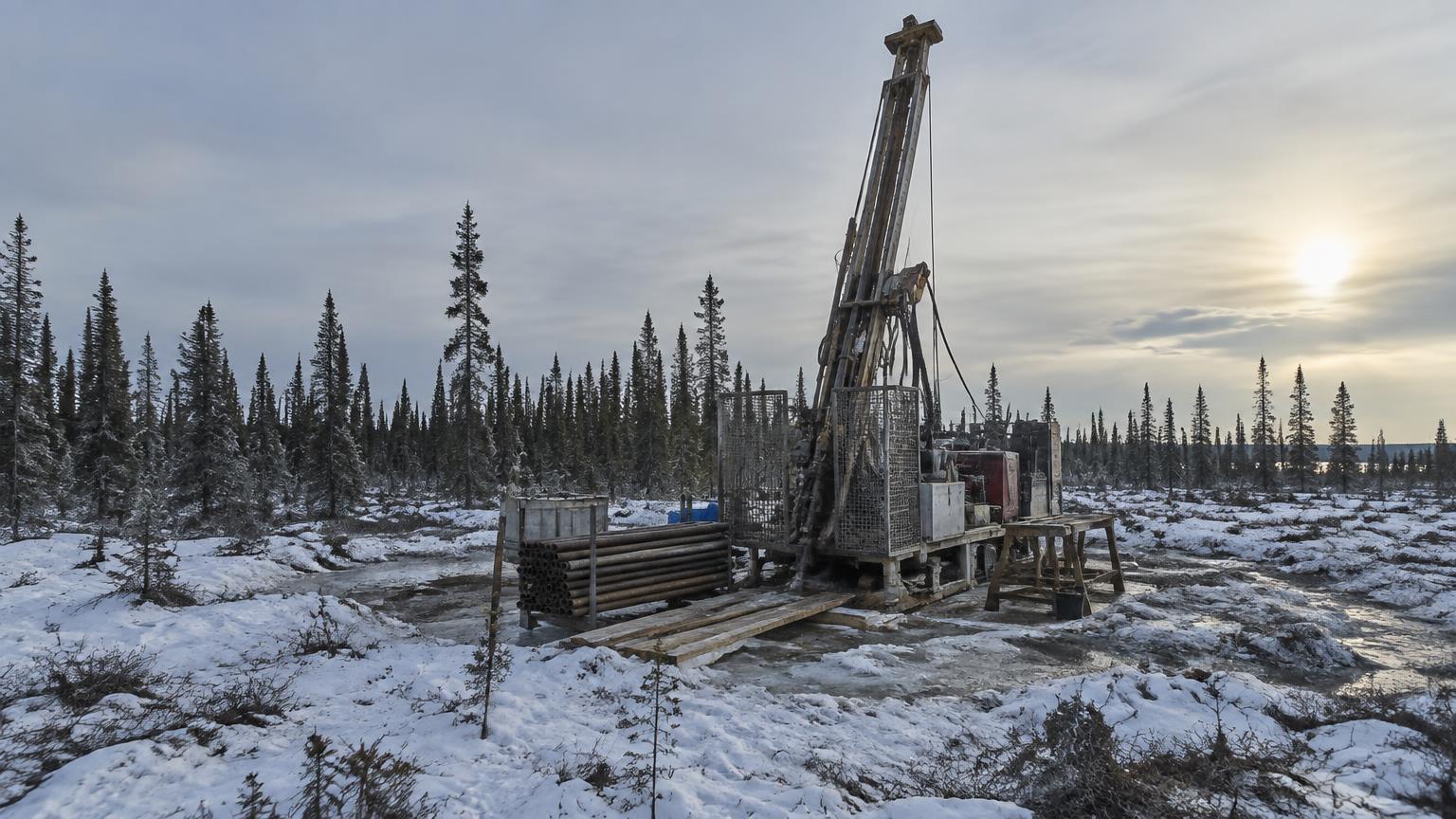 Mining and ResourcesCanAlaska Fell 12 Per Cent With Nothing Filed Since 8 September, and Half Its Value Is CashCanAlaska Uranium Ltd. (TSXV: CVV; FSE: DH7) fell about 12.3 per cent on 18 September 2026 on roughly 5.8 times its average volume, with no company release since 8 September. Three larger Athabasca Basin names fell the same day. The company holds about C$32.9 million against a market value of about C$66.9 million, and has published no mineral resource estimate for its main project.Priya Sandhu · September 21, 2026 · 7 min
Follow this story
Follow M.CN — the next Maple piece on this company, plus the Maple Morning Debrief before the open.
Follow and ask
Get more of our Canadian market coverage in Google Top Stories.
观点
This article expresses the author's personal views, is separate from news reporting and is not investment advice.
披露声明
**Transparency note.** This is an independent due-diligence analysis and editorial opinion piece produced by The Maple Markets editorial desk. It is not sponsored, promoted or commissioned, and no compensation of any kind has been received from Myriad Uranium Corp (CSE: M), Rush Rare Metals Corp., Cameco Corporation, Sprott Inc. or any party acting on their behalf. The analysis is based on public disclosure available as of the publish date; every figure is attributed to its primary source. The Maple Markets and its authors may hold positions in securities mentioned; nothing here is a recommendation to buy, sell or hold any security, and readers should not treat it as investment advice. Past disclosure does not guarantee future results. Policies: [Editorial Standards](https://themaplemarkets.ca/en/policies/editorial-standards) · [Financial Disclaimer](https://themaplemarkets.ca/en/policies/financial-disclaimer). See the Financial Disclaimer.
资料来源与参考 (9)
- Myriad Uranium news release, 10 September 2026, Further Phase II Drill Results from Copper Mountain
- Myriad Uranium correction release, 24 August 2026, Preliminary Radiometric Results from Lucky Cliff Drilling
- Myriad Uranium news release, 21 August 2026, Completes Acquisition of Rush Rare Metals
- Myriad Uranium early warning release regarding Rush Rare Metals Corp., 24 August 2026
- Myriad Uranium news release, 29 March 2023, OTCQB and Frankfurt Stock Exchange listings
- Canadian Securities Exchange listing page, Myriad Uranium Corp.
- Deutsche Börse instrument page, Myriad Uranium Corp. (C3Q)
- Sprott Junior Uranium Miners ETF, published holdings
- Cameco, uranium price page, industry average spot price
引用本文分析
Please attribute The Maple Markets and link to the original page.
Daniel Okoye (September 22, 2026). Myriad Uranium Slid 10.0 Per Cent While Only One Fund Filing Supported the Flow Story. The Maple Markets. https://themaplemarkets.ca/zh-hans/newsroom/myriad-uranium-a-flow-story-nobody-repeated-today-myriad-uranium-fellhttps://themaplemarkets.ca/zh-hans/newsroom/myriad-uranium-a-flow-story-nobody-repeated-today-myriad-uranium-fell