
Alimentation Couche-Tard and the Fuel Margin Question
Couche-Tard's results blend a stable, predictable merchandise business with a volatile fuel-margin business tied to the commodity cycle. The company's real long-run growth engine is its record of acquiring and integrating retail networks.
By Hannah Kuan4 min readTranslation: human
本文目前仅提供英文版本。
Stable segment
Merchandise
Predictable margin
Volatile segment
Fuel
Drives variance
Long-run risk
EV adoption
Volume decline
Alimentation Couche-Tard's quarterly results are, in effect, a report on two different businesses bolted together, and the market's reaction to any given release usually comes down to which of the two dominated the numbers. Understanding that split is the single most useful thing an investor can do before reading the earnings release, because treating the company as one uniform, steadily growing business will lead to misreading both the good quarters and the bad ones.
Two businesses in one release
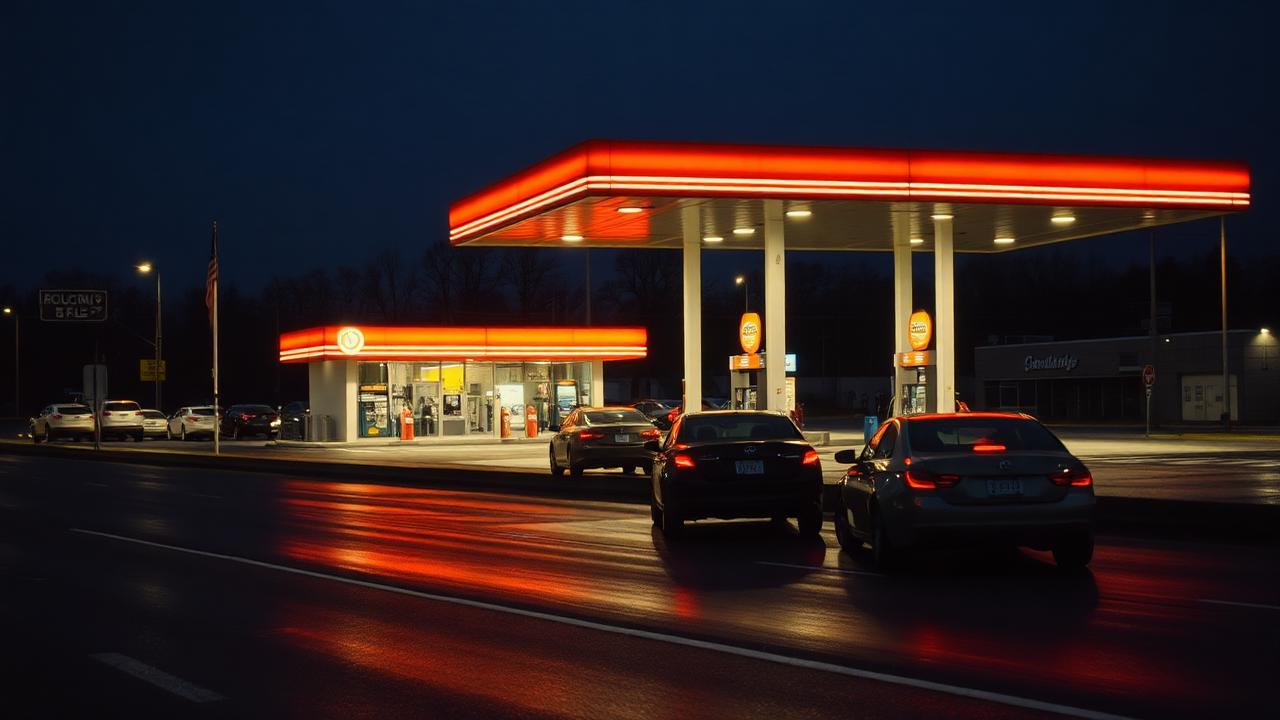
Inside the store, merchandise sales — food, beverages, tobacco and tobacco alternatives, and an expanding fresh-food and private-label offering — behave like a conventional retail business. Margins are predictable, growth is driven by same-store sales trends and new site openings, and the category is not particularly sensitive to commodity price swings. Outside the store, road-transportation fuel is a fundamentally different business. Fuel margin is the spread between wholesale fuel cost and the retail price at the pump, and that spread is volatile because it depends on how quickly retail prices adjust relative to changes in wholesale cost. When crude prices fall sharply, retailers are often slower to cut pump prices than wholesale costs fall, which temporarily widens fuel margins and flatters results. When crude rises quickly, the reverse happens and margins compress, sometimes sharply, in a single quarter. None of this reflects operational performance in the way merchandise margin does; it reflects the mechanics of commodity pass-through.
Why this split matters for how you value the company
Investors who apply a single earnings multiple to Couche-Tard's consolidated results are implicitly assuming that fuel margin behaves like merchandise margin — stable and repeatable. It does not. A quarter with an unusually wide fuel margin should be read as partly a windfall from the commodity cycle rather than as evidence of a structural improvement in the business, and a quarter with a compressed fuel margin should not automatically be read as deterioration in the underlying retail franchise. The more useful way to read results is to separate merchandise same-store sales and margin trends, which speak to the health of the core retail business, from fuel volume and fuel margin trends, which speak largely to the commodity cycle and, over time, to structural shifts in how people fuel their vehicles.
The integration record as the real growth engine
Couche-Tard's long-run value creation has come less from organic same-store growth than from a demonstrated capability to acquire convenience and fuel retail networks and extract cost synergies and merchandising improvements from them. That playbook — buy an underperforming network, apply centralized purchasing scale, upgrade the merchandise mix, and improve site-level execution — has been repeated across multiple acquisitions and geographies, and it is arguably the company's core competency more than any single operating metric. The flip side is that this strategy carries integration risk that scales with the size of the deal. A large acquisition that fails to integrate cleanly, whether because of cultural mismatch, regulatory friction, or execution missteps, poses a bigger risk to consolidated results than a soft quarter in fuel margin ever would, because it can impair the very system (centralized procurement, shared technology, standardized merchandising) that the growth strategy depends on.
The structural headwind that plays out over years, not quarters
Electric vehicle adoption is a genuine long-term threat to the fuel side of the business, since EV owners largely do not need to visit a fuel retailer to charge. But the effect on Couche-Tard is not straightforwardly negative: EV charging, where offered on-site, tends to take considerably longer than a gasoline fill-up, which increases dwell time at a location and creates an opportunity to capture more merchandise spending per visit. Whether that shift nets out positively or negatively for the company depends heavily on how quickly and how well it repositions its real estate and store format for charging infrastructure and a different customer visit pattern. This is a multi-year structural question, not something that will show up cleanly in any single quarter's numbers, and it deserves more attention in long-term thinking about the stock than in reading any specific earnings print.
Reading the disclosure with the right lens
Put together, the analytical task with Couche-Tard is to resist collapsing the two businesses into one blended growth-and-margin story. Merchandise trends tell you about retail execution. Fuel margin trends tell you about the commodity cycle. Acquisition activity tells you about the durability of the long-run compounding engine. And EV-related commentary tells you how seriously management is planning for a multi-year shift in what a "convenience store visit" even looks like.
What to watch
Track same-store merchandise sales growth and merchandise gross margin separately from fuel volume and fuel margin per unit in each quarterly release. Watch for disclosure on the pace of integration and cost synergy realization on any recently completed or announced acquisition. Monitor capital expenditure directed toward EV charging infrastructure and any commentary on store format changes tied to longer dwell times. Finally, watch fuel volume trends over multiple years, not quarters, as the cleanest early signal of how quickly EV adoption is affecting the network.
披露声明
Information only. Not investment advice. The Maple Markets does not hold positions in securities discussed.
接着阅读
英文版: Alimentation Couche-Tard and the Fuel Margin Question
 Mining & EnergyVault Strategic在内华达州:四个月专注于一处钨矿项目2026年7月3日,Vault Strategic Mining放弃另外两项钨矿期权,集中力量开发War Bond。War Bond位于内华达州西部,是1950年代曾经产钨的矿山。此后公司公布了地表采样结果,完成了73.6测线公里的磁法航测,完成150万加元配售,并启动首份NI 43-101技术报告。公司尚未给出报告日期;截至2026年11月30日的六个月财务报表是下一份计划提交的文件。Daniel Okoye · November 4, 2026 · 7 min
 Mining & EnergyQIMC规划横跨三省、总长126.5公里的地震勘探Quebec Innovative Materials已完成新斯科舍省Cumberland县63.7测线公里的地震数据采集。其土壤气、氦、重力和磁法工作以及DDH-26-05钻孔的气体事件都位于同一测网内,目前正在卡尔加里处理。公司还计划与相同承包商在魁北克完成36公里、在安大略完成26.8公里,已完成和计划的覆盖范围合计约126.5测线公里。截至2026年6月30日,公司持有现金1,410万加元。Priya Sandhu · November 3, 2026 · 7 min
 TechnologyReklaim连续第三个季度盈利,股价上涨45%Reklaim Ltd.于2026年11月3日公布,截至9月30日的季度营收同比增长近两倍,达到316万加元,净利润127万加元,为连续第三个盈利季度。该股在多伦多创业板收于C$0.40,上涨45%,成交193万股。公司当季回购510万股;前一天,公司提议允许C$500,000可转换债券的持有人按现行C$0.105的价格提前转股,此事尚待多伦多创业板批准。Marc Belzile · November 3, 2026 · 6 min
Follow this story
Follow ATD — the next Maple piece on this company, plus the Maple Morning Debrief before the open.
Follow and ask
Get more of our Canadian market coverage in Google Top Stories.
资料来源与参考 (2)
引用本文分析
Please attribute The Maple Markets and link to the original page.
Hannah Kuan (May 29, 2026). Alimentation Couche-Tard and the Fuel Margin Question. The Maple Markets. https://themaplemarkets.ca/zh-hans/newsroom/alimentation-couche-tard-and-the-fuel-margin-questionhttps://themaplemarkets.ca/zh-hans/newsroom/alimentation-couche-tard-and-the-fuel-margin-question