
Why a Canadian Explorer Can Sell New Shares Above Its Own Market Price, and Who Pays for That
A flow-through share carries a tax deduction that an ordinary share does not, and the Canada Revenue Agency's look-back rule is why so much of next year's drilling gets funded before December 31.
Junior exploration was the busiest corner of the Canadian market this week, and almost none of it is paid for out of revenue. It is paid for by placements, and those placements are priced two different ways at once: flow-through shares above the market, ordinary units below it. The difference is a tax deduction the Canada Revenue Agency lets an exploration company hand to the buyer. Here is what that deduction is worth in dollars, why the calendar pushes the cheques into the autumn, and what each kind of financing does to the share count.
By Élise Galarneau8 min read
本文目前仅提供英文版本。
Canadian exploration expense deduction
100 per cent in the year incurred
costs of "determining the existence, location, extent or quality of a mineral resource" in Canada; unused amounts carry forward indefinitely (Natural Resources Canada, mining-specific tax provisions, read September 12, 2026).
Critical Mineral Exploration Tax Credit
30 per cent, non-refundable
covers fifteen minerals including copper, nickel, lithium, uranium and rare earths; agreements on or before March 31, 2027; the Mineral Exploration Tax Credit is 15 per cent (Natural Resources Canada, read September 12, 2026).
Look-back rule
renunciation effective 31 December of Year 1 for money spent in Year 2
the reason the subscription season ends with the calendar year (Canada Revenue Agency, flow-through share glossary, read September 12, 2026).
Maximum private-placement discount, TSX Venture
25 per cent up to C$0.50, 20 per cent to C$2.00, 15 per cent above
measured from the last close before the announcement, floor generally five cents (TSXV Policy 1.1 and Policy 4.1).
Illustrative dilution on C$3,000,000
6.3 per cent at a 20 per cent premium against 10.0 per cent at a 25 per cent discount
100,000,000 shares outstanding and a 40-cent market price, assumed inputs, not any company's figures.
A large share of the money that will pay for Canadian mineral exploration next year is being raised right now, in the weeks before December 31. That is not a habit of the industry. It follows from a rule the Canada Revenue Agency calls the look-back rule, and the same tax machinery explains something that looks like a mistake when a small explorer announces it: a company whose shares change hands at 40 cents selling new shares for 48.
Junior exploration was the single busiest corner of the Canadian market in the four trading sessions to September 11, 2026, according to the daily most-active and largest-move tables the desk tracks, and almost none of those companies sell anything. They have no revenue. Every drill hole is funded by issuing stock, which means the terms of the issue are the whole story, and there are two completely different kinds of terms on offer.
The buyer is purchasing a tax deduction with a share attached
A flow-through share is, as the Canada Revenue Agency states, "a new share of capital stock of a principal-business corporation (PBC) that is not a prescribed share and that is issued to a person under a flow-through share agreement." The plain version: an exploration company agrees to spend the money on exploration, and then hands the tax deduction it would have claimed for that spending to the person who put up the cash.
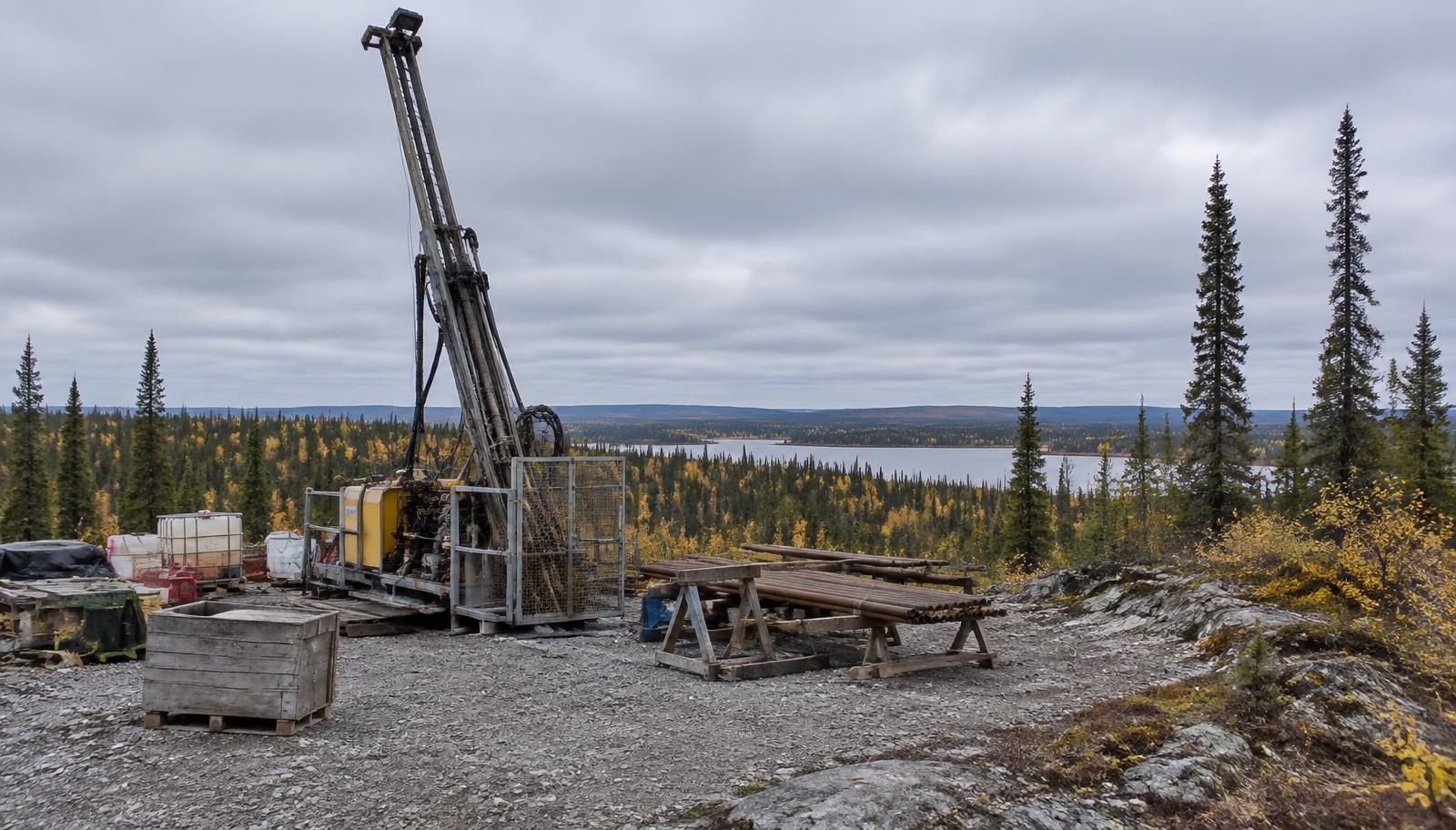
What gets handed over is Canadian exploration expense, which Natural Resources Canada, as of September 12, 2026, defines as the costs of "determining the existence, location, extent or quality of a mineral resource" in Canada. Natural Resources Canada states that those costs are fully deductible in the year they are incurred and that unused balances carry forward indefinitely. When they are renounced to a subscriber, that subscriber deducts them instead, on line 22400 of a personal return.
On top of the deduction sit two federal credits. The Mineral Exploration Tax Credit is 15 per cent of eligible exploration expense. The Critical Mineral Exploration Tax Credit is 30 per cent, and the department's table showed it covering fifteen named minerals including copper, nickel, lithium, uranium and the rare earths. Both are non-refundable credits claimed against federal tax, and according to Natural Resources Canada, read on September 12, 2026, agreements must be entered into on or before March 31, 2027 under the current extensions; the 15 per cent credit was extended to the same date from March 31, 2025.
So two people can buy the same company's stock on the same afternoon and receive different things. One gets a share. The other gets a share plus a deduction plus, on the right kind of project, a 30 per cent credit. It would be strange if they paid the same price.
What the deduction is worth, in dollars
The arithmetic below uses an assumed combined marginal tax rate of 50 per cent to show the method. Marginal rates differ by province and by income, and the figure is illustrative rather than anyone's actual rate.
| Step | Ordinary share | Flow-through share |
|---|---|---|
| Cash subscribed | C$10,000 | C$10,000 |
| Exploration expense renounced to the buyer | none | C$10,000 |
| Tax reduced by the deduction at 50 per cent | C$0 | C$5,000 |
| Cost after the deduction | C$10,000 | C$5,000 |
The credits sit on top of that and cannot simply be stacked on it: a credit claimed in one year reduces the pool of exploration expense available to deduct in the next, so the combined benefit is smaller than 50 plus 30. The direction is what matters here. A buyer whose cost after tax is roughly half the cash subscribed can pay well above the market price for the share and still be in front of the person who bought the ordinary one.
Put it on the 40-cent company. A flow-through unit priced at 48 cents is a 20 per cent premium to the market. After a deduction worth half the subscription, the buyer's cost is about 24 cents for a share the market prices at 40. The premium is real money leaving the buyer's pocket, and the federal treasury is the party making up the difference.
There is a catch at the other end, and it is the part that surprises people. The Canada Revenue Agency treats a flow-through share as having been bought for nothing: "the capital gain on disposal of an FTS is generally the entire sale price since an FTS is deemed to have a cost of zero when purchased." Sell that 48-cent share for 48 cents, and per the agency's own guidance the whole 48 cents is a capital gain. The deduction is not forgiven. It is deferred and converted.
Hard dollars are priced from the other side
An ordinary financing, the kind the market calls hard dollars, gets no deduction, so nobody pays a premium for it. It is sold at a discount, and the exchange puts a limit on how deep that discount can be.
Under TSX Venture Exchange Policy 4.1, "in a Private Placement of Listed Shares, the purchase price must not be less than the Discounted Market Price." Policy 1.1, as posted by the exchange and read on September 12, 2026, sets what that means: a maximum discount of 25 per cent where the closing price is up to C$0.50, 20 per cent from C$0.51 to C$2.00, and 15 per cent above C$2.00, with a general floor of five cents a share. Market Price is the last closing price before the news release or the price reservation form, not the price on the day anyone reads about the deal.
That timing detail does most of the work in explaining terms that look bizarre later. Maple covered two Canadian financings this week that sat at opposite ends of the range. Homeland Nickel announced on August 26, 2026 a placement of up to 8,000,000 units at C$0.38, priced a cent under the C$0.39 close of September 4, 2026, a discount of 2.6 per cent, which is a company that expected its price to hold. World Copper's units at C$0.075, announced September 4, 2026, looked like a 57 per cent discount against the C$0.175 close of the same day only because the shares had risen 84.21 per cent after the price was fixed.
The two mechanisms answer different questions. The exchange rule asks how far below the market a company may sell. The tax rule asks how far above it a company may sell. Neither sets the price; they set the walls the price has to stay between.
December is a deadline, not a season
Here is the line that shapes the calendar. The look-back rule, as the agency's own glossary stated when read on September 12, 2026, "allows a principal-business corporation (PBC) to renounce expenditures that it will incur in Year 2 with an effective date of renunciation of December 31 of Year 1."
Read slowly, that is a considerable thing. Money subscribed in October 2026 can be deducted against 2026 income even though the company will not put a drill in the ground until the summer of 2027. The subscriber gets the deduction against income already earned, in a year already nearly finished, with the arithmetic knowable rather than guessed.
An investor who wants a deduction for this tax year therefore has to sign before the year ends, which is why exploration financing in Canada has an autumn. The pattern is a tax deadline expressing itself as a market season, and it means a junior's financing window is set partly by the calendar and not only by what its ground is worth. Maple reported the neighbouring point about metal prices on September 7, 2026: a junior with nothing to sell earns a financing window from a commodity move rather than a margin. The tax code decides when that window is widest.
The restriction travels with the money. Flow-through cash has to be spent on exploration as the Income Tax Act defines it. It cannot pay down a loan, settle a payable, or cover the head-office lease. A company that needs money for those things has to raise hard dollars as well, which is why so many juniors announce a two-tranche placement: flow-through units at one price, ordinary units at a lower one, in the same release.
What each dollar costs the people already holding the shares
Dilution is where this lands for an existing holder, and the flow-through half is the gentler of the two.
Take a company with 100,000,000 shares outstanding that needs C$3,000,000, with an assumed market price of 40 cents. Sold as flow-through at a 20 per cent premium, C$0.48, the company issues 6,250,000 shares, and the count rises 6.3 per cent. Sold as ordinary units at the maximum 25 per cent discount, C$0.30, it issues 10,000,000 shares, and the count rises 10.0 per cent. Same money, a 60 per cent difference in the stock printed to get it. Those inputs are assumed, to show the shape of the trade rather than to describe any company.
The company gives something up for that. It renounces the deduction, so the exploration expense is no longer in its own tax pool, which matters on the day it has taxable income to shelter. For an explorer years away from revenue, that is a cheap thing to sell. For one approaching production, it stops being cheap.
And a premium price is not a compliment from the market. A flow-through subscriber is buying a tax outcome, and the price paid is a function of a marginal rate rather than a view of the ground. A company that raises at a premium has found a buyer with a tax bill, not a buyer who has read the drill results.
The two prices in the same announcement are therefore telling two separate things, and the one worth reading closely is usually the lower one. The hard-dollar tranche is the one priced by people who wanted the shares for their own sake.
披露声明
Transparency note. This is an independent big-picture analysis and editorial opinion piece produced by The Maple Markets editorial desk. It is not sponsored, promoted or commissioned, and no compensation of any kind has been received from any issuer, government body or organisation named in this article, or any party acting on their behalf. The analysis is based on public data available as of the publish date; every figure is attributed to its primary source, and the tax and dilution tables are illustrative worked examples with assumed inputs, not forecasts or tax advice. Nothing here is a recommendation to buy, sell or hold any security, and readers should not treat it as investment advice. Past disclosure does not guarantee future results. Policies: Editorial Standards · Financial Disclaimer.
接着阅读
英文版: Why a Canadian Explorer Can Sell New Shares Above Its Own Market Price, and Who Pays for That
 Mining & EnergyOceanic Iron Ore 手握4,900万加元现金,重启 Hopes Advance 审批工作Oceanic Iron Ore(TSXV: FEO)于2026年7月20日重启了努纳维克 Hopes Advance 项目的环境与社会影响评估。2月融资将所有债券转为股份后,截至2026年6月30日公司现金为 C$49,336,808,负债为 C$1,967,544。该矿床探明及控制资源量约13.9亿吨,铁品位32.1%,实验室规模测试已制得铁品位68%的直接还原精矿。经济评估数据来自2019年12月的研究;管理层讨论与分析称,2月融资所得将用于资助接替该研究的更新版预可行性研究。Élise Galarneau · October 19, 2026 · 9 min
 Mining & EnergyVault Strategic在内华达州:四个月专注于一处钨矿项目2026年7月3日,Vault Strategic Mining放弃另外两项钨矿期权,集中力量开发War Bond。War Bond位于内华达州西部,是1950年代曾经产钨的矿山。此后公司公布了地表采样结果,完成了73.6测线公里的磁法航测,完成150万加元配售,并启动首份NI 43-101技术报告。公司尚未给出报告日期;截至2026年11月30日的六个月财务报表是下一份计划提交的文件。Daniel Okoye · November 4, 2026 · 7 min
 Mining & EnergyQIMC规划横跨三省、总长126.5公里的地震勘探Quebec Innovative Materials已完成新斯科舍省Cumberland县63.7测线公里的地震数据采集。其土壤气、氦、重力和磁法工作以及DDH-26-05钻孔的气体事件都位于同一测网内,目前正在卡尔加里处理。公司还计划与相同承包商在魁北克完成36公里、在安大略完成26.8公里,已完成和计划的覆盖范围合计约126.5测线公里。截至2026年6月30日,公司持有现金1,410万加元。Priya Sandhu · November 3, 2026 · 7 min
订阅 Maple Morning Debrief
前一交易日收盘、隔夜行情,以及开盘前值得关注的要点 —— 美东时间早上 6 点前送达您的邮箱。免费,一键退订。
Follow and ask
Get more of our Canadian market coverage in Google Top Stories.
资料来源与参考 (8)
- Canada Revenue Agency, how the flow-through share (FTS) program works
- Canada Revenue Agency, flow-through shares glossary (look-back rule, effective date of renunciation)
- Canada Revenue Agency, reporting your flow-through share investments (deemed cost of zero, line 22400)
- Natural Resources Canada, mining-specific tax provisions (CEE, METC, CMETC)
- TSX Venture Exchange, Policy 4.1 Private Placements
- TSX Venture Exchange, Policy 1.1 Interpretation (Market Price, Discounted Market Price)
- The Maple Markets, Homeland Nickel (TSXV: SHL) Raises C$3.04 Million a Cent Under the Tape, September 8, 2026
- The Maple Markets, The quote is not the margin: what a copper and gold week is worth to a Canadian mine in loonies, September 7, 2026
引用本文分析
Please attribute The Maple Markets and link to the original page.
Élise Galarneau (September 12, 2026). Why a Canadian Explorer Can Sell New Shares Above Its Own Market Price, and Who Pays for That. The Maple Markets. https://themaplemarkets.ca/zh-hans/newsroom/flow-through-and-hard-dollars-the-two-prices-a-canadian-explorer-sellshttps://themaplemarkets.ca/zh-hans/newsroom/flow-through-and-hard-dollars-the-two-prices-a-canadian-explorer-sells