
GDP Growth Is Not Productivity Growth
Canada can report stronger output and still have a productivity problem. Both statements can be true.
Real GDP by expenditure grew 0.8% in the second quarter of 2026. That says nothing about whether output per hour worked improved — and for long-horizon investors, the second question is the important one.
By Priya Sandhu2 min read
本文目前仅提供英文版本。

Canada can report stronger GDP and still have a productivity problem. Those statements are not contradictory.
Real GDP measures the amount of inflation-adjusted output being produced. Productivity asks a different question: how efficiently labour and capital are generating that output.
The difference is crucial for long-term investors.
Statistics Canada's current indicators show real GDP by expenditure grew 0.8% in the second quarter of 2026. That is relevant information about the direction of aggregate activity. It does not, by itself, tell investors whether output per hour worked is improving.
Statistics Canada has described Canada's weak productivity growth over the past two decades as a significant concern for long-term economic performance, with recent research examining factors including the relationship between competition intensity and labour productivity.
Why equity investors should care
A company has a limited number of durable ways to increase output per worker. It can invest in better equipment. It can deploy better software. It can redesign processes. It can improve management. It can operate at greater scale. Or it can shift capital and labour toward higher-value activities.
When those improvements occur broadly, businesses generate more output from a given quantity of inputs.
That matters for wages, because higher real compensation is easier to sustain when workers create more real value. It matters for margins, because productivity gains can offset rising labour and input costs. And it matters for living standards, because growth generated by adding workers is different from growth generated by producing more per worker.
A simplified illustration
Imagine an economy with ten workers producing $1 million of output. Next year it has eleven workers producing $1.08 million.
Total output has grown 8%. Output per worker has fallen from $100,000 to approximately $98,182.
The headline economy grew. The average productivity of its workforce did not.
That example is illustrative, not a description of Canada's current data. It exists to show why aggregate growth and efficiency have to be tracked separately.
It also changes how to read policy
A tax incentive that pulls forward equipment investment may affect productivity. Removing barriers to interprovincial trade may affect the scale available to Canadian firms. Competition policy alters the incentive companies have to invest and innovate. Immigration increases the labour force, but its long-term economic effect also depends on whether workers are matched efficiently with capital, housing, infrastructure and occupations suited to their skills.
Those are structural questions. One quarter of GDP does not resolve any of them.
The investment implication
Canada's long-term equity story should not be evaluated merely by asking whether the economy is growing. The question is how it is growing.
Growth built on higher business investment, stronger capital intensity and better output per hour is qualitatively different from growth that depends primarily on adding labour and consumption without corresponding gains in efficiency.
GDP tells us how large the economy became. Productivity helps explain whether it became better at producing. Over long horizons, that distinction matters considerably more — which is why it deserves to be a recurring series rather than a statistic mentioned once a quarter.
接着阅读
Auch auf Deutsch: GDP Growth Is Not Productivity Growth
 EconomyA Canadian Company Can Watch Its Shares Fall All Week and Owe the Market Nothing at AllCanadian issuers must announce a material change immediately and file the report within 10 days. They are not required to publish every material fact, and they are not required to explain a share price. That single distinction explains most of the weeks when a Canadian small cap moves and SEDAR+ stays empty. Here is what the rules actually oblige, what the exchanges do when the price moves first, which filings arrive from someone other than the company, and the calendar that governs a quiet month.Élise Galarneau · September 19, 2026 · 8 min
 EconomyFour Canadian-Listed Companies Announced Government Money This Week, and None of It Was CashBetween September 15 and September 18, 2026, Conifex Timber, Global Atomic, First Phosphate and Bitterroot Resources each announced that a government had put money behind them: up to C$30 million, US$414.2 million, US$212.5 million and up to US$5.22 million. Four announcements, four instruments, and not one of them is a transfer of cash. Here is what a loan agreement, a conditional approval, an export-credit letter of support and a cost-share award each oblige, and what has to be true before the money arrives.Marc Belzile · September 19, 2026 · 10 min
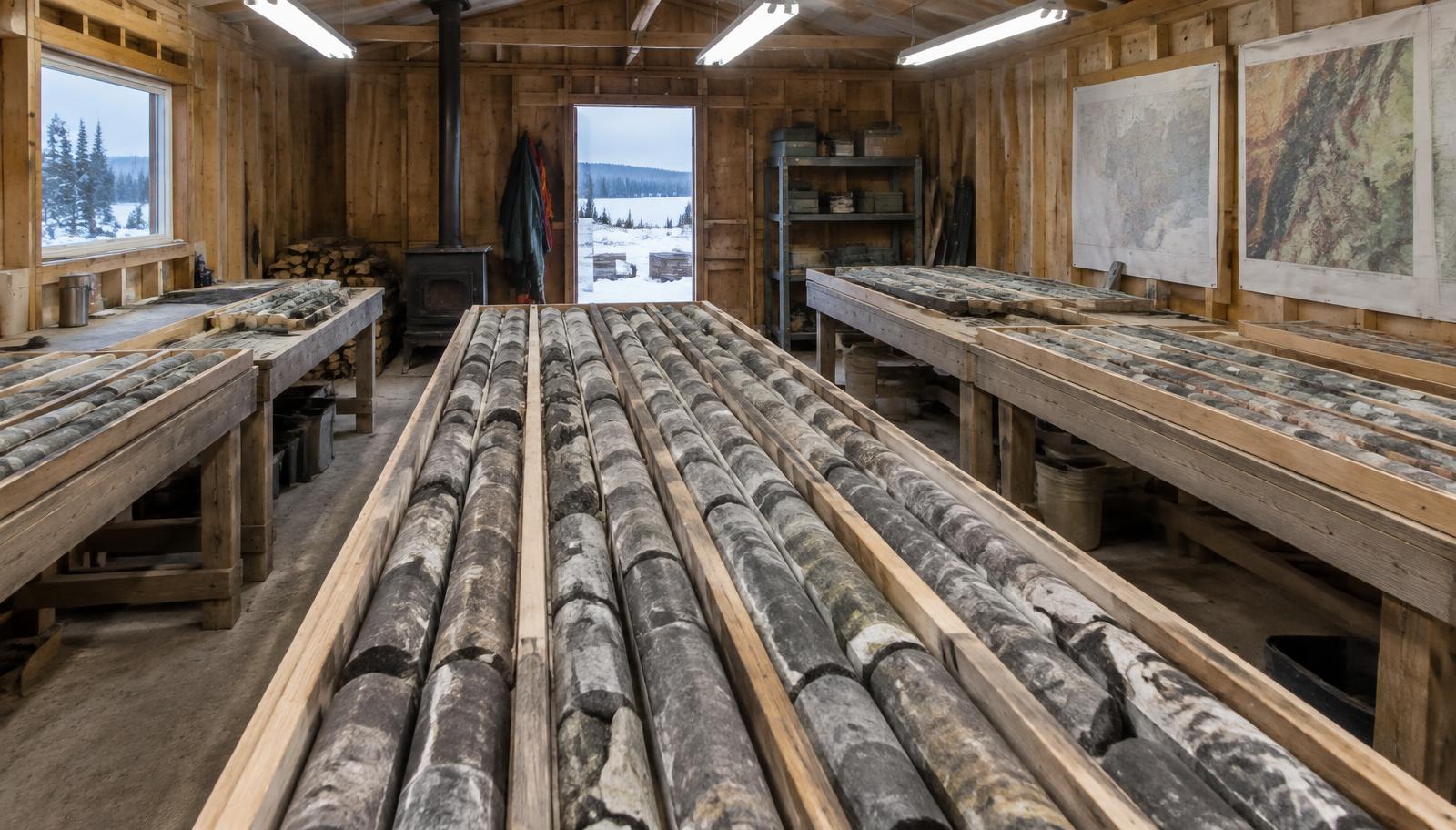 EconomyFour Things a Canadian Miner Can Say About a Hole in the Ground, and What Each Is WorthA Canadian explorer with no laboratory numbers rose 93.8 per cent on September 9, 2026. A company that published laboratory numbers fell 35 per cent the next day. Canadian mining disclosure runs on four separate stages of proof, and most of the confusion in a drill-results week comes from treating them as one.Priya Sandhu · September 13, 2026 · 9 min
订阅 Maple Morning Debrief
前一交易日收盘、隔夜行情,以及开盘前值得关注的要点 —— 美东时间早上 6 点前送达您的邮箱。免费,一键退订。
Follow and ask
Get more of our Canadian market coverage in Google Top Stories.
披露声明
As of the publication date, the author, editor, publisher, their immediate households and affiliated entities do not own positions in the securities discussed. The Maple Markets received no compensation from any company, its officers, investor-relations providers or financiers in connection with this article. Figures are drawn from public filings and official statistical releases as of the date shown and are not restated for later disclosure. Worked examples labelled illustrative use assumed inputs to show a method, not a forecast. This article is informational only and is not investment, legal, accounting or tax advice. See the Financial Disclaimer.
资料来源与参考 (3)
- Statistics Canada — gross domestic product, current economic indicators
- Statistics Canada — labour productivity measures
- Statistics Canada — 2026 research on competition intensity and labour productivity
引用本文分析
Please attribute The Maple Markets and link to the original page.
Priya Sandhu (September 4, 2026). GDP Growth Is Not Productivity Growth. The Maple Markets. https://themaplemarkets.ca/zh-hans/newsroom/gdp-growth-is-not-productivity-growth-canadahttps://themaplemarkets.ca/zh-hans/newsroom/gdp-growth-is-not-productivity-growth-canada