
Why the TSX Composite Keeps Outrunning the S&P 500 This Year
The TSX Composite's outperformance against the S&P 500 this year traces almost entirely to sector composition: heavy materials and energy weighting has caught a commodity upswing, while steady bank earnings add a quieter, more durable layer of return. The same concentration that is helping now is what caused years of underperformance during the US technology-led rally.
By Hannah Kuan3 min readTranslation: human
本文目前仅提供英文版本。

Materials + energy weight
~33%
Share of TSX Composite
Same weight in S&P 500
~7%
Approximate
Financials weight
~30%
Largest TSX sector
The S&P/TSX Composite has outpaced the S&P 500 by a wide margin so far this year, reversing a decade in which Canadian investors were repeatedly told they were underweight the wrong things. The reversal is not a story about Canadian companies suddenly becoming better run; it is a story about sector composition meeting a macro environment that happens to favour exactly the sectors Canada is heaviest in.
The composition story
Materials and energy together account for roughly a third of the TSX by weight, against single digits in the S&P 500. When gold, copper and crude all trend higher in the same year, that concentration works decisively in Canada's favour, because the index-level return mechanically reflects the weighted performance of its largest sectors rather than any broad-based improvement across the whole market. The same concentration is why the Composite lagged badly through the years when the return of the US market was driven almost entirely by large-cap technology, a sector in which the TSX has minimal weight. This is the central fact to hold onto: the TSX's relative performance in any given year is largely explained by whether commodities or technology are leading global markets, not by a change in the average quality of Canadian companies.
Financials are doing the quiet work
The Big Six banks contribute a larger share of the year's index gain than most retail investors assume, precisely because their combined weight in the index is substantial and their moves are less headline-grabbing than a swing in gold or oil prices. Wider net interest margins, contained credit provisions and steady dividend growth have produced a total-return contribution that does not generate headlines but compounds reliably, and this steadier component of the index's return is arguably more durable than the commodity-driven component, since it depends less on volatile global commodity prices and more on the ordinary business of Canadian lending and deposit-taking.
Currency and cross-border comparison
Comparing index-level returns across the two markets also requires attention to currency, since a Canadian-dollar return on the TSX and a US-dollar return on the S&P 500 are not directly comparable without converting one into the other's terms, and currency moves can meaningfully add to or subtract from the apparent gap depending on the direction and magnitude of exchange-rate movement over the period in question. Investors comparing headline index performance across the border should be clear about which currency basis they are using before drawing conclusions about relative strength.
Concentration risk works both ways
The same structural feature that has helped the TSX this year — heavy weighting in a small number of sectors — is a source of risk in other years, and this cuts against treating the current outperformance as evidence that Canadian equities have structurally re-rated relative to US equities. An index this concentrated will systematically outperform when its dominant sectors are in favour and underperform when they are not, which means the relevant analytical question is less "is Canada outperforming" and more "what is currently happening to gold, copper and crude prices, and how durable is that."
Reading the index disclosure
Index providers and market data services publish sector-attribution breakdowns showing how much of a period's total return came from each sector, which is the most direct way to test the composition explanation rather than relying on inference from headline commodity prices alone. Comparing that attribution to the prior decade's equivalent breakdown makes clear how much of the current outperformance is a reversal of the prior underperformance mechanism rather than a genuinely new dynamic.
What would break the trend
A sharp reversal in gold or a demand-driven slump in crude would remove most of the relative advantage quickly, since so much of the year's gain traces directly to those two commodity categories. So would a renewed narrowing of US market leadership into a small group of very large technology names, which mechanically pulls the S&P 500 higher regardless of what Canadian cyclicals do, given how much weight those names carry in the US index relative to their Canadian counterparts. Either development would not reflect any change in Canadian corporate fundamentals — it would simply be the same compositional mechanism working in reverse.
What to watch
Track sector-weight contribution to index return disclosed by index providers, gold and copper price trends alongside crude benchmarks, net interest margin and provision-for-credit-loss trends in quarterly bank earnings, and the concentration of S&P 500 gains among its largest technology constituents as a signal of whether US leadership is broadening or narrowing.
披露声明
Information only. Not investment advice. The Maple Markets does not hold positions in securities discussed.
接着阅读
英文版: Why the TSX Composite Keeps Outrunning the S&P 500 This Year
 Mining & EnergyVault Strategic在内华达州:四个月专注于一处钨矿项目2026年7月3日,Vault Strategic Mining放弃另外两项钨矿期权,集中力量开发War Bond。War Bond位于内华达州西部,是1950年代曾经产钨的矿山。此后公司公布了地表采样结果,完成了73.6测线公里的磁法航测,完成150万加元配售,并启动首份NI 43-101技术报告。公司尚未给出报告日期;截至2026年11月30日的六个月财务报表是下一份计划提交的文件。Daniel Okoye · November 4, 2026 · 7 min
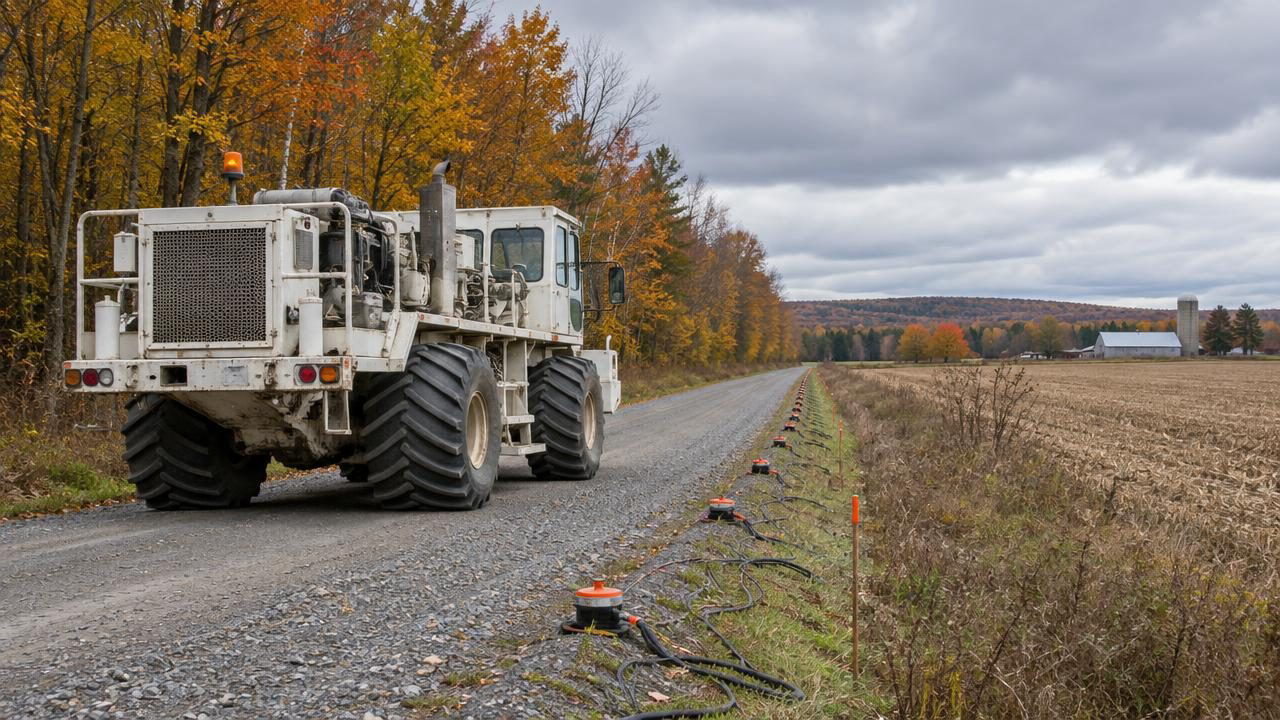 Mining & EnergyQIMC规划横跨三省、总长126.5公里的地震勘探Quebec Innovative Materials已完成新斯科舍省Cumberland县63.7测线公里的地震数据采集。其土壤气、氦、重力和磁法工作以及DDH-26-05钻孔的气体事件都位于同一测网内,目前正在卡尔加里处理。公司还计划与相同承包商在魁北克完成36公里、在安大略完成26.8公里,已完成和计划的覆盖范围合计约126.5测线公里。截至2026年6月30日,公司持有现金1,410万加元。Priya Sandhu · November 3, 2026 · 7 min
 TechnologyReklaim连续第三个季度盈利,股价上涨45%Reklaim Ltd.于2026年11月3日公布,截至9月30日的季度营收同比增长近两倍,达到316万加元,净利润127万加元,为连续第三个盈利季度。该股在多伦多创业板收于C$0.40,上涨45%,成交193万股。公司当季回购510万股;前一天,公司提议允许C$500,000可转换债券的持有人按现行C$0.105的价格提前转股,此事尚待多伦多创业板批准。Marc Belzile · November 3, 2026 · 6 min
订阅 Maple Morning Debrief
前一交易日收盘、隔夜行情,以及开盘前值得关注的要点 —— 美东时间早上 6 点前送达您的邮箱。免费,一键退订。
Follow and ask
Get more of our Canadian market coverage in Google Top Stories.
资料来源与参考 (3)
引用本文分析
Please attribute The Maple Markets and link to the original page.
Hannah Kuan (April 8, 2026). Why the TSX Composite Keeps Outrunning the S&P 500 This Year. The Maple Markets. https://themaplemarkets.ca/zh-hans/newsroom/why-the-tsx-composite-keeps-outrunning-the-s-p-500-this-yearhttps://themaplemarkets.ca/zh-hans/newsroom/why-the-tsx-composite-keeps-outrunning-the-s-p-500-this-year