
Crypto Is Becoming a Public-Markets Story: Four Canadian Stocks Showing What Investors Should Watch Next
The most interesting question in crypto may no longer be where Bitcoin goes next. From mining economics and AI data centres to payment infrastructure and regulation, a growing collection of public companies is giving investors something more useful to study: who can turn digital assets into an actual business.
The most interesting question in crypto may no longer be where Bitcoin goes next. From mining economics and AI data centres to payment infrastructure and regulation, a growing collection of public companies is giving investors something more useful to study: who can turn digital assets into an actual business.
10 min read
Dieser Artikel ist derzeit nur auf Englisch verfügbar.

For years, cryptocurrency coverage in the public markets tended to collapse into one question: Where is Bitcoin going next?
That question isn't irrelevant. But it is becoming incomplete.
Digital assets are increasingly colliding with businesses equity investors already understand: payments, data centres, electricity, specialized hardware, treasury management, capital expenditure and regulation.
Canada now has a federal Stablecoin Act. The framework, expected to come into force in 2027, is designed to require covered issuers to register with the Bank of Canada, maintain one-to-one reserves of high-quality liquid assets and offer redemption at par.
There is also growing evidence for why these products matter outside crypto speculation. An August 2026 Federal Reserve Bank of New York paper found that wallets associated with countries experiencing banking restrictions, currency crises, sanctions or monetary disruptions saw significant increases in U.S.-dollar stablecoin inflows during crisis periods.
That does not mean shaky trade or currencies automatically make Bitcoin go up.
It means financial fragmentation is giving investors another reason to pay attention to blockchain-based dollars, alternative settlement systems and assets that can move outside parts of the traditional banking stack.
And public companies may be one of the best places to study what happens next.
Instead of asking readers to pick the next token, we can ask familiar questions: What does the company own? What does it cost to operate? Is revenue actually growing? How much capital is being consumed? Are shareholders being diluted? And is management converting a compelling technology story into durable economics?
Four Canadian-listed companies show just how different the answers can be.
Mining is an economics problem before it is a crypto story
Bitcoin mining is often described as though it were simply a leveraged bet on Bitcoin.
Operationally, it is closer to a spread business.
A miner earns revenue by contributing computing power to the network. Its economics depend on Bitcoin's price, network difficulty and transaction fees on one side, and electricity, machine efficiency, financing, hosting and uptime on the other.
One useful measure is hashprice: the expected daily revenue generated by a unit of Bitcoin mining computing power.
On September 28, Luxor's Hashrate Index put hashprice at about US$39.87 per petahash per second per day. But the more revealing numbers were underneath it. Fleets operating below 14 joules per terahash — a measure where lower is generally better — were producing about US$138 of compute revenue per megawatt-hour. Older fleets operating between 25 and 38 J/TH were producing only about US$52.
Same Bitcoin. Same network. Radically different machine economics.
That is why it would be premature to declare that mining has "bottomed." What we can say is that margins have been compressed enough to make capital allocation, power costs and equipment efficiency unusually important.
And that gives us our first company.
HIVE Digital Technologies (TSX: HIVE): What scale and optionality can look like
HIVE is useful because it demonstrates what surviving multiple crypto cycles can eventually create.
For fiscal 2026, the company generated US$297.8 million in revenue, including US$278.3 million from digital-currency mining and US$19.5 million from high-performance-computing services. It mined 2,885 Bitcoin during the year and finished March with 25.1 EH/s of installed mining capacity.
The interesting part, however, is no longer just the mining fleet.
HIVE has been turning its experience securing power, operating data centres and managing compute infrastructure into a second business through BUZZ HPC. In the June quarter, total revenue reached US$79.1 million, while the company said contracted GPU-cloud annual recurring revenue had reached roughly US$110 million. In September, HIVE said its combined mining and GPU-cloud operations had surpassed US$1 million in average daily revenue under then-prevailing operating conditions.
This is the optionality lesson.
A megawatt secured for Bitcoin mining does not necessarily have to remain a Bitcoin-mining megawatt forever. If the site, power arrangement, networking and cooling are suitable, some infrastructure may eventually be redirected toward higher-value computing workloads.
But HIVE also demonstrates why revenue alone does not tell the whole story. Fiscal 2026 produced a US$148.4-million GAAP net loss, heavily influenced by depreciation and other non-cash items. Building and continuously upgrading compute infrastructure is expensive.
The question investors should ask is therefore not simply whether AI sounds more exciting than mining. It is whether HIVE can earn attractive returns on the enormous amount of infrastructure required to participate in both.
HIVE is what the mature end of this experiment can look like: substantial revenue, global infrastructure and multiple ways to monetize compute.
Our second company shows the harder side of the same equation.
DMG Blockchain Solutions (TSXV: DMGI): When owning power may become more valuable than mining with it
DMG's fiscal third quarter provides a snapshot of how quickly mining economics can deteriorate.
Revenue fell 45% year over year to C$6.4 million. Bitcoin received from mining declined 27% to 61.9 BTC, while hashrate fell to 1.47 EH/s. The company reported a C$3.9-million quarterly net loss.
Those are not particularly attractive numbers.
But they make the next part of the story more interesting.
DMG is working to convert its Christina Lake, British Columbia facility toward AI data-centre colocation. It has 75 megawatts of power contracted at the site and is working toward a definitive agreement for 50 MW of critical IT load with a prospective tenant. Management said in September that it was now realistically looking toward a 2027 energization schedule rather than having tenant servers operating by the end of 2026. Financing, permitting and a definitive customer agreement still have to come together.
That uncertainty is the lesson.
A struggling mining operation does not magically become a valuable AI data centre because management changes the vocabulary in a presentation.
AI facilities require different cooling, networking, reliability, financing and customer commitments. DMG itself has acknowledged those conditions.
But Christina Lake also demonstrates why crypto miners have suddenly become relevant to the AI infrastructure conversation.
Many of them spent years doing the difficult work of finding large blocks of electricity, negotiating with utilities, building substations and connecting data centres. When mining margins compress, investors can begin asking whether the most valuable asset is actually the Bitcoin being produced — or the power infrastructure underneath the machines.
DMGI is therefore interesting partly because the transition is unfinished.
If the AI conversion works, it could demonstrate another use for infrastructure built during the mining boom. If it fails to produce attractive returns, it will be an equally useful reminder that power capacity is an opportunity, not a business model by itself.
LQWD Technologies (TSXV: LQWD): Can crypto infrastructure generate enough revenue to justify the treasury?
Mining is only one way to build a public company around digital assets.
LQWD provides almost the opposite experiment.
The company operates infrastructure on Bitcoin's Lightning Network, a second-layer payment system designed to move Bitcoin quickly and inexpensively. LQWD uses Bitcoin from its own treasury as liquidity inside payment channels, attempting to earn routing fees as transactions move across its nodes.
That makes the Bitcoin more than a passive treasury asset — at least in theory.
By the end of fiscal 2026, LQWD held approximately 262 BTC and had 98.2 BTC deployed in Lightning channels. During the fourth quarter, its nodes routed roughly 733 BTC across 471,444 forwarded transactions. Routing-fee revenue increased substantially from the previous year.
And yet this is where investors need to separate network activity from business economics.
Despite that growth, fourth-quarter routing-fee revenue was only C$6,153, while total fiscal-2026 sales were approximately C$29,500. LQWD reported a C$10.5-million net loss for the year.
The company has since increased its treasury to roughly 267 BTC.
That creates a fascinating public-markets question.
LQWD has demonstrated that its Bitcoin can be deployed productively on Lightning and that routing activity can scale. What has not yet been demonstrated is whether that activity can become financially meaningful relative to the value of the Bitcoin treasury and the cost of operating the public company.
This is precisely why infrastructure companies deserve coverage.
The bullish version of the story is easy: global Bitcoin payments grow, Lightning becomes important infrastructure, and strategically positioned liquidity earns increasingly valuable fees.
The investor's version should be harder:
How much revenue is actually being earned per Bitcoin committed to the network?
That one metric can tell us more than a dozen announcements about transaction growth.
Hyper Bit Technologies (CSE: HYPE): An early-stage experiment worth watching — carefully
At the opposite end of the scale from HIVE sits Hyper Bit.
This is where the distinction between interesting and investable becomes especially important.
HYPE completed its acquisition of Dogecoin Mining Technologies in July, giving the company a mining operation focused primarily on Dogecoin and Litecoin rather than Bitcoin. The two currencies use the Scrypt mining algorithm and can be merge-mined, allowing compatible miners to earn rewards associated with both networks from the same underlying work.
The operation began modestly. In November 2025, the company reported that 20 ElphaPex DG1+ miners were online at a renewable-powered Quebec colocation facility and had produced 56,902.764 DOGE since mining began that September. The acquired business also has hardware supply arrangements covering up to 2,660 miners and access to as much as 11 MW of hosted capacity, with an anticipated all-in hosting rate below US$0.07 per kilowatt-hour.
The words "up to" matter.
Access to 11 MW is not the same thing as using 11 MW. A supply agreement covering 2,660 machines is not the same thing as having 2,660 machines installed and generating cash.
That gap between available scale and operating scale is exactly what makes HYPE worth following.
There are things the company appears to be doing sensibly. It is using hosted infrastructure rather than trying to build a large data centre from scratch. It has chosen a differentiated Scrypt strategy rather than becoming another tiny Bitcoin miner. And in August it raised C$1.4875 million through a private placement, giving the company additional capital to purchase mining equipment and fund operations.
There are also substantial reasons for caution.
Hyper Bit's audited April 2026 statements showed only C$27,544 of cash at year-end, a C$150,612 working-capital deficiency and a C$4.14-million annual loss. Its auditor highlighted a material uncertainty related to going concern. The company subsequently raised capital, but that capital has come with significant equity issuance. Its July acquisition added approximately 6.64 million shares, while the August financing consisted of another 14.875 million units, each carrying a warrant.
HYPE also restated earlier financial disclosure in May following a regulatory review, and its shares were suspended by the CSE in September before being reinstated after the company rectified the default that caused the suspension.
None of that means the mining strategy cannot work.
It means the evidence investors should demand from here is wonderfully boring: machines installed, realized power costs, uptime, DOGE and LTC produced, cash operating margins and the share count required to achieve that growth.
HYPE is interesting precisely because the answer is not known yet.
It is a company to watch for execution, not one where prospective capacity should be mistaken for accomplished scale.
Then there is November
There is one final reason digital assets increasingly belong in public-markets coverage: crypto has become a political and regulatory industry.
Cryptocurrency companies had already committed about US$189 million toward influencing the 2026 U.S. election cycle by the end of June, according to a Public Citizen analysis reported by Reuters. That was more than the industry's reported corporate political spending during the entire 2024 cycle.
And the stakes are tangible.
On September 15, the U.S. Senate failed to advance the CLARITY Act, comprehensive digital-asset market-structure legislation backed by President Donald Trump. The vote was 50-49 in favour, but the bill needed 60 votes to advance. Its failure effectively pushed the debate beyond the immediate pre-midterm legislative window.
That gives investors a much more defensible political thesis than assuming an administration will simply try to push crypto prices higher before an election.
The chain to watch is:
Election results change Congress. Congress changes the probability and shape of legislation. Regulation changes how digital-asset businesses can operate, raise capital and interact with traditional finance.
That matters to miners, exchanges, stablecoin issuers, custodians, payment networks and the public companies built around them.
The November 3 midterms are therefore a policy catalyst, not a guaranteed market catalyst.
Canada's own stablecoin framework makes the same broader point. Digital assets are increasingly moving from a regulatory grey zone toward formal financial infrastructure.
Four stocks, four different lessons
None of these companies tells investors whether Bitcoin will be higher next year.
That is what makes them useful.
HIVE shows what happens when a miner reaches enough scale to begin monetizing its power and computing expertise elsewhere.
DMGI shows what happens when mining weakens and management has to decide whether the infrastructure underneath the machines has another, potentially more valuable use.
LQWD asks whether a crypto treasury can become productive financial infrastructure rather than simply sitting on a balance sheet.
And HYPE shows the earliest and riskiest stage of the process: a small company with an identifiable operating strategy, access to power and a pathway to scale that still has to prove — through financial results rather than announcements — that it can create value faster than it consumes capital.
Those are public-markets questions.
And that may be the most compelling reason to start covering digital assets differently.
Crypto isn't interesting simply because prices might rise. It is interesting because the industry has now survived enough booms, busts, halvings, hardware cycles, financing waves and regulatory fights that investors can begin separating technology from economics and stories from businesses.
The next phase of crypto coverage does not need to tell readers which coin to buy.
It can ask something much more familiar:
Who is actually making money, who is destroying capital — and why?
Weiterlesen
Also in English: Crypto Is Becoming a Public-Markets Story: Four Canadian Stocks Showing What Investors Should Watch Next
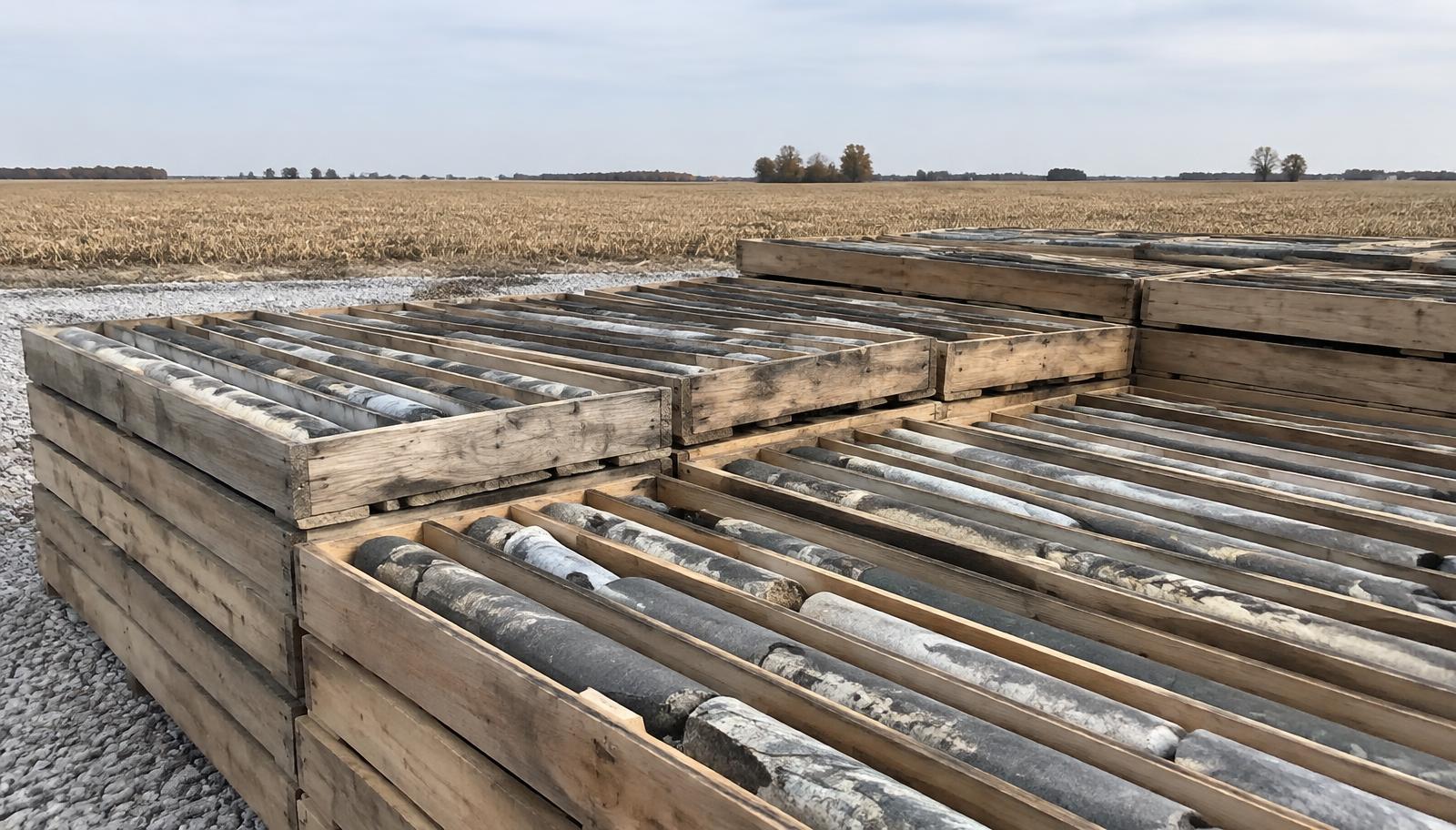 Mining and ResourcesWas steckt im längsten Seltenerd-Bohrabschnitt von Apex Critical Metals?Apex Critical Metals Corp. (CSE: APXC, FWB: KL9) meldete am 5. Oktober 2026, dass Step-out-Bohrungen die Trinity Zone auf dem Projekt Rift in Nebraska rund 200 Meter einfallend nach Westen erweitert haben, mit 3.55 Prozent Seltenerdoxid über 116.0 Meter und 2.35 Prozent über 171.5 Meter Kernlänge. Die Bohrungen sind real, und die Gehalte zählen zu den besten des Projekts. Die Mitteilung enthält keinen Cut-off-Gehalt, keine Bohrlochtiefen und kein Analyseergebnis nach einzelnen Oxiden, und für Rift existiert keine Mineralressourcenschätzung.Daniel Okoye · 6. Oktober 2026 · 9 min
 TechnologyWarum Light AI die Arbeit an seinem einzigen Produkt eingestellt hatLight AI Inc. (Cboe Canada: ALGO) schloss am 5. Oktober 2026 bei C$0.04 und damit 72.4 Prozent niedriger, nachdem das Unternehmen dem Markt am Freitag, 2. Oktober, um 20:34 ET mitgeteilt hatte, es habe Lücken in den Nachweisen für sein einziges Produkt gefunden und werde den Weg zu einer Einreichung bei der U.S. Food and Drug Administration nicht weiterverfolgen. Die Aktienzahl veränderte sich nicht, der Rückgang ist also ein Wertverlust und keine Aktienzusammenlegung. Die im August erteilte Lizenz von Health Canada bleibt in Kraft.Élise Galarneau · 5. Oktober 2026 · 7 min
 Mining and ResourcesXatśūll First Nation kündigt sämtliche Vereinbarungen mit Spanish Mountain GoldAm 1. Oktober 2026 teilte die Xatśūll First Nation mit, sie kündige sämtliche Vereinbarungen mit Spanish Mountain Gold Ltd. CIRO setzte die Aktie noch am selben Vormittag aus; sie wurde am Folgetag wieder zugelassen, als das Unternehmen erklärte, die Umweltprüfbehörde British Columbias habe im August bestätigt, die Umweltprüfung nicht zu beenden. Der eigene Quartalsbericht des Unternehmens hatte bereits offengelegt, dass das Protokoll von 2021 nicht mehr in Kraft ist.Élise Galarneau · 5. Oktober 2026 · 8 min
Dieser Geschichte folgen
HIVE.TO, DMGI.V folgen – der nächste Maple-Beitrag zu diesen Unternehmen, dazu der Maple Morning Debrief vor Handelsbeginn.
Folgen und fragen
Mehr von unserer Berichterstattung zu den kanadischen Märkten in Google Top Stories.
Diese Analyse zitieren
Bitte The Maple Markets nennen und auf die Originalseite verlinken.
The Maple Markets (6. Oktober 2026). Crypto Is Becoming a Public-Markets Story: Four Canadian Stocks Showing What Investors Should Watch Next. The Maple Markets. https://themaplemarkets.ca/de/newsroom/crypto-is-becoming-a-public-markets-story-four-canadian-stockshttps://themaplemarkets.ca/de/newsroom/crypto-is-becoming-a-public-markets-story-four-canadian-stocks