
Snowline Drills a New Gold System at Duke, and Valley Returns 450 Metres
Two new holes at the Duke target in the Yukon returned long runs of gold in a different kind of intrusion, and a Valley hole returned 450.2 metres of gold from surface.
Snowline Gold reported on November 18, 2026 that hole DUK-26-004 at its Duke target cut 65.8 metres of 1.03 grams per tonne gold, about 12 kilometres from the Valley deposit, and that Valley hole V-26-165 returned 1.47 grams per tonne over 450.2 metres from surface. The Valley prefeasibility study remains on schedule for the first quarter of 2027.
By Daniel Okoye7 min read
Dieser Artikel ist derzeit nur auf Englisch verfügbar.
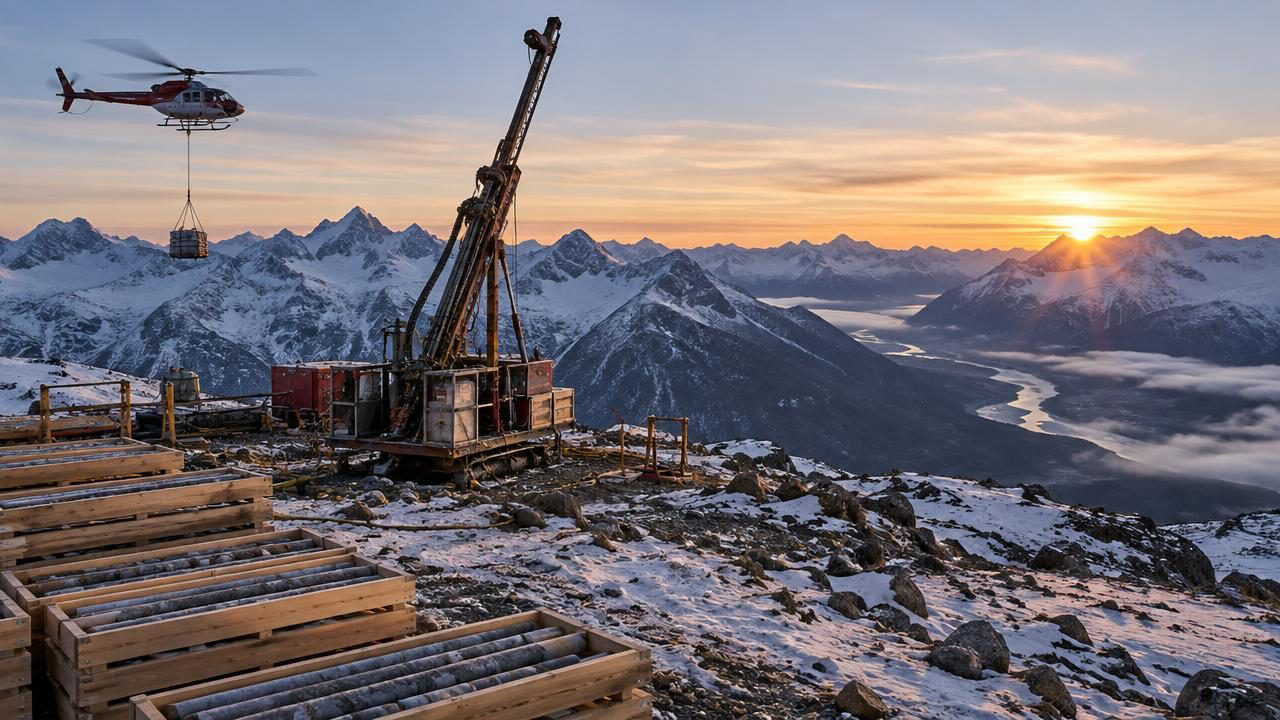
Duke, DUK-26-004
65.8 m of 1.03 g/t gold from 230.0 m, including 1.0 m of 32.2 g/t
drilled length; true width not stated; Snowline release, November 18, 2026.
Valley, V-26-165
450.2 m of 1.47 g/t gold from surface, including 210.5 m of 2.07 g/t
Snowline release, November 18, 2026.
Valley resource
7.94 Moz measured and indicated at 1.21 g/t; 0.89 Moz inferred at 0.62 g/t
technical report dated August 27, 2025, effective March 1, 2025.
Cash and cash equivalents
C$220.4 million at September 30, 2026
condensed interim consolidated financial statements filed on SEDAR+ November 13, 2026; about C$100 million in the company's May 5, 2026 release.
Prefeasibility study
due in the first quarter of 2027
Snowline releases of September 9 and November 18, 2026.
Snowline Gold has drilled into a new gold system in the Yukon, at a target called Duke about 12 kilometres from its Valley deposit. The company reported the results on November 18, 2026: long runs of gold in two holes, around an intrusion the company had not drilled at this scale before.
Valley is the deposit Snowline is engineering toward a mine. Duke is new ground, and it gives the Rogue Project something it has not had before: evidence of a second large intrusion carrying gold on the same claim block.
Duke now has two holes with long runs of gold
The best hole, DUK-26-004, returned 65.8 metres grading 1.03 grams of gold per tonne, the company reported. A gram per tonne is the standard measure of how much gold sits in rock; Valley's measured and indicated resource grades 1.21 grams per tonne, according to the 2025 technical report, though a single drill interval and the average grade of a whole deposit are not like-for-like. Inside that run, a single metre graded 32.2 grams per tonne.
A second hole, listed in the table below, was drilled about 675 metres to the northeast. It returned 54.5 metres of 0.41 grams per tonne, according to the release. In our reading, two holes that far apart both carrying gold over tens of metres, even though the second ran at less than half a gram, is the first sign that Duke is a system rather than a single pocket.
The release reports drilled lengths. It does not state true widths or whether any high assays were cut, so the figures are core lengths as the company reported them. By our arithmetic the one 32.2-gram metre accounts for nearly half of the interval's 1.03-gram average. Samples were prepared in Whitehorse and assayed in Vancouver by Bureau Veritas, an accredited laboratory independent of Snowline, the release states.
Snowline drilled five holes at Duke this season, about 1,600 metres in all. Assays for four have come back, and the company said results for the fifth are pending. The rigs returned because a hole drilled the year before had cut a short run of gold at depth, the company reported.
A different style of intrusion, on the same claims
Valley belongs to a family of deposits geologists call reduced intrusion-related gold systems, or RIRGS. In plain terms, these are deposits where gold was carried out of a cooling body of granite-like rock and settled in and around it, often in large, low-to-moderate-grade volumes suited to open pits.
Duke appears to be one of these, and a variant of the type. The release describes a mid-Cretaceous intrusion about 1.4 by 1.3 kilometres across, cut by breccias, which are zones where rock was shattered and re-cemented by magma and hot fluids. Gold there travels with antimony, bismuth, copper and lead. Chief executive Scott Berdahl put it this way in the release: "Drilling at Duke confirms a new style of RIRGS gold mineralization on the Rogue Project."
The company says the system may be largely blind, meaning it does not show itself at surface, and that it remains open at depth and to the north. Open means drilling has not yet found its edge in those directions.
Duke has no resource estimate yet. It is the second place on the property where Snowline has drilled into gold over tens of metres around an intrusion.
A Valley hole beat the block model, the company says
The same release carried one Valley hole, and it is the longer number on the page. V-26-165 returned 450.2 metres of 1.47 grams per tonne gold from surface, the company reported. The release gives downhole lengths; true widths are not stated. Within it sat a higher-grade core of about two grams a tonne.
The company says the hole came in above the grades its pit-constrained block model predicted for that ground. A block model is the three-dimensional grid of estimated grades behind a resource; a hole that beats it returned more gold than the model estimated for that ground. The hole also ended in gold, in ground below it that had not been drilled, which leaves that direction open.
The release names one Valley hole and says other 2026 Valley results will inform future resource estimates rather than the prefeasibility study. Snowline gave no count of those other holes.
The deposit the study is built on
Valley's current estimate carries 7.94 million ounces of measured and indicated gold, according to the technical report dated August 27, 2025. A further 0.89 million ounces are inferred. The table below gives the grades and the date the estimate took effect.
Measured and indicated ounces are the confident end of a resource: drilled closely enough to plan a mine on. Inferred ounces are a first estimate that needs more drilling.
A preliminary economic assessment on that resource, in the same 2025 report, supports what the company calls the potential for a long-life operation. Snowline states that the assessment is preliminary and includes inferred material. The prefeasibility study now under way is meant to replace it.
| Item | Figure | Source and date |
|---|---|---|
| Duke, DUK-26-004 | 65.8 m of 1.03 g/t gold from 230.0 m | Release, November 18, 2026 |
| Duke, DUK-26-005 | 54.5 m of 0.41 g/t gold from 121.0 m | Release, November 18, 2026 |
| Valley, V-26-165 | 450.2 m of 1.47 g/t gold from surface | Release, November 18, 2026 |
| Valley resource, M&I | 7.94 Moz at 1.21 g/t | Technical report dated August 27, 2025, effective March 1, 2025 |
| Valley resource, inferred | 0.89 Moz at 0.62 g/t | Technical report dated August 27, 2025, effective March 1, 2025 |
| Duke 2026 drilling | 5 holes, about 1,600 m | Release, November 18, 2026 |
Snowline pays for the season from its own treasury
Snowline held C$220.4 million of cash and cash equivalents at September 30, 2026, according to its condensed interim consolidated financial statements for the nine months to that date, filed on SEDAR+ on November 13, 2026. The same statements show net proceeds of C$165.5 million from private placements over those nine months. In its May 5, 2026 release the company had described this year's development and exploration programs as fully funded, with about C$100 million in treasury.
None of the documents Snowline filed on SEDAR+ between August 12 and November 18, 2026 is a prospectus, an at-the-market distribution or an investor-relations agreement; they are news releases, the quarterly statements and MD&A, and the officers' certificates.
The money covered more than Duke. The company's September 9 release listed about 4,200 metres of exploration drilling at Valley, about 2,300 metres of geotechnical and infrastructure drilling, the drilling that feeds the engineering, and work at the Gracie and Crossroad targets.
No financing was announced alongside the November 18 results. Snowline joined the S&P/TSX Composite Index after the close on September 18, 2026, according to its September 9 release, which brought its shares into the main Canadian benchmark.
Snowline's shares closed almost unchanged on results day
Snowline closed at C$12.34 on November 18, 2026, down 0.24 per cent, per end-of-day data read at 16:20 ET on TMX Money.
About 394,000 shares changed hands on the Toronto exchange, and the closing price puts the company's market value at about C$2.3 billion on the 188.4 million shares TMX Money lists.
The low of the day was C$11.82, and the stock recovered most of that ground by the close.
Gold itself fell that day. The spot bid was US$3,724.10 an ounce at 17:01 ET on November 18, down 3.23 per cent, per Kitco.
Next on the calendar: a prefeasibility study in early 2027
The prefeasibility study for Valley is due in the first quarter of 2027, the timing the company gave on September 9 and repeated on November 18. Snowline plans to file a Project Description with the Yukon Environmental and Socio-economic Assessment Board alongside it, which opens the formal permitting conversation, and aims to submit the full Project Proposal in early 2028.
The engineering has moved since the 2025 assessment, according to the company. The September release said the study is testing higher mill throughput than the assessment's 25,000 tonnes a day, liquefied natural gas as the main fuel, and alternative tailings sites to the one the assessment served with an 18-kilometre pipeline.
Duke sits outside that study. Its value for now is geological: a second intrusion carrying gold, open at depth and to the north, about 12 kilometres from a deposit already measured in millions of ounces. Assays for the fifth Duke hole, which the release numbers DUK-25-006, are pending. Snowline has delivered 2026 holes that extend Valley and open Duke, and its next dated step is the Valley prefeasibility study in the first quarter of 2027.
Offenlegung
Transparency note. This is an independent due-diligence analysis and editorial opinion piece produced by The Maple Markets editorial desk. It is not sponsored, promoted or commissioned, and no compensation of any kind has been received from Snowline Gold Corp. (TSX: SGD) or any party acting on their behalf. The analysis is based on public disclosure available as of the publish date; every figure is attributed to its primary source. Neither The Maple Markets nor the author holds a position in the securities mentioned; nothing here is a recommendation to buy, sell or hold any security, and readers should not treat it as investment advice. Past disclosure does not guarantee future results. Policies: Editorial Standards · Financial Disclaimer.
Weiterlesen
Also in English: Snowline Drills a New Gold System at Duke, and Valley Returns 450 Metres
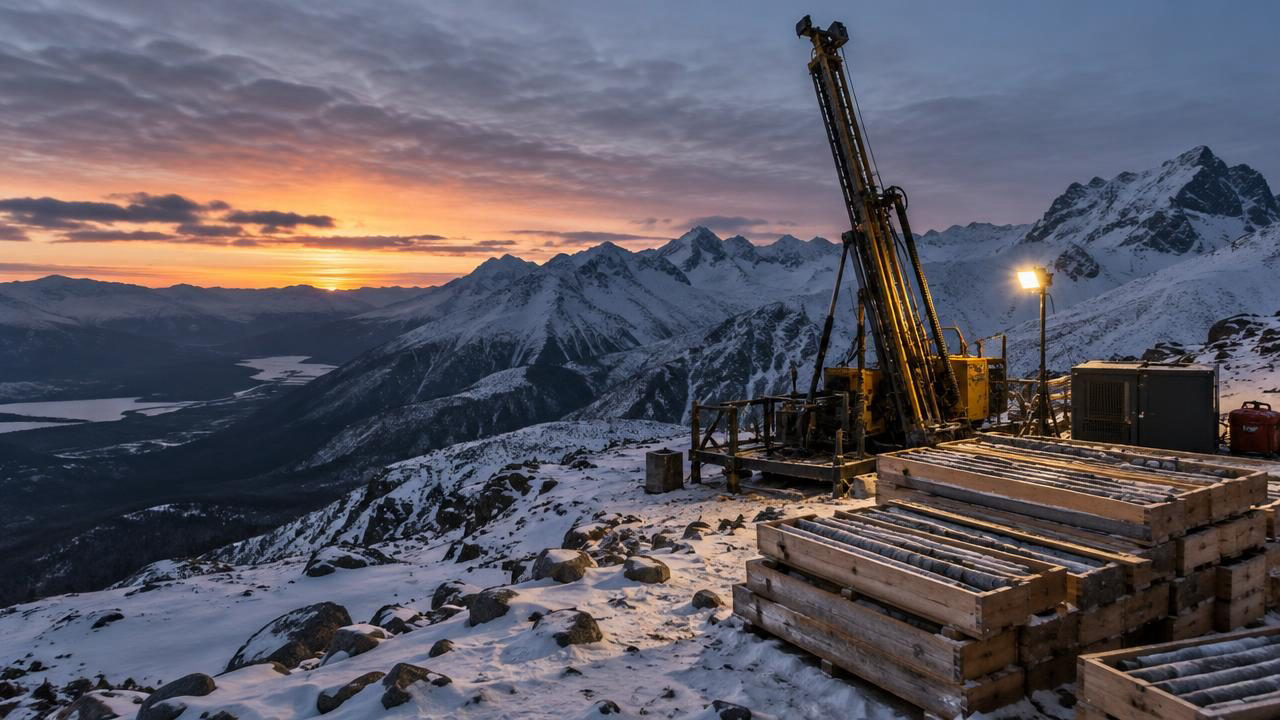 Bergbau & Energie41.7 Meter Gold ab der Oberfläche in der Contact Zone von Sitka GoldSitka Gold hat in der Contact Zone seines RC-Gold-Projekts im Yukon 41.7 Meter mit 2.20 g/t Gold ab der Oberfläche erbohrt. Das Unternehmen meldete die Bohrung am 5. November. Im Oktober schloss es ein Programm über 59,531 Meter ab. Die Ressource liegt bei 1.29 Millionen Unzen angezeigt und 3.83 Millionen Unzen abgeleitet. Eine aktualisierte Schätzung folgt nach den ausstehenden Analyseergebnissen.Daniel Okoye · 18. November 2026 · 8 min
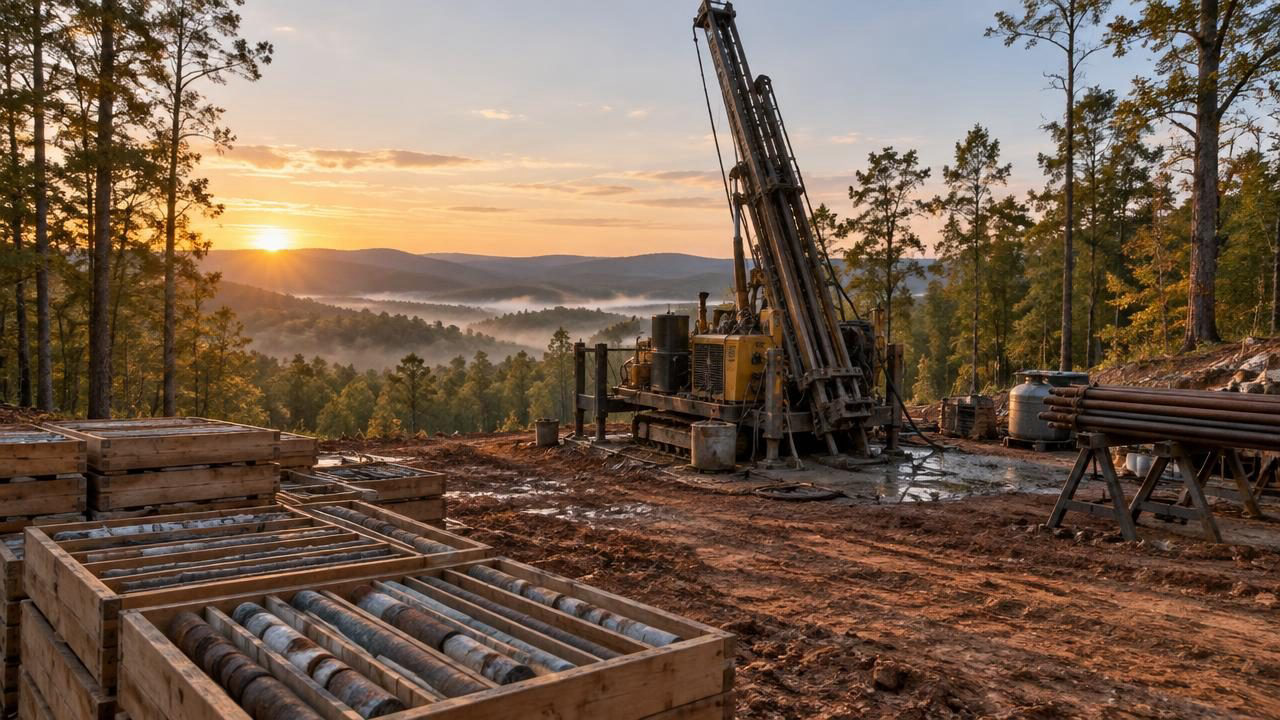 Bergbau & EnergieEric Sprott übt Warrants von Metalsource Mining für C$1.38 Millionen ausEric Sprott hat 4,387,158 Warrants von Metalsource Mining für C$1,379,863.20 ausgeübt, wie das Unternehmen am 18. November mitteilte. Das Unternehmen will das Geld für die Exploration bei Silver Hill und Byrd-Pilot in North Carolina sowie als Betriebskapital verwenden. Dort arbeiten zwei Bohrgeräte, und im Oktober standen für 24 Bohrlöcher die Analyseergebnisse noch aus.Priya Sandhu · 19. November 2026 · 8 min
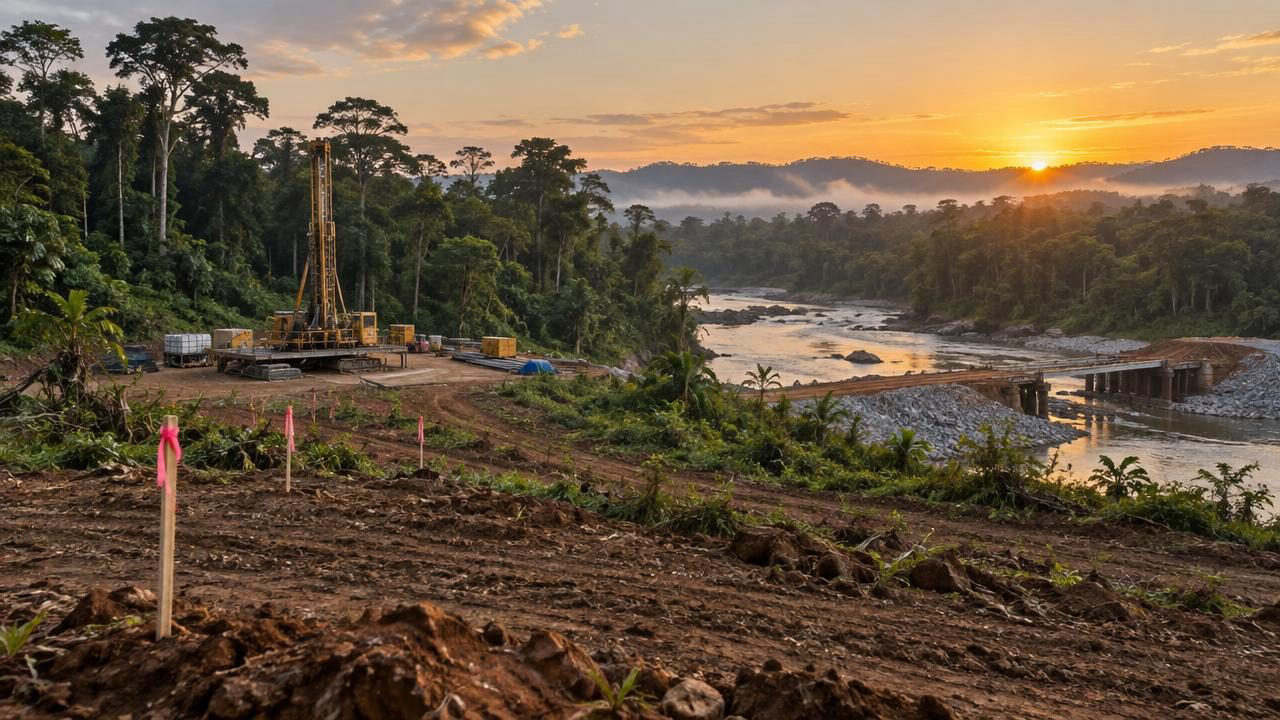 Bergbau & EnergieToroparu, durchgerechnet: Aris Mining beziffert eine Goldmine in Guyana auf US$1 MilliardeDie am 12. November 2026 veröffentlichte Vor-Machbarkeitsstudie von Aris Mining für Toroparu beschreibt eine Goldmine in Guyana mit 29 Jahren Laufzeit, einem anfänglichen Finanzierungsbedarf von US$1,005 Millionen, 5.9 Millionen Unzen Reserven und einem Wert nach Steuern von US$2.8 Milliarden bei US$3,600 Gold. Eine Bauentscheidung ist für Anfang 2027 angestrebt, vorbehaltlich der Bergbaulizenz.Daniel Okoye · 19. November 2026 · 7 min
Dieser Geschichte folgen
SGD.TO folgen – der nächste Maple-Beitrag zu diesem Unternehmen, dazu der Maple Morning Debrief vor Handelsbeginn.
Folgen und fragen
Mehr von unserer Berichterstattung zu den kanadischen Märkten in Google Top Stories.
Quellen und Verweise (6)
- Snowline Gold: Snowline Expands New Gold System at Its Duke Target (GlobeNewswire, November 18, 2026)
- Snowline Gold: Announces Fully Funded 2026 Project Development and Exploration Programs (GlobeNewswire, May 5, 2026)
- Snowline Gold: Announces Inclusion Into Multiple Equity Indices and Provides Project Updates (September 9, 2026)
- TMX Money: Snowline Gold Corp. (SGD) quote
- SEDAR+ document search, Snowline Gold Corp. (profile 000046277): condensed interim consolidated financial statements for the three and nine months ended September 30, 2026, filed November 13, 2026
- Kitco: live gold price, November 18, 2026
Diese Analyse zitieren
Bitte The Maple Markets nennen und auf die Originalseite verlinken.
Daniel Okoye (18. November 2026). Snowline Drills a New Gold System at Duke, and Valley Returns 450 Metres. The Maple Markets. https://themaplemarkets.ca/de/newsroom/snowline-gold-intersected-1-03-grams-per-tonne-gold-over-65-8-metres-athttps://themaplemarkets.ca/de/newsroom/snowline-gold-intersected-1-03-grams-per-tonne-gold-over-65-8-metres-at