
Reading a Mining Feasibility Study Without Getting Fooled
Net present value figures in technical reports rest on assumptions that deserve more scrutiny than they usually get.
By Daniel Okoye4 min readTranslation: human
Cet article n'est offert qu'en anglais pour le moment.

Typical discount rate
5-8%
Often too low for single asset
Price deck
Check vs 10-yr average
Often set near spot
Capital overruns
Industry-wide pattern
Contingency often thin
A feasibility study produces a net present value that promotional material will quote as though it were a valuation. It is a model output, not an appraisal, and the inputs behind that single number are where the real information sits. Two studies on similar deposits can produce wildly different NPVs depending on assumptions that have nothing to do with the rock in the ground. Reading past the headline figure means working backward through the discount rate, the price deck, the capital cost line and, just as importantly, the costs that never made it into the model at all.
The discount rate
Most feasibility studies present economics at a discount rate of five or eight per cent, and the choice is rarely explained in the executive summary. For a diversified major with multiple producing assets, a lower rate might be defensible because company-specific risk is spread across cash flows from several mines. For a single-asset development project — no revenue yet, permits still pending, financing not secured — that same rate understates the risk an investor is actually taking. Recalculating the same cash flow stream at a rate that reflects jurisdictional, permitting and execution risk often cuts the headline NPV by half or more. The company is not lying by publishing the lower rate; it is following an industry convention. The reader's job is to redo the arithmetic before treating the number as comparable across projects.
The commodity price deck
The NPV is only as good as the price assumed for every tonne or ounce sold over the project's life. Studies frequently use long-term price decks that sit near or above the spot price prevailing when the study was published, which flatters the economics precisely when investor attention is highest. A useful discipline is to check the assumed price against a ten-year historical average rather than against the current tape. If the study's price deck sits well above that average, the reported NPV is effectively a bet that today's cycle persists for the life of the mine, which for many projects runs fifteen years or longer. Sensitivity tables in the appendix, which show NPV at a range of prices above and below the base case, are usually more informative than the base case itself, because they show how much of the value depends on the price assumption holding.
Capital cost and the contingency line
Initial capital estimates in mining feasibility studies have a well-documented history of running below actual construction costs, across jurisdictions and across commodity cycles. A contingency allowance of roughly ten per cent is standard, but that figure is more defensible for a conventional flowsheet using proven technology than for a first-of-its-kind process route, an unusual metallurgy, or a remote site with limited infrastructure. Sustaining capital — the ongoing spend required to maintain production once the mine is operating — is often disclosed as a separate, smaller line item lower in the document, and it is where subsequent surprises tend to accumulate once a project is in production and the market is no longer scrutinizing every assumption.
What is not in the model
Some of the largest long-run liabilities in mining barely register in the headline economics. Closure and reclamation costs are typically included, but the assumptions behind them can be dated relative to current regulatory expectations. Water treatment obligations that extend in perpetuity at some sites are a growing category of cost that studies tend to understate or discount so heavily at the model's discount rate that they become nearly invisible in present-value terms despite continuing indefinitely. Community agreements and impact-benefit arrangements negotiated with local and Indigenous communities carry costs and commitments that are not always fully reflected. And the cost of capital required to actually raise the money to build the project — equity dilution, streaming or royalty financing, debt covenants — is a separate question from the project economics and is rarely modelled into the same NPV that gets quoted in headlines.
Reading the study as a whole
None of this means a feasibility study is unreliable; it means the study is an engineering and economic model built on stated assumptions, and the assumptions are the analysis. A reader who accepts the headline NPV without checking the discount rate, the price deck, the contingency and what sits outside the model entirely is accepting someone else's judgment about all four. Comparing studies across companies requires normalizing at least the discount rate and price deck to a common basis before any comparison of project quality is meaningful.
What to watch
Track the discount rate and commodity price deck disclosed in the study's assumptions section, the sensitivity table showing NPV across a range of prices, the contingency percentage relative to the novelty of the process flowsheet, sustaining capital estimates versus initial capital, and any subsequent updates to closure cost or water treatment obligations as permitting proceeds. Watch for a company issuing an updated study with a lower discount rate or higher price deck than the prior version without a corresponding change in project risk — that is a re-rating of assumptions, not of the asset.
Divulgation
Information only. Not investment advice. The Maple Markets does not hold positions in securities discussed.
À lire ensuite
Aussi en anglais: Reading a Mining Feasibility Study Without Getting Fooled
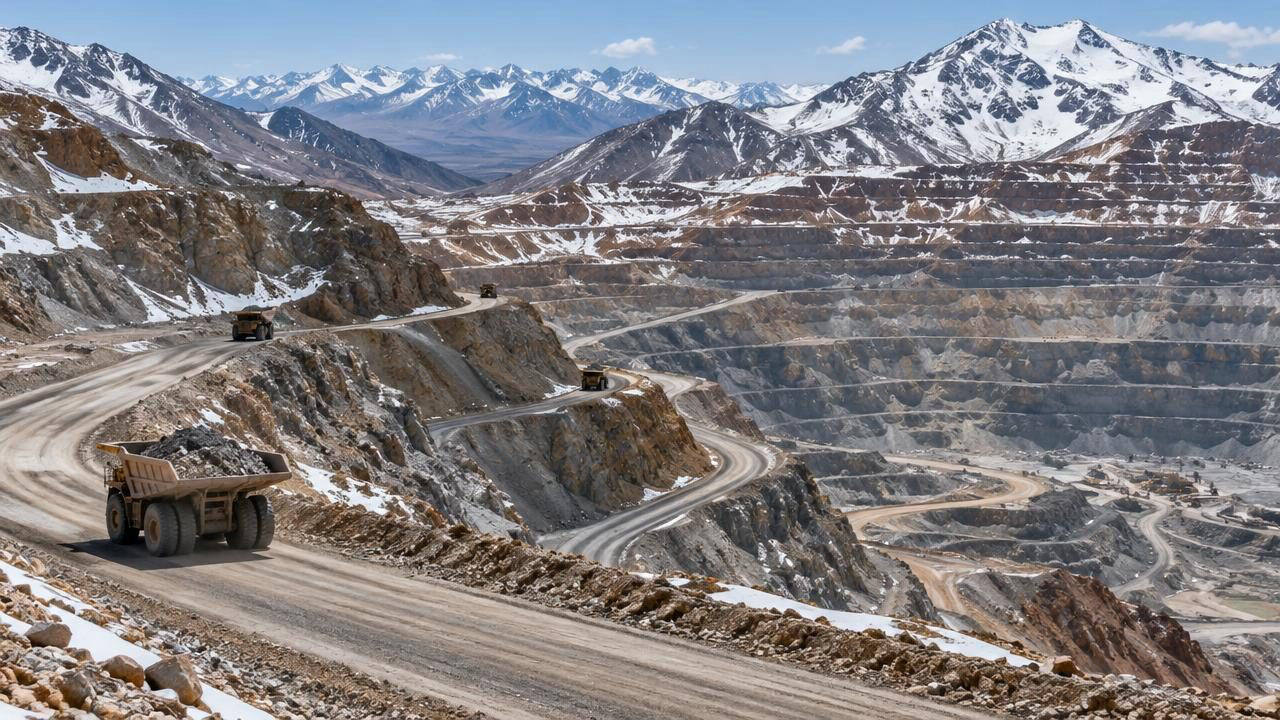 Mining & EnergyPourquoi Lundin Mining a abaissé sa prévision de production de cuivre pour 2026Le troisième trimestre de Lundin Mining, publié le 4 novembre 2026, a combiné une production de cuivre en recul à Caserones, au Chili, et des revenus de US$1,109.2 millions à un prix réalisé du cuivre record. La société a ramené sa prévision de cuivre pour 2026 à 285,000 à 310,000 tonnes, maintenu sa prévision de coûts, déclaré son dividende régulier de C$0.0275 et déclaré une trésorerie nette de US$237.0 millions au 30 septembre. L'action a clôturé à C$28.05 le 5 novembre, en baisse de 11.43 pour cent.Daniel Okoye · 5 novembre 2026 · 8 min
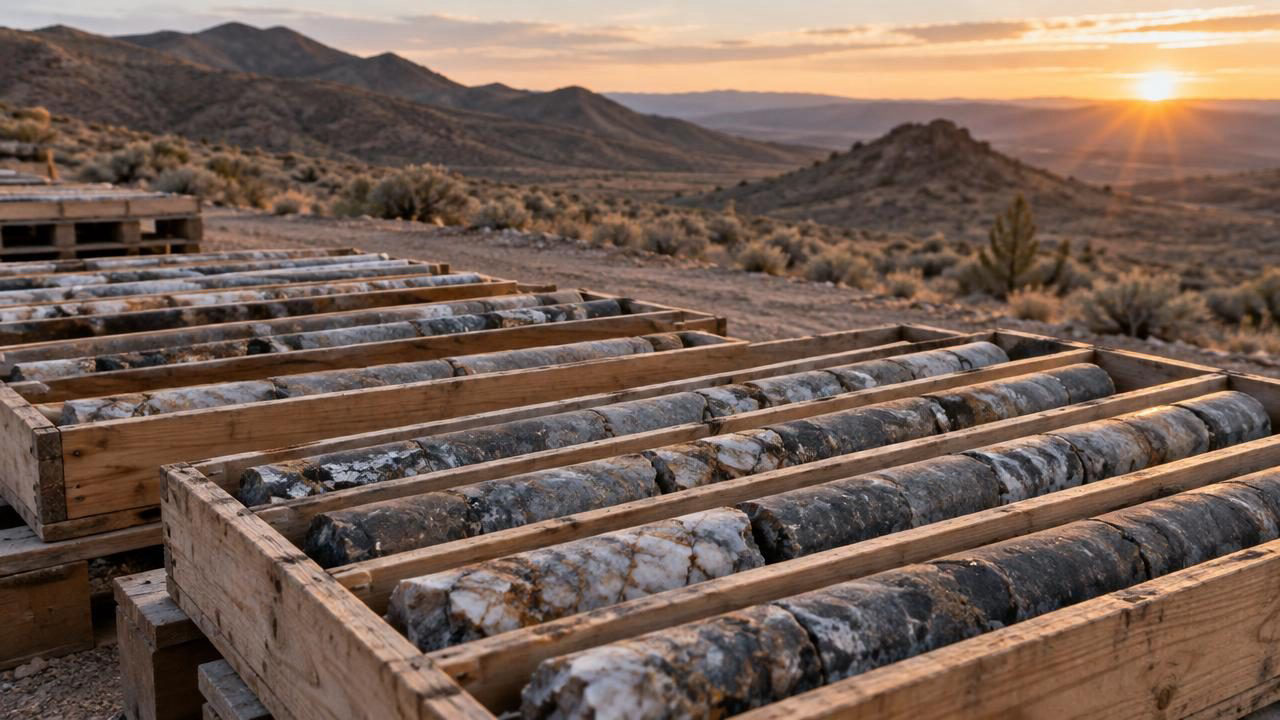 Contenu commanditéMining & Energy19.9 millions d'unités admissibles alors que Copper One se rend à MunichCopper One Resources a déposé le 3 novembre 2026 un supplément de prospectus qui admet au placement 19,889,750 unités issues de son financement par bons de souscription spéciaux de C$7,955,900, ainsi qu'une notice annuelle volontaire, quelques jours après que son premier sondage de la phase 2 à Majuba Hill, au Nevada, eut révélé du cuivre natif identifié visuellement. Les résultats d'analyse en laboratoire sont attendus, et la société fait une présentation à Munich les 6 et 7 novembre.Daryl Frètu Von · 5 novembre 2026 · 8 min
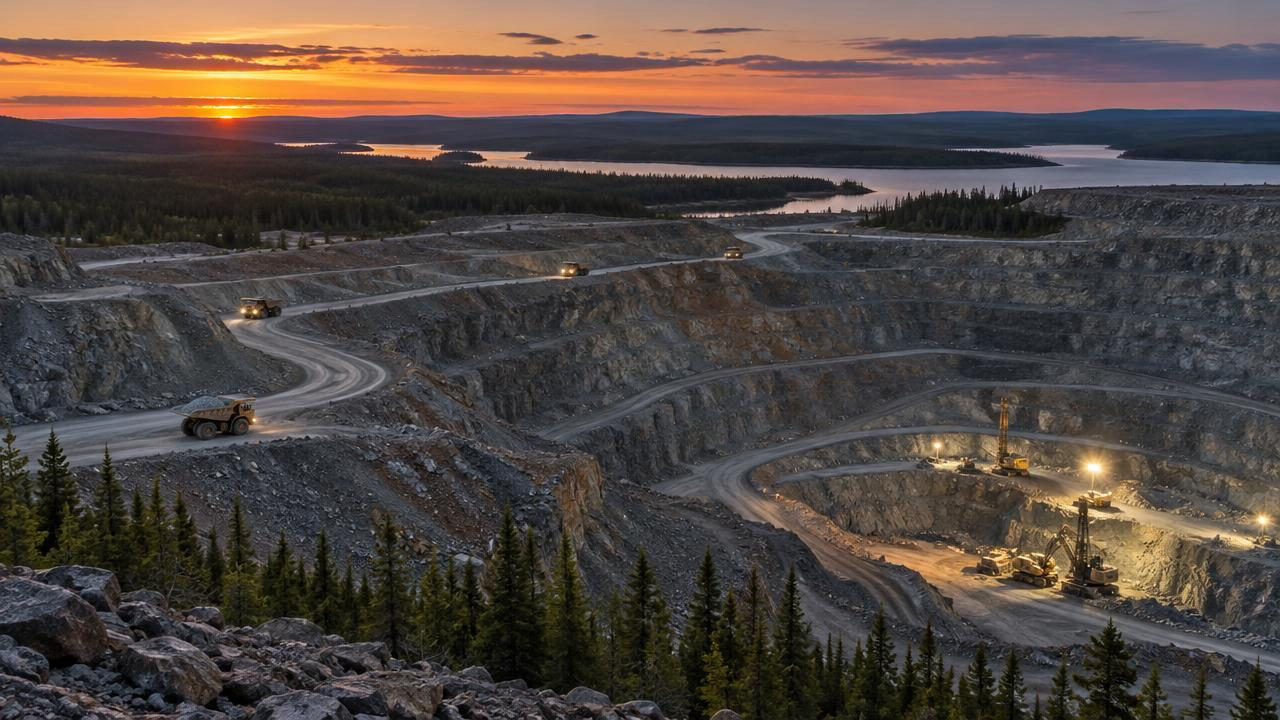 Mining & EnergyUS$852 millions de flux de trésorerie disponibles : le troisième trimestre d'Agnico EagleAgnico Eagle a déclaré 814,012 onces d'or et US$852 millions de flux de trésorerie disponibles pour le troisième trimestre de 2026, a terminé septembre avec US$3.6 milliards en trésorerie pour une dette de US$197 millions, et a maintenu sa fourchette de prévisions pour 2026 tout en indiquant que la production se situera près de la borne inférieure de la fourchette après un mouvement de roche dans la fosse Barnat. L'action a progressé avec celles des producteurs d'or canadiens le 4 novembre.Élise Galarneau · 5 novembre 2026 · 7 min
Recevoir le Maple Morning Debrief
La clôture de la veille, la nuit et ce qu'il faut surveiller avant l'ouverture — dans votre boîte de réception avant 6 h HE. Gratuit, désabonnement en un clic.
Follow and ask
Get more of our Canadian market coverage in Google Top Stories.
Sources et références (3)
Citer cette analyse
Please attribute The Maple Markets and link to the original page.
Daniel Okoye (June 1, 2026). Reading a Mining Feasibility Study Without Getting Fooled. The Maple Markets. https://themaplemarkets.ca/fr/newsroom/reading-a-mining-feasibility-study-without-getting-fooledhttps://themaplemarkets.ca/fr/newsroom/reading-a-mining-feasibility-study-without-getting-fooled