
Lundin Gold's Fruta del Norte and the Single-Asset Discount
Lundin Gold trades at a discount to diversified producers despite owning one of the highest-grade gold mines built this century. This piece unpacks why single-asset concentration and Ecuadorian country risk drive that gap, and what capital allocation choices could eventually close it.
By Daniel Okoye3 min readTranslation: human
本文目前仅提供英文版本。

Cost position
Lowest quartile
Grade driven
Discount reason
Single asset
Concentration risk
Re-rating path
Mine life or M&A
Both carry risk
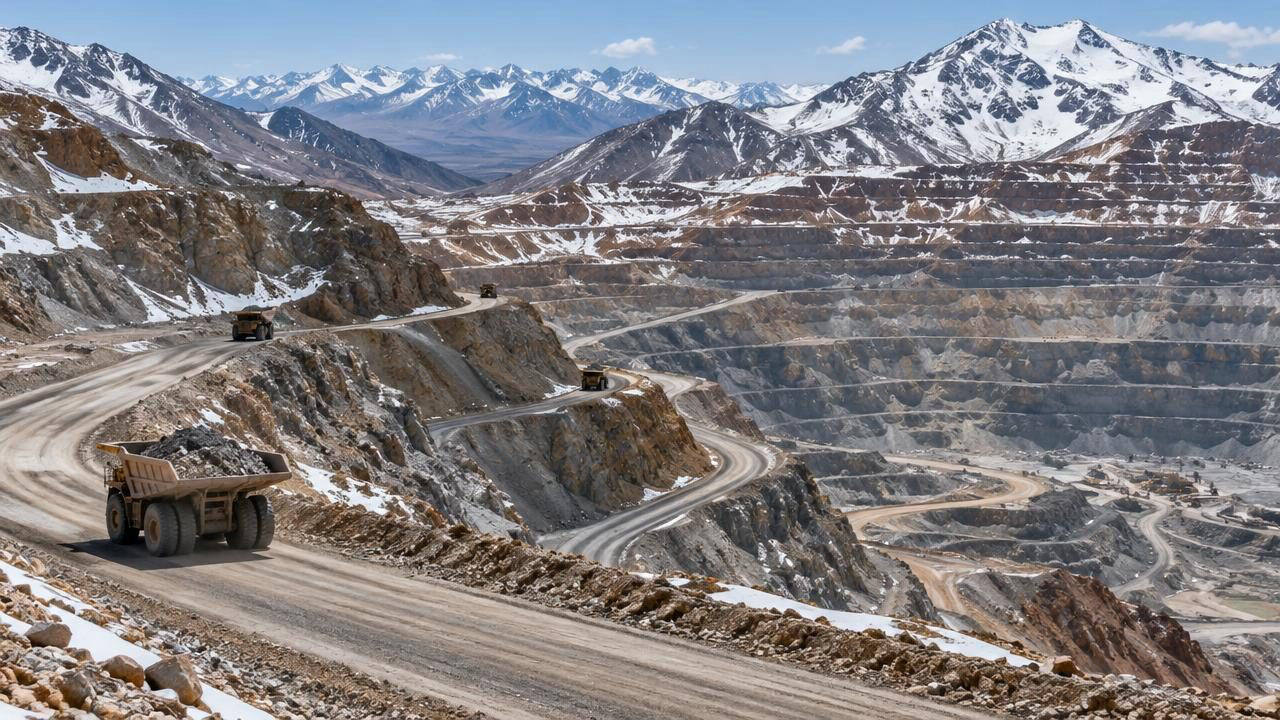
Fruta del Norte is among the higher-grade gold mines built this century, and Lundin Gold's valuation has consistently sat below diversified producers with less attractive assets. That gap is not a market oversight. It is the price the market extracts for owning one mine in one country, and understanding why that discount persists, and what could close it, matters more to an investor than admiring the ore grade itself.
The asset quality
High grade translates into all-in sustaining costs that sit in the lowest quartile of the global cost curve. At current gold prices that produces free cash flow generation disproportionate to the company's market capitalisation. A low-cost position also means the mine remains profitable through a much wider range of gold prices than higher-cost peers, which reduces downside risk in a way that headline valuation multiples do not always capture. Investors comparing Lundin Gold to diversified miners on a price-to-cash-flow basis are often comparing a lower-risk cash flow stream to a higher-risk one, without adjusting the multiple accordingly.
Why the discount exists
A single operating asset means a single point of failure. A geotechnical event, a mill outage, or a change in Ecuadorian fiscal or permitting policy affects one hundred per cent of revenue. Diversified producers absorb such events; single-asset companies do not. This is the structural reason single-asset miners trade at a discount to multi-asset peers across the sector, not something specific to Lundin Gold's execution record. The market is pricing tail risk that has not materialised, and it will keep doing so for as long as the company remains a one-mine story, regardless of how well that mine performs quarter after quarter.
Country risk as a distinct variable
Beyond operational concentration sits jurisdictional concentration. Ecuador is a newer mining jurisdiction relative to Canada or Australia, with a shorter track record of fiscal and regulatory stability through a full commodity cycle. Royalty terms, windfall taxes and permitting rules can shift with changes in government, and a single-asset company has no ability to reallocate capital to a friendlier jurisdiction if terms deteriorate. This is a different risk from the operational risk above: it is policy risk layered on top of geological and mechanical risk, and it compounds the single-asset discount rather than simply adding to it.
The path to re-rating
Either exploration success that extends mine life materially, or acquisition of a second asset. Extending mine life through the drill bit is the lower-risk route because it adds value to an asset the market already understands and has already underwritten operationally. It does not, however, solve the concentration problem; a longer-lived single mine is still a single mine. Acquisition of a second asset would directly address diversification, but it carries its own risk: single-asset producers buying diversification at cycle-high prices have a poor historical record. Gold miners in particular have a history of overpaying for growth assets when their own cash flow and share price are elevated, precisely the moment management teams feel most emboldened to deploy capital. A disciplined, counter-cyclical acquisition would be viewed very differently by the market than a rushed one funded by a strong balance sheet during a gold price spike.
Capital allocation as the swing factor
With free cash flow generation strong relative to market capitalisation, the company faces a familiar allocation choice: return capital directly to shareholders, retire debt, fund exploration, or pursue the acquisition discussed above. Each choice sends a different signal about management's own view of the discount. Heavy buybacks or dividends effectively concede that a second asset is not imminent and that the best use of cash is compensating shareholders for the single-asset risk they are bearing. A visible war chest building toward acquisition signals the opposite. Neither is inherently wrong, but the market will read the capital allocation pattern over several quarters as a proxy for management's own assessment of when, or whether, the discount is fixable.
What to watch
Track exploration results and any resource or reserve updates that extend stated mine life, since these directly address the durability half of the discount. Watch royalty, tax and permitting developments in Ecuador, including any legislative changes affecting mining, as these move the country-risk half. Monitor free cash flow trends and how management deploys them, particularly any signal of acquisition intent versus continued capital return. Finally, watch for operational disclosures around mill throughput, grade reconciliation and any geotechnical issues at Fruta del Norte, since a clean operating record over successive years is the only way the market gradually reduces the discount attached to single-asset concentration.
披露声明
Information only. Not investment advice. The Maple Markets does not hold positions in securities discussed.
接着阅读
英文版: Lundin Gold's Fruta del Norte and the Single-Asset Discount
 Mining & EnergyLundin Mining为何下调2026年铜产量指引Lundin Mining于2026年11月4日公布第三季度业绩:智利Caserones矿铜产量下降,同时公司在创纪录的铜实现价格下实现营收110,920万美元。公司将2026年铜产量指引下调至285,000至310,000吨,维持成本指引,宣布每股C$0.0275的常规股息,截至9月30日净现金为23,700万美元。11月5日股价收于C$28.05,下跌11.43%。Daniel Okoye · November 5, 2026 · 5 min
 赞助内容Mining & EnergyCopper One赴慕尼黑之际,1,990万个单位获准发行Copper One Resources于2026年11月3日提交招股说明书补充文件,使其C$7,955,900特别认股权证融资中的19,889,750个单位获准发行,同时提交了一份自愿年度信息表;数日前,其在内华达州Majuba Hill的第二阶段首个钻孔记录到目视识别的自然铜。实验室化验结果尚待公布,公司将于11月6日和7日在慕尼黑路演。Daryl Frètu Von · November 5, 2026 · 6 min
 Mining & Energy85,200万美元自由现金流:Agnico Eagle的第三季度Agnico Eagle公布2026年第三季度产金814,012盎司、自由现金流85,200万美元,9月末持有现金36亿美元、债务19,700万美元;公司维持2026年指引区间,但表示Barnat矿坑发生岩体移动后,产量将接近区间下限。11月4日,该股与加拿大黄金生产商一同上涨。Élise Galarneau · November 5, 2026 · 5 min
Follow this story
Follow LUG — the next Maple piece on this company, plus the Maple Morning Debrief before the open.
Follow and ask
Get more of our Canadian market coverage in Google Top Stories.
资料来源与参考 (2)
引用本文分析
Please attribute The Maple Markets and link to the original page.
Daniel Okoye (June 24, 2026). Lundin Gold's Fruta del Norte and the Single-Asset Discount. The Maple Markets. https://themaplemarkets.ca/zh-hans/newsroom/lundin-gold-s-fruta-del-norte-and-the-single-asset-discounthttps://themaplemarkets.ca/zh-hans/newsroom/lundin-gold-s-fruta-del-norte-and-the-single-asset-discount