
NI 43-101 Versus the Press Release: Detecting Selective Disclosure
A field guide to the gap between what a technical report says and what a headline claims
Canada's mining disclosure standard is among the strictest in the world. It constrains the technical report — and press releases are where the pressure escapes.
By Daniel Okoye3 min read
本文目前仅提供英文版本。

National Instrument 43-101 exists because of Bre-X. It requires that scientific and technical disclosure about a mineral project be based on a report prepared by, or under the supervision of, a qualified person — an engineer or geoscientist with relevant experience and professional registration, who takes personal responsibility for the content.
The standard works. Outright fabrication is rare in Canadian mining disclosure. What NI 43-101 cannot prevent is emphasis, and emphasis is where retail investors lose money.
The resource and reserve hierarchy
Under the CIM definitions incorporated by NI 43-101, estimates are classified by confidence:
Mineral resources, in increasing order of geological confidence:
- Inferred. Estimated from limited sampling. Geological continuity is assumed, not demonstrated. Inferred material cannot be used in economic studies other than a preliminary economic assessment, and cannot be converted directly to reserves.
- Indicated. Sufficient sampling to assume geological and grade continuity with reasonable confidence.
- Measured. Confidence high enough for detailed mine planning.
Mineral reserves are the economically mineable part of a measured or indicated resource, demonstrated by at least a pre-feasibility study, with all modifying factors applied — mining method, metallurgical recovery, infrastructure, economics, permitting, legal, social and environmental. Only indicated resources can convert to probable reserves; only measured can convert to proven.
Two rules follow that a reader can apply immediately:
- Resources are not reserves. A large resource with no reserves has not been demonstrated to be economically mineable by anyone.
- An inferred-dominant resource is a hypothesis. Conversion rates from inferred to indicated vary enormously, and a substantial portion of inferred ounces routinely fails to survive infill drilling.
The techniques to recognise
Selective interval reporting. A release reports "12.4 g/t gold over 8.0 metres." The question is what the surrounding hole returned. A high-grade sub-interval inside a much longer low-grade intersection is a legitimate disclosure; presenting it without the parent interval is the technique. NI 43-101 requires that the basis for compositing be stated, so the answer is usually in the fine print beneath the table.
True width omission. A drill hole intersecting a steeply dipping structure at an oblique angle produces a downhole length far greater than the true thickness of the mineralisation. Disclosure must state whether widths are true or downhole. "True widths are not yet known" appearing consistently across many releases from a well-drilled project is a choice.
Cut-off grade shifts. A resource restated at a lower cut-off grade contains more tonnes at lower grade. Total contained ounces rise. Nothing in the ground changed. Compare cut-off grades between successive estimates before comparing ounce counts.
Metal price assumptions. Resource and reserve estimates use assumed long-term prices, which are disclosed. A resource expansion driven by a higher assumed price is a market call by the issuer, not a discovery.
Metal-equivalent grades. Combining copper, gold and silver into a single "copper-equivalent" figure requires price and recovery assumptions for each metal. If recoveries for the by-product metals are poor or unproven, the equivalent grade overstates the economics. The calculation must be disclosed — read it.
Adjacent-property references. A release describing a neighbouring producing mine is providing geological context, and NI 43-101 requires an explicit statement that the adjacent results are not necessarily indicative of the issuer's property. That mandatory sentence exists because the technique is effective.
Study types, in order of reliability
- Preliminary economic assessment. May include inferred resources. Accuracy typically stated in the range of ±35-50%. Genuinely preliminary.
- Pre-feasibility study. Reserves may be declared. Accuracy typically ±20-30%.
- Feasibility study. The basis for a construction decision and project financing. Accuracy typically ±10-15%.
Even feasibility studies overrun. The historical record of capital cost escalation between feasibility and commissioning is poor across the industry, and it is worse for first-time builders and for remote projects.
A reading procedure
- Read the technical report summary on SEDAR+, not the press release.
- Check the resource table: inferred versus indicated versus measured, with the cut-off grade and metal price assumption.
- Confirm whether reserves exist, and which study supports them.
- In drill releases, look for true widths and for the full parent interval around any highlighted intersection.
- Identify the qualified person and check whether they are independent of the issuer.
- Check the date of the most recent technical report against the claims being made today.
None of this requires geological training. It requires reading the document that the headline is summarising — which, in this sector, is where nearly all of the available edge sits.
披露声明
As of the publication date, the author, editor, publisher, their immediate households and affiliated entities do not own positions in the securities discussed. The Maple Markets received no compensation from any company, its officers, investor-relations providers or financiers in connection with this article. Figures are drawn from public filings as of the date shown and are not restated for later disclosure. Worked examples labelled illustrative use assumed inputs to show a method, not a forecast. This article is informational only and is not investment, legal, accounting or tax advice.
接着阅读
英文版: NI 43-101 Versus the Press Release: Detecting Selective Disclosure
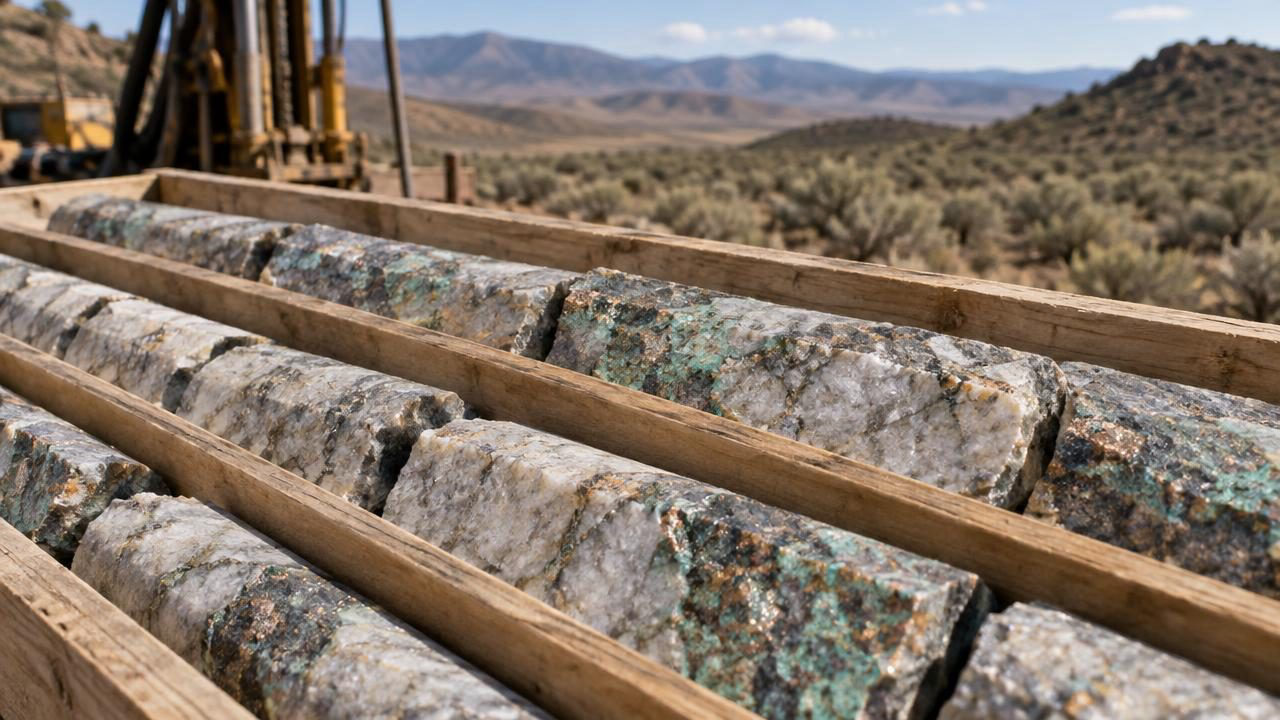 赞助内容Mining & EnergyCopper One 在 Majuba Hill 第二阶段首个钻孔中钻遇目视识别的自然铜Copper One Resources 在宣布开钻一周后,完成了内华达州 Majuba Hill 第二阶段钻探计划的首个钻孔。MHB-39 钻孔为追踪持续出现的硅化作用比计划多钻210英尺,在820英尺处钻遇目视识别的铜氧化物,在1,090英尺处钻遇目视识别的自然铜,均位于公司所述的氧化及富集范围之内。这座曾经投产的矿山累计钻探约95,000英尺;按公司自身数据,10月14日营运资金为1,910万加元;品位将由化验结果确定。Daryl Frètu Von · November 2, 2026 · 8 min
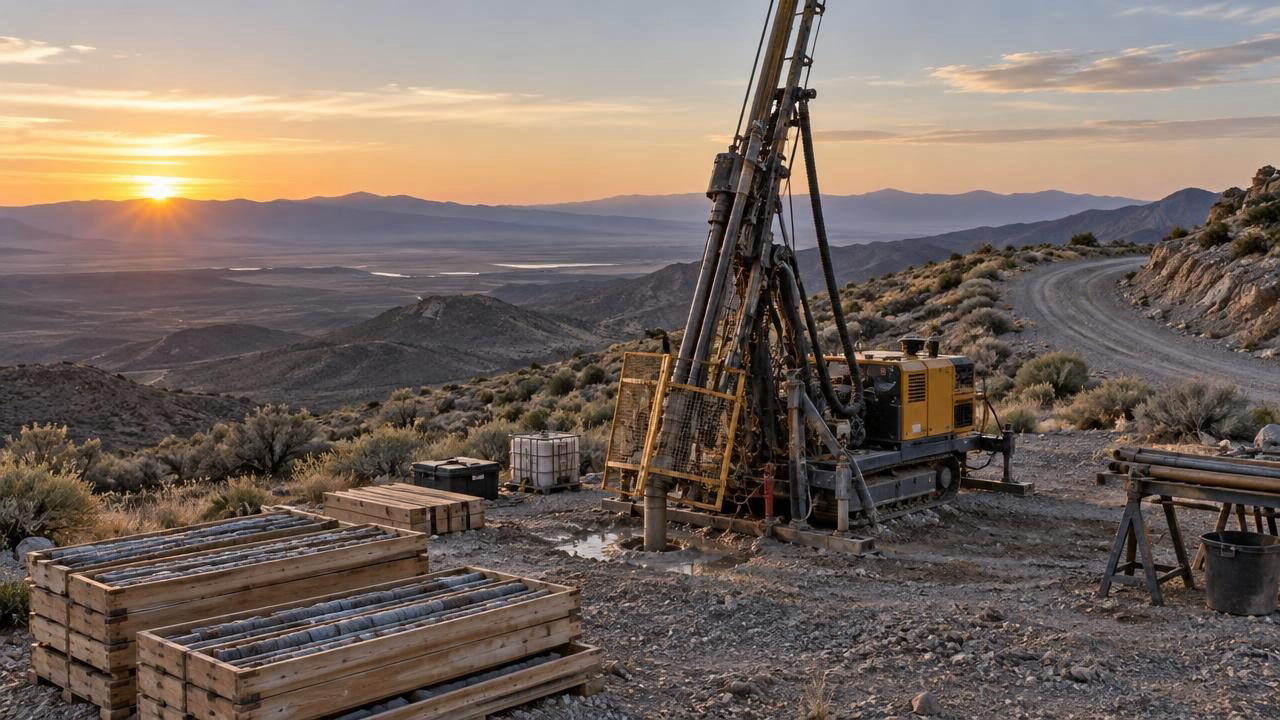 赞助内容Mining & EnergyCopper One 在内华达州 Majuba Hill 启动最多10,000英尺钻探2026年10月23日,Copper One Resources 宣布,其扩大后的第2阶段计划已在内华达州 Pershing 县的 Majuba Hill 开始金刚石岩芯钻探,进尺最多10,000英尺(3,048米)。Majuba Hill 是公司称为旗舰项目的铜银金项目。一台便携式钻机计划昼夜作业,所在矿山曾投产,已有逾90,000英尺钻探;Fraser Institute 的2025年调查将内华达州列为全球矿业投资第一。公司计划在第1阶段化验结果验证后予以公布,并正朝首份 NI 43-101 资源量推进。Daryl Frètu Von · October 26, 2026 · 7 min
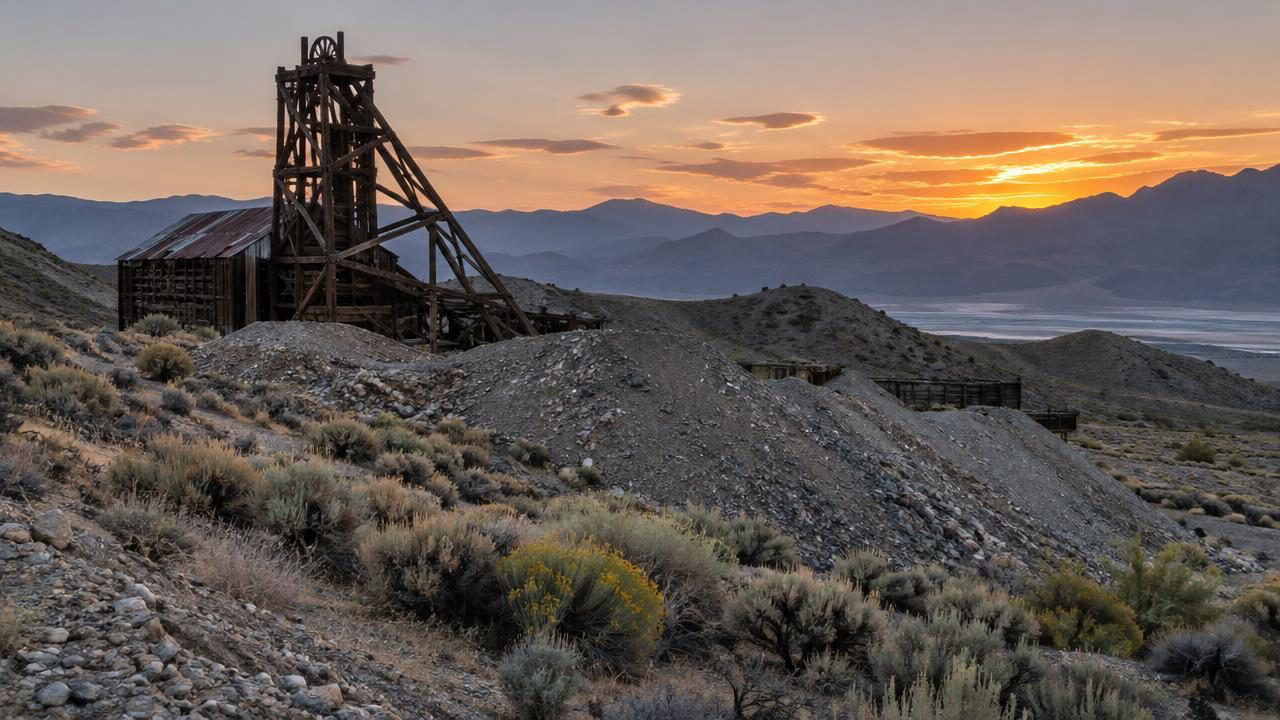 Mining & EnergyVault Strategic在内华达州:四个月专注于一处钨矿项目2026年7月3日,Vault Strategic Mining放弃另外两项钨矿期权,集中力量开发War Bond。War Bond位于内华达州西部,是1950年代曾经产钨的矿山。此后公司公布了地表采样结果,完成了73.6测线公里的磁法航测,完成150万加元配售,并启动首份NI 43-101技术报告。公司尚未给出报告日期;截至2026年11月30日的六个月财务报表是下一份计划提交的文件。Daniel Okoye · November 4, 2026 · 7 min
订阅 Maple Morning Debrief
前一交易日收盘、隔夜行情,以及开盘前值得关注的要点 —— 美东时间早上 6 点前送达您的邮箱。免费,一键退订。
Follow and ask
Get more of our Canadian market coverage in Google Top Stories.
资料来源与参考 (3)
- Canadian Securities Administrators — national instruments
- CIM Definition Standards for Mineral Resources and Reserves
- SEDAR+ issuer filings
引用本文分析
Please attribute The Maple Markets and link to the original page.
Daniel Okoye (August 29, 2026). NI 43-101 Versus the Press Release: Detecting Selective Disclosure. The Maple Markets. https://themaplemarkets.ca/zh-hans/newsroom/ni-43-101-versus-press-release-detecting-selective-disclosurehttps://themaplemarkets.ca/zh-hans/newsroom/ni-43-101-versus-press-release-detecting-selective-disclosure