
NI 43-101 Versus the Press Release: Detecting Selective Disclosure
A field guide to the gap between what a technical report says and what a headline claims
Canada's mining disclosure standard is among the strictest in the world. It constrains the technical report — and press releases are where the pressure escapes.
By Daniel Okoye3 min read

National Instrument 43-101 exists because of Bre-X. It requires that scientific and technical disclosure about a mineral project be based on a report prepared by, or under the supervision of, a qualified person — an engineer or geoscientist with relevant experience and professional registration, who takes personal responsibility for the content.
The standard works. Outright fabrication is rare in Canadian mining disclosure. What NI 43-101 cannot prevent is emphasis, and emphasis is where retail investors lose money.
The resource and reserve hierarchy
Under the CIM definitions incorporated by NI 43-101, estimates are classified by confidence:
Mineral resources, in increasing order of geological confidence:
- Inferred. Estimated from limited sampling. Geological continuity is assumed, not demonstrated. Inferred material cannot be used in economic studies other than a preliminary economic assessment, and cannot be converted directly to reserves.
- Indicated. Sufficient sampling to assume geological and grade continuity with reasonable confidence.
- Measured. Confidence high enough for detailed mine planning.
Mineral reserves are the economically mineable part of a measured or indicated resource, demonstrated by at least a pre-feasibility study, with all modifying factors applied — mining method, metallurgical recovery, infrastructure, economics, permitting, legal, social and environmental. Only indicated resources can convert to probable reserves; only measured can convert to proven.
Two rules follow that a reader can apply immediately:
- Resources are not reserves. A large resource with no reserves has not been demonstrated to be economically mineable by anyone.
- An inferred-dominant resource is a hypothesis. Conversion rates from inferred to indicated vary enormously, and a substantial portion of inferred ounces routinely fails to survive infill drilling.
The techniques to recognise
Selective interval reporting. A release reports "12.4 g/t gold over 8.0 metres." The question is what the surrounding hole returned. A high-grade sub-interval inside a much longer low-grade intersection is a legitimate disclosure; presenting it without the parent interval is the technique. NI 43-101 requires that the basis for compositing be stated, so the answer is usually in the fine print beneath the table.
True width omission. A drill hole intersecting a steeply dipping structure at an oblique angle produces a downhole length far greater than the true thickness of the mineralisation. Disclosure must state whether widths are true or downhole. "True widths are not yet known" appearing consistently across many releases from a well-drilled project is a choice.
Cut-off grade shifts. A resource restated at a lower cut-off grade contains more tonnes at lower grade. Total contained ounces rise. Nothing in the ground changed. Compare cut-off grades between successive estimates before comparing ounce counts.
Metal price assumptions. Resource and reserve estimates use assumed long-term prices, which are disclosed. A resource expansion driven by a higher assumed price is a market call by the issuer, not a discovery.
Metal-equivalent grades. Combining copper, gold and silver into a single "copper-equivalent" figure requires price and recovery assumptions for each metal. If recoveries for the by-product metals are poor or unproven, the equivalent grade overstates the economics. The calculation must be disclosed — read it.
Adjacent-property references. A release describing a neighbouring producing mine is providing geological context, and NI 43-101 requires an explicit statement that the adjacent results are not necessarily indicative of the issuer's property. That mandatory sentence exists because the technique is effective.
Study types, in order of reliability
- Preliminary economic assessment. May include inferred resources. Accuracy typically stated in the range of ±35-50%. Genuinely preliminary.
- Pre-feasibility study. Reserves may be declared. Accuracy typically ±20-30%.
- Feasibility study. The basis for a construction decision and project financing. Accuracy typically ±10-15%.
Even feasibility studies overrun. The historical record of capital cost escalation between feasibility and commissioning is poor across the industry, and it is worse for first-time builders and for remote projects.
A reading procedure
- Read the technical report summary on SEDAR+, not the press release.
- Check the resource table: inferred versus indicated versus measured, with the cut-off grade and metal price assumption.
- Confirm whether reserves exist, and which study supports them.
- In drill releases, look for true widths and for the full parent interval around any highlighted intersection.
- Identify the qualified person and check whether they are independent of the issuer.
- Check the date of the most recent technical report against the claims being made today.
None of this requires geological training. It requires reading the document that the headline is summarising — which, in this sector, is where nearly all of the available edge sits.
Weiterlesen
Also in English: NI 43-101 Versus the Press Release: Detecting Selective Disclosure
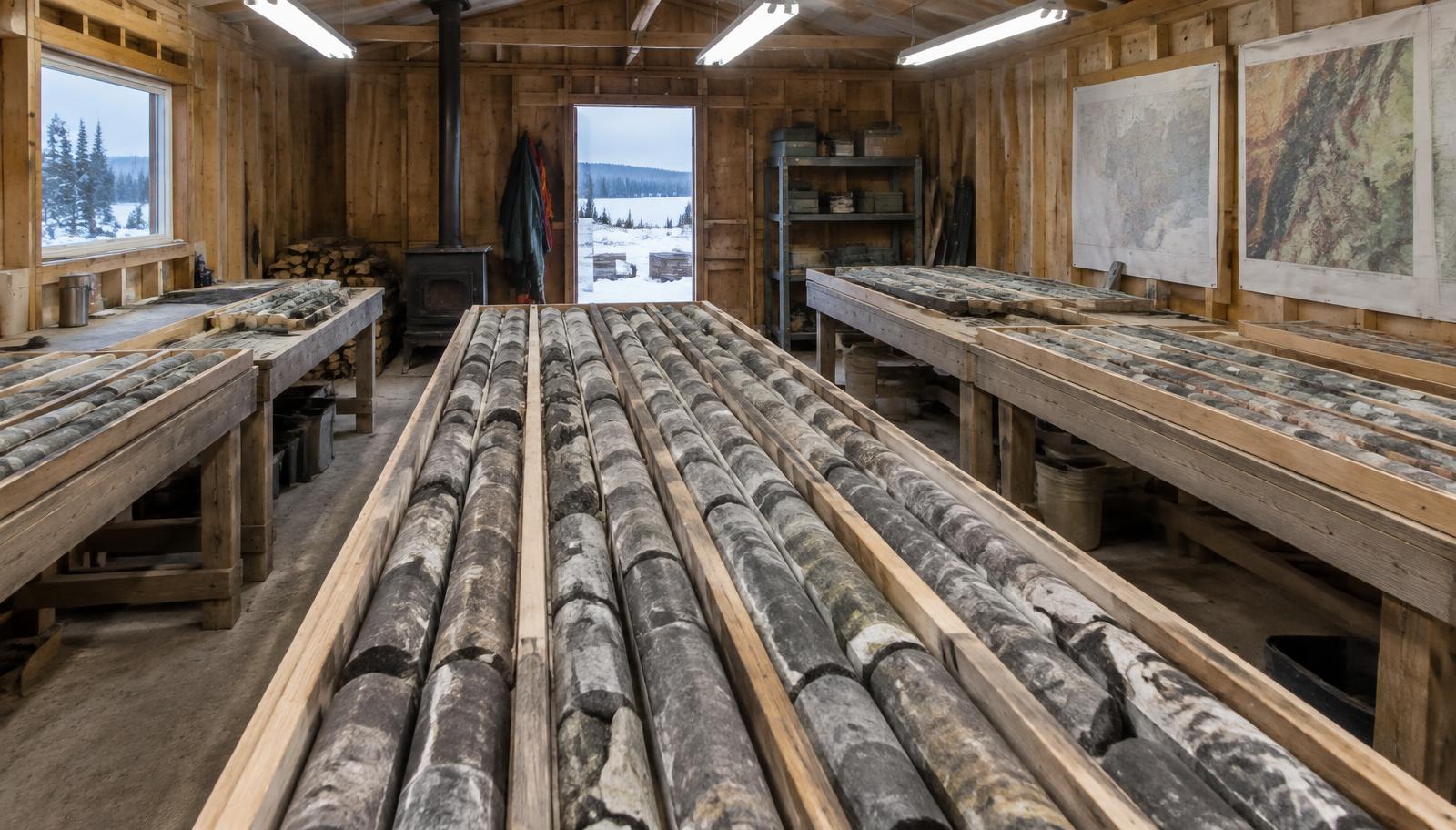 EconomyVier Dinge, die ein kanadischer Bergbaukonzern über ein Bohrloch sagen kann, und was jedes davon wert istEin kanadisches Explorationsunternehmen ohne Laborwerte legte am 9. September 2026 um 93.8 Prozent zu. Ein Unternehmen, das Laborwerte veröffentlichte, verlor am Tag darauf 35 Prozent. Die kanadische Bergbau-Offenlegung kennt vier getrennte Nachweisstufen, und die meiste Verwirrung in einer Bohrergebnis-Woche entsteht, wenn sie als eine behandelt werden.Priya Sandhu · 13. September 2026 · 8 min
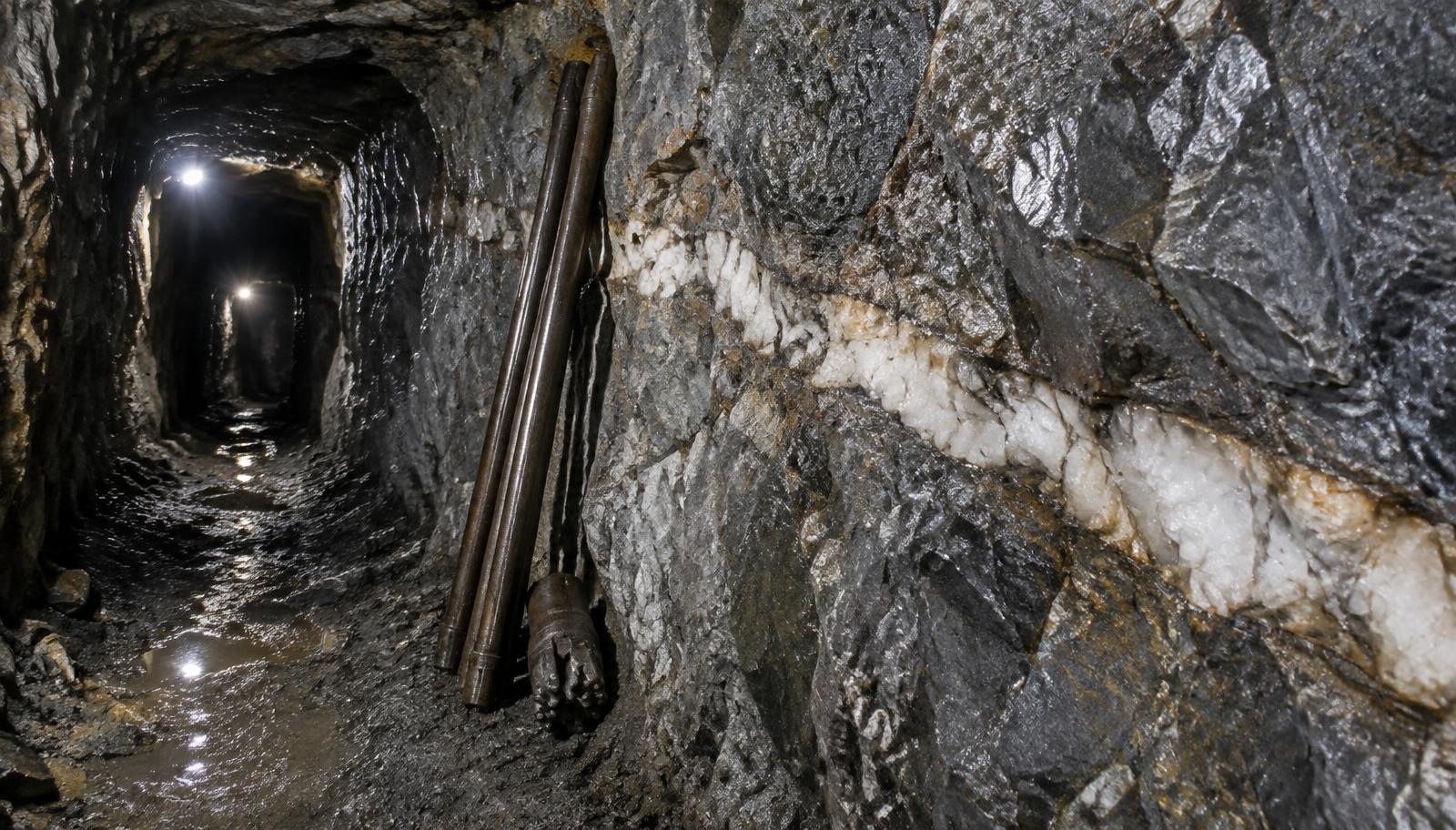 Mining and ResourcesAya Gold and Silver hat in Zgounder 3.501 g/t Silber erbohrt und daraus noch nichts verkauftAya Gold & Silver Inc. (TSX: AYA) meldete am 16. September 2026 hochgradige Silberabschnitte nahe der Grube von Zgounder und in der Tiefe, acht Tage nachdem das Unternehmen den Papierwert seines Projekts Boumadine verdoppelt hatte, und fünfzehn Tage nach der Vereinbarung über den Kauf eines Kupfer-Silber-Konzessionspakets. Die Aktie schloss am 17. September bei C$40,24. Das Unternehmen hält US$182,8 Millionen an Barmitteln, und rund 80 Prozent des Metalls in der Boumadine-Studie liegen in der spekulativsten Ressourcenkategorie, die es gibt.Élise Galarneau · 18. September 2026 · 8 min
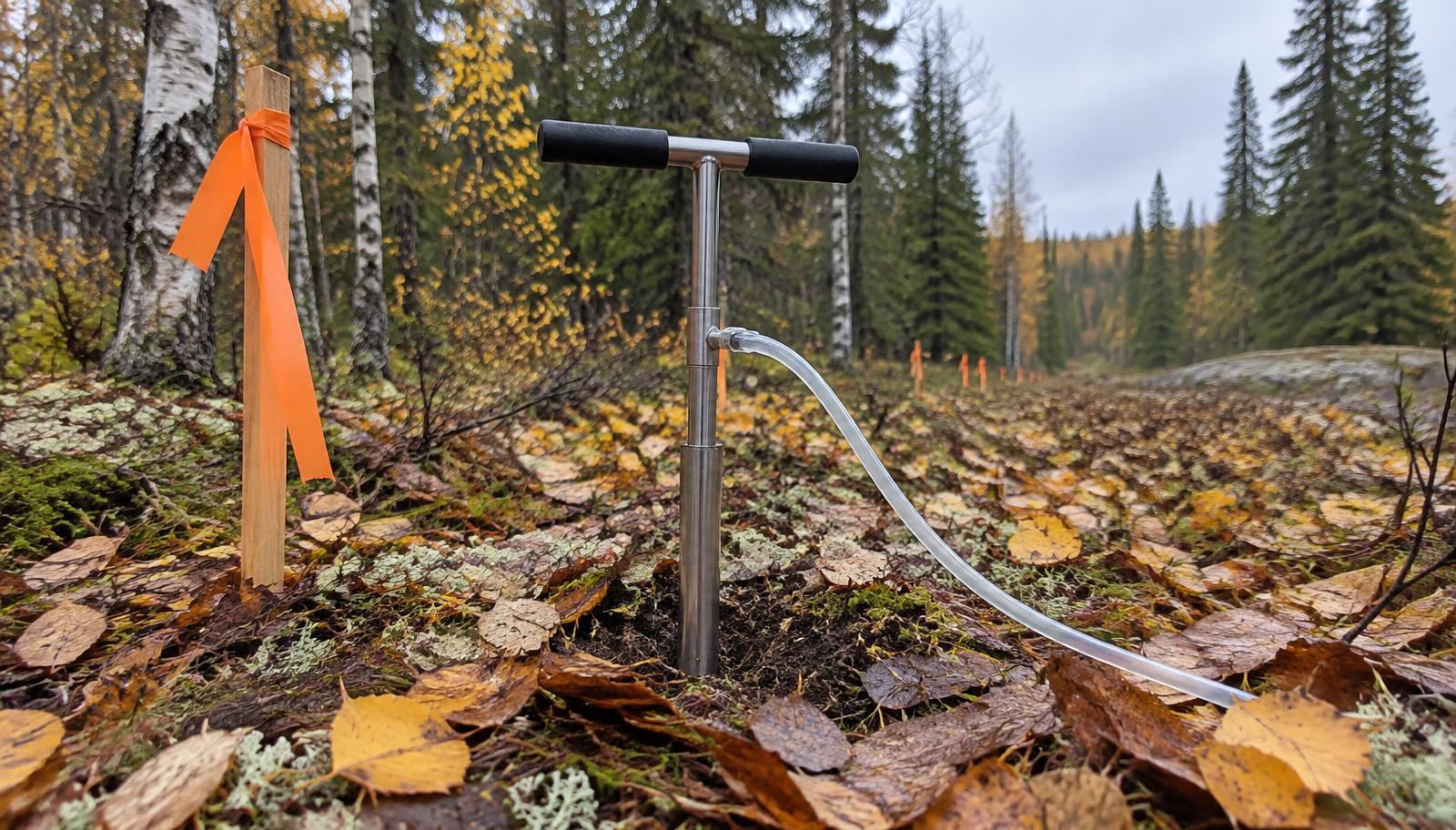 Mining and ResourcesQIMC bringt 823 neue Bodengas-Stationen nach Ontario, der fünfte Schritt einer öffentlich aufgebauten MethodeQuébec Innovative Materials Corp. (CSE: QIMC) hat am 17. September 2026 ein erweitertes Programm zur Exploration von natürlichem Wasserstoff auf der Ontario-Seite des Témiscamingue-Grabens gestartet: 823 neue Bodengas-Stationen im 100-Meter-Raster über rund 80 Linienkilometer, womit die Ontario-Datenbank auf etwa 1,733 Stationen wächst, dazu mehr als 1,100 gravimetrische Stationen und 78 Linienkilometer 2D-Seismik. Die Aktie schloss bei C$0.59. Die eigene Offenlegung des Unternehmens sagt, dass nichts davon eine Fließrate misst.Priya Sandhu · 17. September 2026 · 7 min
Den Maple Morning Debrief erhalten
Der gestrige Schluss, die Nacht und worauf Sie vor der Eröffnung achten sollten — bis 6 Uhr ET in Ihrem Postfach. Kostenlos, Abmeldung mit einem Klick.
Folgen und fragen
Mehr von unserer Berichterstattung zu den kanadischen Märkten in Google Top Stories.
Offenlegung
As of the publication date, the author, editor, publisher, their immediate households and affiliated entities do not own positions in the securities discussed. The Maple Markets received no compensation from any company, its officers, investor-relations providers or financiers in connection with this article. Figures are drawn from public filings as of the date shown and are not restated for later disclosure. Worked examples labelled illustrative use assumed inputs to show a method, not a forecast. This article is informational only and is not investment, legal, accounting or tax advice. Lesen Sie den finanziellen Haftungsausschluss.
Quellen und Verweise (3)
- Canadian Securities Administrators — national instruments
- CIM Definition Standards for Mineral Resources and Reserves
- SEDAR+ issuer filings
Diese Analyse zitieren
Bitte The Maple Markets nennen und auf die Originalseite verlinken.
Daniel Okoye (29. August 2026). NI 43-101 Versus the Press Release: Detecting Selective Disclosure. The Maple Markets. https://themaplemarkets.ca/de/newsroom/ni-43-101-versus-press-release-detecting-selective-disclosurehttps://themaplemarkets.ca/de/newsroom/ni-43-101-versus-press-release-detecting-selective-disclosure