Cameco and Westinghouse: The Vertical Integration Bet
Cameco's Westinghouse stake turned a cyclical uranium miner into a fuel-cycle business with recurring services revenue. This piece unpacks what integration adds, what it costs in leverage and reporting complexity, and how to read the segments separately.
By Marc Belzile3 min readTranslation: human
Segments
Mining plus services
Fuel cycle
Services revenue
Contractual
Installed-base driven
Reporting
Equity accounting
Harder to read
Cameco's investment in Westinghouse converted it from a uranium producer with cyclical earnings tied to a single commodity price into a business with exposure across mining, conversion, fabrication and reactor services. That shift changes not just the growth profile of the company but the entire framework an investor should use to value it, because a mining company and a services business do not trade on the same multiple, do not carry the same risk, and do not respond to the same catalysts.
What integration adds
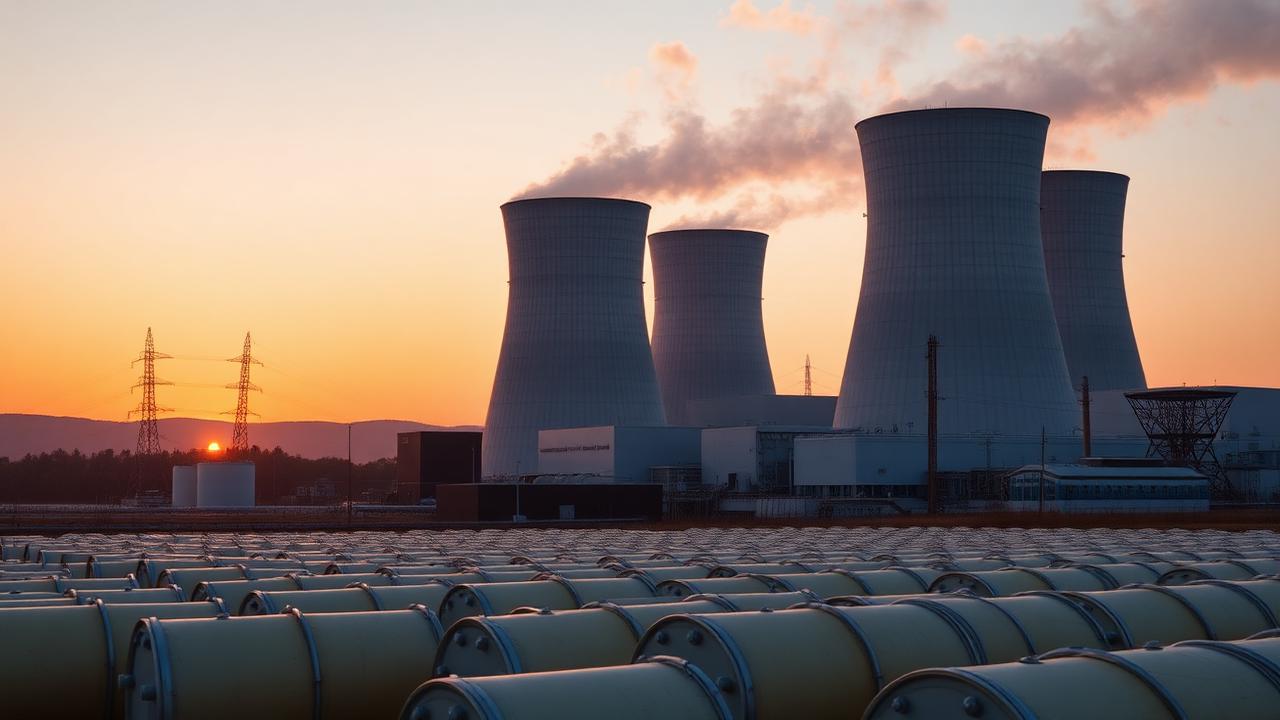
Reactor servicing revenue is contractual and recurring, tied to the installed base of operating reactors rather than to the spot or long-term uranium price. Utilities operating a nuclear reactor need ongoing fuel fabrication, maintenance and engineering services for the operating life of that reactor, which can span decades, and that need does not disappear when uranium prices fall. That dampens the earnings volatility that historically defined Cameco as a pure-play miner, whose results swung with a commodity price driven by a relatively small and illiquid global uranium market. A services-heavy earnings mix supports a steadier valuation approach, closer to how an investor would think about an industrial services company than a mining company, even though the mining segment remains a large part of the overall business.
What it costs
The stake in Westinghouse was funded with a combination of debt and equity, which means the integration was not free and left the balance sheet more levered than the standalone mining business would otherwise be. Westinghouse's earnings are reported through equity accounting rather than full consolidation, which makes the contribution to Cameco's own income statement harder to read at a glance; a headline earnings number can move for reasons that have nothing to do with the mining segment's performance, and vice versa. Investors now effectively need to model two quite different businesses separately, using different assumptions for each, and then reconcile them through an equity-accounting adjustment that is less transparent than a straightforward consolidated segment report would be.
Balance sheet and financing considerations
Any acquisition funded partly with debt introduces a variable that a pure commodity investor did not previously have to consider: interest expense and covenant sensitivity that exist independent of the uranium price cycle. In a period of higher uranium prices, the mining segment's cash flow comfortably services that debt and the leverage looks like a sensible use of a strong balance sheet. In a period of weaker uranium prices, the same debt load becomes a more material consideration, because the servicing segment's earnings, while more stable, are not typically large enough on their own to fully offset a prolonged downturn in mining profitability. The integration reduces overall volatility but does not eliminate the underlying cyclicality of the largest segment.
The upside case
New reactor construction and life-extension programs for existing reactors benefit both segments simultaneously: new builds eventually need fuel supplied by the mining and conversion business, and every operating reactor, new or extended, needs the services Westinghouse provides for as long as it runs. If the nuclear build cycle materialises at the pace that current policy commitments in multiple countries imply, integration allows Cameco to capture value at multiple points in the fuel cycle rather than at the single point of mine-mouth uranium sales, which is the central thesis behind the acquisition.
Reading the disclosures
Because the two businesses are reported differently, an investor comparing Cameco to a pure uranium miner needs to separate the segments explicitly rather than relying on a single blended multiple. The uranium mining and conversion segments can reasonably be benchmarked against other producers, while the equity-accounted Westinghouse contribution needs to be assessed against services and engineering comparables, with an understanding that the underlying detail available on Westinghouse's own operations is less granular than what a fully consolidated segment would provide.
What to watch
Track segment-level disclosure on uranium production, conversion and fabrication volumes separately from the equity-accounted Westinghouse contribution; the trend in net debt and interest coverage as the combined entity services acquisition-related financing; the order backlog and contracted revenue disclosed for reactor servicing; and the pace of announced new reactor construction and life-extension approvals globally, which is the leading indicator for demand across both segments of the combined business.
Weiterlesen
Also in English: Cameco and Westinghouse: The Vertical Integration Bet
 EconomyVier in Kanada notierte Unternehmen meldeten diese Woche Staatsgeld, und keiner der Beträge war BargeldZwischen dem 15. und dem 18. September 2026 meldeten Conifex Timber, Global Atomic, First Phosphate und Bitterroot Resources jeweils, dass eine Regierung Geld hinter sie gestellt hat: bis zu C$30 Millionen, US$414.2 Millionen, US$212.5 Millionen und bis zu US$5.22 Millionen. Vier Meldungen, vier Instrumente, und keines davon ist eine Überweisung. Was ein Darlehensvertrag, eine bedingte Zusage, eine Exportkredit-Unterstützungserklärung und eine Kostenteilungszusage jeweils verpflichten, und was zutreffen muss, bevor das Geld ankommt.Marc Belzile · 19. September 2026 · 10 min
 marketsConifex hat ein Bundesdarlehen von bis zu C$30 Millionen und eine Marktkapitalisierung von C$5.1 MillionenConifex Timber Inc. (TSX: CFF) teilte am 18. September 2026 mit, ein Large Enterprise Tariff Loan von bis zu C$30 Millionen der kanadischen Bundesregierung erhalten zu haben, mit siebenjähriger Laufzeit und besichert durch nahezu das gesamte Vermögen. Die Aktie schloss bei C$0.125, ein Plus von 38.9 Prozent. Zum 30. Juni 2026 standen C$1.3 Millionen freier Liquidität C$101.8 Millionen Schulden und ein Hinweis auf die Fortführungsprämisse gegenüber.Marc Belzile · 18. September 2026 · 6 min
 Mining and ResourcesFür Homeland Nickel läuft die Frist der Forstbehörde, doch die Bohrgenehmigung steht noch ausHomeland Nickel Inc. (TSXV: SHL) teilte am 17. September 2026 mit, der United States Forest Service habe seinen Betriebsplan für ein Sonic-Bohrprogramm in Red Flat, Oregon, angenommen, und die Umwelt- und Kulturgüterprüfung sei weit fortgeschritten, einschließlich abgeschlossener Feldarbeiten. Das Unternehmen hofft, im Oktober zu bohren. Dieselbe Mitteilung wurde am selben Tag erneut versandt, weil ihre Offenlegung zur bezahlten Bewerbung ein Videointerview mit dem Vorstandschef eines anderen Unternehmens beschrieb.Daniel Okoye · 18. September 2026 · 8 min
Dieser Geschichte folgen
CCO folgen – der nächste Maple-Beitrag zu diesem Unternehmen, dazu der Maple Morning Debrief vor Handelsbeginn.
Folgen und fragen
Mehr von unserer Berichterstattung zu den kanadischen Märkten in Google Top Stories.
Offenlegung
Information only. Not investment advice. The Maple Markets does not hold positions in securities discussed. Lesen Sie den finanziellen Haftungsausschluss.
Quellen und Verweise (2)
Diese Analyse zitieren
Bitte The Maple Markets nennen und auf die Originalseite verlinken.
Marc Belzile (15. Juni 2026). Cameco and Westinghouse: The Vertical Integration Bet. The Maple Markets. https://themaplemarkets.ca/de/newsroom/cameco-and-westinghouse-the-vertical-integration-bethttps://themaplemarkets.ca/de/newsroom/cameco-and-westinghouse-the-vertical-integration-bet