
Banyan Gold Joins the GDXJ With 8.6 Million Ounces and No Economic Study of Them
Index inclusion buys a shareholder base rather than a mine, and the AurMac resource behind Banyan's C$847 million valuation is still mostly in the lowest confidence category.
Banyan Gold Corp. (TSXV: BYN) said on 14 September 2026 that it joins the index behind the VanEck Junior Gold Miners ETF on 21 September. Its AurMac project in the Yukon holds 3.639 million indicated ounces and 4.985 million inferred ounces of gold. There is no preliminary economic assessment yet. At Tuesday's close the market valued the company at about C$98 for every ounce in the ground, or C$233 for each indicated ounce.
By Élise Galarneau6 min read

AurMac indicated resource
3.639 million ounces gold
167.3 million tonnes at 0.68 g/t, effective 15 May 2026, technical report filed 26 June 2026.
AurMac inferred resource
4.985 million ounces gold
267.2 million tonnes at 0.58 g/t, same effective date; inferred ounces cannot be converted to reserves.
Market value per ounce
about C$98, or about C$233 on indicated ounces only
C$847.29 million market value at the 15 September 2026 close, TSX Venture Exchange data (15-minute delayed) read after the close.
Cash
C$57.44 million
against C$33.0 million of total liabilities at 30 June 2026.
Index inclusion
effective before the open on 21 September 2026
MVIS Global Junior Gold Miners Index, priced off the 18 September 2026 close, per the company's release of 14 September 2026.
An index fund does not read a resource statement. It buys what the index tells it to buy.
Banyan Gold Corp. (TSXV: BYN) announced on 14 September 2026 that it is joining one. The company will be added to the MVIS Global Junior Gold Miners Index. That index is what the VanEck Junior Gold Miners ETF, ticker GDXJ, tracks.
The change takes effect before the market opens on Monday 21 September 2026. It is based on closing prices from Friday 18 September 2026. Tara Christie, president and chief executive, called the inclusion "a significant milestone for Banyan".
She is right that it is a milestone. It is a milestone about size and liquidity, not about geology.
What an index addition actually does
A tracking fund has to hold whatever its benchmark holds. So a new index member gets bought mechanically. The purchase happens because of a rule. It is not a judgement about drill results.
The effect on the company is real. A new shareholder base arrives. Trading volume usually rises. Analyst coverage often follows, because more funds now have a reason to care.
There is a second effect that matters more for a junior. Index membership is a liquidity test. A company has to be large enough and traded enough to qualify. Passing that test tells the market something about scale.
None of it changes a gram of rock. The deposit is the same on 21 September as it was on 13 September. What changed is who owns the shares.
Two categories, and only one carries much weight
Banyan's flagship is the AurMac project in central Yukon. The current mineral resource estimate has an effective date of 15 May 2026. The company filed the supporting technical report on 26 June 2026.
The estimate holds 167.3 million tonnes at 0.68 grams of gold per tonne in the indicated category. That is 3.639 million ounces. It holds a further 267.2 million tonnes at 0.58 grams per tonne in the inferred category. That is 4.985 million ounces.
There is no measured category at all.
Those words are not decoration. They are confidence levels, set by Canadian securities rules. Indicated means enough drilling to plan a mine around, with stated assumptions. Inferred means the geology is reasonably assumed but not sampled closely enough to rely on.
The rule that matters follows from that. Inferred ounces cannot be converted into mineral reserves. They cannot carry an economic study on their own either.
So 4.985 of Banyan's 8.624 million ounces sit in the weaker category. That is 58 per cent of the total. It is normal for a deposit at this stage. It is also the most important line in the resource table.
The same ounces are worth C$98 or C$233, depending on the category
Banyan closed at C$1.90 on 15 September 2026, down 5.9 per cent. Volume was 1.64 million shares against a 30-day average of 681,857, or 2.41 times normal. That is TSX Venture Exchange data, 15-minute delayed, read after the close. The company had 445.94 million shares outstanding and a market value of C$847.29 million.
Divide that value by the ounces and two very different numbers appear.
All 8.624 million ounces gives about C$98 an ounce. The 3.639 million indicated ounces alone give about C$233 an ounce. Both figures use the same market value and the same 15 May 2026 resource. Only the denominator changes.
The company is well funded for the next step. It held C$57.44 million in cash at 30 June 2026. Total liabilities were C$33.0 million. Total assets were C$165.96 million. That is enough money to pay for a study and keep drilling.
A Yukon comparison, and what it is worth
Snowline Gold Corp. (TSX: SGD) is the closest fair comparison available. It is a Yukon gold company at resource stage, and it was also added to gold mining indices this month.
| Banyan Gold, AurMac | Snowline Gold, Valley | |
|---|---|---|
| Higher confidence ounces | 3.639 Moz indicated at 0.68 g/t | 7.94 Moz measured and indicated at 1.21 g/t |
| Inferred ounces | 4.985 Moz at 0.58 g/t | 0.89 Moz at 0.62 g/t |
| Resource effective date | 15 May 2026 | 15 May 2025 |
| Economic study | none published | PEA filed 23 June 2025 |
| Market value | C$847.29 million | C$2.96 billion |
| Per higher confidence ounce | about C$233 | about C$373 |
The limits of that table should be stated with it. These are different deposits with different rock and different metallurgy. The resource dates are a year apart. Snowline's preliminary economic assessment used a gold price of US$2,150 an ounce, which was a 2025 assumption. A preliminary economic assessment is the first study that puts costs and revenue on a deposit, and it is explicitly preliminary.
What the table does show is where the gap comes from. Snowline's higher confidence ounces are nearly twice the grade of Banyan's. Roughly 90 per cent of Snowline's ounces sit in measured and indicated; about 42 per cent of Banyan's do. And Snowline has published economics. Its study gave an after-tax net present value of C$3.37 billion at a five per cent discount rate. The internal rate of return was 25 per cent. Initial capital was C$1.7 billion over a twenty year mine life.
Banyan has none of that yet. It engaged consultants on 7 July 2026 to advance AurMac toward a preliminary economic assessment. That work is under way. No results have been published.
A per ounce comparison hides the grade difference, and grade is where mining costs live. An ounce at 1.21 grams per tonne and an ounce at 0.68 grams per tonne cost different amounts to dig up. Lower grade means more tonnes moved, crushed and processed for the same metal. Whether that arithmetic works at AurMac is exactly what a preliminary economic assessment is for.
Scale can offset grade. AurMac's indicated tonnage is 167.3 million tonnes. Bulk tonnage operations with good strip ratios do make money well under a gram. Several Canadian open pit mines run there today. The point is not that 0.68 grams is too low. The point is that nobody has published the numbers that would settle it.
The German line exists and sets no price
Banyan's shares carry a Frankfurt listing under the symbol BAJ, with WKN A1T64A and ISIN CA06683K1066, per Deutsche Börse. The company's own release names only the TSX Venture Exchange and the OTCQB. The Deutsche Börse page shows no last price for the German line.
That is the practical fact for anyone holding it in Europe. The security exists there. The price is made in Toronto.
Eight and a half million ounces, with no number for what they cost
The proven part is substantial and should not be understated. Banyan has 8.624 million ounces of gold in a current, filed resource estimate in a stable jurisdiction. It has C$57.44 million of cash. It has drilled high grade intervals at Powerline this year. One of them was 13.03 grams per tonne over 14.2 metres, reported on 17 August 2026. Index funds will buy it next week whatever anyone thinks.
The unproven part is the economics. No study has said what it costs to mine 0.68 gram rock in the Yukon. None has said what the result is worth after tax. Until one does, C$847 million is a price set by ounces, jurisdiction and gold sentiment.
Eight and a half million ounces is a large number. The study that turns it into a mine plan has not been written yet.
Transparency note. This is an independent due-diligence analysis and editorial opinion piece produced by The Maple Markets editorial desk. It is not sponsored, promoted or commissioned, and no compensation of any kind has been received from Banyan Gold Corp. (TSXV: BYN), Snowline Gold Corp. (TSX: SGD) or any party acting on their behalf. The analysis is based on public disclosure available as of the publish date; every figure is attributed to its primary source. The Maple Markets and its authors may hold positions in securities mentioned; nothing here is a recommendation to buy, sell or hold any security, and readers should not treat it as investment advice. Past disclosure does not guarantee future results. Policies: Editorial Standards · Financial Disclaimer.
Read next
Auch auf Deutsch: Banyan Gold kommt in den GDXJ, mit 8.6 Millionen Unzen und ohne wirtschaftliche Studie dazu
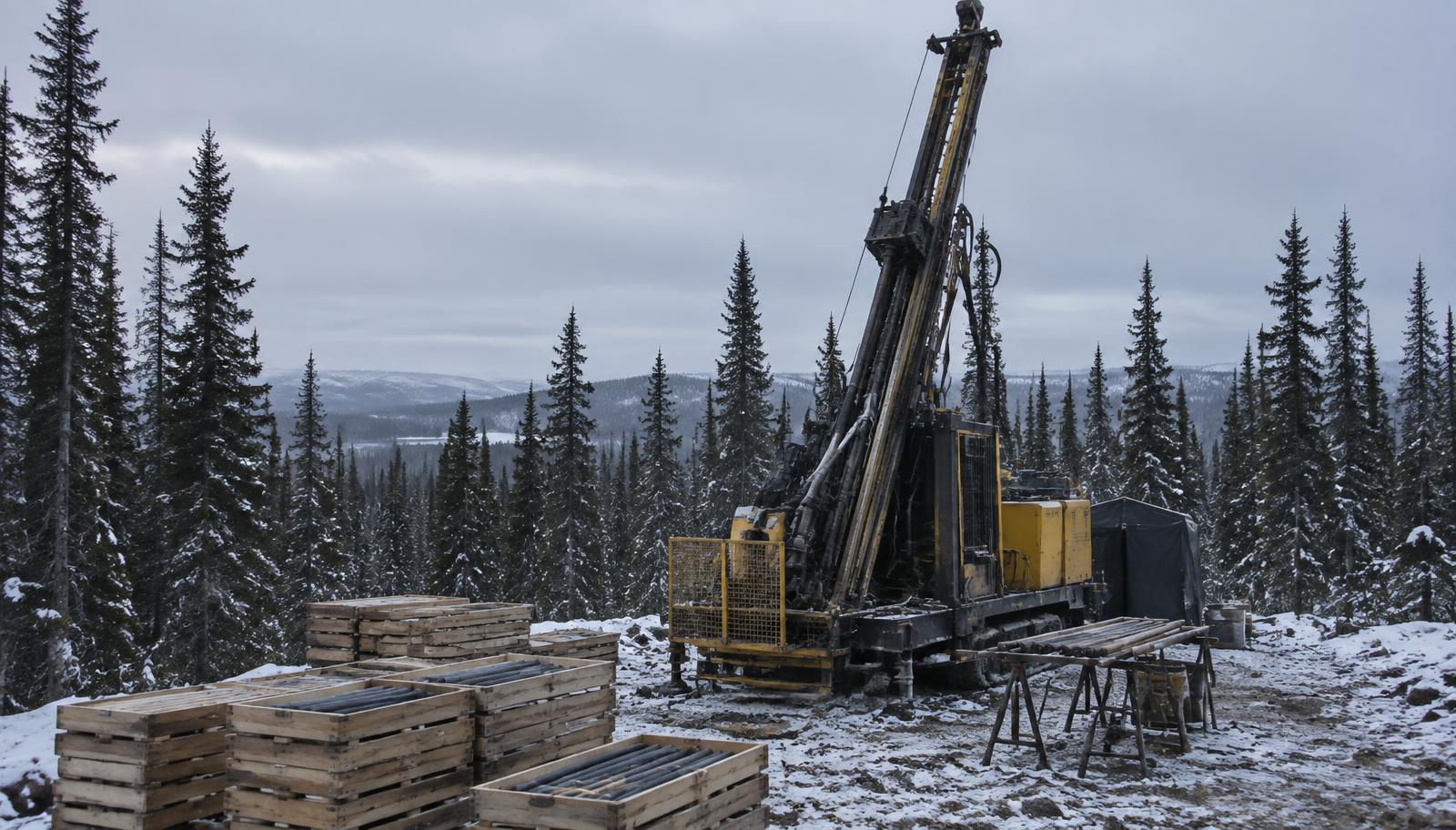 Mining and ResourcesA Kilometre From Its Nearest Hole, FireFox Gold Drilled 21 Metres of 4.13 g/t in LaplandFireFox Gold Corp. (TSXV: FFOX) reported on 16 September 2026 that hole 26MJ032 cut 21.0 metres averaging 4.13 g/t gold more than 650 metres from any previous drilling at Mustajarvi in Finnish Lapland. The shares closed at C$0.63, up 26.0 per cent on thirteen times average volume. Two earlier holes this month carried higher grades and moved nothing. What changed was the distance, and a paid listing that ran the same day.Priya Sandhu · September 17, 2026 · 7 min
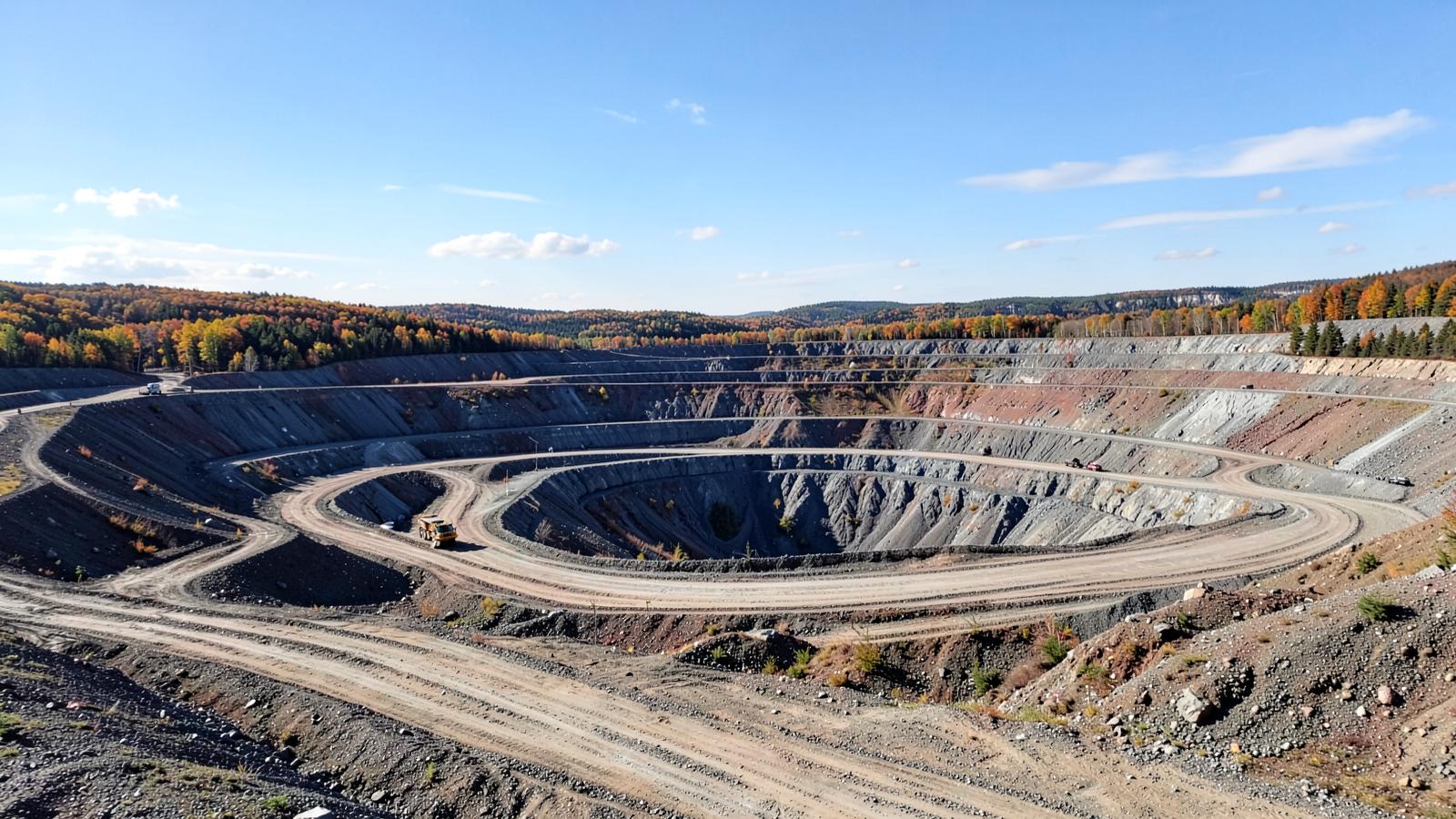 Mining and ResourcesThe quote is not the margin: what a copper and gold week is worth to a Canadian mine in looniesCopper traded at US$6.58 per pound on September 6, 2026, gold near US$4,331 per ounce on September 1, and the Bank of Canada's metals and minerals index rose 4.2 per cent in August. None of those is a Canadian producer's margin. This piece walks the arithmetic from the US-dollar quote through the exchange rate to the Canadian-dollar cash margin, shows what a five per cent stronger loonie does to it, and explains why a pre-revenue explorer reads the same week as a financing window.Daniel Okoye · September 7, 2026 · 7 min
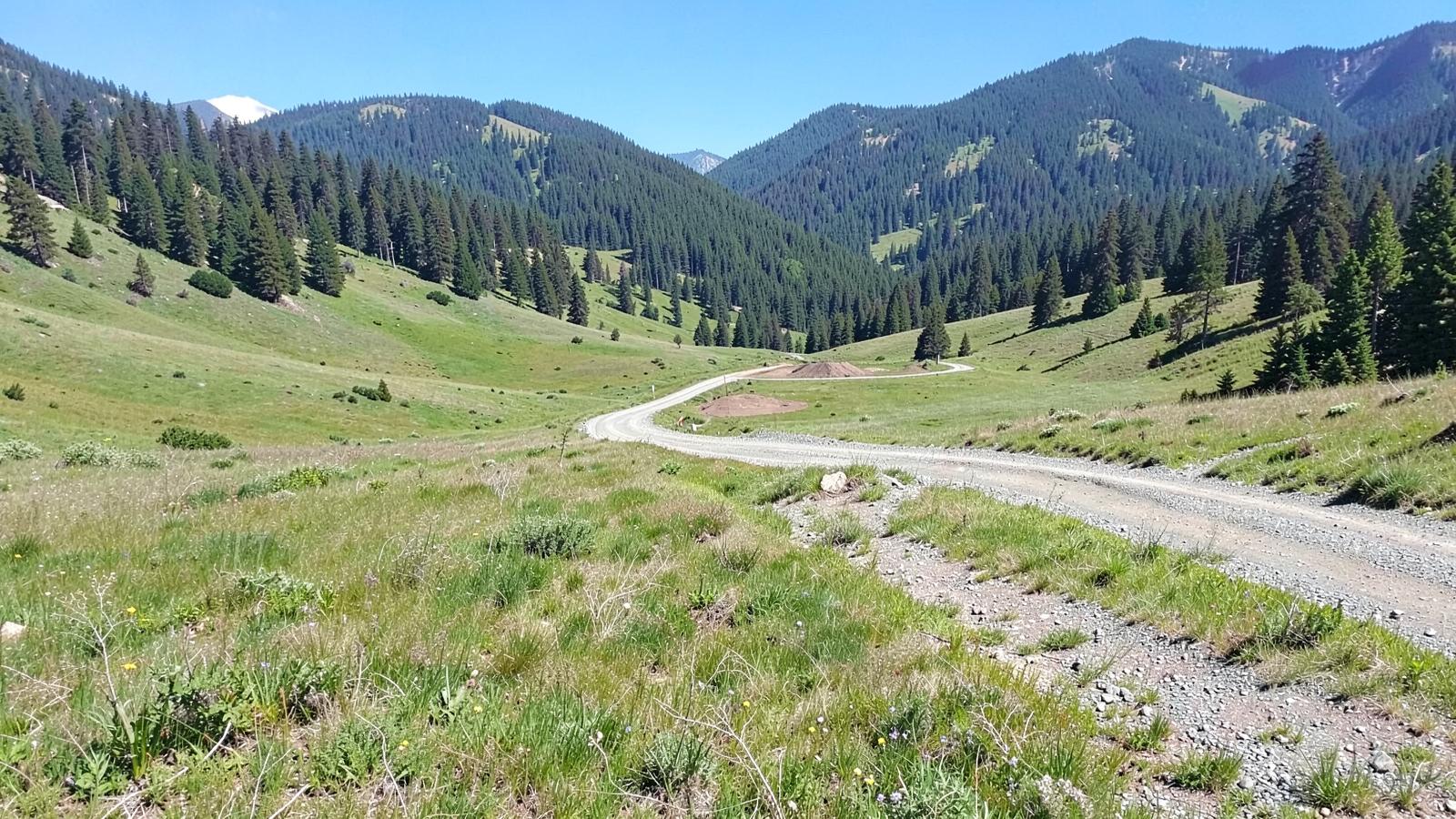 Mining and ResourcesWorld Copper (TSXV: WCU) Closed at C$0.175. The Financing Behind the Move Is Priced at C$0.075World Copper Ltd. (TSXV: WCU) closed at C$0.175 on September 4, 2026, up 84.21 per cent on 16 times its average volume, after a morning release named two Westhaven Gold co-founders as executive chair and chief executive and announced up to 13,333,333 units at C$0.075 for up to C$1,000,000. The stock finished at more than twice the unit price of a financing that has not closed and would double the share count. Fully raised, the money is less than the C$1,150,000 the Brassie Creek option still requires, and the release does not say how many units the people who set the price will take.Daniel Okoye · September 7, 2026 · 8 min
Follow this story
Follow BYN.V — the next Maple piece on this company, plus the Maple Morning Debrief before the open.
Follow and ask
Get more of our Canadian market coverage in Google Top Stories.
Opinion
This article expresses the author's personal views, is separate from news reporting and is not investment advice.
Disclosure
**Transparency note.** This is an independent due-diligence analysis and editorial opinion piece produced by The Maple Markets editorial desk. It is not sponsored, promoted or commissioned, and no compensation of any kind has been received from Banyan Gold Corp. (TSXV: BYN), Snowline Gold Corp. (TSX: SGD) or any party acting on their behalf. The analysis is based on public disclosure available as of the publish date; every figure is attributed to its primary source. The Maple Markets and its authors may hold positions in securities mentioned; nothing here is a recommendation to buy, sell or hold any security, and readers should not treat it as investment advice. Past disclosure does not guarantee future results. Policies: [Editorial Standards](https://themaplemarkets.ca/en/policies/editorial-standards) · [Financial Disclaimer](https://themaplemarkets.ca/en/policies/financial-disclaimer). See the Financial Disclaimer.
Sources and references (6)
- Banyan Gold to be Added to the GDXJ, the VanEck Junior Gold Miners ETF (Banyan Gold Corp., 14 September 2026)
- Banyan Gold Files Technical Report for AurMac Project, Yukon, Canada (Banyan Gold Corp., 26 June 2026)
- Banyan Gold Advances AurMac Toward a PEA with Engagement of Leading Mining Consultants (Banyan Gold Corp., 7 July 2026)
- Banyan Gold Intersects 13.03 g/t Au over 14.2m at Powerline North, AurMac, Yukon, Canada (Banyan Gold Corp., 17 August 2026)
- Snowline Gold Announces Results of Preliminary Economic Assessment for its Valley Gold Deposit, Rogue Project, Yukon (Snowline Gold Corp., 23 June 2025)
- Banyan Gold Corp. security data, Deutsche Börse (Frankfurt symbol BAJ, WKN A1T64A, ISIN CA06683K1066)
Cite this analysis
Please attribute The Maple Markets and link to the original page.
Élise Galarneau (September 16, 2026). Banyan Gold Joins the GDXJ With 8.6 Million Ounces and No Economic Study of Them. The Maple Markets. https://themaplemarkets.ca/en/newsroom/banyan-gold-a-c-847-million-explorer-against-its-peers-banyan-goldhttps://themaplemarkets.ca/en/newsroom/banyan-gold-a-c-847-million-explorer-against-its-peers-banyan-gold