
A Green Bond Is Still a Bond: What Canada's Sovereign Program Actually Changes
The label can change the eligible use of capital. It does not change the mathematics of duration.
Canada raised $2 billion in a new ten-year green bond in February 2026. The green framework governs use of proceeds and reporting. It does not alter interest-rate risk.
By Daniel Okoye2 min read

Canada's sovereign green-bond program illustrates a useful fixed-income principle: the label can change the eligible use of capital. It does not change the mathematics of a bond.
In February 2026, the Government of Canada completed its sixth Canadian-dollar-denominated green-bond issuance, raising $2 billion through a new ten-year offering. Canada says the program is intended to mobilize capital for climate and environmental objectives while adding liquid, highly rated green assets to the domestic sustainable-finance market. The federal program dates to March 2022.
That creates two analytical layers, and they should not be blended.
Layer one: credit and duration
A sovereign green bond remains an obligation of the issuer. Its market value stays sensitive to changes in interest rates, inflation expectations, term premium and demand for Government of Canada duration.
If ten-year yields rise substantially, a ten-year green bond can decline in market value exactly as a conventional ten-year government bond can. Green does not mean low volatility, and it does not mean short duration.
Layer two: use-of-proceeds integrity
For an investor specifically seeking environmental allocation, the additional questions are what expenditures qualify under the framework, how proceeds are allocated, and what reporting accompanies those allocations.
That is where the green label creates a genuine analytical difference. Canada publishes a Green Bond Framework together with periodic allocation and impact reporting, and states that the program is intended both to finance eligible environmental expenditures and to deepen the Canadian sustainable-finance market.
Institutional investors can therefore evaluate two distinct things at once: the financial instrument, and the environmental allocation framework. Confusing them produces poor analysis.
A government can operate an entirely credible green framework and the bond can still deliver a negative mark-to-market return if rates rise. Conversely, a bond can generate a strong financial return because yields fell, without that proving every investor agrees with the taxonomy used to classify eligible spending.
The order of analysis
For a green bond, the sequence should be unchanged from any other sovereign issue, with one layer appended:
- Credit.
- Duration.
- Price and yield relative to the conventional curve.
- Liquidity.
- Then eligibility, allocation and impact reporting.
Whether a green bond prices through the conventional curve — the so-called greenium — is an empirical question to be measured issue by issue, not assumed.
This matters more as Canada continues to treat sustainable issuance as part of its broader debt-management program, having committed to regular green-bond issuance and discussed development of a wider sustainable-bond framework.
A green bond is not a replacement for conventional bond analysis. It is conventional bond analysis plus a mandate-specific layer. That makes the product more interesting. Not magically safer.
Read next
 EconomyWhy Bank of Canada Cuts Do Not Guarantee Lower Long-Term Bond YieldsThe Bank of Canada can cut while the ten-year yield holds or rises. That is not a contradiction — it is what happens when inflation expectations, term premium and sovereign supply price duration separately.Daniel Okoye · September 1, 2026 · 7 min
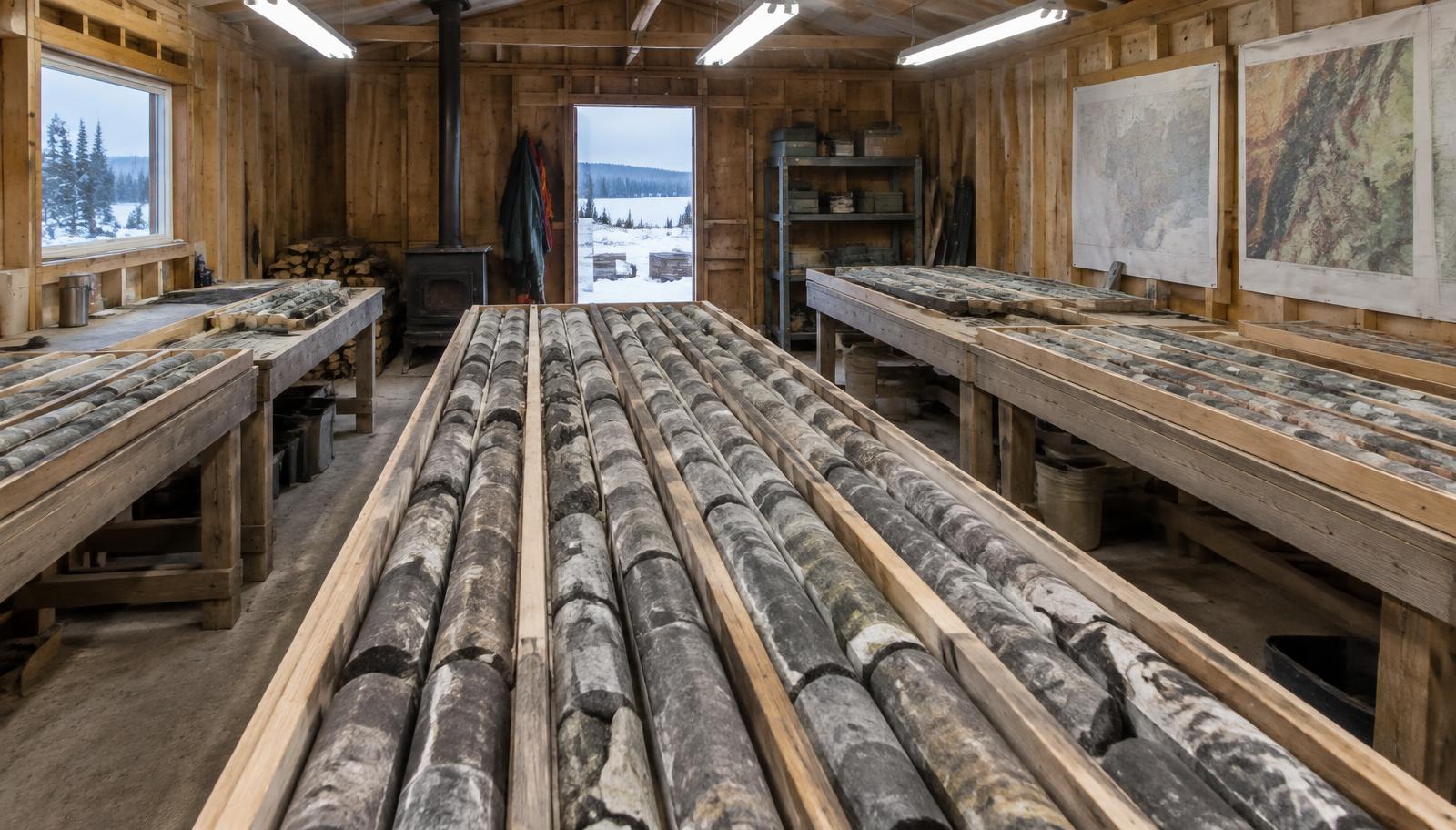 EconomyFour Things a Canadian Miner Can Say About a Hole in the Ground, and What Each Is WorthA Canadian explorer with no laboratory numbers rose 93.8 per cent on September 9, 2026. A company that published laboratory numbers fell 35 per cent the next day. Canadian mining disclosure runs on four separate stages of proof, and most of the confusion in a drill-results week comes from treating them as one.Priya Sandhu · September 13, 2026 · 9 min
 EconomyFour of the Worst Falls on the Toronto Exchange This Week Were Funds, and Three Held One StockOn September 9, 2026 four of the ten largest declines on the Toronto exchange were exchange-traded funds. Three of them hold nothing but Shopify, and they fell 27.83, 14.97 and 14.90 per cent respectively on the same day, against the same company. A fourth, a target-maturity bond fund, had printed a 38.59 per cent gain five sessions earlier on 2,000 units and gave all of it back. Here is what each of those numbers was actually measuring, and where the manager publishes the figure that is not a quote.Marc Belzile · September 12, 2026 · 6 min
Get the Maple Morning Debrief
Yesterday's close, overnight, and what to watch before the open — in your inbox by 6 a.m. ET. Free, and one click to unsubscribe.
Follow and ask
Get more of our Canadian market coverage in Google Top Stories.
Disclosure
As of the publication date, the author, editor, publisher, their immediate households and affiliated entities do not own positions in the securities discussed. The Maple Markets received no compensation from any company, its officers, investor-relations providers or financiers in connection with this article. Figures are drawn from public filings and official statistical releases as of the date shown and are not restated for later disclosure. Worked examples labelled illustrative use assumed inputs to show a method, not a forecast. This article is informational only and is not investment, legal, accounting or tax advice. See the Financial Disclaimer.
Sources and references (3)
- Department of Finance Canada — February 2026 green bond issuance and pricing
- Government of Canada — Green Bond Framework
- Government of Canada — green bond allocation and impact reporting
Cite this analysis
Please attribute The Maple Markets and link to the original page.
Daniel Okoye (September 3, 2026). A Green Bond Is Still a Bond: What Canada's Sovereign Program Actually Changes. The Maple Markets. https://themaplemarkets.ca/en/newsroom/a-green-bond-is-still-a-bond-canada-sovereign-programhttps://themaplemarkets.ca/en/newsroom/a-green-bond-is-still-a-bond-canada-sovereign-program