
First Phosphate Has Two Binding Offtakes and Ottawa's Money; the Economic Study Is Next
Saguenay phosphate is drawing policy attention on both sides of the Atlantic, and underneath it sit two signed supply agreements, C$21.54 million of non-repayable federal funding and a resource that keeps growing.
First Phosphate Corp. (CSE: PHOS, FSE: KD0) has signed two definitive offtake agreements covering 200,000 tonnes a year of phosphate concentrate and 60,000 tonnes a year of phosphoric acid, both confirmed independently in a Government of Canada backgrounder, and has C$21.54 million of non-repayable federal funding under contract. The indicated resource at Bégin-Lamarche has grown nearly fivefold since 2024. What is still missing is the economic study that would price the mine, and neither buyer is named.
By Daniel Okoye9 min read
Measured and indicated resource, Bégin-Lamarche
204.7 Mt at 6.05% P₂O₅
NI 43-101 technical report filed 24 Aug 2026, effective May 1, 2026; no PEA, pre-feasibility or feasibility study on this deposit
Definitive offtake volumes
200,000 t/yr concentrate and 60,000 t/yr phosphoric acid
signed 5 Jan 2026 and 16 Dec 2024; both counterparties unnamed; confirmed in the PMO backgrounder of 17 Jun 2026
Cash and working capital
C$20.19M and C$21.67M
audited statements for the year ended 28 Feb 2026; total liabilities C$3.89M
Non-repayable federal contributions signed
C$21.54M
Natural Resources Canada, C$16.7M Mar 2026 plus C$4.84M 5 Aug 2026
Close, 14 Sep 2026
C$2.06, down 3.7% on 338,151 shares
CSE, QuoteMedia data read after the close, roughly 0.39x the 30-day average; market value about C$389.6M; also FSE: KD0, WKN A3DQCH, ISIN CA33611D1033
First Phosphate Corp., a Saguenay-Lac-Saint-Jean developer listed on the Canadian Securities Exchange as PHOS and in Frankfurt as KD0, has something most pre-production juniors never obtain: two signed, definitive agreements to sell what it hopes to dig up.
That is not a small thing, and it is not what the company is mostly being discussed for. The discussion in September has been about policy, about a federal investment summit in Toronto and about whether Canadian phosphate is heading into European battery supply chains. The filings tell a tighter and more useful story.
The two agreements that already exist
On June 17, 2026 the company disclosed, alongside a Government of Canada announcement from the G7 Leaders' Summit, that it holds two offtake agreements. An offtake agreement is a commitment by a buyer to purchase a stated quantity of a product over a stated period, usually signed years before the product exists, and it is the instrument lenders look for first.
The first covers a minimum of 200,000 tonnes a year of phosphate concentrate from the Bégin-Lamarche deposit and was signed on January 5, 2026. The second covers a minimum of 60,000 tonnes a year of phosphoric acid from a proposed plant at Port Saguenay and was signed on December 16, 2024. The Prime Minister's Office backgrounder of June 17, 2026 describes both, independently of the company, as a "definitive offtake agreement". Definitive, in this usage, means binding rather than a letter of intent.
Here is the limit on what that proves. Neither buyer is named, in the company's disclosure or in the government's. Without a counterparty you cannot assess whether the purchaser could pay in a weak phosphate market, whether it has the working capital to prepay, or what happens if it walks. A binding contract with an unidentified party is worth exactly what the party is worth, and that figure is unavailable.
The one payment attached to either agreement is smaller and softer than the tonnages suggest. On January 6, 2026 First Phosphate reported a lump-sum prepayment equivalent to US$530,000 from the concentrate purchaser. The company described the amendment carrying it as being "in the form of letter of intent", and the release states that if the company decides not to advance to a feasibility study, or reaches a negative production decision, the prepayment is refundable to the purchaser. It is a deposit that can be handed back.
A resource is not a mine plan, and Bégin-Lamarche does not have one
First Phosphate filed an updated NI 43-101 technical report for Bégin-Lamarche on August 24, 2026, with an effective date of May 1, 2026. At a 2.5 per cent cut-off, it reports 6.2 million tonnes measured at 7.70 per cent P₂O₅ and 198.5 million tonnes indicated at 6.00 per cent, for 204.7 million tonnes measured and indicated at an average 6.05 per cent P₂O₅, plus 89.5 million tonnes inferred at 6.16 per cent. The independent qualified person is Antoine Yassa, P.Geo., of P&E Mining Consultants.
Those categories describe confidence, not value. Measured means enough drilling to be confident of tonnage and grade in detail; indicated is a step less certain; inferred is an estimate the regulator will not allow to be used in economic studies at all. The company reports a 378 per cent increase in indicated tonnes over its initial September 2024 estimate of 41.5 million tonnes at 6.49 per cent P₂O₅, which is a nearly fivefold gain and real progress in the drilling.
What sits above a resource is an economic study, and Bégin-Lamarche has none. There is no preliminary economic assessment, no pre-feasibility study and no feasibility study on the deposit that supplies the 200,000-tonne agreement. There are no mineral reserves anywhere in the company's portfolio; a reserve is the portion of a resource that a completed study has shown can be mined profitably, and no such study exists here. The only economic study First Phosphate has published is a July 2023 preliminary economic assessment on Lac à l'Orignal, a separate and much smaller deposit, built on a resource estimate dated November 2022.
So the sequence is unusual. The sales contracts are ahead of the engineering. The company's own twelve-month budget, filed in June 2026, sets aside C$9.54 million for engineering, feasibility and permitting, which is the work that would close the gap.
Two documents in the same filing package disagree about going concern
The audited consolidated statements for the year ended February 28, 2026 show cash of C$20.19 million, working capital of C$21.67 million and total liabilities of C$3.89 million, against a net loss for the year of C$23.44 million and an accumulated deficit of C$53.02 million. There were 177,199,011 shares outstanding at year end and 187,981,190 by June 29, 2026.
Then the language diverges. Note 2 to those statements says that as of February 28, 2026 the company "has raised adequate financing that is sufficient to sustain operations for the next twelve months", and the auditor's report from Davidson & Company LLP, dated June 29, 2026, carries no material-uncertainty paragraph and identifies no key audit matters. The management's discussion and analysis filed the same day says the opposite: that the circumstances give rise to "a material uncertainty that may cast substantial doubt upon the Company's ability to continue as a going concern". The same MD&A projects resources sufficient to operate beyond mid-2027.
Both sentences cannot be the plain truth at once. The MD&A is the more cautious of the two and is the one an analyst should weight, but a company that has just moved to the Nasdaq Global Market and ceased to be a venture issuer, effective August 10, 2026, is now held to a higher continuous-disclosure standard, and an inconsistency of this kind is the sort of thing that gets asked about.
Interim statements for the quarter ended May 31, 2026 were not available from the company or from SEDAR+ when this was written, so the most recent audited balance sheet above is the reliable one; market data services show cash of roughly C$16 million as at that May quarter end, a figure from a secondary source and not from a filing.
The summit prospectus does not name the company
The policy layer deserves the same treatment as the filings, which means checking it.
Canada held its first Canada Investment Summit in Toronto on September 14 and 15, 2026, co-hosted with CPP Investments and PSP Investments, with a stated ambition of catalysing C$1 trillion of investment over five years. A prospectus was prepared for it. The Prime Minister's Office declined to publish that document, and press accounts describe it as 66 pages covering 167 projects across eight sectors, with mining the largest single group.
A copy of that prospectus is circulating publicly. Searched for the company, it does not name First Phosphate, and it does not name Bégin-Lamarche. Its single phosphate entry is a western Canadian fertilizer development using British Columbia phosphate rock, a different project belonging to a different company. Saguenay appears once, as a port and industrial zone.
Nano One Materials Inc. (TSX: NANO), the Vancouver company whose selection has been read on retail boards as a signal for First Phosphate, is named, for a lithium iron phosphate cathode plant in Quebec starting at 25,000 tonnes a year. Nano One's own announcement of September 13, 2026 says it was vetted and selected for inclusion in the prospectus. It does not describe itself as Canada's only eligible lithium iron phosphate process, and no source supports that claim.
The G7 assertion needs the same correction, in the company's favour and against the retail phrasing. The claim circulating is that Canada "brought" First Phosphate to the G7. What the PMO backgrounder of June 17, 2026 actually does is name First Phosphate four times among roughly twenty companies, within 69 partnerships worth C$19.2 billion under the Critical Minerals Resilience and Production Alliance: a letter of intent dated March 30, 2026 for a C$275 million guarantee from Denmark's export credit agency toward the mine, Italian export-credit and engineering letters of intent signed in early June 2026 toward the phosphoric acid plant, and the two offtakes.
That is a real and substantial mention. It is not a delegation, and the two letters of intent are, by the Danish agency's own wording, non-binding until borrower, guarantor and security are settled.
As for Europe, Wall Street Journal reporting on September 13, 2026 described Canada and the EU discussing freer movement of goods, services and workers in strategic supply chains including critical minerals. The verbs in that reporting are "exploring" and "discussing", the sourcing is unnamed officials, and a senior Canadian government source told CTV News that Canada is not seeking European Union membership in any capacity. Talks are not a treaty, and neither is an offtake.
The money that is committed, and the money that is not
The firmest external money is Canadian and it is already signed. Natural Resources Canada has contracted C$21.54 million of non-repayable contributions: C$16.7 million announced in March 2026 under the Global Partnerships Initiative, and C$4.84 million signed on August 5, 2026, split roughly C$3.07 million toward a 161-kilovolt transmission line study and C$1.77 million toward access-road work linking the deposit to regional rail and the Port of Saguenay. Non-repayable means it does not come back as debt or dilution.
Against that sits a capital requirement nobody has yet quantified for Bégin-Lamarche, because the study that would quantify it has not been done. The Lac à l'Orignal assessment from 2023 put initial capital at C$550 million for a smaller operation, which gives a sense of order without transferring to the larger deposit.
On September 14, 2026 the shares closed at C$2.06 on the CSE, down C$0.08 or 3.7 per cent, on 338,151 shares against a 30-day average near 873,500, a little over a third of normal turnover. Market value was about C$389.6 million on 189.1 million shares, per QuoteMedia data read after the close and not verified against filings. The policy conversation is loud and Monday's trading was thin, so the small decline came on roughly a third of normal turnover rather than on anything new in the filings.
The company's German line is FSE: KD0, WKN A3DQCH, ISIN CA33611D1033, per Deutsche Börse. The Nasdaq depositary receipt, ten common shares to one ADR, carries a different identifier, ISIN US33611D3017, and mixing the two is an easy error to make when comparing quotes across venues.
What is proven, and what comes next
My assessment is that First Phosphate has done the commercial and governmental groundwork better than almost any junior at its stage, and that the groundwork is ahead of the engineering. Two binding sales agreements, C$21.54 million of federal money that never has to be repaid, a Nasdaq listing, export-credit letters of intent from Denmark and Italy, and an indicated resource that has grown nearly fivefold in two years are the work of a company that executes. Registered holders rose from 1,301 in 2025 to 12,501 in 2026, which is a distribution achievement and tells you nothing about the deposit.
One document would tie all of it together: a study showing what Bégin-Lamarche costs to build, what it costs to run, and what it earns at a phosphate price somebody is willing to underwrite. C$9.54 million of the current twelve-month budget is pointed at exactly that work, and the company has the cash to pay for it without going back to the market first. Until it lands, the offtakes describe demand for a product whose cost of production is unproven, and the unnamed counterparties mean the quality of that demand cannot be fully weighed.
The contracts are real, and so is the money behind the groundwork. The study is the next thing due.
Transparency note. This is an independent due-diligence analysis and editorial opinion piece produced by The Maple Markets editorial desk. It is not sponsored, promoted or commissioned, and no compensation of any kind has been received from First Phosphate Corp. (CSE: PHOS), Nano One Materials Inc. (TSX: NANO) or any party acting on their behalf. The analysis is based on public disclosure available as of the publish date; every figure is attributed to its primary source. The Maple Markets and its authors may hold positions in securities mentioned; nothing here is a recommendation to buy, sell or hold any security, and readers should not treat it as investment advice. Past disclosure does not guarantee future results. Policies: Editorial Standards · Financial Disclaimer.
Read next
Auch auf Deutsch: First Phosphate hat zwei verbindliche Abnahmeverträge und Bundesmittel; es fehlt die Wirtschaftlichkeitsstudie
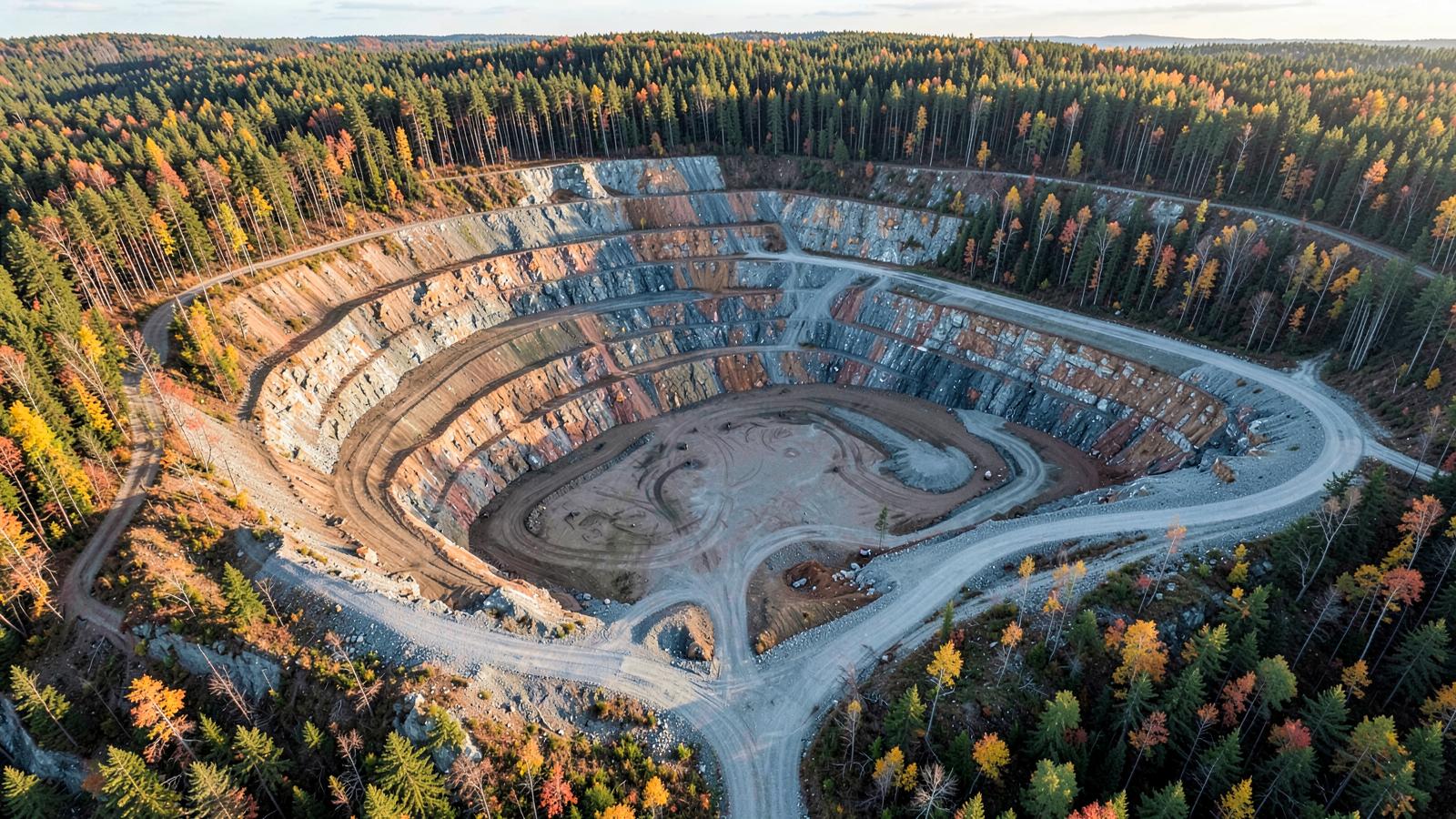 Mining and ResourcesFirst Phosphate (FSE: KD0) Trades on Three Kinds of Numbers, and Only One Describes the DepositFirst Phosphate Corp. (CSE: PHOS, FSE: KD0) told shareholders on September 1, 2026 that holders of record had risen 861 per cent since the 2025 meeting, three weeks after its ADRs began trading on Nasdaq and a week after it filed an updated NI 43-101 resource of 198.5 Mt indicated at 6.00 per cent P2O5. A September 2 flash report that cut the discount rates in its model was paid for by the company at US$1,500. Of the numbers in circulation, only the resource is a filed statement about the rock, and construction financing for Bégin-Lamarche has not been announced.Daniel Okoye · September 8, 2026 · 8 min
 Mining and ResourcesQIMC Buys the Picture: Seismic Contractors Engaged for 42 Kilometres at Bennett HillQuebec Innovative Materials Corp. (CSE: QIMC, FSE: 7FJ) engaged Echo Seismic and Strum Consulting on September 14, 2026 for 42 line-kilometres of 2D seismic across Bennett Hill and Apple River in Nova Scotia, the larger half of a 78-kilometre campaign and the biggest geophysical programme it has funded. It follows five drill holes that measured up to 30.0 per cent hydrogen at two centres about fifteen kilometres apart. The structural picture arrives this autumn; a flow test, the step that would settle deliverability, has still not been announced.Priya Sandhu · September 14, 2026 · 9 min
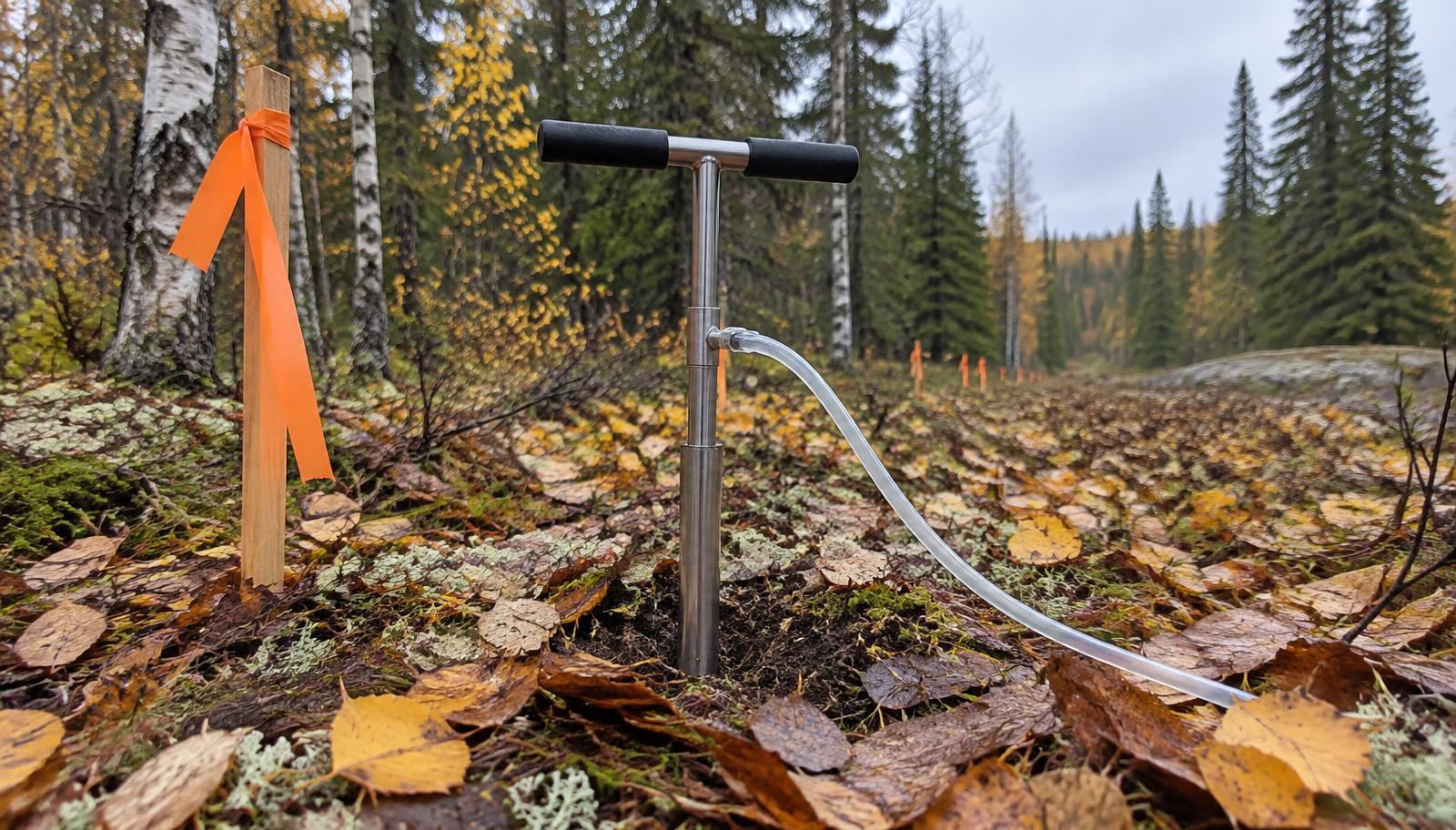 Mining and ResourcesQIMC Takes 823 New Soil-Gas Stations Into Ontario, the Fifth Step in a Method Built in PublicQuébec Innovative Materials Corp. (CSE: QIMC) launched an expanded 2026 natural hydrogen programme on the Ontario side of the Témiscamingue Graben on September 17, 2026: 823 new soil-gas stations at 100-metre spacing over about 80 line-kilometres, taking the Ontario database to roughly 1,733 stations, alongside more than 1,100 gravimetric stations and 78 line-kilometres of 2D seismic. The shares closed at C$0.59. The company's own disclosure says none of this measures flow.Priya Sandhu · September 17, 2026 · 7 min
Follow this story
Follow PHOS.CN — the next Maple piece on this company, plus the Maple Morning Debrief before the open.
Follow and ask
Get more of our Canadian market coverage in Google Top Stories.
Opinion
This article expresses the author's personal views, is separate from news reporting and is not investment advice.
Disclosure
**Transparency note.** This is an independent due-diligence analysis and editorial opinion piece produced by The Maple Markets editorial desk. It is not sponsored, promoted or commissioned, and no compensation of any kind has been received from First Phosphate Corp. (CSE: PHOS), Nano One Materials Inc. (TSX: NANO) or any party acting on their behalf. The analysis is based on public disclosure available as of the publish date; every figure is attributed to its primary source. The Maple Markets and its authors may hold positions in securities mentioned; nothing here is a recommendation to buy, sell or hold any security, and readers should not treat it as investment advice. Past disclosure does not guarantee future results. Policies: [Editorial Standards](https://themaplemarkets.ca/en/policies/editorial-standards) · [Financial Disclaimer](https://themaplemarkets.ca/en/policies/financial-disclaimer). See the Financial Disclaimer.
Sources and references (10)
- First Phosphate: G7 investment and offtake agreements, June 17, 2026
- Prime Minister's Office: backgrounder on G7 defence and critical minerals partnerships, June 17, 2026
- First Phosphate: NI 43-101 technical report filed for updated Bégin-Lamarche resource, August 24, 2026
- First Phosphate: audited consolidated financial statements, year ended February 28, 2026
- First Phosphate: management's discussion and analysis, year ended February 28, 2026
- First Phosphate: offtake prepayment of US$530,000, January 6, 2026
- First Phosphate: C$4.84 million in non-repayable federal contributions, August 5, 2026
- Government of Canada: Canada Investment Summit 2026
- Nano One Materials: selected for the inaugural Canada Investment Summit, September 13, 2026
- Deutsche Börse: First Phosphate Corp., WKN A3DQCH, ISIN CA33611D1033
Cite this analysis
Please attribute The Maple Markets and link to the original page.
Daniel Okoye (September 15, 2026). First Phosphate Has Two Binding Offtakes and Ottawa's Money; the Economic Study Is Next. The Maple Markets. https://themaplemarkets.ca/en/newsroom/first-phosphate-a-policy-narrative-is-not-an-offtake-testing-the-canadahttps://themaplemarkets.ca/en/newsroom/first-phosphate-a-policy-narrative-is-not-an-offtake-testing-the-canada