
Metalsource Corrects a Silver Hill Interval Upward to 103 g/t Silver Equivalent
A corrected release dated 25 November raises the grade of the full 17.28-metre interval in hole SH26-27, and the new figure agrees with the high-grade core reported inside it.
Metalsource Mining restated one row of its 24 November drill table: hole SH26-27 now grades 103 g/t silver equivalent over 17.28 metres, up from 32 g/t, with every other assay unchanged. The corrected figure fits the 3.60-metre core at 416 g/t inside it, and assays from 24 more holes at Silver Hill in North Carolina are pending ahead of the 14 December annual meeting.
By Élise Galarneau7 min read
SH26-27, corrected
17.28 m at 103 g/t AgEq
core length; was 32 g/t in the 24 November release; corrected release of 25 November 2026.
High-grade core
3.60 m at 416 g/t AgEq, including 0.67 m at 1,192 g/t
unchanged by the correction; release of 25 November 2026.
Holes awaiting assays
24 of 46 listed
collar table in the corrected release of 25 November 2026, SH26-45 among them.
Cash
C$5,096,172
at 30 June 2026, audited annual statements filed 28 October 2026; C$1,379,863.20 received from the Sprott warrant exercise reported 18 November.
Frankfurt listing
FSE: E9Z, WKN A4021B, ISIN CA59132M1086
Deutsche Börse listing page and company release boilerplate.
A southern hole at Silver Hill is a better hole than its first release said. Metalsource Mining Inc. corrected its drill table this week, and the long interval in that hole now carries about three times the grade first reported.
The corrected release, dated 25 November, gives hole SH26-27 a grade of 103 grams per tonne silver equivalent over 17.28 metres. The version of 24 November gave 32 g/t for the same stretch of core. The company's notice says the error sat in "the assay values reported for the broader 17.28-metre composite interval of SH26-27 in Table 1", that "all other reported assay results remain unchanged", and that the new release supersedes the old one. The two narrower intervals inside the hole, 3.60 metres at 416 g/t and 0.67 metres at 1,192 g/t silver equivalent, are the same in both versions.
One row changed, and every metal in it went up
The correction touches a single line of the table, and each metal in that line rose.
| SH26-27, 17.28 m | 24 November | 25 November (corrected) |
|---|---|---|
| Gold (g/t) | 0.08 | 0.49 |
| Silver (g/t) | 3.49 | 21.23 |
| Lead (%) | 0.58 | 1.07 |
| Zinc (%) | 1.07 | 2.18 |
| Copper (%) | 0.01 | 0.03 |
| Silver equivalent (g/t) | 32 | 103 |
A composite interval is an average. The laboratory assays short lengths of core, and the company weights those results by length to report one grade across a longer section. A mistake in that weighting, or in copying the result into the table, changes the average without changing any of the underlying assays. The release does not say which step went wrong. It does say the underlying sample results stand.
The corrected number is also the one the rest of the table supports. The 3.60 metres at 416 g/t sit inside the 17.28 metres. Spread across the full length, those 3.60 metres alone work out to about 87 g/t silver equivalent, before any of the remaining 13.68 metres is counted. A 32 g/t average could not hold that core. A 103 g/t average can. The silver column tells the same story: the core's 91.67 g/t of silver, spread across the whole interval, is about 19 g/t, close to the corrected 21.23 g/t. Those figures are Maple's own arithmetic from the company's table.
Maple's own piece of 24 November reported the original release, including the 32 g/t figure for the long interval. The corrected release replaces that figure, and the 416 g/t and 1,192 g/t intervals reported then are unchanged.
What "silver equivalent" is counting in this hole
Silver equivalent folds several metals into one number. The company prices each metal, applies an expected recovery, and expresses the total as the grams of silver that would be worth the same. The release gives every input. Prices are 200-day moving averages taken on 6 February 2026, in US dollars, with gold at US$124.5 a gram and silver at US$1.58 a gram; copper, lead and zinc are priced by the pound. Recoveries come from batch metallurgical tests of Silver Hill ore completed in 1988.
Working the corrected grades through those prices shows what the 103 g/t is made of. Gold carries about 36 per cent of the value and zinc about 31 per cent. Silver supplies about 19 per cent and lead about 12 per cent, with copper under 2 per cent. That split is Maple's calculation from the published inputs. It describes a polymetallic interval in which gold and zinc carry more of the value than silver does.
The price date matters for the gold figure. Gold has fallen from its January record: a Reuters report of 17 November put spot gold near US$3,869 an ounce, close to US$124 a gram and within a dollar of the release's assumption. The silver-equivalent figure moves with metal prices, and the release fixes them at one date so that every hole is measured the same way.
South of the low-grade line
The location is why the company put this hole at the top of its release. SH26-27 was drilled south of SH26-26 to test what lies beyond a lower-grade area. SH26-26 returned 16.34 metres at 14 g/t silver equivalent. SH26-27, further along the same trend, returned the corrected 17.28 metres at 103 g/t.
Chief executive Joe Cullen described the result in the corrected release: "It suggests the lower-grade area does not appear to be the southern limit of the system and raises the possibility of additional mineralized zones beyond the footprint we have been concentrating on." The release also quotes him on the correction itself: "We recognize the importance of accurate technical disclosure and have moved to correct the previously reported figures."
The company has already drilled further south. Hole SH26-45, reported on 22 October as about 22 metres of visible mineralisation, has no assays yet. Visible mineralisation is what a geologist logs by eye in the core box. It shows sulphides are present. Only the assay gives the grade.
Two limits travel with these numbers, and the company states both. The widths are core lengths, and "additional data is required to estimate true widths at this stage of the project". True width is the thickness of the mineralised zone measured across it; a hole that cuts a zone at an angle gives a longer core length than the zone is thick. The release also says the results "are preliminary in nature and are insufficient to define a mineral resource." A mineral resource is a formal estimate of tonnes and grade prepared under National Instrument 43-101, Canada's disclosure standard for mining projects, and Silver Hill does not have a current one.
How the samples were handled
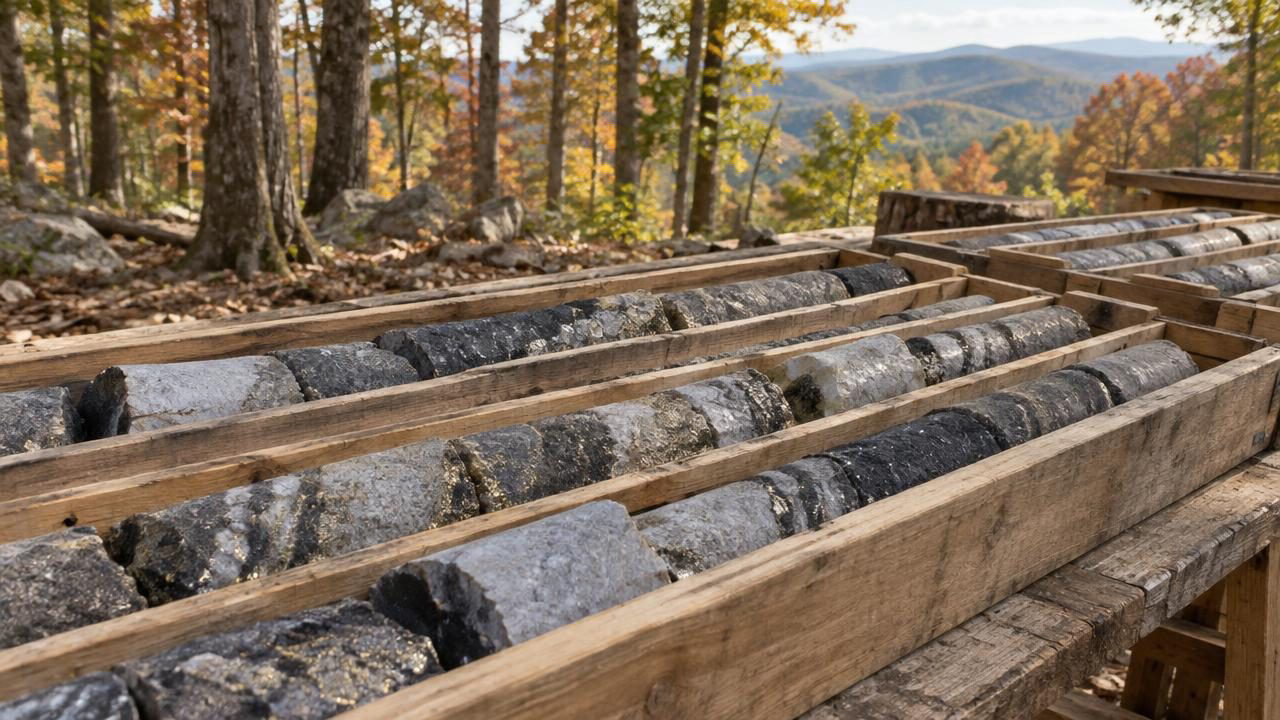
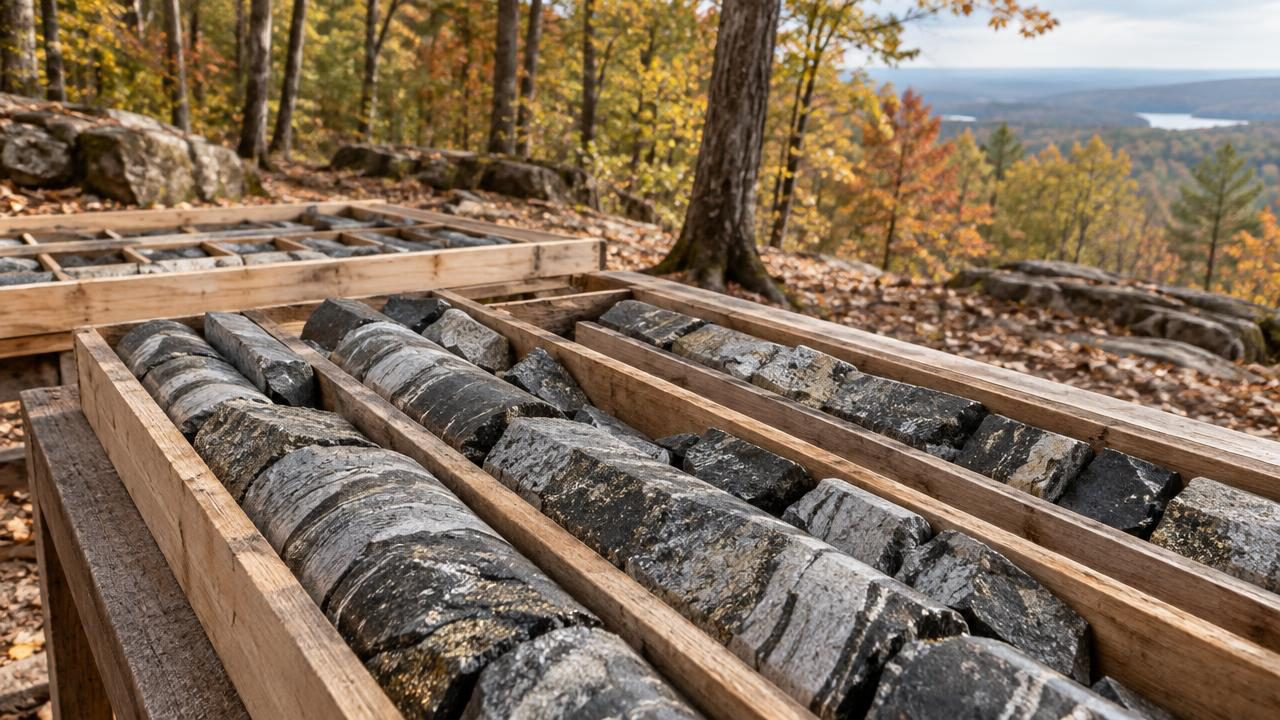
The quality-control section is the same in both versions of the release. Core is cut in half with a diamond saw. One half goes to the laboratory in sealed bags and the other stays on site. ALS Geochemistry in Reno and ALS Canada in Vancouver prepare and analyse the samples, using a four-acid digest with ICP-AES and ICP-MS finishes and fire assay for gold. Metalsource inserts certified standards, blanks and duplicates into the sample stream to check the laboratory's work.
The qualified person is Darcy Vis, B.Sc., P.Geo., president of Tripoint Geological Services Ltd., a contractor to the company. A qualified person is the professional geologist or engineer who signs off on the technical content of a release under NI 43-101.
A busy month at a historic mine
Silver Hill sits on 1,300 acres in Davidson County, North Carolina. The company calls it America's first silver-producing mine, worked from 1839. Known mineralisation reaches 550 metres below surface in a set of steep lenses.
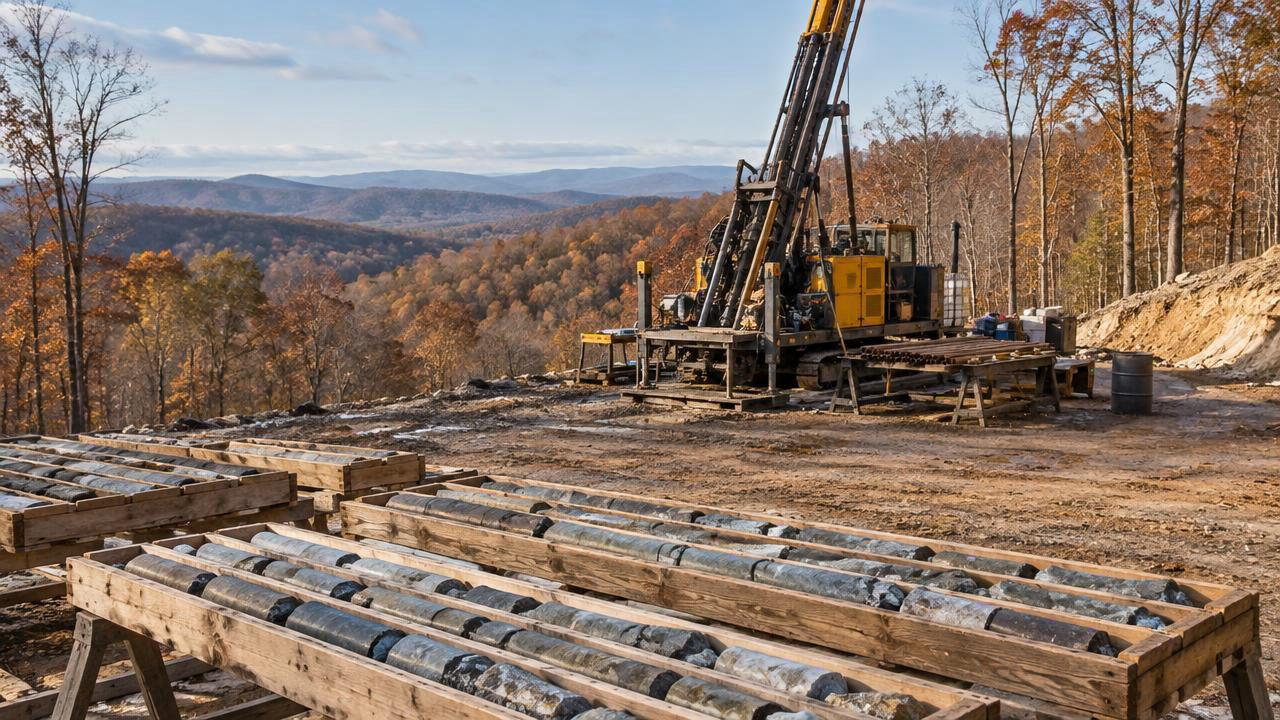
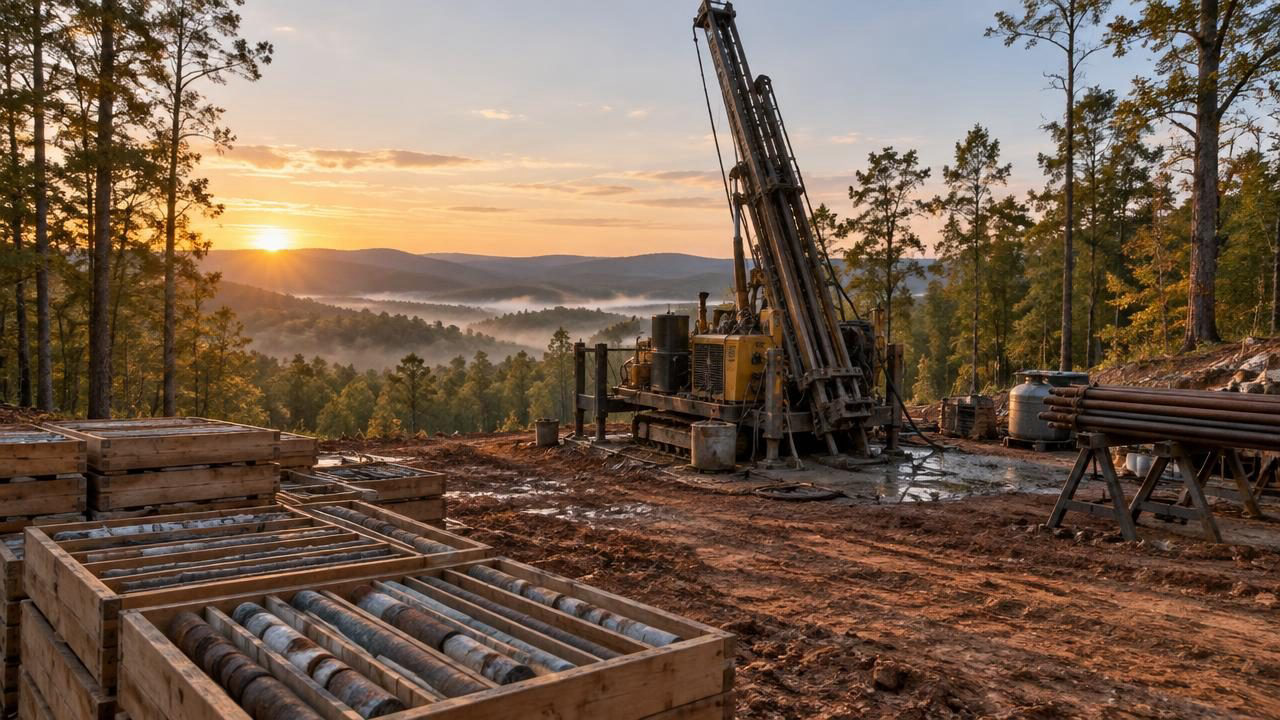
The program behind the result is large for a company of this size. The collar table in the corrected release lists 46 holes, from SH25-01 to SH26-47. Twenty-one are marked complete, one was abandoned at 15 metres, and 24 are waiting on assays. Two rigs were operating, according to the company's release of 12 November, which also reported that chief operating officer Tom Kleeberg had stepped down on 10 November and would stay on as a consultant, with project geologist Dale Moore directing exploration.
The money side moved in November too. On 18 November the company reported that Eric Sprott had exercised 4,387,158 warrants for C$1,379,863.20, lifting his holding to about 19.9 per cent and the share count to 83,557,556. The audited statements for the year ended 30 June 2026, filed on 28 October, showed cash of C$5,096,172 at 30 June 2026 and current liabilities of C$887,234 at the same date. The net loss for the year to 30 June 2026 was C$10,905,606.
Metalsource also pays for investor awareness. Its 29 September release announced a six-month engagement with Galt Consulting Group, operating as NaturalResourceStocks.net, for a one-time fee of US$28,000, running from 1 October 2026 to 31 March 2027. On 19 November it announced a placement in a MiningNewsWire editorial; that release does not state a fee. Neither the 24 November results nor the 25 November correction carries a paid-dissemination notice.
On the Frankfurt Stock Exchange the shares trade under the symbol E9Z, WKN A4021B and ISIN CA59132M1086, as listed by Deutsche Börse and shown as "FSE: E9Z" in each company release. On the CSE the shares closed at C$0.445 on 25 November, down C$0.01, or 2.2 per cent, on 43,000 shares, per end-of-day data read at 16:58 ET on the CSE's listing page.
The next dates on the company's calendar
The corrected hole is one hole. The company has 24 more in the laboratory queue, SH26-45 among them, and their assays will show how far the southern trend extends. The annual general meeting is set for 14 December 2026, according to the company's amended notice of meeting dated 6 November, with a record date of 3 November and the management information circular filed on 25 November.
Disclosure
Transparency note. This is an independent due-diligence analysis and editorial opinion piece produced by The Maple Markets editorial desk. It is not sponsored, promoted or commissioned, and no compensation of any kind has been received from Metalsource Mining Inc. (CSE: MSM) or any party acting on their behalf. The analysis is based on public disclosure available as of the publish date; every figure is attributed to its primary source. Neither The Maple Markets nor the author holds a position in the securities mentioned; nothing here is a recommendation to buy, sell or hold any security, and readers should not treat it as investment advice. Past disclosure does not guarantee future results. Policies: Editorial Standards · Financial Disclaimer.
Read next
Auch auf Deutsch: Metalsource korrigiert ein Silver-Hill-Intervall auf 103 g/t Silberäquivalent nach oben
 Mining & EnergyMetalsource Intercepts 416 g/t Silver Equivalent South of a Lower-Grade Area at Silver HillMetalsource Mining reported on November 24, 2026 that hole SH26-27 at its Silver Hill project in North Carolina cut 3.60 metres at 416 grams per tonne silver equivalent, including 0.67 metres at 1,192 grams per tonne, south of a lower-grade area. Chief executive Joe Cullen said the result suggests that area does not mark the southern limit of the system. Assays for more than 20 holes are pending, and two rigs were drilling according to a November 12 release.Daniel Okoye · November 25, 2026 · 7 min
 Mining & EnergyMetalsource Has Drilled 44 Holes at a Historic North Carolina Silver MineMetalsource Mining has drilled 44 holes at Silver Hill in North Carolina since 2025, per its October 22, 2026 release. The assayed holes include 12.62 metres of 46.5 g/t gold in SH26-07, and 24 holes covering about 5,700 metres were awaiting laboratory results. Two rigs are turning, Eric Sprott added C$1.38 million on November 18, and the company has tied its test of the wider system to late 2026 or early 2027.Daniel Okoye · November 20, 2026 · 8 min
 Mining & EnergyEric Sprott Exercises Metalsource Mining Warrants for C$1.38 MillionEric Sprott exercised 4,387,158 Metalsource Mining warrants for C$1,379,863.20, the company announced on November 18. The company plans to use the cash for exploration at Silver Hill and Byrd-Pilot in North Carolina and for working capital. Two rigs are working there, and 24 holes were awaiting assays in October.Priya Sandhu · November 19, 2026 · 7 min
Follow this story
Follow MSM.CN — the next Maple piece on this company, plus the Maple Morning Debrief before the open.
Follow and ask
Get more of our Canadian market coverage in Google Top Stories.
Sources and references (9)
- Metalsource Mining: CORRECTION FROM SOURCE: Metalsource Mining Intercepts Significant Mineralized Zone at Silver Hill (Newsfile, 25 November 2026)
- Metalsource Mining: Metalsource Mining Intercepts Significant Mineralized Zone at Silver Hill (Newsfile, 24 November 2026, superseded)
- Metalsource Mining: audited annual financial statements for the year ended 30 June 2026 (filed 28 October 2026)
- Metalsource Mining: Receives C$1.38 Million from Eric Sprott Warrant Exercise (Newsfile, 18 November 2026)
- Metalsource Mining: Announces Management Transition as Silver Hill Exploration Advances (Newsfile, 12 November 2026)
- Metalsource Mining: Notice of Meeting and Record Dates, Amended (dated 6 November 2026)
- Metalsource Mining: Engages Naturalresourcestocks.net (Newsfile, 29 September 2026)
- Deutsche Börse: Metalsource Mining listing page (E9Z, WKN A4021B, ISIN CA59132M1086)
- Khaleej Times (Reuters): Gold inches up from over one-year low, 17 November 2026
Cite this analysis
Please attribute The Maple Markets and link to the original page.
Élise Galarneau (November 26, 2026). Metalsource Corrects a Silver Hill Interval Upward to 103 g/t Silver Equivalent. The Maple Markets. https://themaplemarkets.ca/en/newsroom/metalsource-mining-corrected-silver-hill-release-states-interval-sh26https://themaplemarkets.ca/en/newsroom/metalsource-mining-corrected-silver-hill-release-states-interval-sh26