
The Loonie, the Differential and Why CAD/USD Stopped Tracking Oil
The long-assumed link between crude prices and the Canadian dollar has weakened as energy's share of the economy has shrunk and interest-rate differentials have taken over as the dominant driver. This piece explains the rate-differential mechanism now doing most of the work and what that means for how Canadian investors should think about currency exposure.
By Élise Galarneau3 min readTranslation: human

Historic driver
Crude oil
Weakened correlation
Current driver
Rate differential
Dominant
Energy share of exports
Declining
Structural
For years the shorthand was simple: crude up, loonie up. That relationship has broken down enough that trading on it is now a reliable way to be wrong. The correlation was never a law of nature — it was a reflection of Canada's export mix and capital flows at a particular point in the commodity cycle, and both have shifted.
What changed
Energy is a smaller share of Canadian GDP and exports than it was at the peak of the last commodity cycle. As the economy has diversified and energy prices have been less consistently elevated, the currency's sensitivity to a single commodity has mechanically declined, simply because that commodity now represents a smaller share of the trade flows that ultimately determine currency demand. At the same time, the interest-rate differential between Canada and the United States has widened and narrowed in ways that dominate short-horizon currency moves. Global capital markets are large relative to any single country's trade balance, and interest-rate-driven capital flows can move faster and in larger size than trade-driven flows, particularly over short windows.
The rate-differential mechanic
Capital flows toward higher real yields. When the Bank of Canada eases ahead of the Federal Reserve, the differential widens against the loonie regardless of what West Texas Intermediate is doing that week. This has been the dominant driver through the recent cycle. The mechanism is straightforward: if Canadian short-term rates fall relative to US rates, holding Canadian-dollar assets becomes relatively less attractive on a yield basis, all else equal, and that repricing can happen quickly once a policy divergence becomes clear to markets. Because central bank paths are set by domestic inflation and growth conditions in each country independently, the differential does not need to have anything to do with commodity markets at all.
Why the old correlation is not coming back mechanically
The historical crude-loonie link relied on energy exports being large enough, relative to the overall economy, that swings in crude prices moved Canada's terms of trade meaningfully. Even if energy prices rise again, the correlation will only reassert itself to the extent that energy's share of exports and GDP also rises back toward its prior level, which is a separate question from the price of oil itself. A higher oil price with an unchanged or smaller energy share of the economy would show up much less in the currency than the same price move once did.
Practical implications
Canadian investors holding unhedged US equities have been receiving a currency tailwind that is really a monetary-policy bet. When the rate differential moves in the loonie's favour, unhedged US-dollar exposure detracts from returns in Canadian-dollar terms, and vice versa — but that effect is now better explained by relative central bank paths than by energy markets. Whether to hedge is a decision about relative central-bank paths, not a decision about oil. An investor forming a view on currency hedging should be forming a view on the relative direction of Bank of Canada and Federal Reserve policy, since that is the variable now doing most of the explanatory work.
What this means for reading currency moves
A trader or investor watching daily currency moves and attributing them to oil headlines is likely misreading the driver in most sessions. The more informative inputs are each central bank's rate decisions, forward guidance, and the government bond yield differential between the two countries at comparable maturities, since that differential is the direct, observable proxy for the capital-flow mechanism described above.
What to watch
Track the Canada–US government bond yield differential at short and medium maturities as the primary variable, alongside Bank of Canada and Federal Reserve policy statements and forward guidance. Watch energy's share of Canadian exports and GDP over time as a gauge of whether the historical correlation could plausibly reassert itself, and treat any correlation with crude prices in a given period as coincidental unless the rate differential and the oil price are moving in the same direction for identifiable, related reasons.
A note on other contributing factors
Broader risk sentiment and general US-dollar strength or weakness against a basket of currencies also influence the loonie, since the Canadian dollar does not move in isolation from global currency markets. A period of broad US-dollar strength driven by global risk-off conditions can move the loonie in a direction that has nothing to do with either oil or the specific Canada–US rate differential, which is a further reason a single-factor explanation tied to crude prices was always an oversimplification, even in the years when the correlation held reasonably well.
Read next
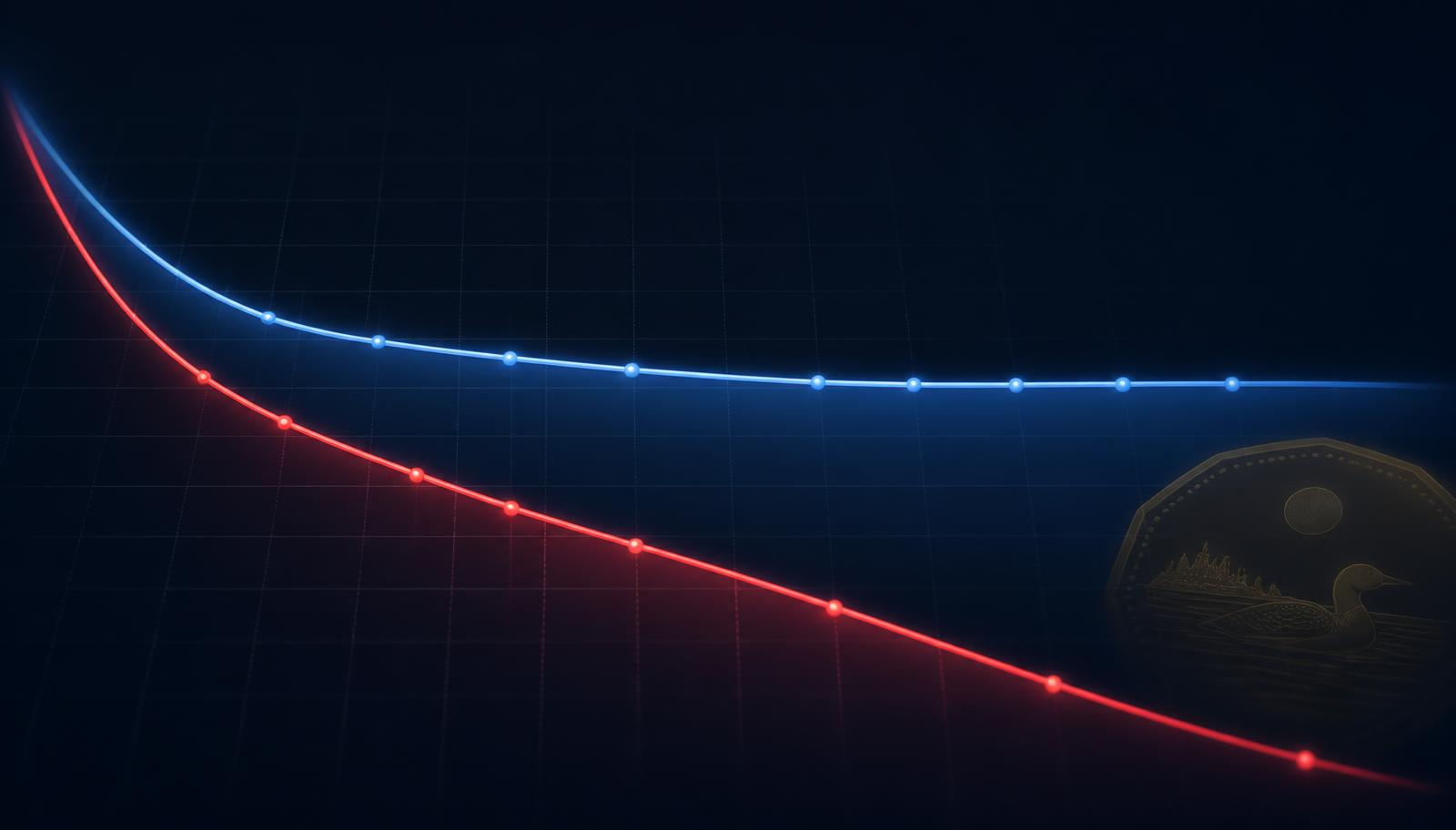 EconomyThe Canada–U.S. Rate Gap Is a Signal, Not a Loonie ForecastThe Bank of Canada's target sits well below the federal-funds range. That is factual. The conclusion that the loonie must therefore weaken is not.Élise Galarneau · September 4, 2026 · 6 min
 EconomyThe Loonie Has Two Engines: Why a 1.4-Point Rate Gap Is Only Half of the Canadian Dollar StoryThe Bank of Canada's policy rate sat about 1.4 percentage points below the US effective federal funds rate in early September 2026, metals prices rose 4.2 per cent into August, and the loonie ended the week close to where it began. That stops being a puzzle once the currency is read as the net of two forces, the rate gap and the terms of trade. Here is how each one works, what the Bank's commodity index says about August, and what a five per cent move in the loonie does to a US$10,000 position.Hannah Kuan · September 7, 2026 · 7 min
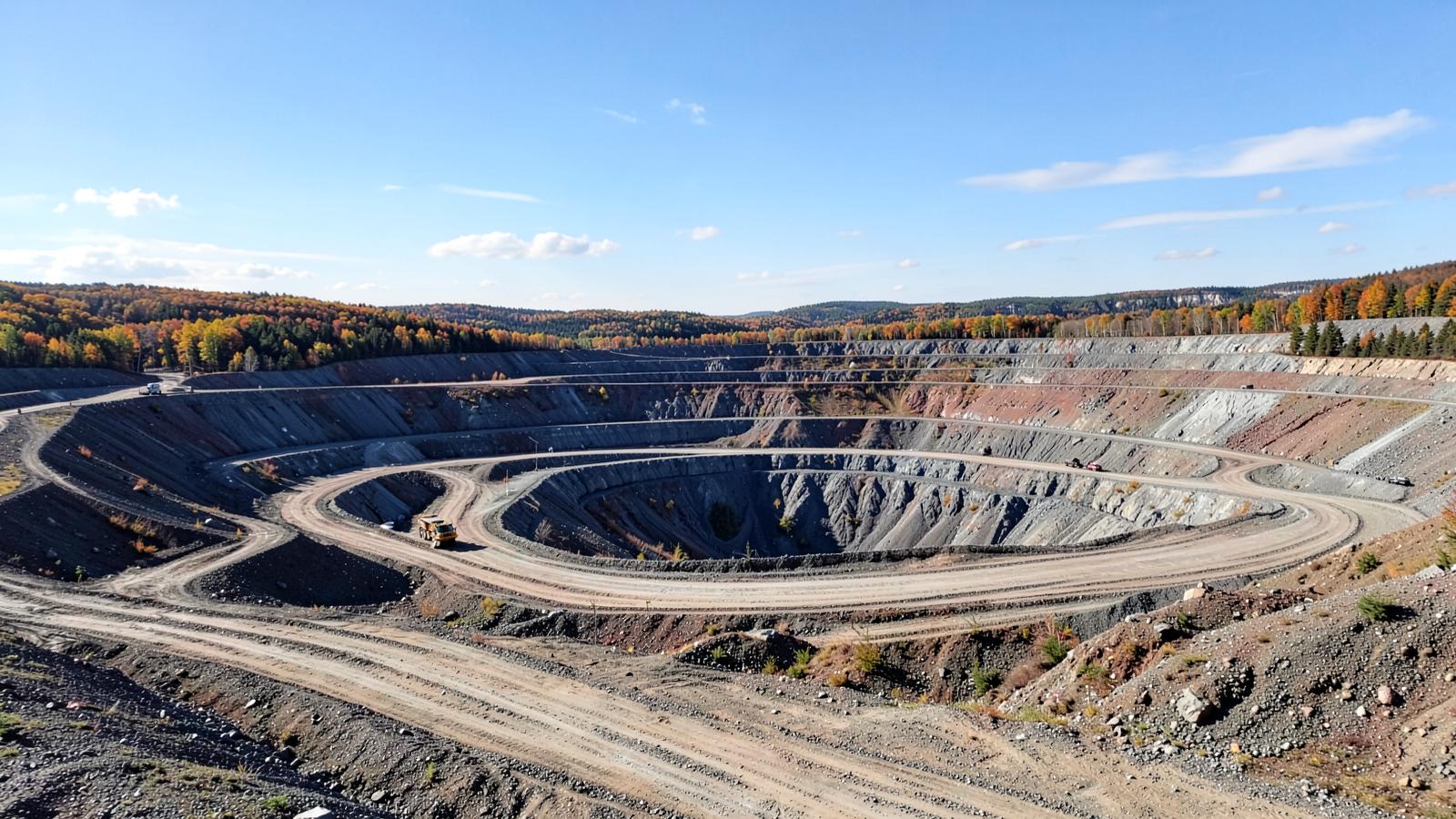 Mining and ResourcesThe quote is not the margin: what a copper and gold week is worth to a Canadian mine in looniesCopper traded at US$6.58 per pound on September 6, 2026, gold near US$4,331 per ounce on September 1, and the Bank of Canada's metals and minerals index rose 4.2 per cent in August. None of those is a Canadian producer's margin. This piece walks the arithmetic from the US-dollar quote through the exchange rate to the Canadian-dollar cash margin, shows what a five per cent stronger loonie does to it, and explains why a pre-revenue explorer reads the same week as a financing window.Daniel Okoye · September 7, 2026 · 7 min
Get the Maple Morning Debrief
Yesterday's close, overnight, and what to watch before the open — in your inbox by 6 a.m. ET. Free, and one click to unsubscribe.
Follow and ask
Get more of our Canadian market coverage in Google Top Stories.
Disclosure
Information only. Not investment advice. The Maple Markets does not hold positions in securities discussed. See the Financial Disclaimer.
Sources and references (3)
Cite this analysis
Please attribute The Maple Markets and link to the original page.
Élise Galarneau (April 20, 2026). The Loonie, the Differential and Why CAD/USD Stopped Tracking Oil. The Maple Markets. https://themaplemarkets.ca/en/newsroom/the-loonie-the-differential-and-why-cad-usd-stopped-tracking-oilhttps://themaplemarkets.ca/en/newsroom/the-loonie-the-differential-and-why-cad-usd-stopped-tracking-oil