
Volatus Aerospace Wins a Seat in Canada's Defence Drone Marketplace. The Harder Part Is Conversion
A Supply Arrangement under W8703-270055 buys procurement access, not revenue. What has to happen next for the Mirabel build-out to pay for itself.
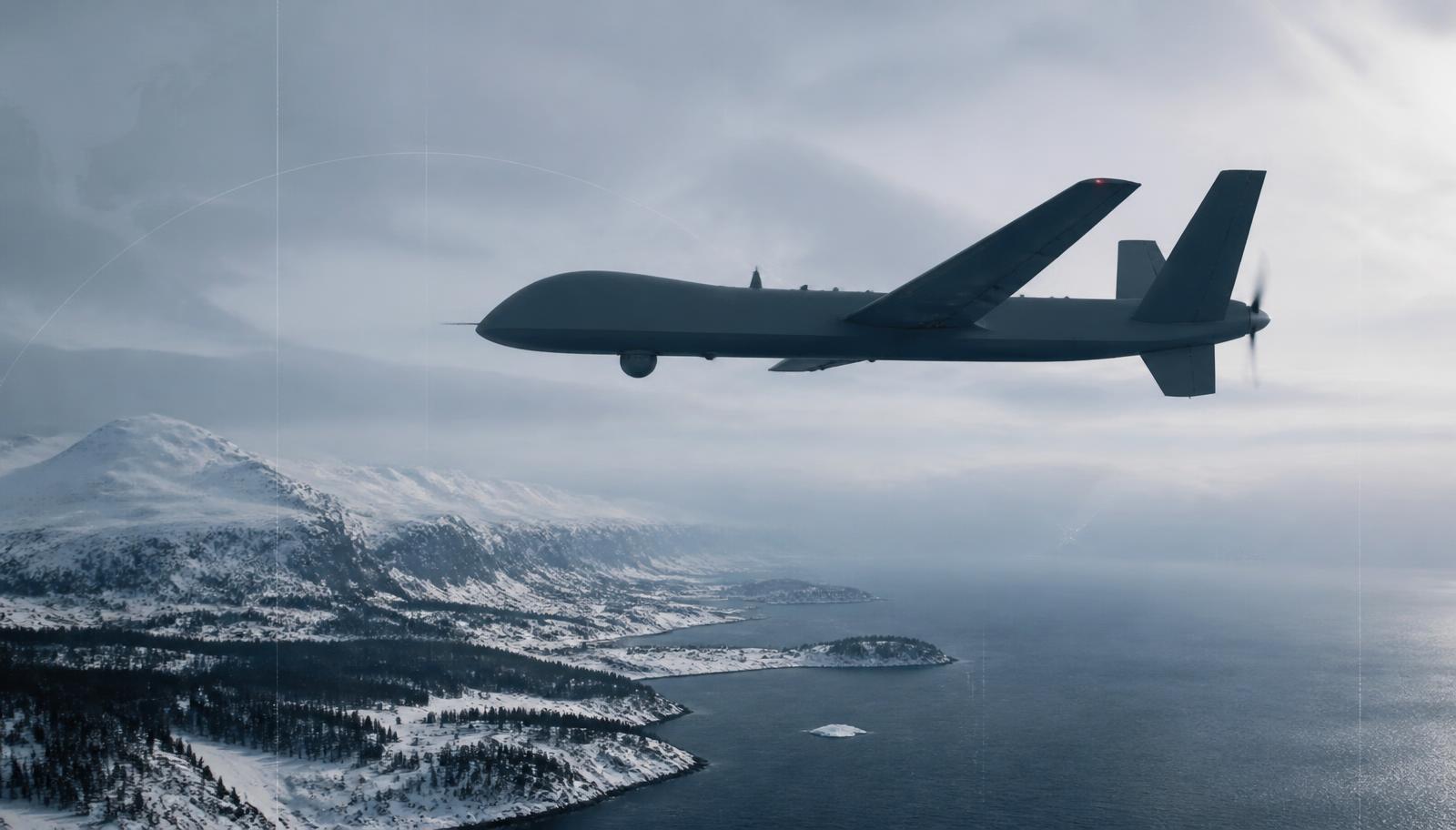
Volatus Aerospace (TSX: FLT) has been qualified as a supplier under the Department of National Defence's Defence Drone Initiative Marketplace, effective August 24, 2026 and running to July 31, 2031. The award carries no committed dollar value. Its worth depends entirely on whether pre-qualification converts into task authorizations before the company's C$59.2 million cash position is absorbed by an autonomy and manufacturing build-out that is still EBITDA-negative.
By Priya Sandhu6 min read
Cet article n'est offert qu'en anglais pour le moment.
Cash, end Q2 2026
C$59.2M
After the C$34.5M June bought deal
Q2 2026 revenue
C$8.4M
+49.5% sequential; Adjusted EBITDA still negative
Supply Arrangement term
to Jul 31, 2031
Awarded Aug 24, 2026; no committed value
Volatus Aerospace Inc. (TSX: FLT) has been added to the Government of Canada's pre-qualified supplier pool for uncrewed and autonomous systems. Federal procurement records show Volatus Aerospace Corp. holding a Supply Arrangement under the Department of National Defence's W8703-270055 Defence Drone Initiative (DDI) Marketplace, awarded August 24, 2026 and running to July 31, 2031.
That is the fact. What follows is the part that matters to an investor: what a Supply Arrangement actually obliges the Crown to do, and what it does not.
What a Supply Arrangement Is, Precisely
A Supply Arrangement is not a contract. It is a standing framework that establishes terms, security requirements and a qualified supplier list, against which departments may later issue competitive or directed task authorizations. There is no minimum purchase, no committed dollar value and no guaranteed call-up.
The DDI Marketplace, administered by the Defence Investment Agency on behalf of DND and the Canadian Armed Forces, exists to compress the interval between an emerging requirement and a lawful purchase order. Its scope spans uncrewed and autonomous systems, counter-UAS, communications and data, engineering and integration, and testing, training and experimentation.
The correct way to read the award is therefore as an option, not an asset:
| Element | What the award establishes | What it does not establish |
|---|---|---|
| Commercial commitment | Terms, pricing basis and eligibility to receive task authorizations | Any minimum volume, revenue or committed spend |
| Competitive position | Membership in a screened pool; bids are not re-qualified from zero | Exclusivity — the pool contains multiple qualified suppliers |
| Duration | Access through July 31, 2031 | That access will be exercised within that window |
| Financial reporting | Nothing directly | No backlog, no bookings, no deferred revenue recognition |
The value is procedural: it removes qualification as a gating item so that, when a requirement appears, Volatus is inside the process rather than outside it. For a sub-C$10-million-per-quarter revenue base, that is worth something. It is not worth a re-rating on its own.
The Capability Stack Behind the Qualification
Qualification is only interesting if the company has something to sell into it. Over 2026 Volatus has assembled a stack that is unusually vertical for its size.
V-Cortex. Introduced in May, the company's AI-enabled flight controller and autonomy operating system moves Volatus from integrator toward owner of the software layer. This is the single most important structural change in the portfolio: autonomy software is where defence programs generate sustainment revenue and switching costs, and it is the part of the stack a services reseller cannot replicate.
Mirabel. The approximately 53,000-square-foot manufacturing and systems-integration facility at Montreal-Mirabel opened in June, inside one of Canada's larger aerospace clusters. Company materials describe development aligned to AS9100 quality standards with defence-grade security protocols, supporting multi-platform UAV production, integration and flight-readiness work. AS9100 alignment and facility security clearance are prerequisites for most serious defence work — they are cost items today and eligibility items tomorrow.
Regulatory position. In July, Transport Canada accepted the Canary RPAS under the new Pre-Validated Declaration process, supporting beyond-visual-line-of-sight operations in populated areas using onboard detect-and-avoid. BVLOS approval is the economic unlock for drone services: it removes the observer from the cost line and makes recurring inspection and monitoring contracts scalable.
Partnered capability. The August partnership with Kraus Hamdani Aerospace provides a route to introduce the K1000ULE ultra-long-endurance autonomous aircraft and the ATNE++ resilient airborne communications architecture into Canada, with contemplated integration, training, lifecycle support and progressive Mirabel manufacturing. Persistent ISR and resilient comms are precisely the Arctic and domain-awareness capabilities Canadian requirements documents keep describing.
Read together, the stack targets Group 3 UAS — the segment between hobby-scale and strategic systems, where affordability and deployability meet real mission capability, and where a mid-cap Canadian manufacturer can plausibly compete without contesting a prime.
The Balance Sheet Buys Time, Not Certainty
Volatus entered the second half of 2026 with the strongest liquidity in its history.
- Cash of approximately C$59.2 million and working capital of approximately C$63.8 million at the end of Q2, following a C$34.5 million bought-deal financing in June.
- Q2 revenue of approximately C$8.4 million, up 49.5% sequentially.
- Adjusted EBITDA negative, as spending continued on defence infrastructure, product development and manufacturing capacity.
Two observations follow.
First, the June financing was raised into strength and ahead of need, which is the correct sequencing and materially better than the alternative most small-cap defence hopefuls face. It also diluted existing holders, and that cost is already borne — the question now is what the proceeds buy.
Second, sequential revenue growth of 49.5% off a small base is not yet evidence of a defence business. Services and equipment revenue can grow at that rate for reasons that have nothing to do with DND. The disclosure that would change the analysis is revenue attributable to defence programs, disclosed separately, with an order backlog attached.
What Would Actually Constitute Conversion
Investors should hold this position to a specific evidentiary standard rather than a narrative one. The following are observable, dated and verifiable:
- A named task authorization issued under W8703-270055 with a disclosed value, visible in CanadaBuys contract history rather than a company press release alone.
- Repeat call-ups from the same customer, which distinguish a trial from a program of record.
- Facility security clearance and AS9100 certification confirmed, not merely aligned to — these are binary gates on classified and airworthiness-sensitive work.
- Aircraft delivered from Mirabel, with unit counts, rather than integration and readiness activity.
- Defence revenue disclosed as a segment, with backlog, in quarterly reporting.
- A positive Adjusted EBITDA quarter, or at minimum a stated and dated path to one.
Absent items one, two and five, the DDI award remains what the record says it is: eligibility.
The Risks a Bull Case Has to Survive
Pool dilution. A pre-qualified marketplace is designed to have many members. Being inside removes a barrier for competitors as much as for Volatus, and DND retains the ability to run competitive processes within the pool.
Timing mismatch. Defence procurement cycles routinely run years. The fixed-cost base at Mirabel runs monthly. Cash covers a meaningful runway at current burn, but a two-to-three-year conversion lag against an EBITDA-negative operating profile is the central financing risk, and it points to further equity issuance if orders arrive late.
Budget political risk. Increased Canadian defence spending is a policy commitment, not an appropriated line item for uncrewed systems specifically. Allocation across Arctic infrastructure, aircraft, ships and personnel is contested, and drones are not guaranteed a proportionate share.
Execution transition. Moving from services and distribution to manufacturing under aerospace quality regimes is a different operating discipline. First-article delays, supply-chain qualification and cost overruns are the normal experience, not the exception.
Partner dependency. The Kraus Hamdani relationship supplies capability Volatus does not own. It is a sensible accelerant and a structural dependency at once; economics on partnered platforms are typically thinner than on owned ones.
The Position, Stated Plainly
Volatus has done the things a company must do to be considered for Canadian autonomous-systems work: it owns an autonomy software layer, it has domestic production capacity in an aerospace cluster, it holds a leading-edge BVLOS regulatory position, it has allied partnerships, and it is now inside the federal pre-qualified pool. That is a coherent, deliberate sequence rather than an opportunistic pivot, and coherence is rarer than it should be in this segment.
What has not yet happened is the only thing that converts the sequence into a valuation: a defence customer paying for it at scale, repeatedly, with the revenue disclosed.
The company is well capitalised enough to wait for that. Whether shareholders are is a separate question, and it is the one the next two or three quarterly reports will answer.
Divulgation
This is an independent due-diligence analysis and editorial opinion piece produced by The Maple Markets editorial desk. It is not sponsored, promoted or commissioned, and no compensation of any kind has been received from Volatus Aerospace Corp. or any party acting on its behalf. The views expressed reflect editorial interpretation of publicly disclosed information and represent the opinion of The Maple Markets; they are not statements of fact about future performance and are not investment advice, an offer to sell securities, or a solicitation to purchase securities. Certain statements are forward-looking; actual outcomes may differ materially. Readers should conduct their own due diligence and consult qualified professionals.
À lire ensuite
Aussi en anglais: Volatus Aerospace Wins a Seat in Canada's Defence Drone Marketplace. The Harder Part Is Conversion
 Mining & EnergyVault Strategic au Nevada : quatre mois de travaux sur une seule propriété de tungstèneLe 3 juillet 2026, Vault Strategic Mining a renoncé à deux autres options de tungstène pour se concentrer sur War Bond, une ancienne mine de tungstène des années 1950 dans l'ouest du Nevada. Depuis, elle a déclaré des résultats d'échantillonnage de surface, réalisé un levé magnétique de 73.6 kilomètres linéaires, clôturé un placement de C$1.5 million et lancé un premier rapport technique selon le Règlement 43-101. La société n'a pas encore daté ce rapport; ses états des six mois clos le 30 novembre 2026 constituent le prochain dépôt prévu.Daniel Okoye · 4 novembre 2026 · 9 min
 Mining & EnergyQIMC prévoit un programme sismique de 126.5 kilomètres dans trois provincesQuebec Innovative Materials a terminé l'acquisition de 63.7 kilomètres linéaires de sismique dans le comté de Cumberland, en Nouvelle-Écosse, où ses travaux de gaz des sols, d'hélium, de gravimétrie et de magnétisme ainsi que l'événement gazeux du sondage DDH-26-05 se trouvent sur une même grille, aujourd'hui en traitement à Calgary. Elle a prévu 36 kilomètres au Québec et 26.8 kilomètres en Ontario avec les mêmes sous-traitants, ce qui porte la couverture réalisée et prévue à environ 126.5 kilomètres linéaires, et détenait C$14.1 millions en trésorerie au 30 juin 2026.Priya Sandhu · 3 novembre 2026 · 9 min
 TechnologyHausse de 45 pour cent pour Reklaim après un troisième trimestre rentable d'affiléeReklaim Ltd. a annoncé le 3 novembre 2026 que ses produits du trimestre clos le 30 septembre avaient presque triplé sur un an, à C$3.16 millions, et qu'elle avait réalisé un bénéfice de C$1.27 million, son troisième trimestre rentable d'affilée. L'action a clôturé à C$0.40 à la Bourse de croissance TSX, en hausse de 45 pour cent sur 1.93 million d'actions. Le trimestre a aussi vu le rachat de 5.1 millions d'actions, et la veille la société a proposé de permettre aux porteurs de C$500,000 de débentures de convertir avant l'échéance au prix existant de C$0.105, sous réserve de l'approbation de la Bourse de croissance TSX.Marc Belzile · 3 novembre 2026 · 8 min
Follow this story
Follow FLT.TO — the next Maple piece on this company, plus the Maple Morning Debrief before the open.
Follow and ask
Get more of our Canadian market coverage in Google Top Stories.
Sources et références (6)
- CanadaBuys — Defence Drone Initiative Marketplace, contract history CW2465047
- Volatus Aerospace — Q2 2026 financial results
- Volatus Aerospace — Mirabel manufacturing facility
- Volatus Aerospace — Kraus Hamdani Aerospace partnership
- Volatus Aerospace — Canary RPAS and Transport Canada PVD acceptance
- Volatus Aerospace — investor news and press release archive
Citer cette analyse
Please attribute The Maple Markets and link to the original page.
Priya Sandhu (September 1, 2026). Volatus Aerospace Wins a Seat in Canada's Defence Drone Marketplace. The Harder Part Is Conversion. The Maple Markets. https://themaplemarkets.ca/fr/newsroom/volatus-aerospace-defence-drone-marketplace-supply-arrangementhttps://themaplemarkets.ca/fr/newsroom/volatus-aerospace-defence-drone-marketplace-supply-arrangement