
Canadian Commodity Stocks in the Global Cycle
Oil, copper, potash and the TSX issuers tied to the cycle.
Canadian commodity producers are sensitive to the same global cycle. Here is how to read the signals and separate the quality operators from the price takers.
By Daniel Okoye2 min read
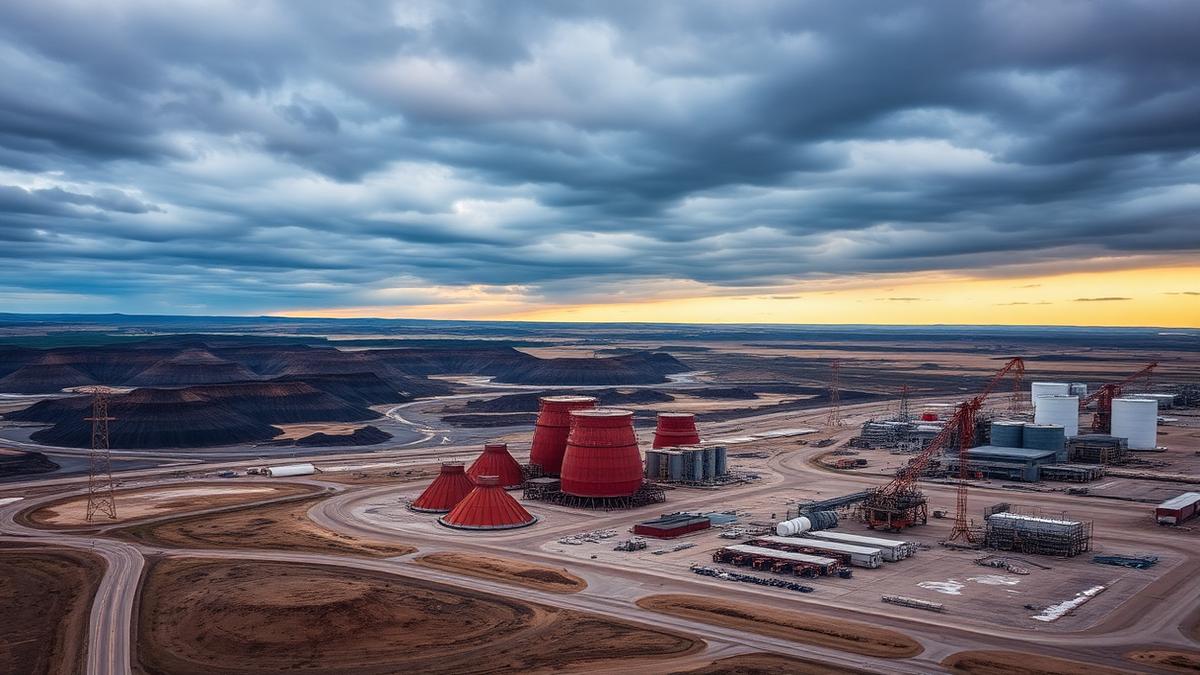
TSX energy + materials weight
~30%+
approximate index exposure
China copper demand share
~50%+
global refined copper demand
Saskatchewan potash reserves
~30%+
estimated global share
Canada is a commodity index in disguise
Energy, materials, and fertilizers make up a large share of the TSX. That means Canadian investors are already exposed to commodity cycles through their domestic equity allocation. Understanding the cycle is not optional.
The three main buckets
- Energy: Oil sands, conventional oil, and integrated producers like Canadian Natural Resources, Suncor, and Imperial Oil.
- Base metals: Copper, nickel, and zinc dominated by Teck, Lundin Mining, and First Quantum.
- Fertilizers: Potash is a Canadian specialty, with Nutrien and smaller juniors in Saskatchewan.
What drives the cycle
The global cycle is driven by Chinese industrial demand, U.S. dollar strength, capital spending discipline, and supply disruptions. A weak U.S. dollar usually lifts commodity prices because they are priced in USD. A strong dollar has the opposite effect. China is the marginal buyer of copper, oil, and potash. When China stimulates, commodities tend to follow.
Quality vs. price takers
The best commodity companies are low-cost operators with long reserve lives. They make money even when prices are weak. High-cost producers only thrive at the top of the cycle. The difference shows up in:
- All-in sustaining costs for miners.
- Free cash flow breakeven for oil producers.
- Net debt levels relative to the commodity price needed to service it.
The TSX twist
Canadian commodity stocks often trade at a discount to global peers. That is partly due to the country''s small capital markets and partly due to regulatory risk. The discount creates opportunity for patient investors who understand the cycle, but it also means volatility can be severe.
How to position
Most investors should not try to time the cycle. Instead, own the lowest-cost producers in each sector and let the cycle be a tailwind over a decade. If you must trade the cycle, use commodity futures, commodity ETFs, or a diversified energy ETF rather than betting on one stock.
Bottom line
Commodity stocks are not buy-and-hold in the same way as software or consumer staples. They require a view on the global cycle, a focus on low-cost operators, and a willingness to stomach volatility.
Weiterlesen
Also in English: Canadian Commodity Stocks in the Global Cycle
 Mining and ResourcesAya Gold and Silver hat in Zgounder 3.501 g/t Silber erbohrt und daraus noch nichts verkauftAya Gold & Silver Inc. (TSX: AYA) meldete am 16. September 2026 hochgradige Silberabschnitte nahe der Grube von Zgounder und in der Tiefe, acht Tage nachdem das Unternehmen den Papierwert seines Projekts Boumadine verdoppelt hatte, und fünfzehn Tage nach der Vereinbarung über den Kauf eines Kupfer-Silber-Konzessionspakets. Die Aktie schloss am 17. September bei C$40,24. Das Unternehmen hält US$182,8 Millionen an Barmitteln, und rund 80 Prozent des Metalls in der Boumadine-Studie liegen in der spekulativsten Ressourcenkategorie, die es gibt.Élise Galarneau · 18. September 2026 · 8 min
 Mining and ResourcesGlobal Atomic hat eine Zusage über US$414.2 Millionen aus Washington und fünf Bedingungen vor der ersten AuszahlungGlobal Atomic Corporation (TSX: GLO) wurde am 16. September 2026 vom Handel ausgesetzt und gab bekannt, dass der Vorstand der U.S. International Development Finance Corporation eine Kreditfazilität über bis zu US$414.2 Millionen für das Uranprojekt Dasa in Niger genehmigt hat. Die Aktie schloss bei C$0.71, ein Plus von 44.9 Prozent bei mehr als dem Siebenfachen des Durchschnittsvolumens. Die Fazilität übersteigt die für den Bau noch veranschlagten US$327.9 Millionen, und zwischen Zusage und Auszahlung stehen fünf Bedingungen.Daniel Okoye · 17. September 2026 · 6 min
 Mining and ResourcesHemlo Mining erbohrt 89.9 g/t Gold 50 Meter neben einem aktiven Abbau und ändert seine Angabe zur wahren MächtigkeitHemlo Mining Corp. (TSX: HMMC) meldete am 10. September 2026 89.89 g/t Gold über 3.0 Meter Bohrkernlänge in Bohrung 6702608 bei South-Rim, aus einer Zone 50 bis 150 Meter vom aktiven Abbau in der C-Zone entfernt. Die Mitteilung revidiert zugleich die geschätzte Umrechnung auf die wahre Mächtigkeit auf 65 bis 90 Prozent der Bohrlochlänge, nach 30 bis 70 Prozent in der Mitteilung vom 14. Mai 2026 zur selben Zone, ohne einen Grund zu nennen. South-Rim trägt keine Ressource, keine Reserve und keine Wirtschaftlichkeitsrechnung.Priya Sandhu · 11. September 2026 · 9 min
Dieser Geschichte folgen
CNQ.TO, TECK.B folgen – der nächste Maple-Beitrag zu diesen Unternehmen, dazu der Maple Morning Debrief vor Handelsbeginn.
Folgen und fragen
Mehr von unserer Berichterstattung zu den kanadischen Märkten in Google Top Stories.
Offenlegung
The Maple Markets is not a registered investment advisor. This article is for information only. Lesen Sie den finanziellen Haftungsausschluss.
Quellen und Verweise (2)
Diese Analyse zitieren
Bitte The Maple Markets nennen und auf die Originalseite verlinken.
Daniel Okoye (23. August 2026). Canadian Commodity Stocks in the Global Cycle. The Maple Markets. https://themaplemarkets.ca/de/newsroom/canadian-commodity-stocks-global-cyclehttps://themaplemarkets.ca/de/newsroom/canadian-commodity-stocks-global-cycle