
Canadian Grocery Margins: Pricing Power Under Political Scrutiny
Gross margin, private label mix and the difference between food and everything else in the basket
Canadian grocers earn thin margins on food and better margins on everything else in the store. The public debate conflates the two, and so do a lot of investors.
By Hannah Kuan3 min read
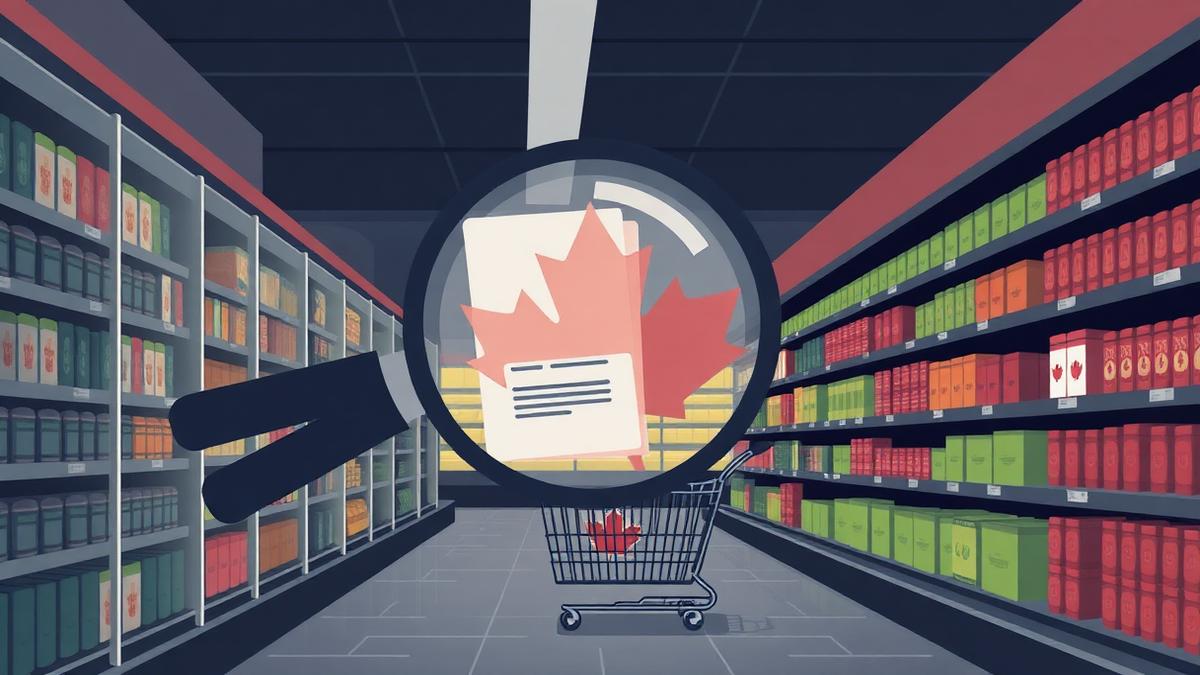
Canadian grocery is a concentrated industry, politically exposed, and consistently misunderstood in public discussion. The claim that grocers profiteered during food inflation and the claim that grocery is a razor-thin margin business are both supported by selectively chosen numbers. The reconciliation is mix.
The margin structure
A large Canadian grocery retailer's net margin is typically in the low single digits — often around 3-4% of revenue. That figure is accurate and is the number the industry cites.
Gross margin tells a different story, because it is not uniform across the store:
- Centre-store packaged food and fresh carry the thinnest gross margins. Competition is direct and price comparison is easy.
- Private label carries materially higher gross margin than the equivalent national brand, because the retailer captures the brand margin.
- Pharmacy operates on prescription reimbursement economics, with front-store retail attached at higher margin.
- General merchandise, health and beauty, and apparel carry the highest gross margins in the store.
- Financial services, loyalty programme monetisation and retail media — advertising sold to suppliers for placement in-store and in apps — carry very high margins and have grown rapidly.
So a grocer can report expanding gross margin during a period of food inflation without raising food margins at all, if the mix shifted toward pharmacy, general merchandise, private label or retail media. Segment disclosure allows this to be partially unpicked, and the honest reading requires doing so before drawing a conclusion in either direction.
What food inflation does mechanically
When food costs rise and a retailer passes through the cost at a constant percentage margin, gross profit dollars rise while gross margin percentage stays flat. Revenue rises; profit rises; the margin ratio does not move. This is not price gouging, and it is also not nothing — it is real dollar profit growth generated by inflation.
Where the debate has substance is in the timing asymmetry: costs pass through to shelf quickly on the way up and more slowly on the way down. This is observable in the gap between Statistics Canada's industrial product price index for food manufacturing and the food component of CPI. A widening gap during disinflation is the evidence-based version of the argument.
Private label is the strategic variable
Private label penetration rises during periods of consumer stress, as shoppers trade down. For the retailer this is favourable: the trade-down retains the customer and improves gross margin per unit even as the ticket price falls.
The metrics to watch:
- Private label penetration, disclosed qualitatively or as a percentage by most Canadian grocers.
- Same-store sales split between ticket and traffic. Rising ticket with falling traffic is inflation without volume. Rising traffic with flat ticket is genuine share gain.
- Tonnage or unit volume growth, where disclosed — the cleanest read on real demand.
The regulatory overhang
Canadian grocery faces sustained political attention: parliamentary hearings, a grocery code of conduct governing retailer-supplier relations, and Competition Bureau study of the sector's concentration. The realistic risks to model are not dramatic:
- Code of conduct compliance limits certain fees charged to suppliers, modestly compressing a real profit source.
- Merger review effectively forecloses further consolidation among the largest players, capping one growth path.
- Reputational pressure on pricing during inflationary episodes, which has produced voluntary price-freeze commitments — a real constraint on pass-through during the period it applies.
Outright price regulation of Canadian grocery has not been seriously advanced, and modelling it as the base case is not supported by the policy record. Modelling continued scrutiny, higher compliance cost and constrained M&A is.
The analytical checklist
- Segment revenue and profit: food retail versus pharmacy versus other.
- Gross margin by segment, tracked over eight quarters rather than year over year.
- Same-store sales decomposed into traffic and ticket.
- Private label penetration trend.
- Retail media and loyalty revenue, where separately disclosed — small in revenue, disproportionate in profit.
- Capital allocation: store renovation capex, buyback pace, and whether square footage is growing or being converted to discount banners.
Discount banner conversion is the quiet indicator worth ending on. When a grocer converts conventional stores to its discount format, it is forecasting the Canadian consumer more explicitly than any management commentary will.
Weiterlesen
Also in English: Canadian Grocery Margins: Pricing Power Under Political Scrutiny
 EconomyVier in Kanada notierte Unternehmen meldeten diese Woche Staatsgeld, und keiner der Beträge war BargeldZwischen dem 15. und dem 18. September 2026 meldeten Conifex Timber, Global Atomic, First Phosphate und Bitterroot Resources jeweils, dass eine Regierung Geld hinter sie gestellt hat: bis zu C$30 Millionen, US$414.2 Millionen, US$212.5 Millionen und bis zu US$5.22 Millionen. Vier Meldungen, vier Instrumente, und keines davon ist eine Überweisung. Was ein Darlehensvertrag, eine bedingte Zusage, eine Exportkredit-Unterstützungserklärung und eine Kostenteilungszusage jeweils verpflichten, und was zutreffen muss, bevor das Geld ankommt.Marc Belzile · 19. September 2026 · 10 min
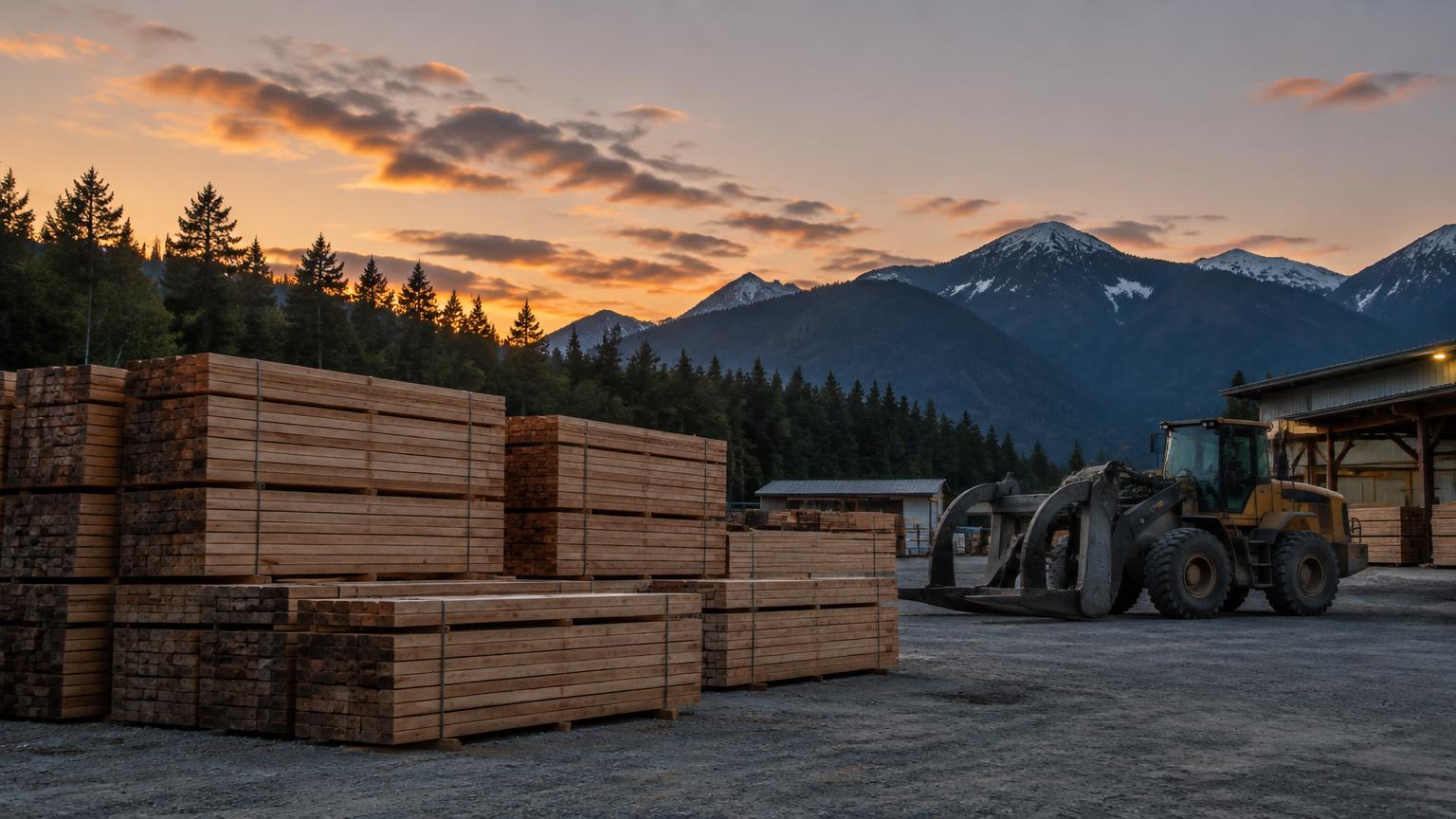 marketsConifex hat ein Bundesdarlehen von bis zu C$30 Millionen und eine Marktkapitalisierung von C$5.1 MillionenConifex Timber Inc. (TSX: CFF) teilte am 18. September 2026 mit, ein Large Enterprise Tariff Loan von bis zu C$30 Millionen der kanadischen Bundesregierung erhalten zu haben, mit siebenjähriger Laufzeit und besichert durch nahezu das gesamte Vermögen. Die Aktie schloss bei C$0.125, ein Plus von 38.9 Prozent. Zum 30. Juni 2026 standen C$1.3 Millionen freier Liquidität C$101.8 Millionen Schulden und ein Hinweis auf die Fortführungsprämisse gegenüber.Marc Belzile · 18. September 2026 · 6 min
 Mining and ResourcesFür Homeland Nickel läuft die Frist der Forstbehörde, doch die Bohrgenehmigung steht noch ausHomeland Nickel Inc. (TSXV: SHL) teilte am 17. September 2026 mit, der United States Forest Service habe seinen Betriebsplan für ein Sonic-Bohrprogramm in Red Flat, Oregon, angenommen, und die Umwelt- und Kulturgüterprüfung sei weit fortgeschritten, einschließlich abgeschlossener Feldarbeiten. Das Unternehmen hofft, im Oktober zu bohren. Dieselbe Mitteilung wurde am selben Tag erneut versandt, weil ihre Offenlegung zur bezahlten Bewerbung ein Videointerview mit dem Vorstandschef eines anderen Unternehmens beschrieb.Daniel Okoye · 18. September 2026 · 8 min
Dieser Geschichte folgen
L, MRU folgen – der nächste Maple-Beitrag zu diesen Unternehmen, dazu der Maple Morning Debrief vor Handelsbeginn.
Folgen und fragen
Mehr von unserer Berichterstattung zu den kanadischen Märkten in Google Top Stories.
Offenlegung
As of the publication date, the author, editor, publisher, their immediate households and affiliated entities do not own positions in the securities discussed. The Maple Markets received no compensation from any company, its officers, investor-relations providers or financiers in connection with this article. Figures are drawn from public filings as of the date shown and are not restated for later disclosure. Worked examples labelled illustrative use assumed inputs to show a method, not a forecast. This article is informational only and is not investment, legal, accounting or tax advice. Lesen Sie den finanziellen Haftungsausschluss.
Quellen und Verweise (3)
Diese Analyse zitieren
Bitte The Maple Markets nennen und auf die Originalseite verlinken.
Hannah Kuan (31. August 2026). Canadian Grocery Margins: Pricing Power Under Political Scrutiny. The Maple Markets. https://themaplemarkets.ca/de/newsroom/canadian-grocery-margins-pricing-power-versus-scrutinyhttps://themaplemarkets.ca/de/newsroom/canadian-grocery-margins-pricing-power-versus-scrutiny