
CUSMA Has Become a Valuation Variable
Revenue by geography is no longer sufficient disclosure analysis for cross-border Canadian manufacturers.
A functioning free-trade agreement and significant sectoral tariffs can coexist. Two Canadian companies with identical U.S. revenue can carry entirely different trade risk.
By Priya Sandhu2 min read
Dieser Artikel ist derzeit nur auf Englisch verfügbar.

For Canadian public companies with meaningful U.S. exposure, trade policy can no longer be treated solely as a macroeconomic headline. It increasingly belongs in the financial model.
The latest escalation illustrates why. The Canadian government says the United States imposed a 50% tariff on $27.6 billion of Canadian goods effective August 22, 2026. Canada subsequently announced matching countermeasures on $27.6 billion of U.S. products, scheduled to take effect September 8. The Canadian list is concentrated in steel and aluminum, dairy, appliances, agricultural equipment, pulp and paper, plastics and electronics.
At the same time, the Canada-United States-Mexico Agreement remains in force.
Following the July 1 trilateral joint-review meeting, Canada's government reiterated that CUSMA remains fully effective until 2036 and can be renewed for another sixteen-year period. If the parties do not agree to extend its term through the review mechanism, further joint reviews can occur annually until an extension is agreed or the agreement eventually expires.
Those two facts — an operating free-trade agreement and significant sectoral tariffs — coexist. That is the part investors need to internalize.
The question is not whether CUSMA exists
For an individual company, the relevant questions are narrower and answerable:
- What products does the company ship?
- Do they qualify under the applicable rules of origin?
- Are they exposed to a sector-specific U.S. measure outside normal CUSMA treatment?
- Where are inputs sourced?
- Who contractually bears a tariff?
- Can the company reprice the product?
Those questions convert trade policy into company-level economics.
Two hypothetical manufacturers
Consider two Canadian manufacturers with identical U.S. revenue. Both figures are illustrative.
Company A manufactures a specialized component using predominantly North American inputs, qualifies cleanly under CUSMA, operates with strong gross margins, and holds contracts allowing tariff-related price adjustments.
Company B imports significant non-North-American inputs, operates with narrow margins, and sells into a sector subject to an additional U.S. trade measure under fixed-price contracts.
Both may describe themselves as having "50% U.S. exposure." Their trade risk is entirely different. Company B's margin absorbs the tariff; Company A's customer does.
What Canadian stakeholders actually asked for
Canada's own consultation process reinforces the value companies attach to predictable continental access. The government's 2026 report on CUSMA consultations says stakeholders generally considered the agreement to be working well and favoured a "do no harm" approach to the joint review.
That is a useful data point for analysts: the agreement is not the risk. Measures layered outside it are.
The disclosure upgrade analysts should demand
Revenue by geography is no longer enough. Companies exposed to cross-border manufacturing should increasingly be evaluated on CUSMA qualification rates, tariff classification, sourcing concentration, contractual pass-through mechanisms, and the capital required to relocate production or sourcing.
The framework remains useful even if the current dispute is settled. Tariff schedules change; the sensitivity of a given cost structure to them does not.
That is why CUSMA belongs in the valuation model rather than the political-news category.
Tariff coverage and timing in this article reflect measures announced as of publication and remain subject to negotiation. The analytical framework is intended to outlast any particular schedule.
Offenlegung
As of the publication date, the author, editor, publisher, their immediate households and affiliated entities do not own positions in the securities discussed. The Maple Markets received no compensation from any company, its officers, investor-relations providers or financiers in connection with this article. Figures are drawn from public filings and official statistical releases as of the date shown and are not restated for later disclosure. Worked examples labelled illustrative use assumed inputs to show a method, not a forecast. This article is informational only and is not investment, legal, accounting or tax advice.
Weiterlesen
Also in English: CUSMA Has Become a Valuation Variable
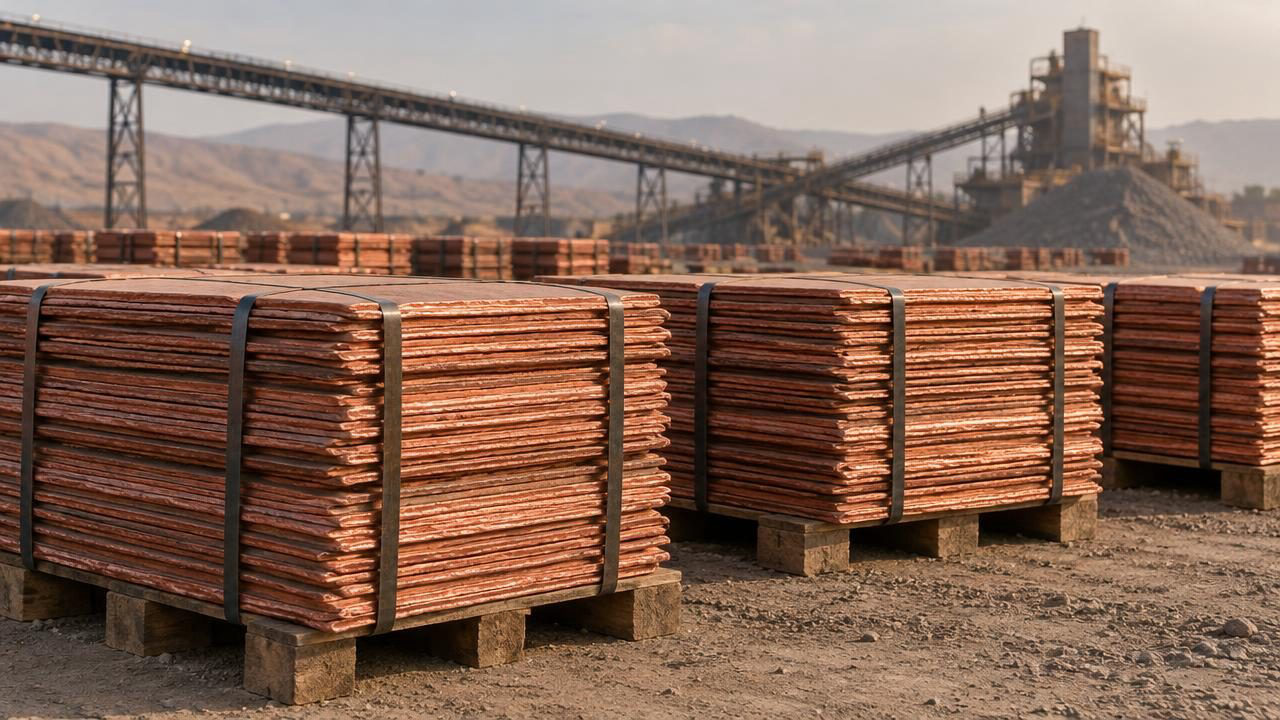 Mining & EnergyIvanhoe Mines berichtet am Dienstag über ein Kupferquartal mit 76,401 TonnenIvanhoe Mines veröffentlicht seine Finanzergebnisse für das dritte Quartal 2026 nach Börsenschluss am 3. November und veranstaltet die Telefonkonferenz am 4. November. Die Produktion ist bereits öffentlich: 76,401 Tonnen Kupfer aus Kamoa-Kakula, ein Rekord von 77,147 Tonnen Zink aus Kipushi und eine bestätigte Prognose. Die Ergebnisse ergänzen Gewinne, Kosten und Bilanz hinter diesen Tonnen; die Aktie schloss am 2. November bei C$9.00.Élise Galarneau · 3. November 2026 · 6 min
 Mining & EnergyMyriad Uranium schließt den Erwerb des 55,000 Hektar großen Projekts Los Altares in Argentinien abMyriad Uranium hat am 2. November 2026 den Erwerb des Projekts Los Altares im Zentrum der argentinischen Provinz Chubut abgeschlossen und übernimmt 100 Prozent von rund 55,000 Hektar neben dem bekanntesten Urandistrikt Argentiniens, für C$300,000 in bar, 1,571,268 Aktien und eine Lizenzgebühr von 2 Prozent. Das Unternehmen will die rund 12,500 Meter historischer Bohrungen zusammenstellen und den Sandstein auf In-situ-Laugung prüfen; eine Ressource wurde für das Projekt nicht geschätzt.Daniel Okoye · 3. November 2026 · 6 min
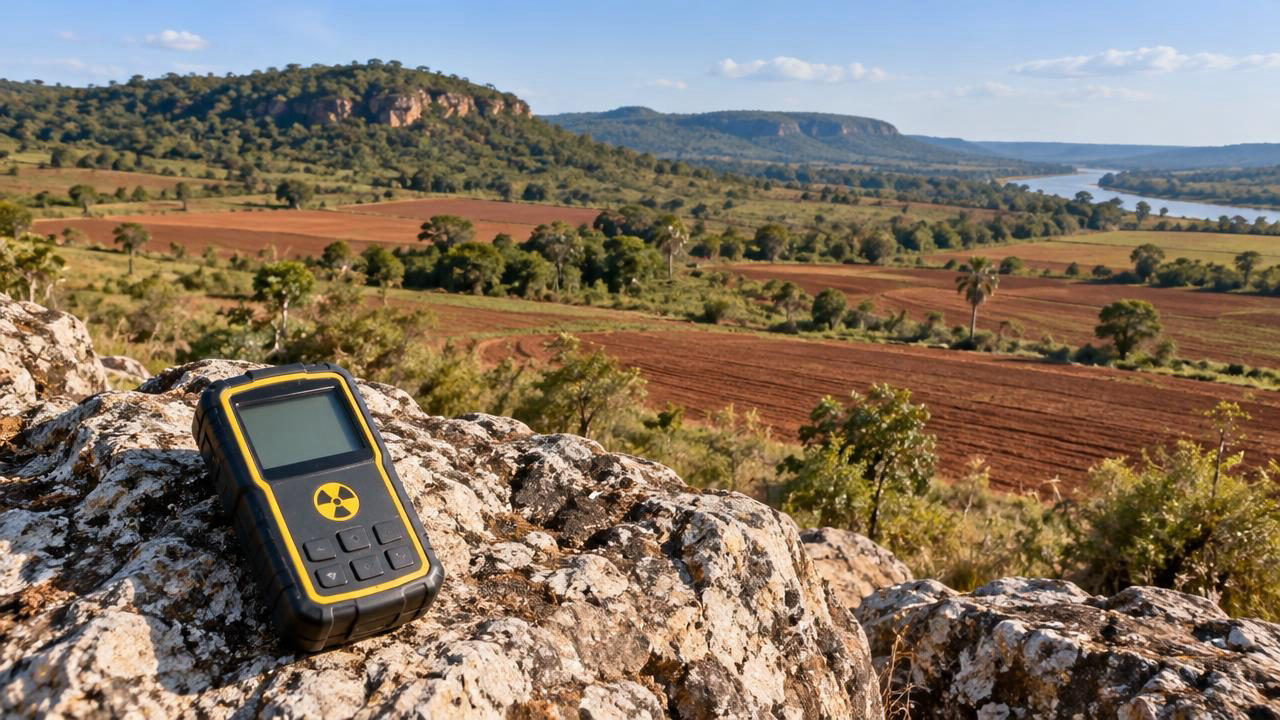 Mining & EnergyUranium One startet nach Genehmigung erstes Uranprogramm in ParaguayUranium One Mining Corp. (CSE: UUU) verfügt über die Prospektionsgenehmigung des paraguayischen Bergbauministeriums und teilte am 2. November 2026 mit, dass das erste Explorationsprogramm des Unternehmens auf dem rund 90,000 Hektar großen Uranprojekt Yuty Prometeo läuft. Der Prometeo-Block grenzt direkt an das Yuty-Projekt der Uranium Energy Corp., eine definierte Ressource, die sich laut UEC nach vorläufigen Studien für die In-situ-Gewinnung eignet. Historische Anschutz-Aufzeichnungen zu Prometeo nennen 0.05 bis 0.10 Prozent U3O8 über 107 Meter, und San Jose kommt als zweites, größeres Zielgebiet hinzu.Élise Galarneau · 2. November 2026 · 8 min
Den Maple Morning Debrief erhalten
Der gestrige Schluss, die Nacht und worauf Sie vor der Eröffnung achten sollten — bis 6 Uhr ET in Ihrem Postfach. Kostenlos, Abmeldung mit einem Klick.
Folgen und fragen
Mehr von unserer Berichterstattung zu den kanadischen Märkten in Google Top Stories.
Quellen und Verweise (3)
- Department of Finance Canada — countermeasures and tariff lists
- Global Affairs Canada — CUSMA joint review statements
- Government of Canada — 2026 report on CUSMA consultations
Diese Analyse zitieren
Bitte The Maple Markets nennen und auf die Originalseite verlinken.
Priya Sandhu (2. September 2026). CUSMA Has Become a Valuation Variable. The Maple Markets. https://themaplemarkets.ca/de/newsroom/cusma-as-a-valuation-variable-tariffs-rules-of-originhttps://themaplemarkets.ca/de/newsroom/cusma-as-a-valuation-variable-tariffs-rules-of-origin