
The Mortgage Renewal Wall: Doing the Payment Shock Math
How much payments actually rise, who is exposed, and where it lands on bank balance sheets
Canadian mortgages renew every few years, not every thirty. That structural difference concentrates rate risk into renewal windows, and the arithmetic is more specific than the headlines suggest.
By Priya Sandhu4 min read

The Canadian mortgage market differs from the American one in a way that matters enormously and is rarely stated plainly: the standard Canadian mortgage has a term of five years or less amortised over twenty-five, so the interest rate resets at renewal. There is no thirty-year fixed. Rate risk is not eliminated by choosing a fixed rate; it is deferred to a known date.
That structure produces renewal cohorts — waves of borrowers repricing in the same window — and the analysis of a renewal wall is fundamentally about arithmetic.
The base calculation
Illustrative worked example. A borrower took a five-year fixed mortgage of C$600,000 at 2.6%, amortised over 25 years. The monthly payment is approximately C$2,716. After five years of payments, the outstanding balance is roughly C$514,000, with 20 years remaining.
At renewal, the rate is 5.0% on a 20-year remaining amortisation. The new monthly payment is approximately C$3,391.
The increase is C$675 per month, or about 25%. Annualised, that is roughly C$8,100 of after-tax income redirected from everything else to housing.
Now change one input. Renew at 4.25% instead: the payment is approximately C$3,183, an increase of C$467 or 17%. The sensitivity to the renewal rate is steep, and a hundred basis points of policy easing between now and a borrower's renewal date changes their outcome materially. This is why renewal risk is a distribution, not a single number.
Variable rate and the static-payment problem
Some Canadian variable-rate mortgages have static payments: the monthly amount does not change when rates change, but the split between interest and principal does. When rates rose sharply, some of these borrowers reached the point where the payment no longer covered the interest accruing, and negative amortisation occurred — the balance grew.
Lenders responded by extending amortisation periods, which held payments flat but pushed the loan out beyond its original schedule. At renewal, these loans must be re-amortised back to a contractual schedule, which produces a larger payment increase than the rate change alone implies.
The banks disclose the amortisation distribution of their residential book, in buckets. The share of balances with remaining amortisation beyond 30 years is the specific number to track. A falling share is genuine repair; a stable share is deferral.
Who is actually exposed
Exposure is uneven, and the disclosure allows some segmentation:
- Origination vintage. Borrowers who originated at the lowest rates face the largest gap at renewal. The cohort renewing in a given year is knowable in advance from origination data.
- Insured versus uninsured. Insured mortgages carry default insurance, so the credit loss on default is largely borne by the insurer, not the bank. Uninsured mortgages, typically with larger down payments, carry the credit risk on the bank's books — but also have more equity cushion.
- Loan-to-value at origination and current. Banks disclose average LTV on the uninsured book. Falling home prices raise effective LTV and reduce the borrower's ability to refinance elsewhere.
- Income growth since origination. Wage growth partially offsets payment shock. Nominal income growth over a five-year term of 15-20% absorbs a meaningful share of a 25% payment increase.
Where it lands financially
For households, payment shock is a consumption event before it is a credit event. The first response is to reduce discretionary spending, draw down savings, and extend other credit. Canadian retail, travel and discretionary goods companies feel it before any mortgage goes delinquent.
For banks, the sequence is:
- Stage 2 migration under IFRS 9. Loans showing a significant increase in credit risk move to lifetime expected loss provisioning before any default occurs. Provisions rise while credit performance still looks fine.
- Delinquency rates. Disclosed by product, typically 90+ days.
- Realised losses. These arrive last and, for insured mortgages, are substantially mitigated.
Canadian residential mortgage losses have historically been very low even through severe housing corrections, because of full recourse in most provinces, insurance on high-LTV lending, and underwriting standards including the qualifying stress test. The base case is payment stress rather than credit catastrophe.
What to monitor
- The bank's disclosed remaining-amortisation distribution, particularly balances above 30 years.
- Renewal volumes by year, where disclosed in investor presentations.
- 90+ day delinquency by province, and the gap between Ontario/British Columbia and the rest.
- Consumer discretionary company commentary on Canadian same-store sales, which is the early real-economy read.
- The five-year Government of Canada yield, which drives fixed mortgage pricing and therefore the renewal rate the next cohort faces.
The renewal wall is real and its timing is known. What is not knowable is the rate at which each cohort renews, which is why this remains a sensitivity analysis rather than a forecast.
Weiterlesen
Also in English: The Mortgage Renewal Wall: Doing the Payment Shock Math
 marketsConifex hat ein Bundesdarlehen von bis zu C$30 Millionen und eine Marktkapitalisierung von C$5.1 MillionenConifex Timber Inc. (TSX: CFF) teilte am 18. September 2026 mit, ein Large Enterprise Tariff Loan von bis zu C$30 Millionen der kanadischen Bundesregierung erhalten zu haben, mit siebenjähriger Laufzeit und besichert durch nahezu das gesamte Vermögen. Die Aktie schloss bei C$0.125, ein Plus von 38.9 Prozent. Zum 30. Juni 2026 standen C$1.3 Millionen freier Liquidität C$101.8 Millionen Schulden und ein Hinweis auf die Fortführungsprämisse gegenüber.Marc Belzile · 18. September 2026 · 6 min
 Mining and ResourcesFür Homeland Nickel läuft die Frist der Forstbehörde, doch die Bohrgenehmigung steht noch ausHomeland Nickel Inc. (TSXV: SHL) teilte am 17. September 2026 mit, der United States Forest Service habe seinen Betriebsplan für ein Sonic-Bohrprogramm in Red Flat, Oregon, angenommen, und die Umwelt- und Kulturgüterprüfung sei weit fortgeschritten, einschließlich abgeschlossener Feldarbeiten. Das Unternehmen hofft, im Oktober zu bohren. Dieselbe Mitteilung wurde am selben Tag erneut versandt, weil ihre Offenlegung zur bezahlten Bewerbung ein Videointerview mit dem Vorstandschef eines anderen Unternehmens beschrieb.Daniel Okoye · 18. September 2026 · 8 min
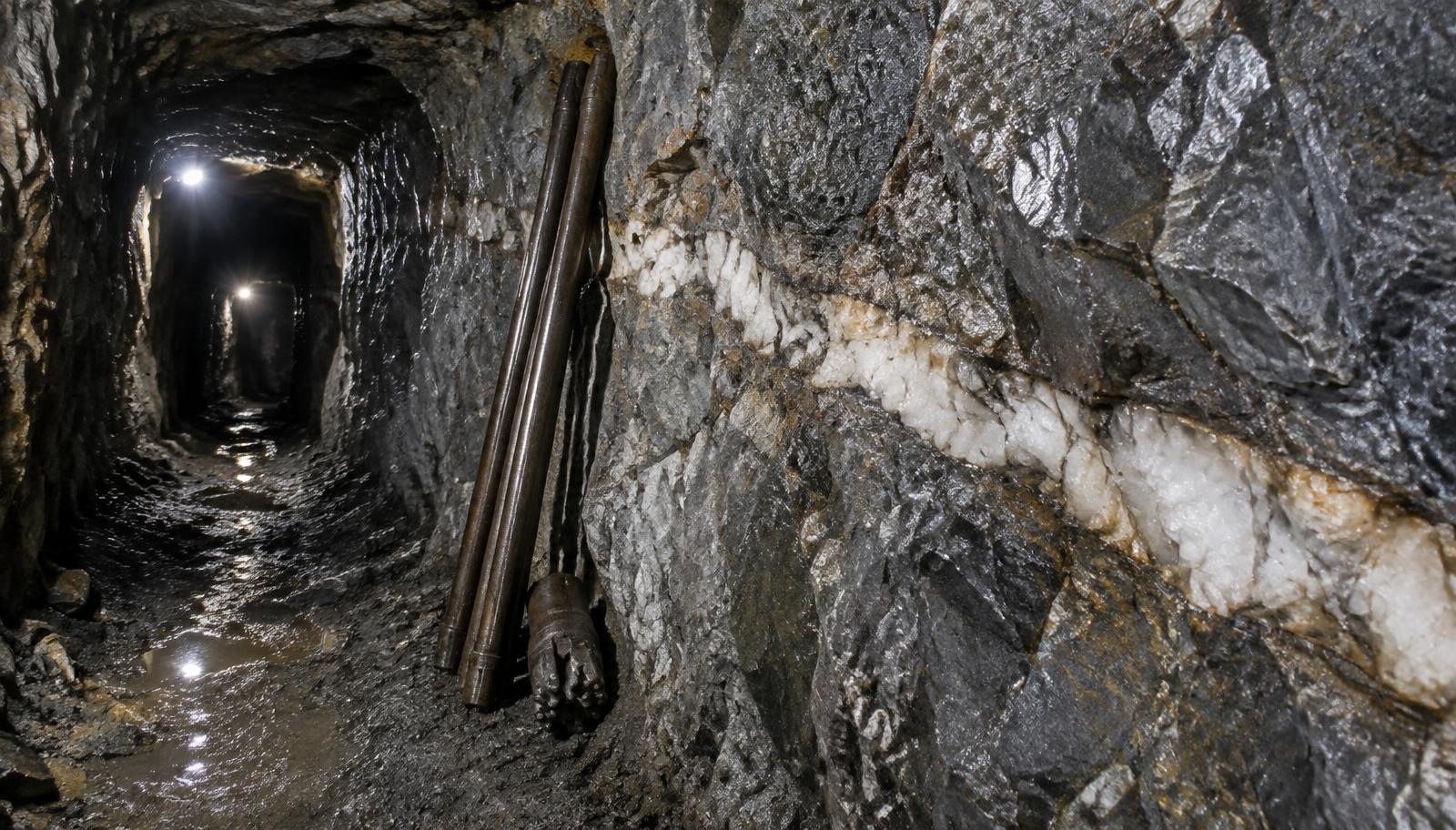 Mining and ResourcesAya Gold and Silver hat in Zgounder 3.501 g/t Silber erbohrt und daraus noch nichts verkauftAya Gold & Silver Inc. (TSX: AYA) meldete am 16. September 2026 hochgradige Silberabschnitte nahe der Grube von Zgounder und in der Tiefe, acht Tage nachdem das Unternehmen den Papierwert seines Projekts Boumadine verdoppelt hatte, und fünfzehn Tage nach der Vereinbarung über den Kauf eines Kupfer-Silber-Konzessionspakets. Die Aktie schloss am 17. September bei C$40,24. Das Unternehmen hält US$182,8 Millionen an Barmitteln, und rund 80 Prozent des Metalls in der Boumadine-Studie liegen in der spekulativsten Ressourcenkategorie, die es gibt.Élise Galarneau · 18. September 2026 · 8 min
Dieser Geschichte folgen
RY, TD folgen – der nächste Maple-Beitrag zu diesen Unternehmen, dazu der Maple Morning Debrief vor Handelsbeginn.
Folgen und fragen
Mehr von unserer Berichterstattung zu den kanadischen Märkten in Google Top Stories.
Offenlegung
As of the publication date, the author, editor, publisher, their immediate households and affiliated entities do not own positions in the securities discussed. The Maple Markets received no compensation from any company, its officers, investor-relations providers or financiers in connection with this article. Figures are drawn from public filings as of the date shown and are not restated for later disclosure. Worked examples labelled illustrative use assumed inputs to show a method, not a forecast. This article is informational only and is not investment, legal, accounting or tax advice. Lesen Sie den finanziellen Haftungsausschluss.
Quellen und Verweise (4)
- CMHC housing research
- Bank of Canada — rates and statistics
- OSFI — capital and liquidity guidance
- Statistics Canada
Diese Analyse zitieren
Bitte The Maple Markets nennen und auf die Originalseite verlinken.
Priya Sandhu (31. August 2026). The Mortgage Renewal Wall: Doing the Payment Shock Math. The Maple Markets. https://themaplemarkets.ca/de/newsroom/mortgage-renewal-payment-shock-math-2026https://themaplemarkets.ca/de/newsroom/mortgage-renewal-payment-shock-math-2026