
What You Actually Own in a TSX Index Fund
Capped weights, sector concentration and the eligibility rules that shape the index
A Canadian index fund is described as diversified exposure to the Canadian market. It is more precisely a concentrated bet on financials, energy and materials, governed by rules worth reading.
By Marc Belzile3 min read
Dieser Artikel ist derzeit nur auf Englisch verfügbar.
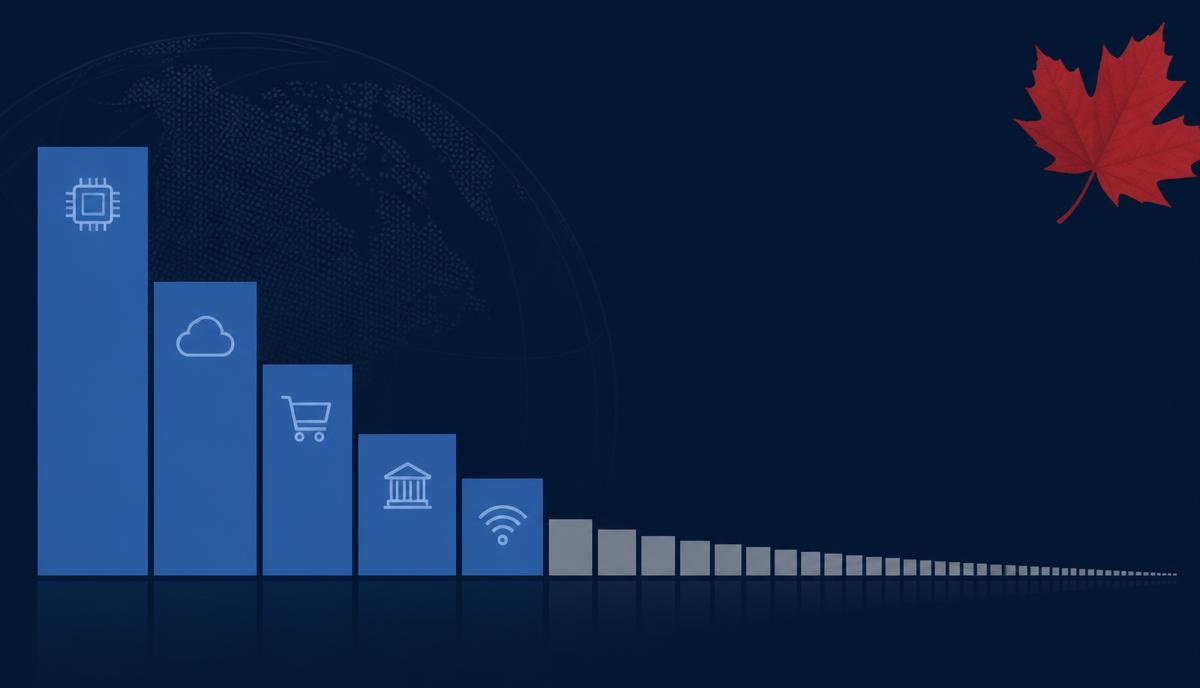
Buying a Canadian index fund is a decision to accept somebody else's rules about what belongs in the market and how much of each thing you get. Those rules are published, short and worth reading once.
Eligibility
To join the S&P/TSX Composite, a security must be listed on the Toronto Stock Exchange, meet a minimum weight threshold in the index, satisfy liquidity requirements measured by turnover, and meet a minimum price test. Securities are float-adjusted, meaning shares held by control blocks, governments or strategic holders are excluded from the weight calculation.
Float adjustment has a practical consequence in Canada that it does not have everywhere: a meaningful number of Canadian issuers have concentrated founder or family ownership, and dual-class structures are more common on the TSX than on many peer exchanges. A company can be large by market capitalisation and modest by index weight because most of its shares are not freely traded.
Concentration is the defining feature
The Canadian market is small relative to global equity markets and heavily weighted toward three sectors: financials, energy and materials. In combination, those three have generally accounted for a majority of the Composite's weight. Information technology weight has been volatile and has, at times, been dominated by one or two names.
This is not a flaw in the index. It is an accurate representation of the Canadian listed economy. It becomes a problem only when the index is described as diversified, because the correlation structure inside it is high:
- Financials are exposed to Canadian housing, domestic credit and the rate cycle.
- Energy and materials are exposed to global commodity prices and, indirectly, the same global growth cycle.
- The Canadian dollar is itself commodity-correlated, which means the currency and the index tend to move together rather than offset.
An investor holding a Canadian index fund, a Canadian home and a job in a Canadian city has a level of concentrated exposure to a single economy that no equity diversification statistic captures.
Capped variants exist for a reason
The Composite has a capped version that limits any single constituent's weight, applied at rebalancing. The capped index exists because of a specific Canadian episode: at its peak, one telecommunications equipment company reached an extraordinary share of the entire index, and its collapse produced index losses that few investors understood they were exposed to.
Most large Canadian index ETFs track a capped variant. Verifying which index a fund tracks — capped or uncapped — is a thirty-second check in the fund facts document and materially changes single-name risk.
Rebalancing mechanics
The index is reviewed quarterly, with share count and float updates applied on a set schedule and additions or deletions announced in advance. Two consequences for investors:
- Announcement effects. Additions tend to see buying pressure between announcement and effective date as index funds prepare, and deletions the reverse. This is well documented and largely arbitraged, but it explains price action that otherwise looks unexplained.
- Turnover cost. Index funds must trade at rebalance. The cost is embedded in tracking difference rather than disclosed as a fee.
What this means practically
For an investor using a Canadian index fund as a core holding:
- Check whether the fund tracks the capped index. Nearly all major ones do; confirm rather than assume.
- Look at the top ten holdings and their combined weight. In Canada this is typically a much larger share of the fund than in a broad US or global index.
- Treat the Canadian allocation as a sector bet. If you hold Canadian equity plus a global fund, calculate your total financials and energy exposure across both.
- Compare tracking difference, not MER, between competing funds tracking the same index. Fee differences among the largest Canadian index ETFs are small; realised tracking difference captures the full cost.
- Consider the currency. A Canadian index fund is unhedged CAD exposure by construction, which is the appropriate default for a Canadian investor with Canadian liabilities.
The conclusion worth keeping
The index is a rulebook, not a market truth. Those rules produce a portfolio that is genuinely representative of listed Canada and genuinely concentrated. Both statements are true simultaneously, and an investor who understands that owns the fund deliberately rather than by default.
Offenlegung
As of the publication date, the author, editor, publisher, their immediate households and affiliated entities do not own positions in the securities discussed. The Maple Markets received no compensation from any company, its officers, investor-relations providers or financiers in connection with this article. Figures are drawn from public filings as of the date shown and are not restated for later disclosure. Worked examples labelled illustrative use assumed inputs to show a method, not a forecast. This article is informational only and is not investment, legal, accounting or tax advice.
Weiterlesen
Also in English: What You Actually Own in a TSX Index Fund
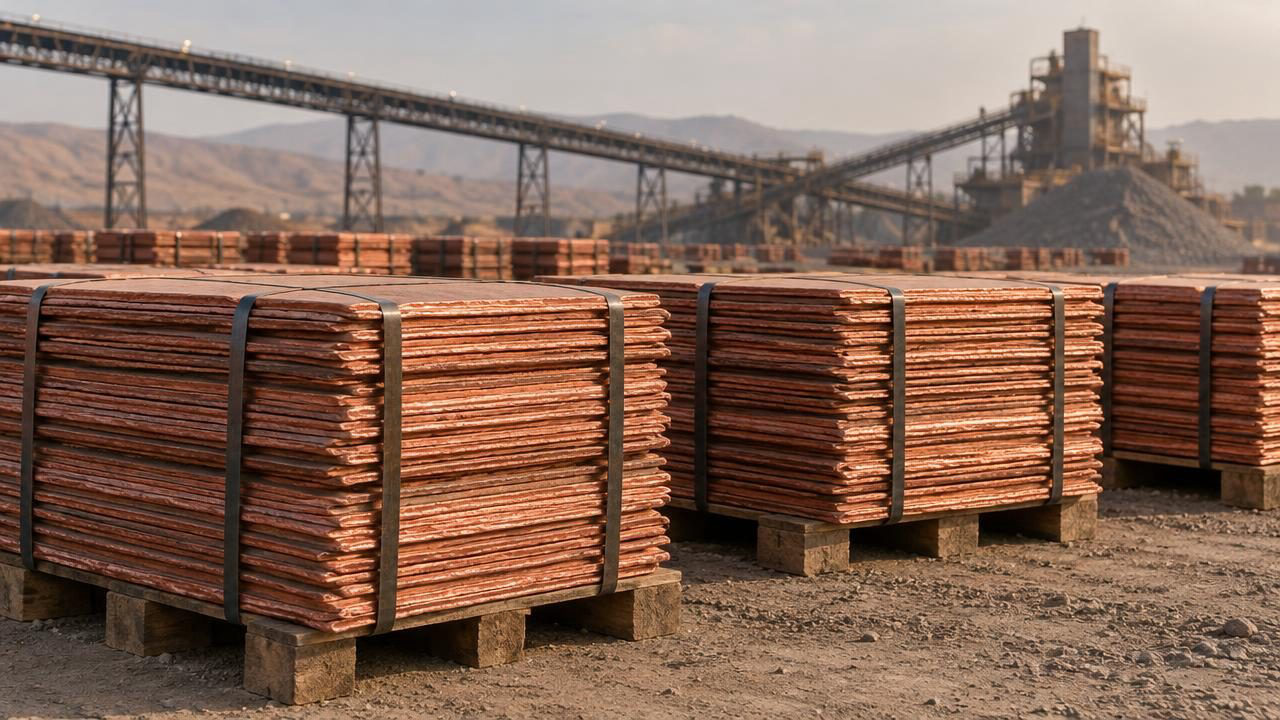 Mining & EnergyIvanhoe Mines berichtet am Dienstag über ein Kupferquartal mit 76,401 TonnenIvanhoe Mines veröffentlicht seine Finanzergebnisse für das dritte Quartal 2026 nach Börsenschluss am 3. November und veranstaltet die Telefonkonferenz am 4. November. Die Produktion ist bereits öffentlich: 76,401 Tonnen Kupfer aus Kamoa-Kakula, ein Rekord von 77,147 Tonnen Zink aus Kipushi und eine bestätigte Prognose. Die Ergebnisse ergänzen Gewinne, Kosten und Bilanz hinter diesen Tonnen; die Aktie schloss am 2. November bei C$9.00.Élise Galarneau · 3. November 2026 · 6 min
 Mining & EnergyMyriad Uranium schließt den Erwerb des 55,000 Hektar großen Projekts Los Altares in Argentinien abMyriad Uranium hat am 2. November 2026 den Erwerb des Projekts Los Altares im Zentrum der argentinischen Provinz Chubut abgeschlossen und übernimmt 100 Prozent von rund 55,000 Hektar neben dem bekanntesten Urandistrikt Argentiniens, für C$300,000 in bar, 1,571,268 Aktien und eine Lizenzgebühr von 2 Prozent. Das Unternehmen will die rund 12,500 Meter historischer Bohrungen zusammenstellen und den Sandstein auf In-situ-Laugung prüfen; eine Ressource wurde für das Projekt nicht geschätzt.Daniel Okoye · 3. November 2026 · 6 min
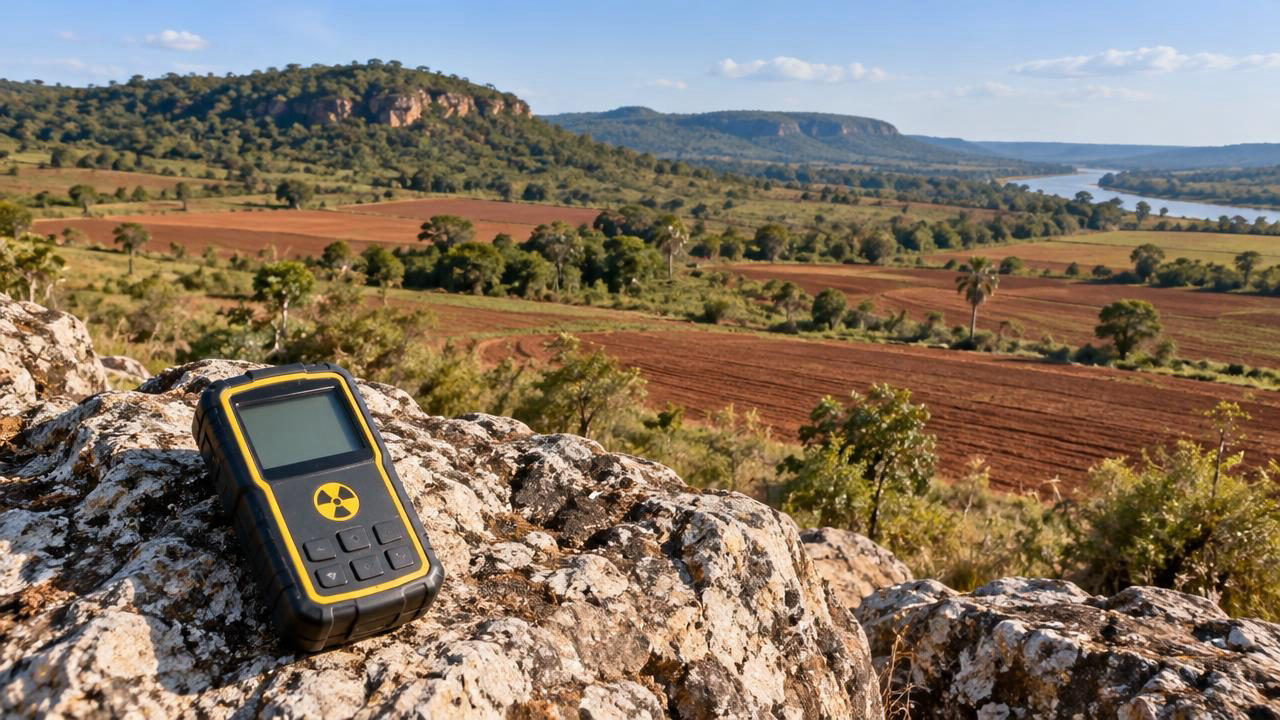 Mining & EnergyUranium One startet nach Genehmigung erstes Uranprogramm in ParaguayUranium One Mining Corp. (CSE: UUU) verfügt über die Prospektionsgenehmigung des paraguayischen Bergbauministeriums und teilte am 2. November 2026 mit, dass das erste Explorationsprogramm des Unternehmens auf dem rund 90,000 Hektar großen Uranprojekt Yuty Prometeo läuft. Der Prometeo-Block grenzt direkt an das Yuty-Projekt der Uranium Energy Corp., eine definierte Ressource, die sich laut UEC nach vorläufigen Studien für die In-situ-Gewinnung eignet. Historische Anschutz-Aufzeichnungen zu Prometeo nennen 0.05 bis 0.10 Prozent U3O8 über 107 Meter, und San Jose kommt als zweites, größeres Zielgebiet hinzu.Élise Galarneau · 2. November 2026 · 8 min
Dieser Geschichte folgen
XIC, ZCN folgen – der nächste Maple-Beitrag zu diesen Unternehmen, dazu der Maple Morning Debrief vor Handelsbeginn.
Folgen und fragen
Mehr von unserer Berichterstattung zu den kanadischen Märkten in Google Top Stories.
Quellen und Verweise (3)
Diese Analyse zitieren
Bitte The Maple Markets nennen und auf die Originalseite verlinken.
Marc Belzile (29. August 2026). What You Actually Own in a TSX Index Fund. The Maple Markets. https://themaplemarkets.ca/de/newsroom/sp-tsx-composite-index-construction-concentrationhttps://themaplemarkets.ca/de/newsroom/sp-tsx-composite-index-construction-concentration