
US$1,500 Bought the Research Note Circulating on First Phosphate This Week
Emerging Growth Research is paid by the company it writes about, and the four company releases underneath its note carry more weight than the note itself.
A New York research firm issued a press release on 23 September 2026 announcing a new flash report on First Phosphate Corp., the Quebec igneous phosphate developer listed on the CSE as PHOS. The report's own disclosure page says First Phosphate paid for it: US$1,500, described in the text as Company Sponsored Research. The underlying month was a good one for the company, with a much larger resource filed in August and a Swiss export-credit letter in September. None of that came from the note.
By Priya Sandhu8 min read

Fee paid for the flash report
US$1,500
disclosed in the report's own text as compensation from "the subject Company", with a further US$0 expected over twelve months; Emerging Growth Research release, 2026-09-23.
Conference fee on the same publisher's rate card
US$12,500 per quarter
the published charge for presenting companies; whether First Phosphate paid for its 24 September slot is not disclosed; EmergingGrowth.com disclosure page read 2026-09-23.
Indicated mineral resource, Bégin-Lamarche
198.5 Mt at 6.00 per cent P₂O₅
effective 2026-05-01, filed 2026-08-24, up 378 per cent on the September 2024 estimate; no mineral reserves exist.
Audited cash against initial capital
C$20.2 million versus C$675 million
cash at 2026-02-28 per the financial statements filed 2026-07-29; capital cost from the company's preliminary economic assessment; feasibility study expected early 2027.
Listings
CSE and Nasdaq PHOS, FSE KD0, WKN A3DQCH, ISIN CA33611D1033, OTCQX FRSPF
Deutsche Börse and Tradegate instrument pages; close C$2.21 on 2026-09-23, down 3.5 per cent, 15-minute delayed secondary market data.
A research firm in New York published a note about a Quebec phosphate developer on 23 September 2026, and the company it wrote about paid for the note. The fee, disclosed in the firm's own text, was US$1,500.
That single line settles what the document is. Emerging Growth Research, LLC issued a press release through ACCESS Newswire announcing a new flash report on First Phosphate Corp., the igneous phosphate developer listed on the Canadian Securities Exchange as PHOS and on Nasdaq as PHOS. The release names no author of a valuation and contains no rating. What it does contain, near the bottom, is this: "EGR is being compensated by the subject Company of this report. EGR was paid one thousand five hundred USD for this report and expects to receive an additional zero dollars over the following 12 months." Two paragraphs later the firm calls the document by its own name for such things. It is "Company Sponsored Research."
A fee that size decides what the document can be
Issuer-paid research is legal, disclosed and common among small companies that no bank follows. The problem is not that it exists. The problem is that on a news feed it sits beside the company's own filings and looks like the same class of thing.
The distinguishing test is simple. A brokerage analyst is paid by the firm's clients and can be wrong in public at a cost to the firm's reputation, which is why the ratings move and occasionally move down. Emerging Growth Research is paid by the subject of the report, and its published disclosure says plainly where that leaves it: "EG and EGR have a conflict of interest and strongly urge you to consult your own independent financial, investment, tax, and legal advisors prior to purchasing or selling any securities mentioned herein."
The same page states that "EG is not a licensed broker, broker dealer, market maker, investment banker, investment advisor, analyst, or underwriter," and that the firm is not regulated by the United Kingdom's Financial Conduct Authority, so a complaint about the work has nowhere formal to go.
The scale of the arrangement is on the public disclosure page too. Companies profiled there pay a minimum of US$500 for each post. Companies that present at the firm's Emerging Growth Conference pay US$12,500 quarterly for a package of services.
First Phosphate presents on Day 2 of Conference 96 on Thursday 24 September 2026 from 10:50 to 11:20 Eastern time, by video webcast. The conference release discloses that "certain of the presenting companies have paid us a fee to secure a presentation time slot or to present generally" and does not say which ones, so whether First Phosphate paid for its slot is not disclosed either way. On the published rate card, a quarter of conference access costs roughly eight times what the note cost.
The C$5.72 figure came from a discount rate, not from the rock
The 23 September release carries no valuation. An earlier flash report from the same firm, dated 2 September 2026, does, and it is the figure still circulating. In it Emerging Growth Research carried a buy rating and a price target of C$5.72 per share, raised from C$4.94, against a reference price of C$2.25.
The arithmetic behind it is worth following, because it is the cleanest illustration of what a paid note is doing. The C$5.72 is a sum of two net asset values: C$617 million for the mine at a 10.5 per cent discount rate, and C$431 million for a proposed phosphoric acid plant at Port Saguenay at 12.5 per cent. Together, C$1,083 million across 189.1 million shares gives C$5.73 a share. A discount rate is the annual penalty applied to money that arrives years from now rather than today; a lower rate makes distant cash worth more, and nothing about the deposit has to change for that to happen.
Both rates in the September report were cut by one percentage point from the previous version, from 11.5 and 13.5 per cent. That single change accounts for essentially the whole increase from C$4.94 to C$5.72, a rise of 15.8 per cent. No new tonne of rock was involved.
The firm's stated reason for the cut was de-risking: the Nasdaq listing, inclusion in Quebec's fast-track permitting process, and the larger resource. Those are real events. They are also the company's events, disclosed by the company, and an outside party choosing to reprice them at a lower discount rate is an opinion about risk rather than a measurement of value.
The company's own September was the stronger document
Here is what makes the register of this awkward: First Phosphate has had a genuinely good five weeks, and almost none of the evidence for that comes from the note.
On 24 August 2026 the company filed a technical report under National Instrument 43-101 for an updated mineral resource at Bégin-Lamarche, 50 kilometres northwest of Saguenay, with an effective date of 1 May 2026. It reports 6.2 million tonnes Measured at 7.70 per cent phosphorus pentoxide, 198.5 million tonnes Indicated at 6.00 per cent, and 89.5 million tonnes Inferred at 6.16 per cent. The Indicated category, the one an engineer may build a feasibility study on, rose 378 per cent against the September 2024 estimate. That is a large and specific improvement, and it is the company's own filed work.
On 16 September 2026 Switzerland's export credit insurer said it would consider supporting up to US$212.5 million toward the project's capital cost, which is 85 per cent of an assumed Swiss export contract value of US$250 million. Maple covered that letter on 18 September and the point then still holds: it is a letter of support subject to due diligence and a binding agreement, and no supplier, lender or signed contract is named. On 21 September a study of the deposit's geology appeared in the journal Ore Geology Reviews, independent confirmation of how the phosphate formed and how low it is in the trace elements that spoil sedimentary rock.
Set against those three documents, the flash report adds no fact. It restates them, adds a capital-cost figure of roughly C$675 million from the company's own preliminary economic assessment, and lists the financing letters: up to C$275 million from Denmark's export credit fund, letters from three Italian agencies for the Port Saguenay plant, a US Export-Import Bank letter of interest up to US$170 million, and C$21.5 million from the Government of Canada.
That last number does not match the company's own release of 5 August 2026, which announced C$4.84 million in non-repayable federal contributions for road and power infrastructure. The note does not reconcile the two, which is the ordinary consequence of a summary written about documents rather than from them.
What has to be settled before any of it is a mine
Two categories are still missing, and they are the ones that decide whether C$675 million of construction happens.
There are no mineral reserves. A resource is rock that has been measured; a reserve is rock an engineer has costed and a company can commit money against. The step between them is a feasibility study, and the company expects that study in early 2027. Every letter in the financing stack is written against a project that has not yet cleared it.
Then there is the equity. The last audited balance sheet, for the year ended 28 February 2026 and filed as an exhibit to the company's Form 40-F on 29 July 2026, shows cash of C$20,190,457 and total liabilities of C$3,891,993 on 177,199,011 shares. The interim statements for the quarter to 31 May 2026 were not available, and the SEDAR+ filing system was unreadable on 23 September 2026, so the audited February figure is the most recent one drawn from a filing rather than from a presentation.
The company's September 2026 corporate deck shows 190,419,664 shares basic and 203,653,479 fully diluted, and describes the company as debt free. A placement that closed on 10 July 2026 raised C$17,698,290, most of it as flow-through shares at C$2.00 with warrants struck at C$2.50.
Put those beside the project. Roughly C$20 million of audited cash and a market value of about C$418 million stand against an initial capital estimate of C$675 million. Export credit agencies lend against completed studies and signed supply contracts, and the equity portion of a project that size is not raised at C$1,500 a note. First Phosphate closed at C$2.21 on 23 September 2026, down 3.5 per cent, on exchange data read after the close and delayed 15 minutes.
For anyone finding the security in Europe, it trades on the Frankfurt Stock Exchange under the symbol KD0, with WKN A3DQCH and ISIN CA33611D1033, and on OTCQX as FRSPF. When Maple checked the Deutsche Börse instrument page on 21 September it showed no last price and no volume, so the German line is an identifier rather than a market, and price discovery happens on the CSE and on Nasdaq.
None of which makes the flash report dishonest. It disclosed its fee, in dollars, in the text, which is more than a good deal of promotional material manages. It is simply a different instrument from the filings it summarises, and the four documents First Phosphate published itself between 5 August and 21 September will still be readable long after the note has scrolled off the feed.
Transparency note
Transparency note. This is an independent due-diligence analysis and editorial opinion piece produced by The Maple Markets editorial desk. It is not sponsored, promoted or commissioned, and no compensation of any kind has been received from First Phosphate Corp. (CSE: PHOS) or any party acting on their behalf. The analysis is based on public disclosure available as of the publish date; every figure is attributed to its primary source. The Maple Markets and its authors may hold positions in securities mentioned; nothing here is a recommendation to buy, sell or hold any security, and readers should not treat it as investment advice. Past disclosure does not guarantee future results. Policies: Editorial Standards · Financial Disclaimer.
Read next
Auch auf Deutsch: US$1,500 bezahlten die Research-Notiz, die diese Woche zu First Phosphate im Umlauf ist
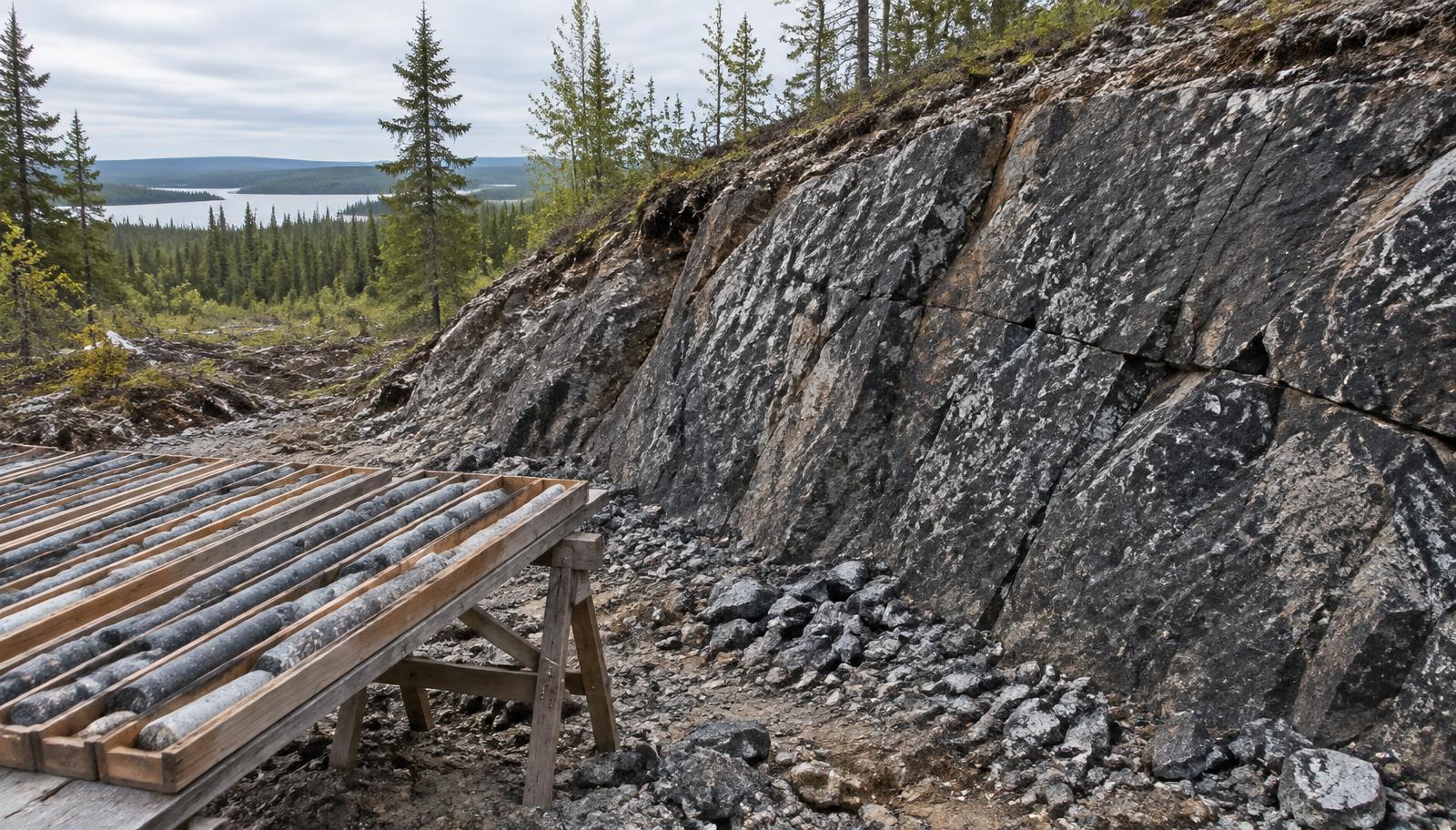 Mining and ResourcesPeer-Reviewed Geology, No Reserves: What First Phosphate's Ore Geology Reviews Paper SettlesFirst Phosphate Corp. (CSE: PHOS) announced on 21 September 2026 that a study of its Bégin-Lamarche deposit has been published in Ore Geology Reviews, and the shares closed at C$2.38, up 6.3 per cent. The paper is the strongest independent evidence the company has produced: the phosphate is magmatic, continuous across three zones, and unusually low in the trace elements that spoil sedimentary rock. It is also seven months old, and two of the four conclusions in the release are not findings of the paper.Priya Sandhu · September 22, 2026 · 10 min
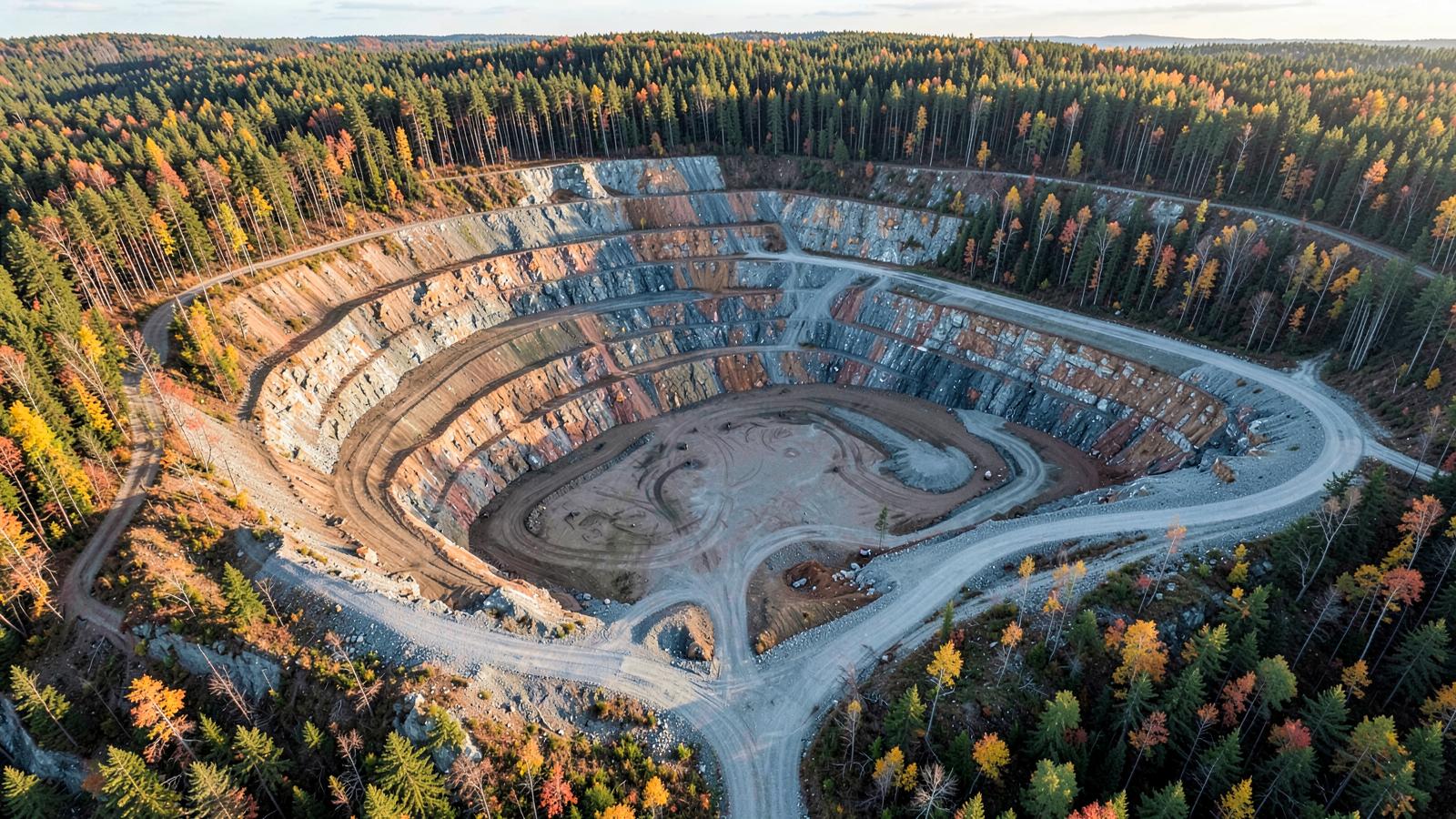 Mining and ResourcesFirst Phosphate (FSE: KD0) Trades on Three Kinds of Numbers, and Only One Describes the DepositFirst Phosphate Corp. (CSE: PHOS, FSE: KD0) told shareholders on September 1, 2026 that holders of record had risen 861 per cent since the 2025 meeting, three weeks after its ADRs began trading on Nasdaq and a week after it filed an updated NI 43-101 resource of 198.5 Mt indicated at 6.00 per cent P2O5. A September 2 flash report that cut the discount rates in its model was paid for by the company at US$1,500. Of the numbers in circulation, only the resource is a filed statement about the rock, and construction financing for Bégin-Lamarche has not been announced.Daniel Okoye · September 8, 2026 · 8 min
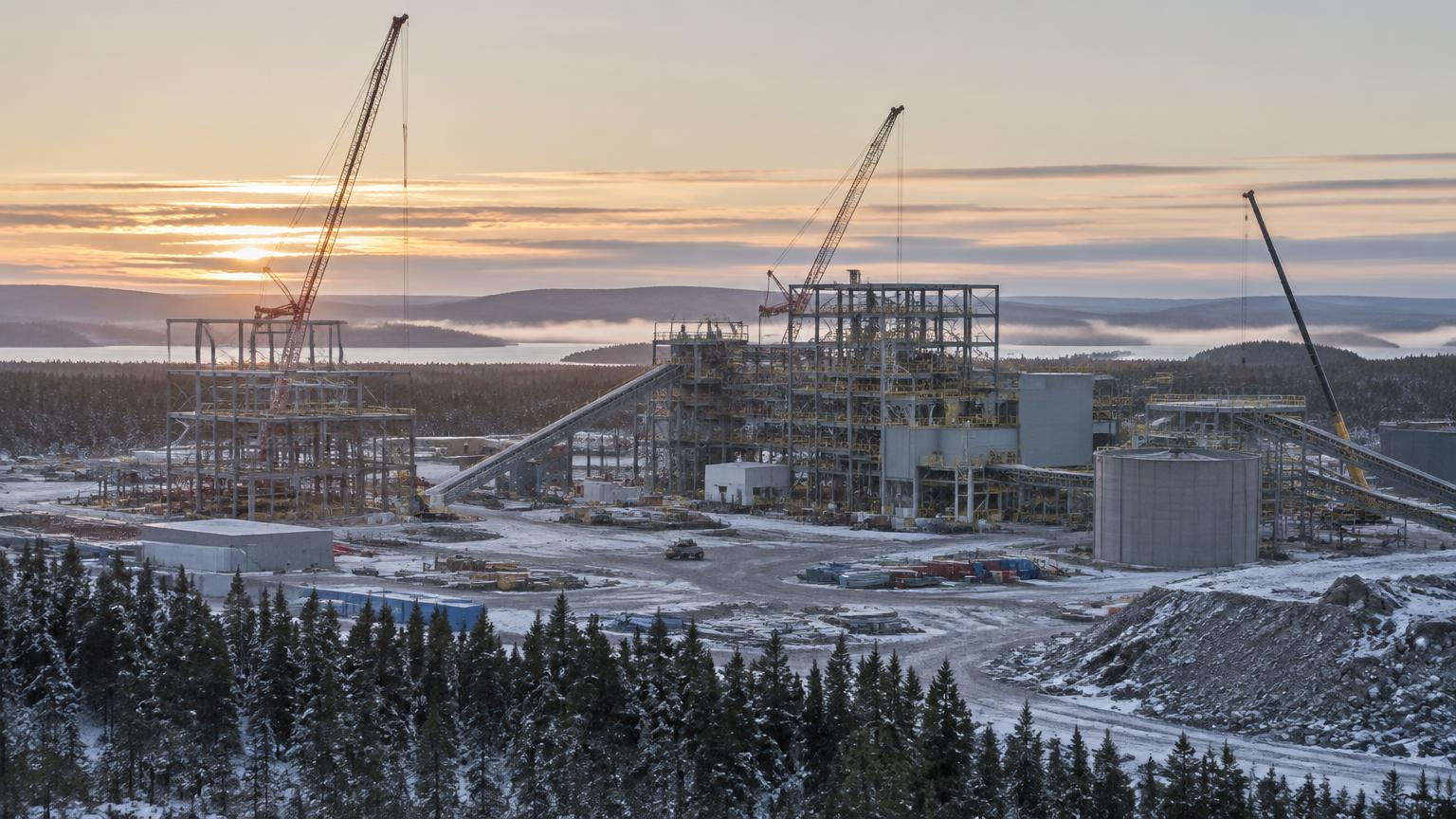 Mining and ResourcesA Swiss Letter of Support Puts US$212.5 Million Beside First Phosphate's Quebec MineFirst Phosphate Corp. (CSE: PHOS) said on 16 September 2026 that Swiss Export Risk Insurance had issued a Letter of Support covering roughly US$212.5 million for its Bégin-Lamarche phosphate project in Quebec. The sum is 85 per cent of an assumed US$250 million Swiss supply contract that has not been signed, and it sits against an initial capital cost the company's own 2024 economic study put at C$675 million.Daniel Okoye · September 21, 2026 · 8 min
Follow this story
Follow PHOS.CN — the next Maple piece on this company, plus the Maple Morning Debrief before the open.
Follow and ask
Get more of our Canadian market coverage in Google Top Stories.
Opinion
This article expresses the author's personal views, is separate from news reporting and is not investment advice.
Disclosure
**Transparency note.** This is an independent due-diligence analysis and editorial opinion piece produced by The Maple Markets editorial desk. It is not sponsored, promoted or commissioned, and no compensation of any kind has been received from First Phosphate Corp. (CSE: PHOS) or any party acting on their behalf. The analysis is based on public disclosure available as of the publish date; every figure is attributed to its primary source. The Maple Markets and its authors may hold positions in securities mentioned; nothing here is a recommendation to buy, sell or hold any security, and readers should not treat it as investment advice. Past disclosure does not guarantee future results. Policies: [Editorial Standards](https://themaplemarkets.ca/en/policies/editorial-standards) · [Financial Disclaimer](https://themaplemarkets.ca/en/policies/financial-disclaimer). See the Financial Disclaimer.
Sources and references (11)
- Emerging Growth Research press release announcing the flash report, 23 September 2026
- EmergingGrowth.com disclosure page, read 23 September 2026
- Emerging Growth Conference 96 Day 2 release, 23 September 2026
- First Phosphate release on the filing of the updated Bégin-Lamarche NI 43-101 mineral resource, 24 August 2026
- First Phosphate release on the Swiss Export Risk Insurance letter of support, 16 September 2026
- First Phosphate release on the peer-reviewed Ore Geology Reviews study, 21 September 2026
- Audited consolidated financial statements for the year ended 28 February 2026, filed 29 July 2026
- First Phosphate release on the closing of the C$17.7 million private placement, 13 July 2026
- First Phosphate release on C$4.84 million in federal infrastructure contributions, 5 August 2026
- Deutsche Börse instrument page, First Phosphate Corp., KD0
- Tradegate order book, ISIN CA33611D1033
Cite this analysis
Please attribute The Maple Markets and link to the original page.
Priya Sandhu (September 24, 2026). US$1,500 Bought the Research Note Circulating on First Phosphate This Week. The Maple Markets. https://themaplemarkets.ca/en/newsroom/first-phosphate-a-flash-report-is-not-coverage-the-emerging-growth-notehttps://themaplemarkets.ca/en/newsroom/first-phosphate-a-flash-report-is-not-coverage-the-emerging-growth-note