
Franco-Nevada's Royalty Portfolio After the Cobre Panamá Writedown
Losing a cornerstone asset tested the diversification argument that royalty companies make.
By Daniel Okoye4 min readTranslation: human
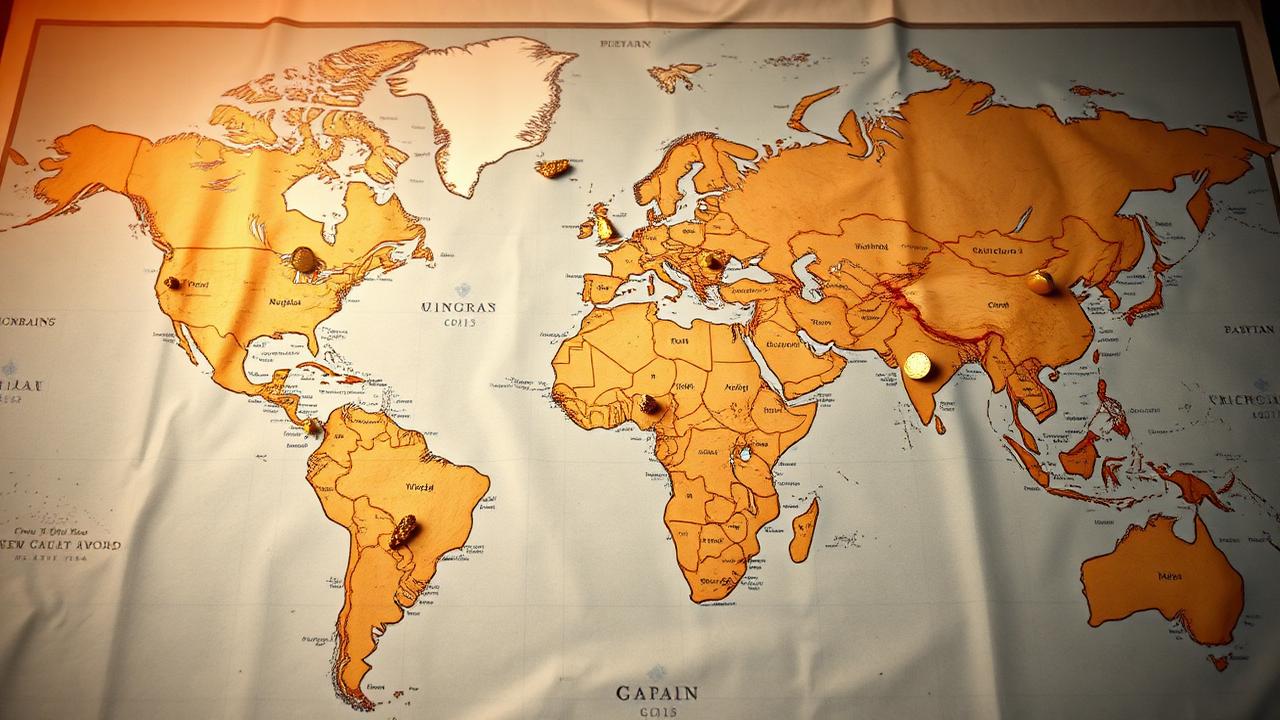
Balance sheet
Debt free
Through the disruption
Royalty term
Does not expire
Restart optionality
Better metric
Top-3 concentration
Than portfolio count
The suspension of Cobre Panamá removed a material contributor from Franco-Nevada's portfolio and provided an unwelcome but genuinely useful test of how much diversification actually protects a royalty company. For a business built on the premise that no single asset should be able to sink the enterprise, this was as close to a live-fire drill as investors are likely to get, and the aftermath is worth studying in some detail rather than treating as a closed chapter.
What the portfolio absorbed
Revenue fell but the company remained cash-generative and debt-free, which is precisely the outcome the diversified model is designed to produce. A single-asset royalty company facing the same event would have faced existential questions about covenant compliance, dividend sustainability and its ability to fund new acquisitions. Franco-Nevada instead continued to operate from a position where it could still evaluate new royalty and streaming opportunities across gold, other precious metals and energy, rather than retrenching to conserve capital. That is the practical difference between a portfolio and a bet: a bet either pays off or it does not, while a portfolio absorbs a loss and keeps functioning. The fact that this event registered as a reduction in growth rather than a threat to the balance sheet is the clearest evidence available that the model performed as designed under real stress, not just in a theoretical downside case modelled by analysts.
The optionality that remains
Royalty interests do not expire when a mine is suspended. If the asset restarts under a negotiated arrangement, the royalty resumes with no additional capital required from the holder. That optionality has real value that book accounting does not capture well, because accounting treatments tend to write down or impair the carrying value of an asset based on current-period cash flow expectations rather than the embedded right to participate in a future restart on essentially the same terms. This is a structural feature of royalty and streaming agreements generally: the holder is not an operator, has no obligation to fund remediation or restart capital, and simply waits for the underlying mine to resume production under whatever commercial or regulatory resolution is eventually reached. That asymmetry — no further capital outlay required, full upside preserved if production resumes — is the reason royalty models trade at premium multiples to direct mining equities in normal markets, and it is precisely the feature being tested here.
Reading the disclosure correctly
Investors evaluating the quarterly and annual filings should distinguish between the reported financial impact of the suspension, which shows up cleanly as a revenue and cash-flow reduction, and the contingent value of a restart, which by its nature cannot be quantified with precision until a resolution is reached. Companies in this position often provide limited forward guidance on restart timing because it depends on matters outside their control, including government negotiations and regulatory processes in the host jurisdiction. That silence should not be read as an absence of value; it should be read as an acknowledgment that the outcome is binary and the timeline uncertain, which is exactly the kind of risk a diversified royalty book is meant to absorb without requiring investors to underwrite it individually.
The lesson for investors
Concentration risk in royalty portfolios is often understated because contributions are reported as percentages of a growing total. Looking at the top three contributors as a share of cash flow is the more honest measure, since a portfolio can appear well-diversified on paper across dozens of royalty interests while still deriving a disproportionate share of actual cash generation from a small handful of flagship assets. When one of those flagship assets is removed, the percentage-based diversification metrics that looked reassuring a year earlier can understate how concentrated the cash-generating base really was. This is not unique to Franco-Nevada; it is a feature of how royalty and streaming portfolios are typically constructed, since the largest and most productive mines naturally attract the largest royalty commitments. The correct response for an investor is to stress-test the portfolio against the loss of each of its top contributors individually, rather than relying on headline counts of royalty interests as a proxy for genuine diversification.
Comparing the model to direct equity exposure
The broader value of this episode is comparative. A direct equity holder in the mine's operator would have faced a far sharper drawdown, tied to the operator's own balance sheet, operating costs and ability to fund care-and-maintenance at the suspended site. The royalty holder's exposure, by contrast, ends at the point of forgone cash flow; there is no obligation to fund the asset through its suspension. This is the mechanism by which royalty and streaming companies are marketed as offering commodity exposure with reduced operational risk, and the Cobre Panamá episode is a real-world illustration of that mechanism functioning under duress rather than merely as a marketing claim.
What to watch
The two things that matter most going forward are the pace and terms of any restart negotiation, since the structure of a resumed royalty could differ from the original terms depending on what is agreed, and how Franco-Nevada redeploys the cash flow that continues to be generated by the rest of the portfolio. New royalty and streaming commitments made during this period will determine whether the concentration that existed before the suspension is reduced or simply shifted toward a different set of flagship assets. Investors should also watch whether disclosure practices around top-contributor concentration improve, since this episode has made the case for that additional transparency more directly than any prior discussion could.
Read next
 Mining and ResourcesRoyalties Versus Operators: Dissecting Streaming EconomicsRoyalty companies are described as miners without the mining risk. Half of that is true. The half that is not true is where the value gets destroyed.Daniel Okoye · August 24, 2026 · 8 min
 Mining and ResourcesA Forest Service Clock Started for Homeland Nickel, but Drill Approval Has Not ArrivedHomeland Nickel Inc. (TSXV: SHL) said on September 17, 2026 that the United States Forest Service had accepted its plan of operation for a sonic drill programme at Red Flat, Oregon, and that environmental and cultural review was well underway, including completed fieldwork. The company hopes to drill in October. The same release was reissued the same day because its paid-promotion disclosure described a video interview with another company's chief executive.Daniel Okoye · September 18, 2026 · 8 min
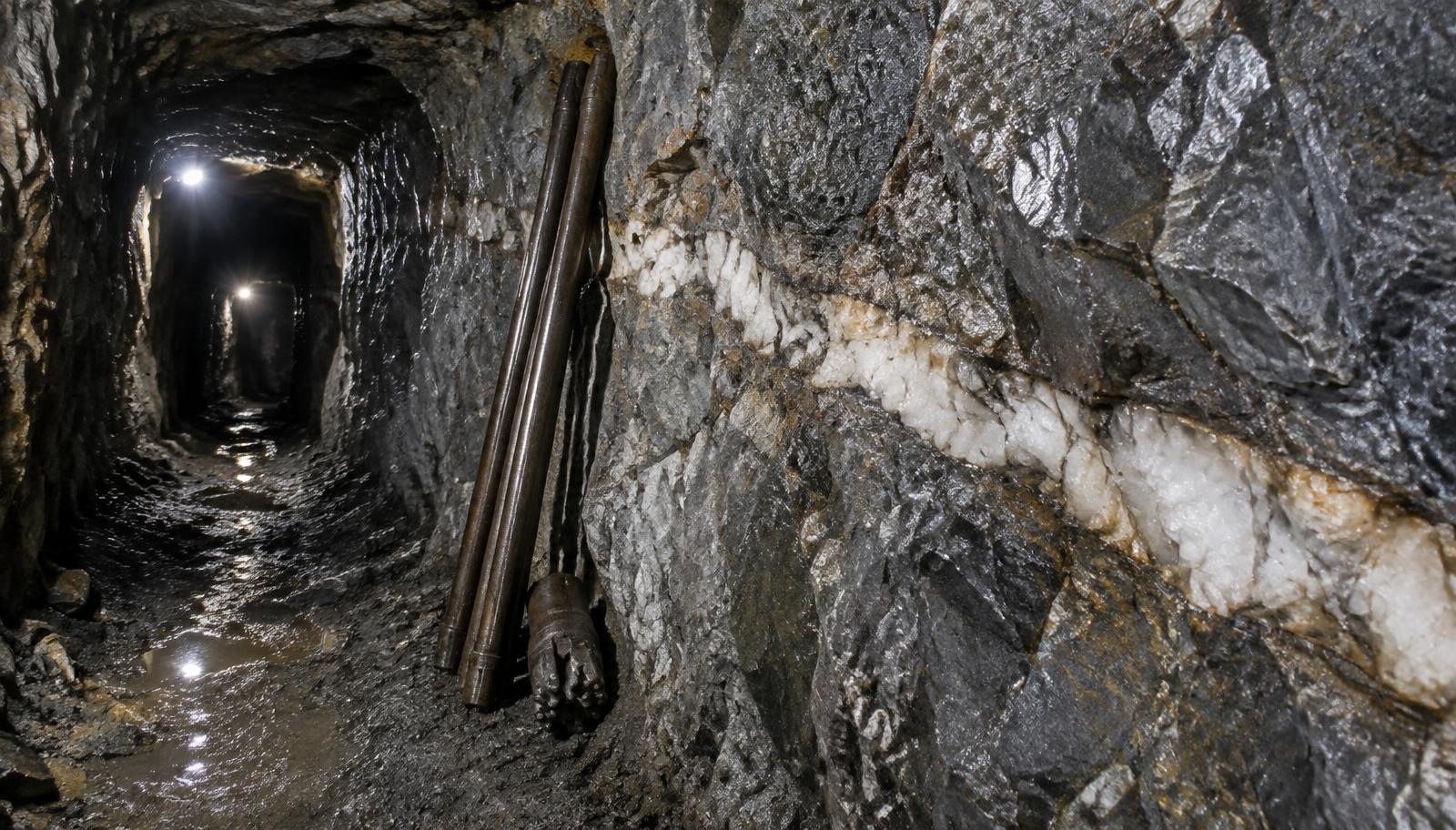 Mining and ResourcesAya Gold and Silver Has Drilled 3,501 g/t Silver at Zgounder and Sold Nothing From It YetAya Gold & Silver Inc. (TSX: AYA) reported high-grade silver intercepts near the Zgounder pit and at depth on September 16, 2026, eight days after doubling the paper value of its Boumadine project and fifteen days after agreeing to buy a copper-silver land package. The shares closed at C$40.24 on 17 September. The company holds US$182.8 million of cash, and about 80 per cent of the metal in the Boumadine study is in the most speculative resource category there is.Élise Galarneau · September 18, 2026 · 8 min
Follow this story
Follow FNV — the next Maple piece on this company, plus the Maple Morning Debrief before the open.
Follow and ask
Get more of our Canadian market coverage in Google Top Stories.
Disclosure
Information only. Not investment advice. The Maple Markets does not hold positions in securities discussed. See the Financial Disclaimer.
Sources and references (2)
Cite this analysis
Please attribute The Maple Markets and link to the original page.
Daniel Okoye (May 22, 2026). Franco-Nevada's Royalty Portfolio After the Cobre Panamá Writedown. The Maple Markets. https://themaplemarkets.ca/en/newsroom/franco-nevada-s-royalty-portfolio-after-the-cobre-panama-writedownhttps://themaplemarkets.ca/en/newsroom/franco-nevada-s-royalty-portfolio-after-the-cobre-panama-writedown