
goeasy's Repair Is Working, but the Earnings Model Has Not Recovered
Sequential progress in credit and leverage is real. It is not the same as a return to the prior earnings profile.
goeasy's charge-offs and leverage improved sequentially in the second quarter. Originations fell 70% year over year and adjusted diluted EPS fell to $1.02 from $4.40. Repair is not reacceleration.
By Hannah Kuan4 min read

The bearish case on goeasy Ltd. does not require a forecast of imminent financial distress.
It requires something less dramatic: accepting that the earnings model investors previously paid for may take materially longer to re-emerge than the balance-sheet repair.
That distinction matters.
Mississauga-based goeasy operates in Canadian non-prime consumer lending, a business in which loan growth, portfolio yield, funding costs and credit losses interact closely. After a severe deterioration in credit performance associated particularly with merchant-originated automotive and powersports lending, the company entered 2026 focused on liquidity, tighter underwriting and balance-sheet repair. Its second-quarter results show evidence that the strategy is producing sequential progress. They also show how much profitability has been sacrificed to achieve it.
Credit: better than last quarter, far worse than last year
goeasy's annualized net charge-off rate was 16.7% in the second quarter of 2026 — an improvement of 110 basis points from the first quarter, but still 800 basis points above the 8.7% reported for the comparable quarter of 2025. The total allowance for credit losses on gross consumer loans was $499.5 million at June 30, up from $406.7 million a year earlier. Management attributed the higher allowance principally to its view of collectability and a weaker credit-loss outlook for merchant-originated automotive and powersports loans.
The company has responded in the rational way: it has lent less.
Gross loan originations were $272.1 million in the second quarter, down 70% from $903.7 million a year earlier. goeasy says the reduction reflected tighter underwriting in merchant automotive and powersports lending and a moderation in direct-to-consumer originations to manage liquidity. Gross consumer loans ended the quarter at $5.00 billion, down 7% sequentially and 2% year over year.
This is where the bearish thesis begins. Reducing originations can improve future credit quality and preserve liquidity. But a lender cannot indefinitely repair credit quality by materially shrinking new business without eventually changing its earnings profile.
The earnings arithmetic
Revenue fell 9.6% year over year to approximately $390.0 million. Operating income fell 40.6% to $99.6 million. Adjusted net income fell 77.1% to $16.8 million, and adjusted diluted earnings per share declined to $1.02 from $4.40. The company identifies lower portfolio yield, elevated credit losses and higher borrowing costs as the key contributors.
Yield pressure deserves particular attention because it is not purely cyclical. goeasy says total loan yield has been affected by tighter credit underwriting, portfolio mix, a higher allowance for credit losses on interest receivable, and the lower maximum allowable interest rate applicable to its unsecured lending product. Canada's Criminal Code currently defines the criminal rate as an annual percentage rate exceeding 35% on credit advanced, following the federal reduction in the maximum-rate regime.
Part of the pressure on unit economics is therefore structural rather than a temporary consequence of the credit cycle. A lender can respond by improving funding costs, shifting product mix, growing ancillary revenue, tightening underwriting or achieving scale efficiencies. It cannot assume the prior regulatory yield environment returns.
Leverage
goeasy's debt-to-adjusted-tangible-equity ratio improved sequentially from 5.30 times at March 31 to 4.95 times at June 30 — evidence the repair is moving in the intended direction. The same ratio was 3.71 times a year earlier. The average blended debt coupon stood at 6.8% at quarter end.
Deleveraging while originations are curtailed is achievable. Deleveraging while restoring growth is the harder problem, and it is the one the equity is priced against.
What the bull case gets right
Charge-offs improved sequentially. Leverage improved sequentially. Originations were deliberately curtailed rather than allowed to compound the problem. These are not the actions of a management team ignoring deteriorating credit, and a lender that shrinks deliberately in a bad vintage often emerges with a cleaner book.
The bull argument is that the credit cycle turns, underwriting normalizes, originations resume and operating leverage does the rest.
The bearish answer is that this recovery has a cost that is already visible: a 70% year-over-year reduction in quarterly originations, a 16.7% net charge-off rate, materially lower yield, and adjusted EPS of $1.02 against $4.40. Those figures do not yet demonstrate a return to the combination of growth and credit quality that supported the prior earnings profile.
There is also a financial-reporting consideration investors should not skip. The company's Q2 tables label comparable 2025 results "as restated." Earlier 2026 disclosures involved revisions to prior-period financial information following the problems identified in the LendCare portfolio. That does not prove further restatements will occur. It does raise the evidentiary burden before assuming historical economics are fully restored.
Research stance
Bearish, pending further evidence of normalization.
What would change the thesis
The position becomes materially less bearish if four things occur together: charge-offs trend decisively toward historical high-single-digit levels; originations begin growing again without renewed deterioration in credit metrics; leverage continues declining rather than rising to fund renewed growth; and portfolio yield stabilizes sufficiently to rebuild earnings despite the lower statutory interest-rate ceiling.
Until then, sequential improvement should be recognized for what it is. Progress — not normalization.
Read next
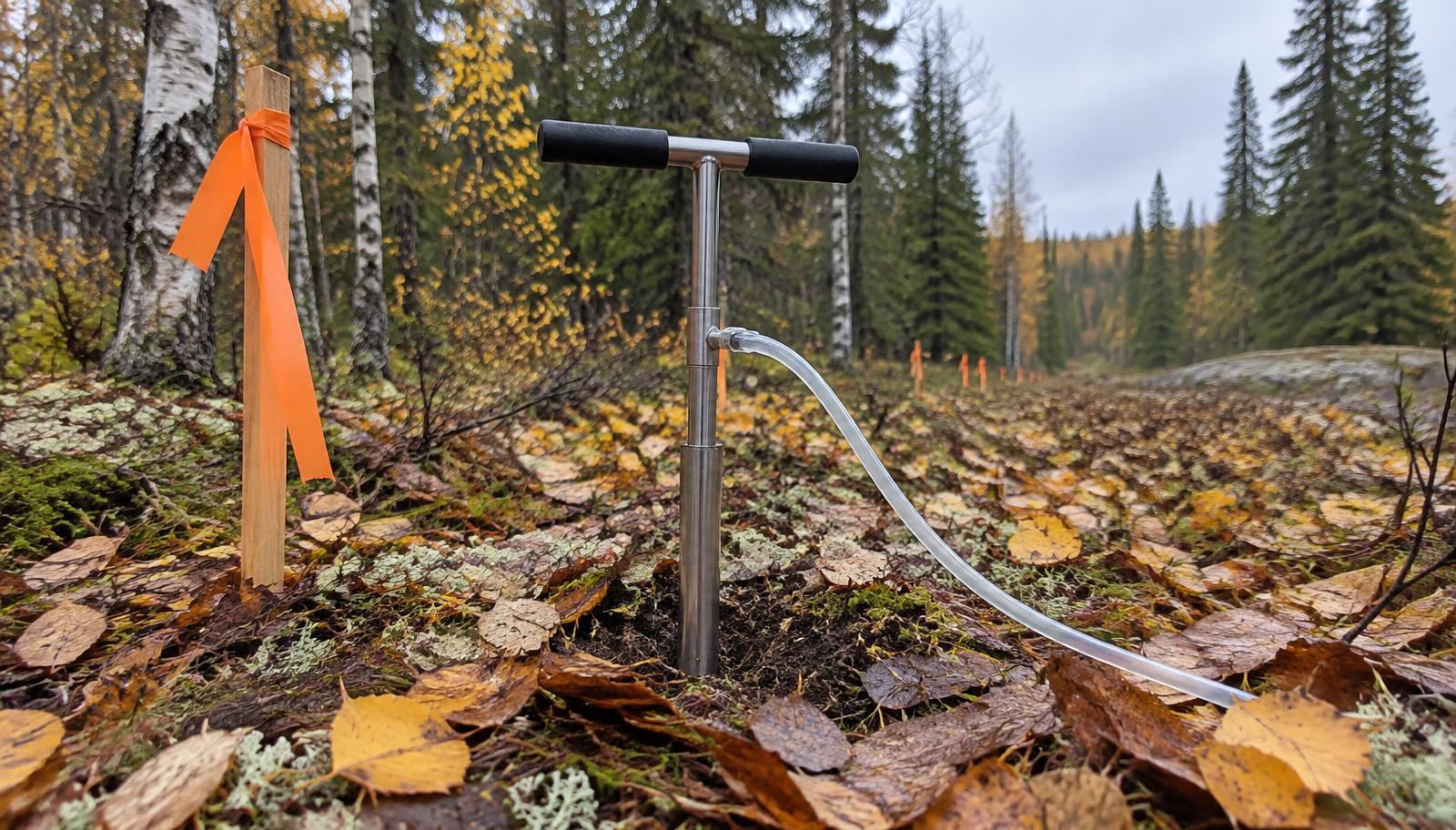 Mining and ResourcesQIMC Takes 823 New Soil-Gas Stations Into Ontario, the Fifth Step in a Method Built in PublicQuébec Innovative Materials Corp. (CSE: QIMC) launched an expanded 2026 natural hydrogen programme on the Ontario side of the Témiscamingue Graben on September 17, 2026: 823 new soil-gas stations at 100-metre spacing over about 80 line-kilometres, taking the Ontario database to roughly 1,733 stations, alongside more than 1,100 gravimetric stations and 78 line-kilometres of 2D seismic. The shares closed at C$0.59. The company's own disclosure says none of this measures flow.Priya Sandhu · September 17, 2026 · 7 min
 Mining and ResourcesA Return of Capital, Not a Result: Lightning Resource (TSXV: LTNG) Fell 18.9 Per Cent on 11 SeptemberLightning Resource closed at C$0.385 on 11 September 2026, down 18.9 per cent on roughly fifty times its recent average volume. No Lightning release was issued that day. What landed the day before was a return of capital from Prospector Metals that distributed 29,400,000 Lightning shares, and the arithmetic of that distribution explains the tape better than anything in the company's own disclosure.Élise Galarneau · September 11, 2026 · 9 min
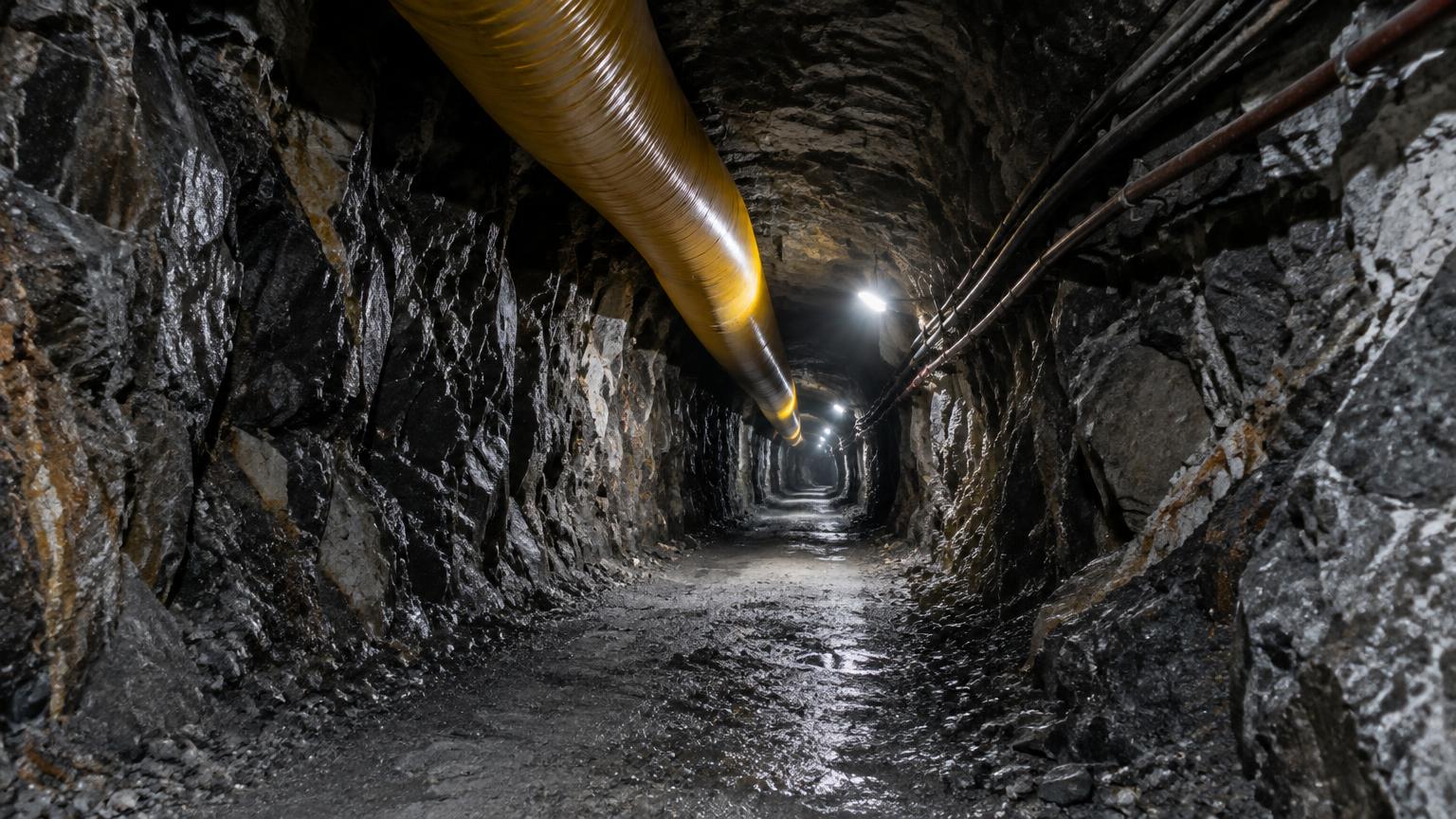 Mining and ResourcesHemlo Mining Drills 89.9 g/t Gold 50 Metres From a Working Stope, and Changes Its True-Width EstimateHemlo Mining Corp. (TSX: HMMC) reported 89.89 g/t gold over 3.0 metres of core length in hole 6702608 at South-Rim on September 10, 2026, from a zone 50 to 150 metres from active C-Zone mining. The release also revises the estimated true-thickness conversion to 65 to 90 per cent of downhole length, from 30 to 70 per cent in the May 14, 2026 release on the same zone, without stating why. South-Rim carries no resource, no reserve and no economics.Priya Sandhu · September 11, 2026 · 9 min
Follow this story
Follow GSY.TO — the next Maple piece on this company, plus the Maple Morning Debrief before the open.
Follow and ask
Get more of our Canadian market coverage in Google Top Stories.
Opinion
This article expresses the author's personal views, is separate from news reporting and is not investment advice.
Disclosure
As of the publication date, the author, editor, publisher, their immediate households and affiliated entities do not own positions in the securities discussed. The Maple Markets received no compensation from any company, its officers, investor-relations providers or financiers in connection with this article. Figures are drawn from public filings and official statistical releases as of the date shown and are not restated for later disclosure. Worked examples labelled illustrative use assumed inputs to show a method, not a forecast. This article is informational only and is not investment, legal, accounting or tax advice. See the Financial Disclaimer.
Sources and references (3)
- goeasy Ltd. — Q2 2026 results news release and financial statements
- goeasy Ltd. — Q2 2026 management's discussion and analysis (SEDAR+)
- Justice Canada — Criminal Code, criminal rate of interest
Cite this analysis
Please attribute The Maple Markets and link to the original page.
Hannah Kuan (September 1, 2026). goeasy's Repair Is Working, but the Earnings Model Has Not Recovered. The Maple Markets. https://themaplemarkets.ca/en/newsroom/goeasy-balance-sheet-repair-versus-earnings-recoveryhttps://themaplemarkets.ca/en/newsroom/goeasy-balance-sheet-repair-versus-earnings-recovery