
Ivanhoe Mines and the Copper Grade Nobody Else Has
Kamoa-Kakula's grade is exceptional by any standard. The question has always been power, logistics and country risk.
By Daniel Okoye4 min readTranslation: human
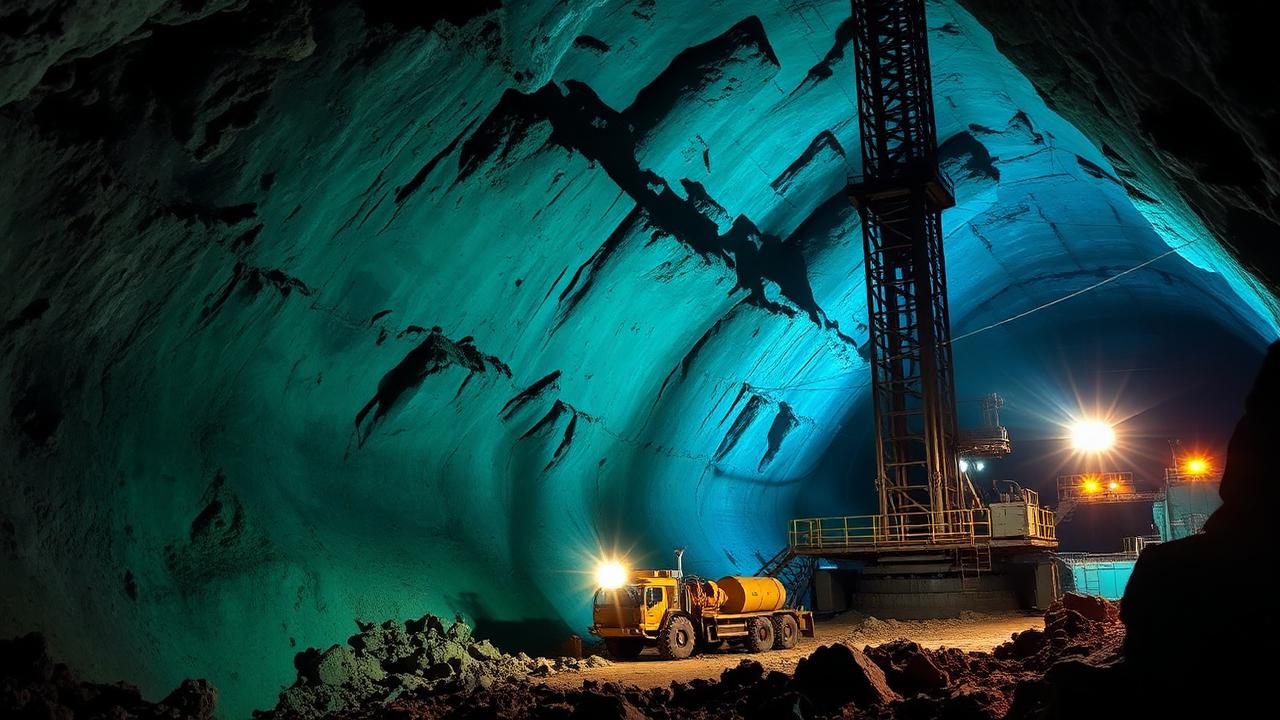
Kamoa-Kakula grade
Multiples of average
Global copper average declining
Binding constraint
Grid power
Hydro refurbishment
Key risk
Jurisdiction
Fiscal and logistics
Kamoa-Kakula in the Democratic Republic of Congo produces copper at grades several times the global average, an advantage that is real, measurable and persistently discounted by the market. That gap between a demonstrable operating advantage and the valuation the market assigns to it is the central puzzle for anyone evaluating Ivanhoe Mines, and understanding why the discount exists — and whether it is justified — requires separating the geological advantage from the jurisdictional and infrastructure risks that surround it.
Why grade compounds
Higher grade means fewer tonnes milled per tonne of metal, less energy per unit of output, and lower unit costs across almost every line item. In a commodity where the global average grade has been declining for decades, this is a structural rather than cyclical advantage. Ore grade is not something that can be easily replicated by capital investment; it is a function of the deposit's geology, and a mine with several times the average industry grade has a durable cost advantage that persists regardless of where the copper price sits in its cycle. This matters more in copper than in some other commodities because the global average grade being mined has been in secular decline as easier, higher-grade deposits are depleted and mining companies are forced toward progressively lower-grade ore bodies to maintain output. A deposit that bucks this trend is not simply having a good year; it is sitting on a geological endowment that lower-grade competitors cannot engineer their way into matching, which is why the cost advantage should be expected to persist through multiple commodity cycles rather than fade as the market matures.
The constraint is power
Smelting and processing capacity in the region depend on grid reliability that has historically been the binding constraint on throughput. Hydroelectric refurbishment work directly determines how much of the resource can actually be converted to sales in any given year. This is the critical qualifier to the grade advantage: a high-grade deposit is only valuable to the extent the ore can actually be processed and the metal brought to market, and processing at scale requires large, reliable volumes of electricity. In this region, that power has historically come primarily from hydroelectric infrastructure that has required substantial refurbishment investment to restore and expand its reliable output. The pace of that refurbishment work, not the size of the ore body, has been the practical limit on how quickly production can be scaled, which means investors assessing near-term output trajectories should weight power infrastructure updates as heavily as they weight geological or mine-plan disclosures.
The discount is not irrational
Fiscal terms, export logistics through neighbouring corridors, and the practical difficulty of repatriating capital all justify some discount. The investment question is whether the market's discount is larger than the risk warrants. Operating in this jurisdiction carries considerations that do not apply to a comparable deposit in a stable, established mining jurisdiction: fiscal and royalty terms can be renegotiated by the host government in ways that are harder to predict than in jurisdictions with longer track records of regulatory stability, physical export of concentrate depends on logistics corridors running through neighbouring countries with their own political and infrastructure risks, and moving capital and profits out of the country involves currency and regulatory hurdles that add cost and uncertainty relative to operations in more established mining regions. None of these risks are invented or exaggerated; they are the reason a discount exists at all. The relevant analytical question is not whether a discount is warranted, but whether the size of the discount currently being applied fully or excessively prices in these risks relative to the scale of the cost advantage the grade provides.
Comparing the risk-adjusted economics
One way to approach that question is to model the operation's all-in costs, inclusive of the fiscal terms and logistics costs specific to the jurisdiction, and compare the resulting margin to global copper producers operating at average grades in stable jurisdictions. If the grade advantage is large enough that even after fully loading in jurisdictional costs the operation still generates superior margins to typical peers, that is evidence the market discount may be overstated relative to the actual risk-adjusted economics. If the margin advantage narrows to parity once those costs are fully accounted for, the discount looks more justified.
The trajectory that matters
Because both the grade advantage and the power constraint are structural rather than temporary, the more useful lens for investors is the trajectory of power infrastructure investment relative to the pace at which additional high-grade tonnes can be brought into production. A widening gap between available processing capacity and mine-plan output would suggest the market's caution about execution risk is warranted; a narrowing gap would suggest the operation is approaching the point where its full grade advantage is being converted into realized production and cash flow.
What to watch
The clearest near-term indicators are updates on hydroelectric refurbishment and power availability, since these directly gate production growth regardless of ore body size, along with any changes to fiscal terms or export logistics arrangements with the host government and neighbouring transit countries. Sustained progress on power infrastructure without adverse changes to fiscal or logistics terms would be the strongest signal that the jurisdictional discount currently applied to the stock is wider than the underlying risk actually justifies.
Read next
 Mining and ResourcesEro Copper's Tucumã Ramp-Up Is the Whole StoryA new operation reaching design throughput on schedule changes the cash-flow profile entirely.Daniel Okoye · July 27, 2026 · 3 min
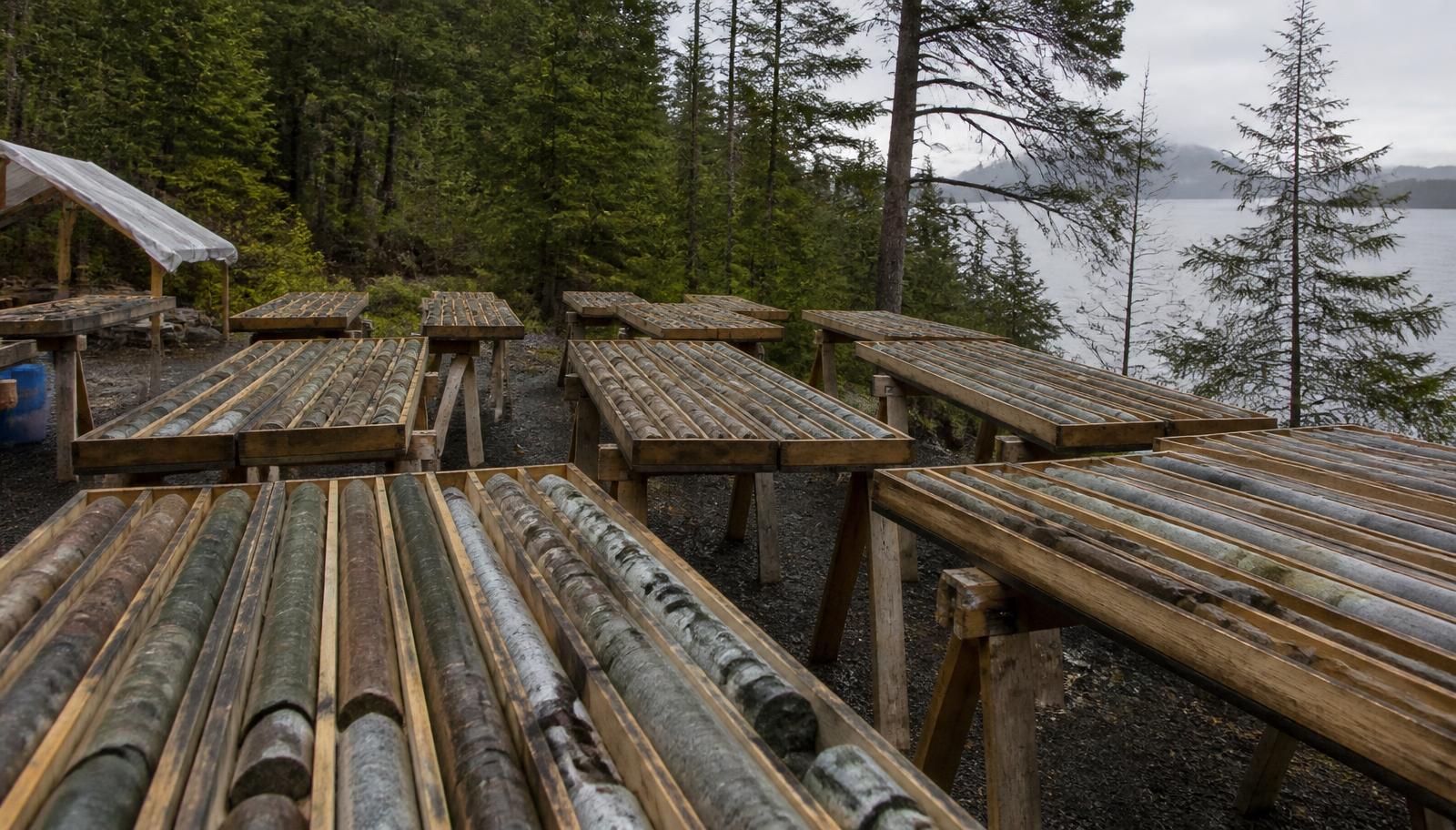 Mining and ResourcesProspect Ridge Has Reported 979 Metres of Excalibur Core and Not One Assay From ItProspect Ridge Resources Corp. (CSE: PRR) reported long intervals of alteration and sulphide mineralisation in the first two holes at its Excalibur copper-gold project in British Columbia on 10 September 2026, with assays still at the laboratory. On 15 September the shares closed at C$0.09, up 38.5 per cent, on 6.18 times their average exchange volume, with nothing new filed. What the logs describe, and what they cannot, is the whole question before Wednesday's open.Daniel Okoye · September 16, 2026 · 6 min
 Mining and ResourcesCoyote Copper's Arizona Drill Permits Started a 30-Day Clock on 17.5 Million WarrantsCoyote Copper Mines Inc. (TSXV: CCMM) received Phase 1 drill permits for its wholly owned Copper Springs project in Arizona on 15 September 2026 and, in the same release, gave notice accelerating 17,501,296 warrants to a 15 October expiry. Exercise brings in C$3,143,386.58 and adds about 13 per cent to the share count. The shares closed down 33.33 per cent at C$0.44 on 281,072 shares, 1.57 times their 30-day average.Priya Sandhu · September 16, 2026 · 6 min
Follow this story
Follow IVN — the next Maple piece on this company, plus the Maple Morning Debrief before the open.
Follow and ask
Get more of our Canadian market coverage in Google Top Stories.
Disclosure
Information only. Not investment advice. The Maple Markets does not hold positions in securities discussed. See the Financial Disclaimer.
Sources and references (2)
Cite this analysis
Please attribute The Maple Markets and link to the original page.
Daniel Okoye (April 22, 2026). Ivanhoe Mines and the Copper Grade Nobody Else Has. The Maple Markets. https://themaplemarkets.ca/en/newsroom/ivanhoe-mines-and-the-copper-grade-nobody-else-hashttps://themaplemarkets.ca/en/newsroom/ivanhoe-mines-and-the-copper-grade-nobody-else-has