
Power Metallic (TSXV: PNPN) Published Its First Resource Estimate for Lion and the Shares Fell 15.8 Per Cent
The grade is high by any Canadian standard, and the first estimate is unusually solid. The market wanted a bigger number — and the test of that bigger number is already at the lab.
Power Metallic Mines published its first mineral resource estimate for the Lion deposit in Quebec on September 8, 2026: about 4.75 million tonnes at close to 4 per cent copper equivalent, with more than 85 per cent of it in the more confident category. The shares fell 15.8 per cent to C$1.28 the same day. This is a plain-English explanation of why a good result can still knock a stock down, and what the company itself says is still unproven.
By Daniel Okoye8 min read

Lion maiden resource
about 4.75 Mt at close to 4 per cent CuEq
4,145,000 t indicated and 601,000 t inferred, effective June 19, 2026 on data to April 19, 2026 (release dated September 8, 2026).
Contained copper equivalent, Lion
405.9 Mlb
352.8 Mlb indicated and 53.1 Mlb inferred at the company's stated prices and recoveries (release dated September 8, 2026).
Combined Lion and Nisk
9,465,000 t for 677.1 Mlb CuEq
Nisk restated in the same document (release dated September 8, 2026).
Session move
C$1.28, down 15.8 per cent
from a C$1.52 previous close on 6,188,884 consolidated shares, September 8, 2026 (TMX Money, data to 15:53 ET).
Contained metal against market value
about C$0.49 per pound CuEq
C$333.3 million market capitalisation on 260,404,489 shares divided by 677.1 Mlb contained; contained metal is not recoverable metal and no economic study exists (TMX Money and release, September 8, 2026).
Power Metallic Mines Inc. (TSXV: PNPN) published its first mineral resource estimate for the Lion deposit at its Nisk property in Quebec on September 8, 2026. The estimate is about 4.75 million tonnes of rock grading close to 4 per cent copper equivalent, holding roughly 406 million pounds of copper-equivalent metal. More than 85 per cent of the tonnes are in the "indicated" category, which is the more confident of the two labels used at this stage. The estimate is dated June 19, 2026 and uses drilling up to April 19, 2026.
The shares fell 15.8 per cent the same day, to C$1.28 from a previous close of C$1.52, on 3,208,279 shares through the TSX Venture Exchange and 6,188,884 across all venues, according to TMX Money data updated at 15:53 ET. The day's range was C$1.25 to C$1.50.
Good news, red screen. That combination confuses a lot of people, so it is worth taking slowly. The short version: the rock passed with flying colours, the size came in modest, and the market had priced in more. The encouraging part is that the company is already drilling the exact question the market asked — and the answers are at the laboratory now.
This piece is built from the September 8 release, the company's news archive and exchange data.
What a maiden resource estimate actually does
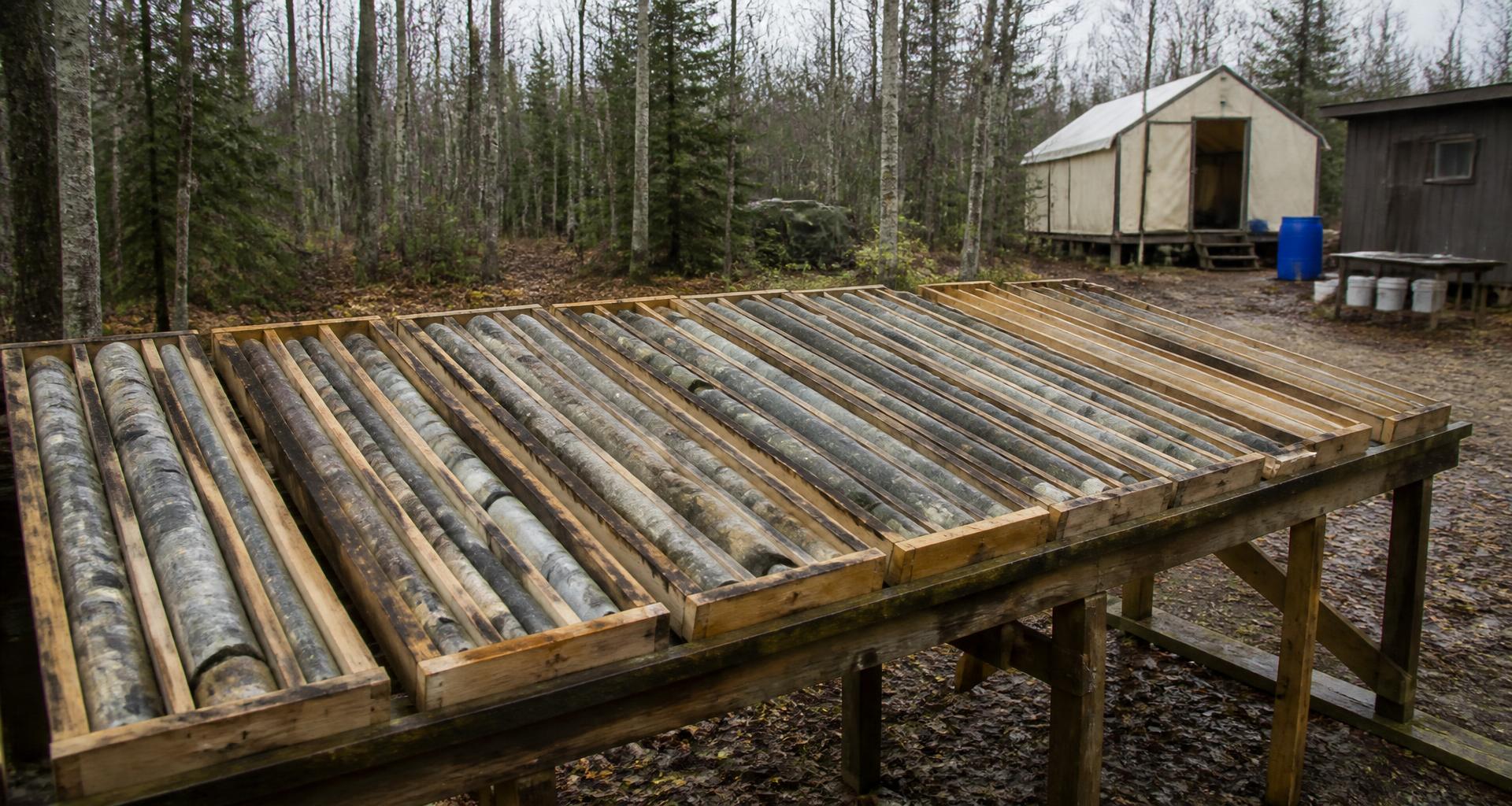
Until September 8, everything published about Lion was a drill interval: 36.42 metres of 2.83 per cent copper equivalent on July 15, 2026, 13.30 metres of 3.98 per cent on June 23, 2026, and a string of similar results before those.
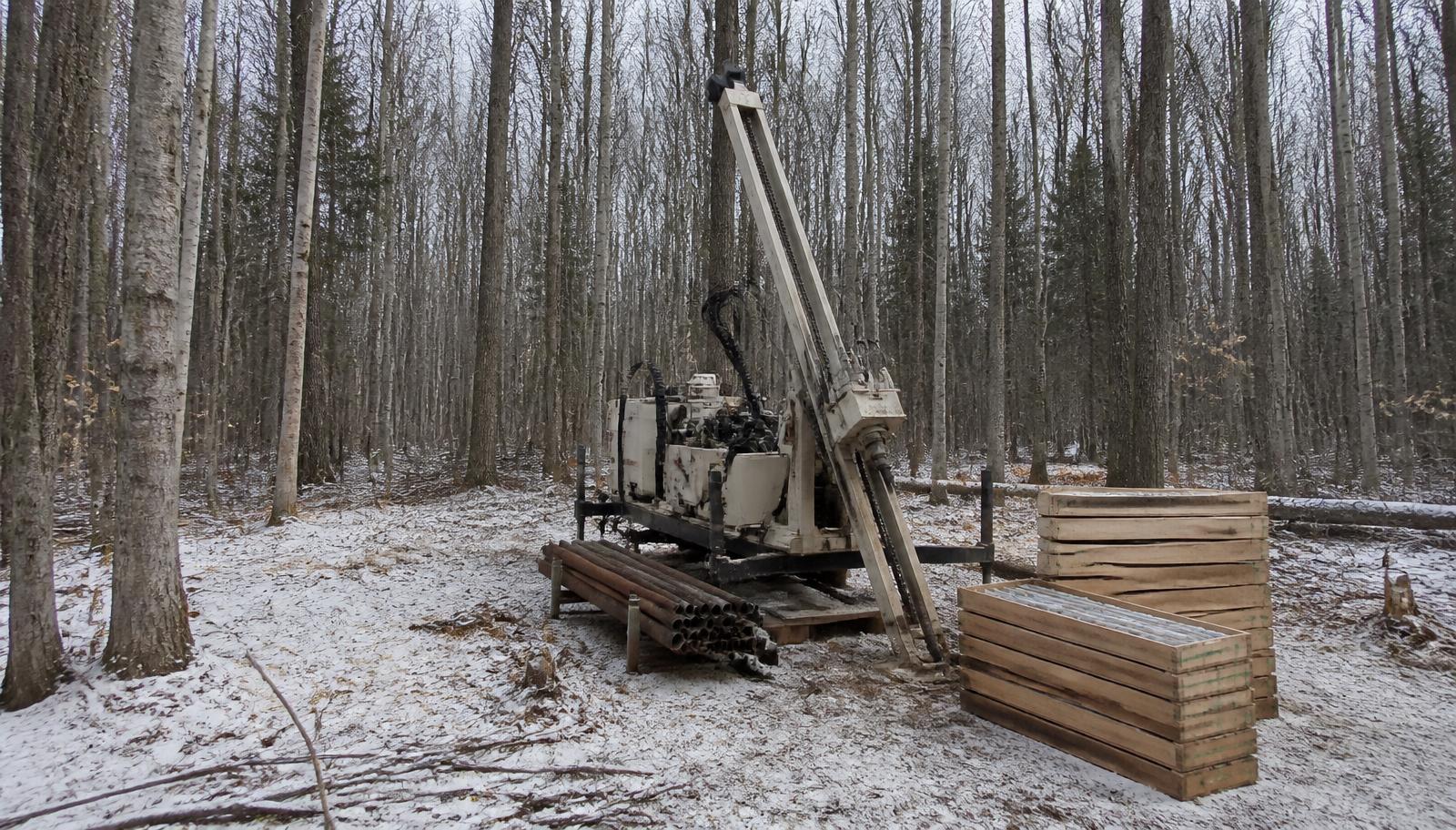
A drill hole is a straw pushed into the ground. It proves the rock is rich where the straw went. It says nothing about how far the rich rock extends. A resource estimate is the first attempt to draw a shape around all of it and say: this much, at this grade.
September 8 was the first day anyone had a size for Lion, and the size came in modest.
That is not a knock on the geology — in fact this estimate is unusually solid for a first pass, with more than 85 per cent of the tonnes in the confident category. It is simply what first estimates do — they turn a year of exciting headlines into one bounded number, and the bounded number is nearly always smaller than the impression the headlines left. The company had also prepared the market for a bigger document: its July 30, 2026 update said the combined Nisk and Lion estimate was being pushed to the end of August because the consultants were stretched.
What the property holds in total
The September 8 release also restates the existing Nisk deposit. Put together, on the company's own assumptions, the property looks like this.
| Deposit and class | Tonnes | Contained CuEq (Mlb) |
|---|---|---|
| Lion, indicated | 4,145,000 | 352.8 |
| Lion, inferred | 601,000 | 53.1 |
| Nisk, indicated | 2,703,000 | 149.4 |
| Nisk, inferred | 2,016,000 | 121.8 |
| Total | 9,465,000 | 677.1 |
"Indicated" means enough drilling has been done to be reasonably confident. "Inferred" is a lower-confidence estimate that, by the rules, cannot be counted on in an economic study.
The part of Lion close to surface grades 1.47 per cent copper, 0.08 per cent nickel, 2.35 grams per tonne palladium, 0.84 grams per tonne platinum, 0.42 grams per tonne gold and 11.65 grams per tonne silver — 3.45 per cent copper equivalent all in. The deeper, underground part grades 2.10 per cent copper, or 4.71 per cent copper equivalent. Cut-off grades are 0.35 per cent copper equivalent near surface and 0.90 per cent underground. Marc-Antoine Laporte, P.Geo., of SGS Canada Inc. prepared the estimate.
One caution about "copper equivalent". It is a convenience that squashes seven metals into one number, using assumed prices: US$4.80 per pound copper, US$8.00 nickel, US$15.00 cobalt, US$3,600 per ounce gold, US$1,400 platinum, US$1,200 palladium and US$38 silver, with assumed recoveries of 98.5 per cent for copper, 63 per cent nickel, 90 per cent platinum and 92 per cent palladium. Change any of those assumptions and the headline grade moves without a single gram of rock changing.
A rough scaling check
Power Metallic ended the day with 260,404,489 shares and a market value of C$333.3 million, per TMX Money on September 8, 2026. Against 677.1 million pounds of contained copper-equivalent metal, the market was paying about C$0.49 per pound in the ground after the fall, versus roughly C$0.58 before it.
Say the limits out loud in the same breath. Metal in the ground is not metal recovered. The recovery figures above are modelling assumptions, not results from a plant. There is no economic study yet, so nobody knows the cost of building or running a mine there. And the figure mashes seven metals together at fixed prices. It is a rough scaling check, not a valuation.
What it does explain is the tape. A C$333 million company that has just published its first measured tonnage has to carry that tonnage, and 4.75 million tonnes at Lion is a mine measured in years, not decades — as it stands today.
The most useful lines came from the company
Chief executive Terry Lynch said the estimate confirms Lion is a high-grade polymetallic deposit, that the rich rock starts at surface, and that it stays open at depth. Then he said something sharper: "We believe the quality of Lion has been demonstrated. Now our focus is on demonstrating its scale."
That is management telling you, in its own words, that size is the open question — and that it intends to answer it. The release then names the geological version of it. Lynch describes the puzzle as how deep Lion goes and where the nickel went — Lion carries the copper and precious metals that leave a system like this last, and the nickel-rich material that leaves first has not been found.
A company that tells you which half of its orebody it has not located yet is disclosing well, and it is also telling you the resource you were just handed is not the whole picture.
The release says the company is reviewing proposals from engineering firms for a preliminary economic assessment, with Nisk assessed alongside Lion.
The assays already at the lab matter more than the estimate
The estimate stops at drilling done by April 19, 2026. Five months of drilling sits outside it — and the drill has been aimed at the very question the market asked on September 8.
The release names holes PML26-121A, PML-26-125 and PML-26-128A as drilled after that cut-off, below the modelled zone, with visible copper in them and assays still pending. The deepest hole inside the estimate, PML-25-002, reached about 610 metres below surface and returned 1.95 metres at 7.95 per cent copper equivalent; the modelled zone runs to about 675 metres. Lynch said assays from Lion Deep are expected by the end of September.
So the document that moved the market describes the deposit as it stood in April, the drill bit has not been sitting still since, and the test of the company's own biggest question is about three weeks away.
What to watch, in order
- Lion Deep assays, expected end of September 2026. The direct test of whether the deposit keeps going down, and the only near-term item that can change the size question rather than restate it.
- Any nickel-rich zone. Management has framed its absence as the outstanding question. Finding it changes the model; continuing not to find it narrows the story to copper and precious metals.
- The preliminary economic assessment, once a firm is hired. First real numbers on build cost, running cost and throughput — the first document the market value can be tested against.
- An updated estimate including post-April drilling. No date given, and the July delay is a reminder these dates slip.
- Another high-grade hole inside the known zone. Grade is the part that has already been settled.
The takeaway
September 8 was a good document that answered the wrong question for the price — and the fall is not a verdict on the rock.
Start with what the estimate proves, because it proves a great deal: high-grade rock starting at surface, more than 85 per cent of the tonnes in the confident category at a first pass, conventional cut-offs, and a named geologist standing behind it. Very few juniors publish a first estimate that solid.
The disappointment is arithmetic, not geology. Two years of drill headlines built an expectation of scale; the first measured number is 4.75 million tonnes at Lion and 9.47 million across the property, and the market had priced something bigger. The company agrees scale is unproven — it said so in the release — and it has pointed the drill rig straight at the question.
Judge the next Power Metallic update on tonnes, not on grade. Grade has been demonstrated and paid for. How far the deposit runs has not, and the assays that speak to it are already at the laboratory.
Transparency note. This is an independent due-diligence analysis and editorial opinion piece produced by The Maple Markets editorial desk. It is not sponsored, promoted or commissioned, and no compensation of any kind has been received from Power Metallic Mines Inc. (TSXV: PNPN) or any party acting on their behalf. The analysis is based on public disclosure available as of the publish date; every figure is attributed to its primary source. The Maple Markets and its authors may hold positions in securities mentioned; nothing here is a recommendation to buy, sell or hold any security, and readers should not treat it as investment advice. Past disclosure does not guarantee future results. Policies: Editorial Standards · Financial Disclaimer.
Read next
 Mining and ResourcesFour Holes, Three Intrusions and No Assays: What Perseverance Metals' 93.8 Per Cent Day Rests OnPerseverance Metals reported on September 9, 2026 that three of four diamond drill holes into the blind Osprey target at its Voyageur project in Michigan had intersected a mafic-ultramafic intrusion up to 50 metres thick carrying 3 to 8 per cent magmatic sulphides, with portable XRF confirming nickel and copper. Assays are pending. The shares closed at C$0.93, up 93.8 per cent, adding roughly C$17.4 million of market value on a release that contains no grade.Élise Galarneau · September 9, 2026 · 8 min
 Mining and ResourcesA Forest Service Clock Started for Homeland Nickel, but Drill Approval Has Not ArrivedHomeland Nickel Inc. (TSXV: SHL) said on September 17, 2026 that the United States Forest Service had accepted its plan of operation for a sonic drill programme at Red Flat, Oregon, and that environmental and cultural review was well underway, including completed fieldwork. The company hopes to drill in October. The same release was reissued the same day because its paid-promotion disclosure described a video interview with another company's chief executive.Daniel Okoye · September 18, 2026 · 8 min
 Mining and ResourcesA US$5.22 Million Cost Share for Bitterroot's Michigan Nickel Project, and an Unnamed Matching HalfBitterroot Resources Ltd. (TSXV: BTT) said on 15 September 2026 that the U.S. Department of War will invest up to US$5,223,431 in its Michigan nickel-copper project on a 50/50 cost share basis. A cost share has two sides. The release sets out the government's side in detail and says nothing about who funds the matching half, which on the same arithmetic runs to roughly C$7.3 million against a company worth C$17.1 million at Tuesday's close.Élise Galarneau · September 15, 2026 · 7 min
Follow this story
Follow PNPN.V — the next Maple piece on this company, plus the Maple Morning Debrief before the open.
Follow and ask
Get more of our Canadian market coverage in Google Top Stories.
Opinion
This article expresses the author's personal views, is separate from news reporting and is not investment advice.
Sources and references (5)
- Power Metallic Mines, Power Metallic Defines High-Grade Maiden Resource at Lion Averaging ~3.9% CuEq, with >85% Indicated and Significant Expansion Potential, September 8, 2026
- Power Metallic Provides NISK Update, July 30, 2026
- Power Metallic Mines, news release archive
- TMX Money, Power Metallic Mines Inc. quote and key data, September 8, 2026
- SEDAR+ continuous disclosure record for Power Metallic Mines Inc.
Cite this analysis
Please attribute The Maple Markets and link to the original page.
Daniel Okoye (September 9, 2026). Power Metallic (TSXV: PNPN) Published Its First Resource Estimate for Lion and the Shares Fell 15.8 Per Cent. The Maple Markets. https://themaplemarkets.ca/en/newsroom/power-metallic-mines-the-release-and-the-tape-disagree-what-to-watch-inhttps://themaplemarkets.ca/en/newsroom/power-metallic-mines-the-release-and-the-tape-disagree-what-to-watch-in