
Canada's Productivity Gap: Reading Capex Per Worker Into TSX Margins
The most cited statistic in Canadian economics, taken apart and made investable
Canada's productivity shortfall is discussed as a national failing. For investors it is more useful as a margin forecast: output per hour determines how much of revenue growth reaches operating income.
By Élise Galarneau3 min read
Cet article n'est offert qu'en anglais pour le moment.
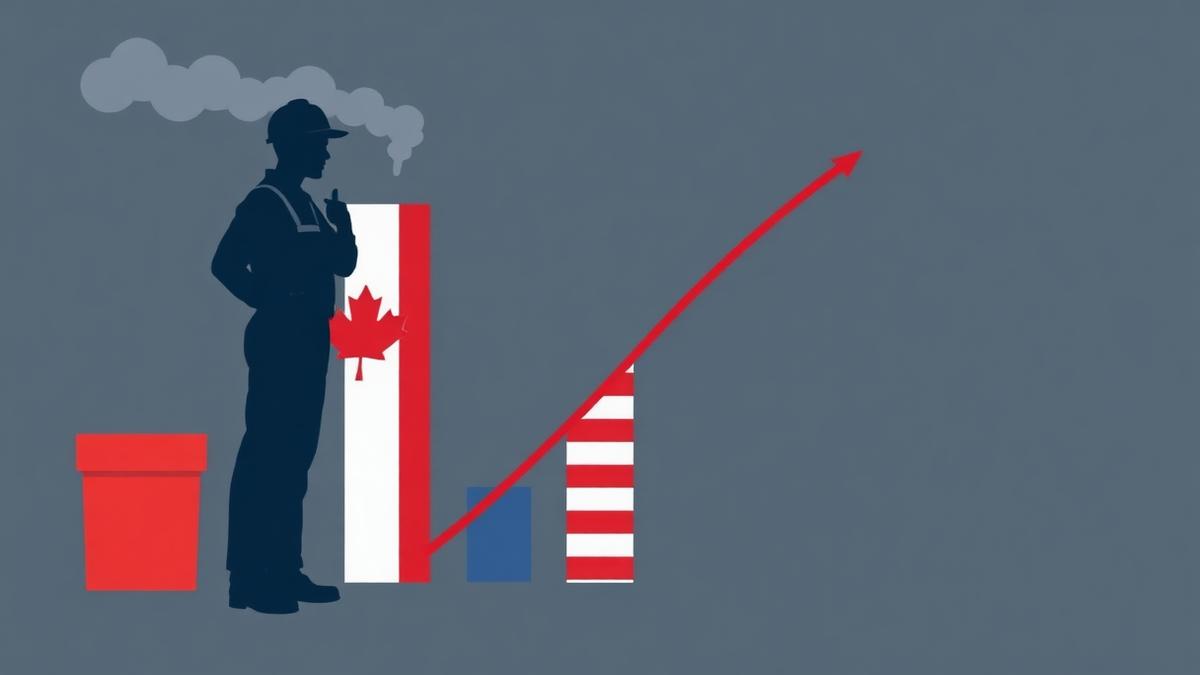
Canadian labour productivity — real GDP per hour worked — has grown more slowly than in the United States for a sustained period, and the gap in levels is now large enough that officials describe it in emergency terms. The statistic is repeated constantly and analysed rarely. For an investor, the useful questions are narrow: what is being measured, why is Canada behind, and what does it imply for the companies on the TSX?
What the measure is
Labour productivity is real output divided by hours worked. It is not a measure of effort. It is overwhelmingly a measure of how much capital, technology and organisational capability each worker has to work with.
Three components drive it:
- Capital deepening — the amount of machinery, equipment, software and intellectual property per hour worked.
- Labour composition — the skills and experience mix of the workforce.
- Multifactor productivity — the residual, capturing technology diffusion, competition intensity, management quality and allocation of resources between firms.
Canada's shortfall is concentrated in the first and third. Capital investment per worker, particularly in machinery, equipment and intellectual property products, has run below the United States for years. That is measurable and is published by Statistics Canada.
Why the composition of the economy matters
Part of the gap is structural rather than a failure of management:
- Resource extraction is highly capital intensive and produces high measured output per hour, but investment is cyclical and lumpy. A period of low resource capex mechanically depresses national capital deepening.
- Firm size distribution. Canada has a larger share of employment in small firms, which invest less per worker in software and automation. Scale economies in technology adoption are real.
- Domestic market size and competition intensity. Concentrated domestic industries — telecommunications, banking, air travel, grocery — face less competitive pressure to invest. Protected margins reduce the urgency of capital deepening even as they support current profitability.
- Population growth composition. Rapid labour force growth raises total GDP while diluting capital per worker unless investment grows at the same pace. Measured productivity falls even as the economy expands.
That last point is analytically important and frequently confused: strong headline GDP growth alongside weak per-hour productivity is arithmetically consistent, and it describes recent Canadian data well.
The investment translation
Productivity growth sets the sustainable pace of real wage growth. Where wages grow faster than productivity, unit labour costs rise, and the cost lands somewhere: in prices if the firm has pricing power, or in margins if it does not.
Illustrative worked example. A Canadian services company grows revenue 5% with wage costs, 60% of its cost base, rising 4% and productivity flat. Unit labour cost rises roughly 4%. If the company can pass through 3% in price, operating margin compresses by roughly 60 basis points on a 15% starting margin. Repeat across three years without productivity improvement and the compounding effect on operating income is material even with healthy top-line growth.
This produces a straightforward screen for Canadian equities:
- Companies that can pass through cost inflation. Regulated utilities with cost-of-service frameworks, pipelines with tolling escalators, and consumer names with genuine brand pricing power.
- Companies whose output per employee is structurally rising. Software and asset-light platforms, where incremental revenue requires little incremental labour. Revenue per employee, disclosed or derivable, is the metric.
- Companies most exposed. Labour-intensive domestic services with regulated or competitive price ceilings — where wage inflation cannot be passed on and automation is slow.
What would change the trend
The measurable inputs to watch, all published:
- Business investment in machinery, equipment and intellectual property products as a share of GDP, quarterly from Statistics Canada.
- Non-residential business investment per worker.
- Business R&D intensity.
- Net foreign direct investment flows, which proxy the attractiveness of Canada as a place to deploy capital.
A durable improvement requires business investment per worker to rise faster than employment for several consecutive years. That is a slow variable, which is precisely why it is a poor trading signal and a good allocation signal.
The honest conclusion
The productivity gap is not a reason to avoid Canadian equities. Many TSX-listed businesses earn a large share of revenue outside Canada and are unaffected by domestic output per hour. It is a reason to be specific: within the domestically exposed part of the index, the gap functions as a persistent headwind to margin expansion, and it should be assumed rather than hoped away in any medium-term model.
À lire ensuite
Auch auf Deutsch: Canada's Productivity Gap: Reading Capex Per Worker Into TSX Margins
 EconomyA Canadian Company Can Watch Its Shares Fall All Week and Owe the Market Nothing at AllCanadian issuers must announce a material change immediately and file the report within 10 days. They are not required to publish every material fact, and they are not required to explain a share price. That single distinction explains most of the weeks when a Canadian small cap moves and SEDAR+ stays empty. Here is what the rules actually oblige, what the exchanges do when the price moves first, which filings arrive from someone other than the company, and the calendar that governs a quiet month.Élise Galarneau · 19 septembre 2026 · 8 min
 EconomyFour Canadian-Listed Companies Announced Government Money This Week, and None of It Was CashBetween September 15 and September 18, 2026, Conifex Timber, Global Atomic, First Phosphate and Bitterroot Resources each announced that a government had put money behind them: up to C$30 million, US$414.2 million, US$212.5 million and up to US$5.22 million. Four announcements, four instruments, and not one of them is a transfer of cash. Here is what a loan agreement, a conditional approval, an export-credit letter of support and a cost-share award each oblige, and what has to be true before the money arrives.Marc Belzile · 19 septembre 2026 · 10 min
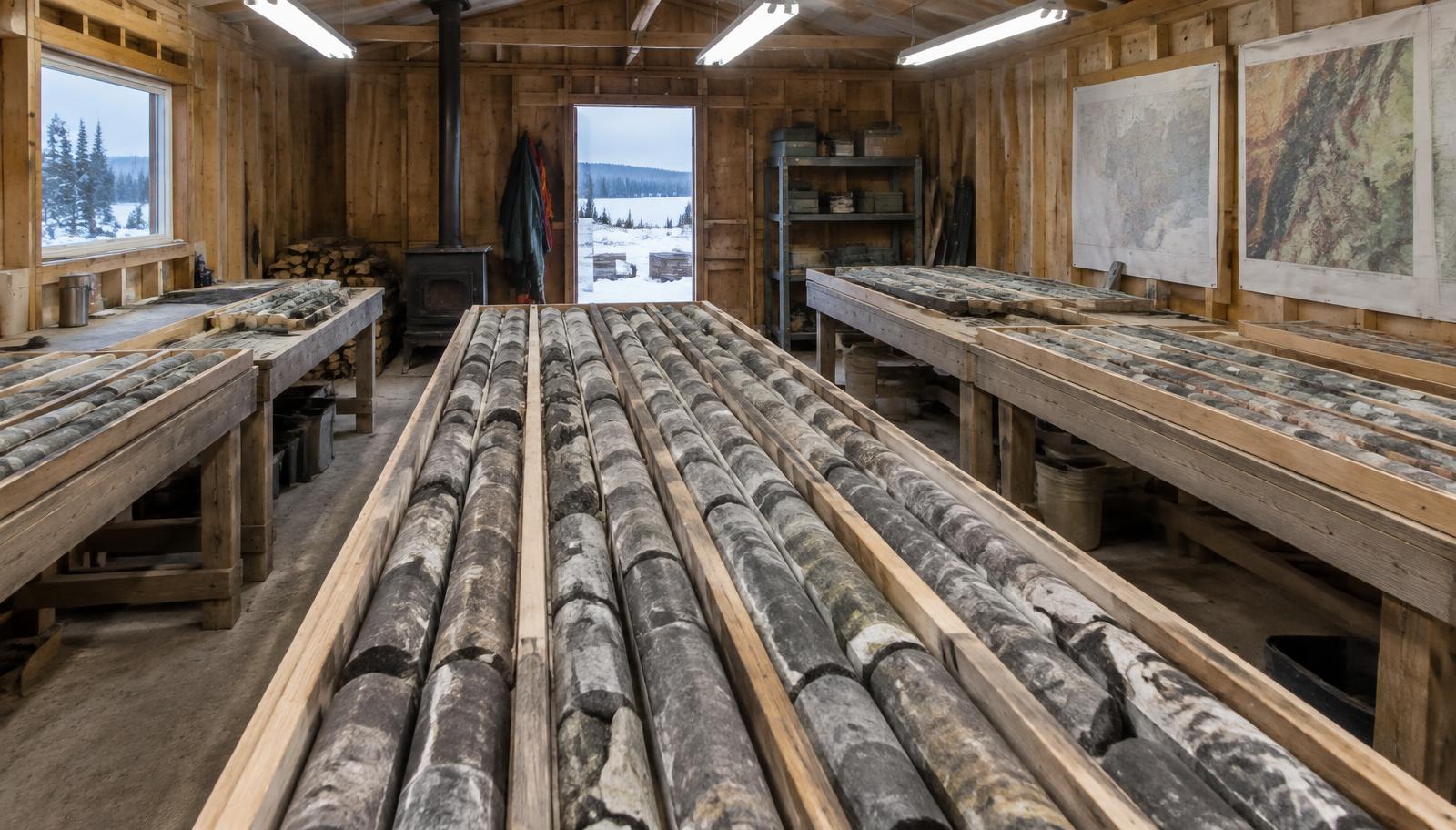 EconomyFour Things a Canadian Miner Can Say About a Hole in the Ground, and What Each Is WorthA Canadian explorer with no laboratory numbers rose 93.8 per cent on September 9, 2026. A company that published laboratory numbers fell 35 per cent the next day. Canadian mining disclosure runs on four separate stages of proof, and most of the confusion in a drill-results week comes from treating them as one.Priya Sandhu · 13 septembre 2026 · 9 min
Recevoir le Maple Morning Debrief
La clôture de la veille, la nuit et ce qu'il faut surveiller avant l'ouverture — dans votre boîte de réception avant 6 h HE. Gratuit, désabonnement en un clic.
Follow and ask
Get more of our Canadian market coverage in Google Top Stories.
Divulgation
As of the publication date, the author, editor, publisher, their immediate households and affiliated entities do not own positions in the securities discussed. The Maple Markets received no compensation from any company, its officers, investor-relations providers or financiers in connection with this article. Figures are drawn from public filings as of the date shown and are not restated for later disclosure. Worked examples labelled illustrative use assumed inputs to show a method, not a forecast. This article is informational only and is not investment, legal, accounting or tax advice. See the Financial Disclaimer.
Sources et références (3)
Citer cette analyse
Please attribute The Maple Markets and link to the original page.
Élise Galarneau (August 24, 2026). Canada's Productivity Gap: Reading Capex Per Worker Into TSX Margins. The Maple Markets. https://themaplemarkets.ca/fr/newsroom/canada-productivity-gap-capex-per-worker-tsx-marginshttps://themaplemarkets.ca/fr/newsroom/canada-productivity-gap-capex-per-worker-tsx-margins