
Agnico Eagle's Detour Lake Expansion and the Cost of Growth
Expanding Detour Lake is cheaper and lower-risk than a new mine, but underground development and rising strip ratios push sustaining capital per ounce higher. The growth headline and the capital cost behind it need to be read together.
By Daniel Okoye4 min readTranslation: human
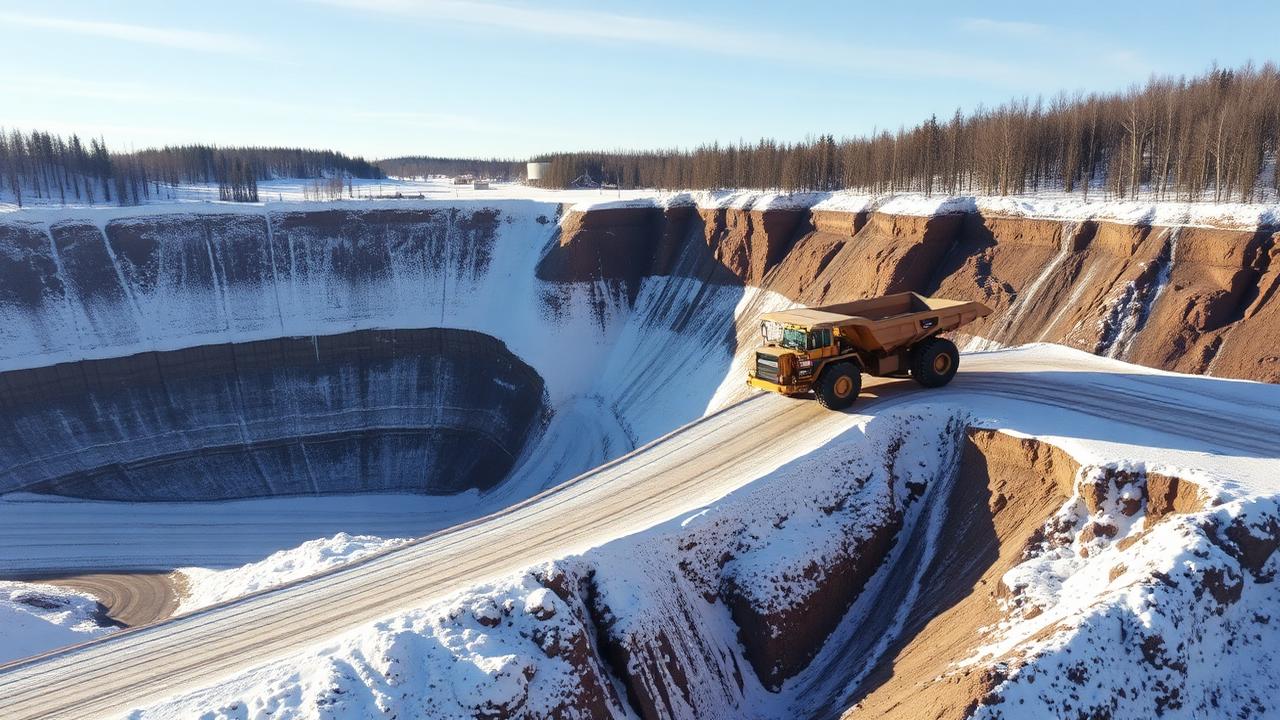
Growth type
Brownfield
Lower capital intensity
Hidden cost
Sustaining capital
Rises with underground
Alternative use
Shareholder returns
Comparison required
Agnico Eagle's Detour Lake expansion is the clearest illustration in the Canadian gold sector of a rule that gets stated often and applied selectively: it is cheaper to grow an existing mine than to build a new one, but "cheaper" is not the same as "cheap." The project adds incremental ounces to an operation whose pit, mill, tailings capacity, permits and workforce already exist, which is precisely why the market tends to wave brownfield expansions through with less scrutiny than a new build proposal would receive. That leniency is only partly justified.
Why brownfield growth gets the benefit of the doubt
A greenfield mine carries permitting risk that can run years, community and Indigenous consultation processes with uncertain outcomes, and the need to build power, road and water infrastructure from scratch before the first ounce is poured. Detour Lake skips almost all of that. The environmental assessment framework is already established, the local workforce is trained, and the processing circuit exists even if it needs debottlenecking or capacity additions. Capital intensity per incremental ounce is structurally lower than any comparable new development, and the execution timeline is shorter and more predictable. Those are real advantages, and they are the reason producers with mature assets consistently prioritize expansion over exploration-stage acquisitions when the geology allows it.
The cost that the headline growth figure does not show
The complication at Detour Lake, as at many long-life open pits, is that the easiest ounces come first. As a pit matures, expansion increasingly means going underground beneath an operation that was engineered as a surface mine, or pushing the pit deeper and wider at a strip ratio that keeps climbing. Underground development requires different fleets, different ventilation and dewatering infrastructure, and different skill sets than a surface operation was built around, and none of that comes cheap simply because it sits next to an existing plant. The practical effect is that sustaining capital per ounce tends to rise even while total reported production grows. A production chart that only shows tonnes and ounces will look like an unambiguous success. A chart that includes sustaining capital per ounce alongside it tells a more complicated story, because the margin improvement that investors assume comes with higher output is partly consumed by the cost of extracting it.
Why this gets missed in the market's read
Analysts and investors default to production growth as the headline metric because it is the easiest number to compare across companies and across time. Sustaining capital intensity is buried deeper in the disclosure, usually in per-ounce cost guidance that requires cross-referencing against the capital budget rather than reading off a single line. That asymmetry in how easy the two numbers are to find creates a systematic bias toward overrating the value of brownfield expansion, especially late in the life of a pit when the cheap ounces have already been mined. It also means the market tends to re-rate a stock on the growth headline before the market has had time to absorb what the incremental capital spend implies for free cash flow per ounce.
How to judge whether the expansion is worth it
The right framework is not whether Detour Lake can produce more gold — it almost certainly can, given the scale of the reserve base — but whether the marginal ounce, after sustaining capital, generates a return that beats what the company could do with that capital elsewhere. For a company with Agnico Eagle's balance sheet strength and reserve life, funding growth internally rather than through debt or equity issuance is defensible on its face; internally generated cash that is not obviously needed for balance sheet repair is fair game for reinvestment. But defensible is not the same as optimal. The comparison that matters is between the discounted value of ounces that will not be produced for years against the alternative of returning that capital to shareholders through buybacks or dividends today. The further out the ounces sit, and the higher the sustaining capital needed to reach them, the weaker the case for reinvestment relative to distribution, particularly in a commodity where price cycles can turn well before a decade-out mine plan is realized.
What this means for how to read future updates
None of this means the expansion is a mistake. Brownfield growth remains, on almost any measure, the lowest-risk form of production growth available to a major gold producer, and Detour Lake's scale gives Agnico Eagle a reserve base few peers can match. The point is that the growth headline and the capital cost behind it need to be read together, not sequentially, and that a rising production number paired with rising sustaining capital per ounce is a different investment case than a rising production number on its own.
What to watch
Track sustaining capital per ounce at Detour Lake in each quarterly and annual disclosure, not just total production. Watch the strip ratio and any disclosed transition timeline toward underground development, since that is where the cost structure changes most. Compare all-in sustaining cost guidance revisions against production guidance revisions to see whether growth is being delivered at a stable or deteriorating margin. Finally, watch capital allocation commentary on buybacks and dividend growth relative to sustaining and growth capital spend, since that ratio reveals how management itself weighs reinvestment against distribution.
Read next
 Mining and ResourcesAgnico Eagle Stock Analysis: Is Canada’s Gold Leader Worth Its Premium?Agnico Eagle Mines trades on the TSX and NYSE under AEM. It is a senior gold producer with major Canadian operations including Detour Lake, Canadian Malartic, LaRonde, Goldex, Macassa, Meliadine and Meadowbank, supplemented by mines in Finland, Australia and Mexico. Its portfolio is predominantly producing, with large expansion and underground-development opportunities at Detour Lake, Odyssey and Hope Bay. In the second quarter of 2026, Agnico reported approximately US$2.76 billion of EBITDA and US$1.6 billion of net income. Long-term debt was only US$197 million and the company reported net cash of approximately US$3.27 billion. TMX showed a market capitalization near C$103 billion and an average target of approximately C$312.51 from 11 analysts.Daniel Okoye · August 3, 2026 · 3 min
 Mining and ResourcesKinross Gold: Cash Returns, Great Bear and the Next Growth CycleKinross trades on the TSX as K and on the NYSE as KGC. Its principal producing assets include Tasiast in Mauritania, Paracatu in Brazil, Fort Knox and Manh Choh in Alaska, and Round Mountain and Bald Mountain in Nevada. Its development portfolio includes Great Bear in Ontario, Curlew in Washington and Lobo-Marte in Chile. In Q2 2026, Kinross produced approximately 492,000 gold-equivalent ounces, generated US$2.24 billion in revenue and US$726.8 million in free cash flow, and ended the quarter with US$2.7 billion of cash and US$1.9 billion of net cash.Daniel Okoye · August 5, 2026 · 3 min
 Mining and ResourcesA Forest Service Clock Started for Homeland Nickel, but Drill Approval Has Not ArrivedHomeland Nickel Inc. (TSXV: SHL) said on September 17, 2026 that the United States Forest Service had accepted its plan of operation for a sonic drill programme at Red Flat, Oregon, and that environmental and cultural review was well underway, including completed fieldwork. The company hopes to drill in October. The same release was reissued the same day because its paid-promotion disclosure described a video interview with another company's chief executive.Daniel Okoye · September 18, 2026 · 8 min
Follow this story
Follow AEM — the next Maple piece on this company, plus the Maple Morning Debrief before the open.
Follow and ask
Get more of our Canadian market coverage in Google Top Stories.
Disclosure
Information only. Not investment advice. The Maple Markets does not hold positions in securities discussed. See the Financial Disclaimer.
Sources and references (2)
Cite this analysis
Please attribute The Maple Markets and link to the original page.
Daniel Okoye (July 3, 2026). Agnico Eagle's Detour Lake Expansion and the Cost of Growth. The Maple Markets. https://themaplemarkets.ca/en/newsroom/agnico-eagle-s-detour-lake-expansion-and-the-cost-of-growthhttps://themaplemarkets.ca/en/newsroom/agnico-eagle-s-detour-lake-expansion-and-the-cost-of-growth