
How Canada's Uranium Gets Priced Years Before It Is Mined
Cameco realized US$65.78 a pound in its third quarter while the spot price ended September at US$89.63, because most Saskatchewan uranium is sold under contracts signed years earlier.
Canada produces about a quarter of the world's uranium and exports nine-tenths of it, almost all under long-term contracts. Cameco's third quarter of 2026 shows how those contracts work: a realized price well below the spot quote, a narrowed forecast after a longer Key Lake shutdown, and a contract book that ties future prices to the market inside floors and ceilings.
By Daniel Okoye7 min read
Realized price, Q3 2026
US$65.78/lb (C$91.76/lb)
Cameco's average realized uranium price for the quarter ended September 30, 2026, per its Q3 MD&A released October 30, 2026.
Spot price, September 30, 2026
US$89.63/lb
average of TradeTech and UxC spot prices at quarter end, as reported in Cameco's Q3 2026 MD&A; the long-term indicator was US$96.50.
Contracted deliveries
over 28 million lb a year
Cameco's average annual long-term contract commitments for 2026 to 2030, per its October 30, 2026 release.
Canada's share of world uranium
24%
14.3 kilotonnes produced in Saskatchewan in 2024, 90% exported, per Natural Resources Canada (updated February 27, 2026).
Long-term contracts in US deliveries
87%
share of 2025 uranium deliveries to US reactor owners bought under long-term contracts at US$55.91/lb, per the EIA report released July 29, 2026; Canada supplied 32%.
Cameco, the Saskatoon company that mines most of Canada's uranium, sold 5.6 million pounds of it in the three months to September 30 and was paid well under the price quoted on the open market. Its third-quarter report, released on October 30, 2026, is the clearest public example of how Canadian uranium is actually sold.
The average realized price was US$65.78 a pound, according to the company's management's discussion and analysis for the quarter. On September 30 the average spot price reported by the two industry price services Cameco cites, TradeTech and UxC, was US$89.63 a pound, and their long-term indicator was higher again.
A gap of about US$24 a pound between what a producer receives and what the screen shows looks like a problem until the contracts are read. It is the design.
Two prices, and why the second one matters more
Uranium trades in two ways. The spot price is the price for a small lot delivered within about a year, and it is the number quoted in news reports. The long-term price is the reference for contracts that deliver over several years, often starting two or more years after signing.
Nuclear utilities buy most of their fuel the second way, because a reactor runs for years and its operators want supply they can count on. The United States Energy Information Administration's annual survey of American reactor owners, released in July, found that 87 per cent of the uranium delivered to them in 2025 was bought under long-term contracts.
Those contract pounds cost a weighted average of US$55.91. The spot pounds, the other 13 per cent, cost US$76.01.
Canada was the largest single origin of that uranium, at 32 per cent of 2025 deliveries, ahead of Kazakhstan at 28 per cent, according to the same survey.
What a Canadian uranium contract looks like
Cameco describes two kinds of pricing in its quarterly report. A base-escalated contract fixes a price at signing that then rises with inflation; the company says these "reflect market conditions and pricing at the time each contract was finalized." A market-related contract instead references the spot price, the long-term price or both at the time of delivery, "subject to specific terms unique to each contract such as floors and ceilings set relative to market pricing."
A floor is a minimum price the buyer pays even if the market falls; a ceiling is the maximum the seller receives if the market rises. Between them the contract follows the market.
The mix explains the third quarter. Pounds delivered in 2026 were largely priced under contracts signed when uranium was much cheaper, and the escalation clauses lift those prices slowly. The quarter's realized price was 6 per cent higher in US dollars than a year earlier, when it was US$62.12.
Cameco publishes a table that shows the effect directly. It estimates the average price it would realize in each year if the spot price sat at a given level for the whole year, using the contracts finalized at September 30, 2026 and a 2 per cent inflation assumption for escalation. The company says plainly that "the table is not a forecast of prices we expect to receive."
| Spot price held for the year (US$/lb) | 2026 realized (US$/lb) | 2028 realized (US$/lb) | 2030 realized (US$/lb) |
|---|---|---|---|
| 40 | 63 | 50 | 54 |
| 80 | 67 | 72 | 76 |
| 100 | 68 | 80 | 88 |
| 160 | 69 | 90 | 104 |
Source: Cameco, Q3 2026 MD&A, expected realized uranium price sensitivity at September 30, 2026.
Read across the 2026 row. The whole range of spot prices in the table moves Cameco's 2026 realized price by only US$6 a pound, because this year's deliveries are almost fully priced already. By 2030 the same range moves it by US$50, because more of those later deliveries sit under market-related terms. In its October 30 release the company said it keeps "layering in volumes that capture greater future upside using market-related pricing mechanisms."
The contract book is larger than the mines
Cameco's long-term contracts call for average deliveries of more than 28 million pounds of uranium oxide a year over the next five years, with commitments heavier in the early years and lighter at the end, according to the release.
Its own share of production this year is a smaller number. On October 30 the company narrowed its 2026 production forecast to 19.5 million to 20.5 million pounds, lowering the top of the range, and cited "greater certainty in the timing of uranium production as we approach the end of the year." It expects to sell 29.5 million to 30.5 million pounds.
The difference is filled from inventory and from purchases. In the third quarter Cameco bought 1.8 million pounds at an average of US$60.15 a pound, according to the MD&A. Its own production for the quarter was 3.5 million pounds, 20 per cent less than a year earlier.
The Key Lake mill, which processes ore from McArthur River, is part of the reason. Cameco said the mill's annual maintenance shutdown began in the third quarter and was planned to run longer than in previous years while new infrastructure is commissioned. Maple's report on the results, "Cameco Narrows Its 2026 Uranium Forecast After a Longer Key Lake Shutdown" (October 30), covers the company's quarter in full.
Costs moved with it. Cameco raised its 2026 guidance for the average unit cost of sales, including depreciation, to C$67.00 to C$70.00 a pound, from a range that topped out at C$67.50.
Its guidance for the 2026 average realized price is C$91.00 to C$96.00 a pound. That range assumes spot and long-term prices close to their quarter-end levels and an exchange rate of 1.35 Canadian dollars per US dollar.
What a higher uranium price means for Canada
Canada produced 14.3 kilotonnes of uranium in 2024, all of it in northern Saskatchewan, according to Natural Resources Canada's uranium facts page, last updated in February. That was 24 per cent of world production and second only to Kazakhstan. Ninety per cent of it was exported.
The department puts the value of the year's production at about C$3 billion. It says the export destinations, which rest on "long-term commercial contracts", lean toward the Americas, with Europe second and Asia third.
The contract structure means a higher spot price reaches the Canadian economy with a lag measured in years. A pound delivered this year from Saskatchewan was mostly priced when the contract was signed. A pound delivered in 2029 or 2030 carries more exposure to the market price at delivery, within whatever floor and ceiling the two parties wrote down.
My own illustration puts a size on the lag, and it is a calculation, not a company figure. Had every pound Cameco delivered in the quarter been sold at the quarter-end spot price, its revenue for the three months to September 30, 2026 would have been about US$134 million higher.
The same table works in reverse: at a US$40 spot price held through 2026, Cameco estimates it would still realize US$63 a pound this year, because the prices fixed at signing do not fall with the market.
The exchange rate is the second channel. Uranium contracts are priced in US dollars, and Cameco's two realized prices for the quarter imply a conversion of about 1.39 Canadian dollars per US dollar. A weaker loonie raises the Canadian-dollar value of every pound already contracted, which is why the company's guidance states its exchange-rate assumption beside its price assumptions.
Where the developers fit
The Athabasca Basin explorers Maple covered this week, among them F3 Uranium and Uranium One Mining, sell no uranium today. For a company planning a mine, the long-term indicator is the more relevant of the two prices, because a future mine's output would most likely be sold the way Cameco's is, under multi-year contracts with utilities.
The long-term indicator ended September at US$96.50, a dollar above its June level, and Cameco's MD&A describes it as "approaching its highest level since 2011" in 2026 constant dollars.
What is uncertain is narrower than the headlines suggest. The spot price can move by tens of dollars in a quarter without changing much of Cameco's 2026 revenue. The questions that matter to Saskatchewan are how many new long-term contracts utilities sign, at what floors and ceilings, and whether Key Lake's new infrastructure returns the mill to its planned rate. Cameco's next quarterly report, for the fourth quarter and full year 2026, will show the first of those in its contract table and the second in its production line.
Disclosure
Transparency note. This is an independent due-diligence analysis and editorial opinion piece produced by The Maple Markets editorial desk. It is not sponsored, promoted or commissioned, and no compensation of any kind has been received from any issuer, government body or organisation named in this article, or any party acting on their behalf. The analysis is based on public disclosure available as of the publish date; every figure is attributed to its primary source. The Maple Markets and its authors may hold positions in securities mentioned; nothing here is a recommendation to buy, sell or hold any security, and readers should not treat it as investment advice. Past disclosure does not guarantee future results. Policies: Editorial Standards · Financial Disclaimer.
Read next
Auch auf Deutsch: Wie Kanadas Uran schon Jahre vor dem Abbau seinen Preis bekommt
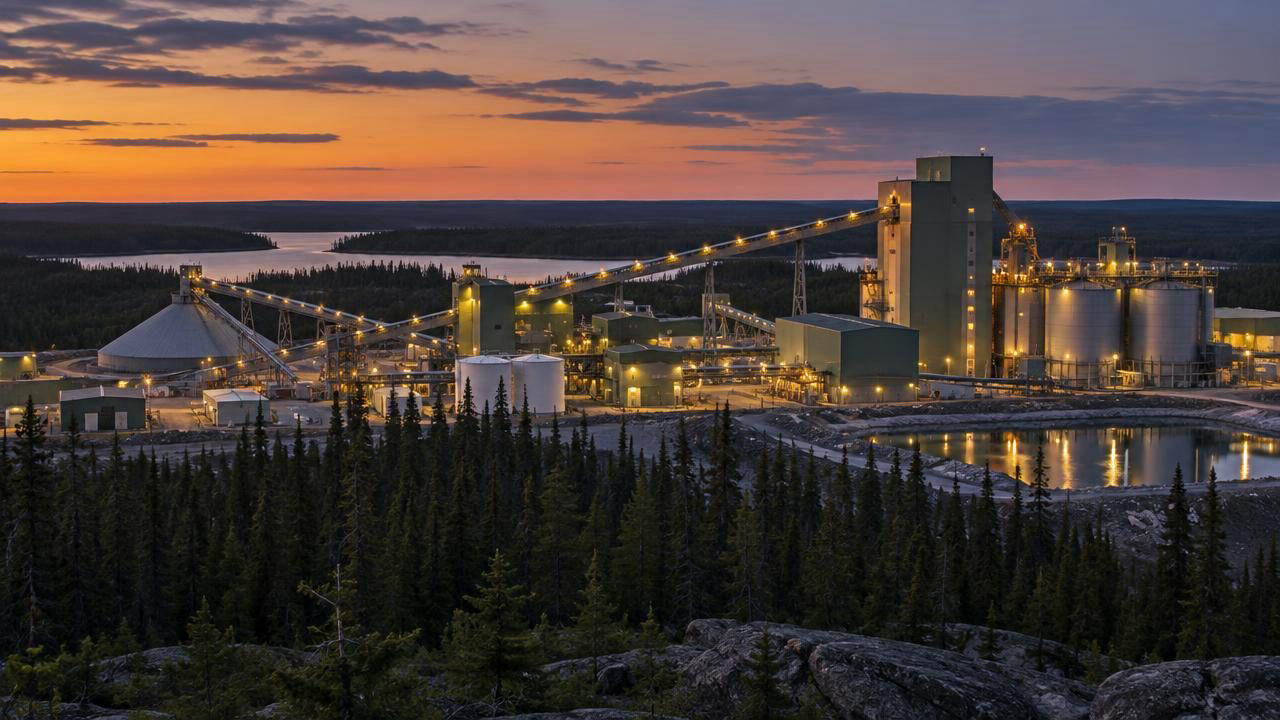 Mining & EnergyCameco Narrows Its 2026 Uranium Forecast After a Longer Key Lake ShutdownCameco reported third-quarter 2026 results on October 30. A longer planned maintenance stop at the Key Lake mill cut quarterly uranium output to 3.5 million pounds, the 2026 production range narrowed to 19.5 to 20.5 million pounds, unit cost guidance rose and Westinghouse posted a quarterly loss, smaller than a year earlier. Realized prices rose, the C$0.24 annual dividend was declared and the shares closed at C$107.60, down 7.7 per cent.Élise Galarneau · October 30, 2026 · 7 min
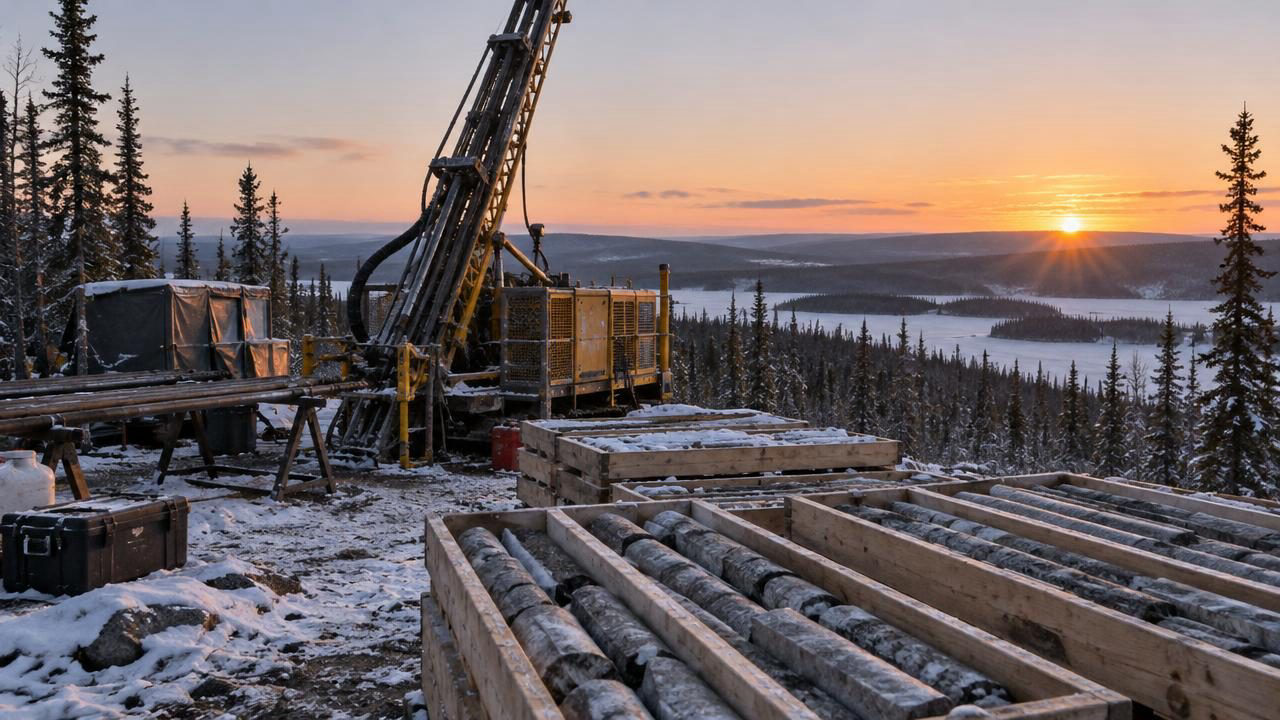 Mining & EnergyF3 Uranium's Strongest Exploration Hole: 4,400 cps Outside JR and TetraF3 Uranium reported on 21 October that hole PLN26-232, drilled about a kilometre east of its Tetra Zone discovery in Saskatchewan's western Athabasca Basin, returned 4,400 counts per second on a handheld spectrometer, its strongest reading in an exploration hole away from its known zones. A second drill rig is following it up. F3 ended its fiscal year on 30 June 2026 with C$22.7 million in cash and term deposits. That leaves the follow-up drilling funded. Assays are pending, and this week's option and RSU grants are routine compensation filings.Daniel Okoye · October 30, 2026 · 7 min
 Mining & EnergyUranium One Adds a 14-Year Exploration Geologist for Its First Athabasca SeasonUranium One Mining engaged Saskatoon geologist Adrian Huerta Ruiz on October 23, 2026 to help plan its first field season in the Athabasca Basin, where it holds the Nucleon and Quark claims and has agreed to acquire Pasfield Lake. The company held C$2.87 million in cash at June 30, 2026, with about C$1.55 million committed to Canadian exploration.Daniel Okoye · October 27, 2026 · 6 min
Get the Maple Morning Debrief
Yesterday's close, overnight, and what to watch before the open — in your inbox by 6 a.m. ET. Free, and one click to unsubscribe.
Follow and ask
Get more of our Canadian market coverage in Google Top Stories.
Sources and references (5)
- Cameco, "Cameco reports 2026 third quarter results," October 30, 2026
- Cameco, Q3 2026 management's discussion and analysis, financial statements and notes
- Natural Resources Canada, Uranium and nuclear power facts, updated February 27, 2026
- US Energy Information Administration, 2025 Uranium Marketing Annual Report, released July 29, 2026
- The Maple Markets, "Cameco Narrows Its 2026 Uranium Forecast After a Longer Key Lake Shutdown," October 30, 2026
Cite this analysis
Please attribute The Maple Markets and link to the original page.
Daniel Okoye (October 31, 2026). How Canada's Uranium Gets Priced Years Before It Is Mined. The Maple Markets. https://themaplemarkets.ca/en/newsroom/canada-uranium-long-term-contracts-and-the-spot-pricehttps://themaplemarkets.ca/en/newsroom/canada-uranium-long-term-contracts-and-the-spot-price