
Copper One’s Next Exploration Milestones: Lessons From Faraday’s Rise
As Faraday advances its Arizona copper projects, Copper One is pursuing the drilling evidence needed to move its Nevada exploration project forward.
Copper One has begun an expanded drilling program at Majuba Hill after raising C$7.96 million in gross proceeds. Faraday’s development offers a useful illustration of the technical steps ahead—not a valuation benchmark or a prediction of Copper One’s outcome.
By Daryl Frètu Von6 min read
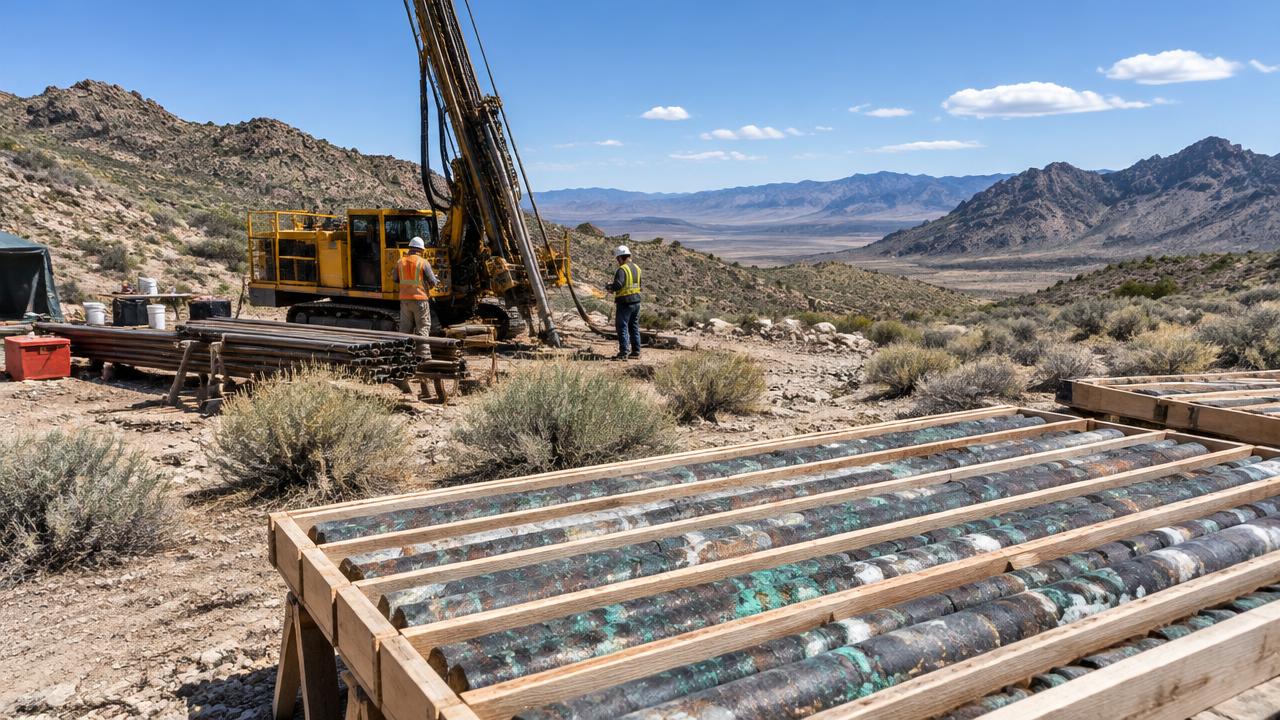
Phase 2 drilling
Up to 10,000 feet
Copper One October 23 announcement; expanded program commenced, results not assured.
Drilling history
More than 90,000 feet
Across more than 100 holes, according to Copper One.
September financing
C$7,955,900 gross
Before costs and other commitments; share and warrant issuance affects ownership.
Faraday resource
4.2 billion lb copper
Measured and indicated contained copper in the May 2023 release; resources, not reserves.
Redonda step-out
About 600 metres
Northeast of the main zone; preliminary visual observations require laboratory confirmation.
Copper One Resources Corp. (CSE: CEXY; OTC: CEXYF) has begun an expanded drilling program at its Majuba Hill copper-silver-gold project in Nevada. The next laboratory results and geological work will help establish what its exploration history can support.
That work comes against a copper market in which new mine development matters. The International Energy Agency’s Global Critical Minerals Outlook 2026 identifies a potential copper supply gap of around 25% by 2035 under its base-case project pipeline. That is a scenario-based projection, not a guaranteed shortage or a forecast of Copper One’s value.
Favourable market conditions alone do not establish a deposit’s value. Companies must demonstrate that their projects can progress from geological potential toward technically supported resources, economic studies and, where justified, mine development.
Faraday Copper Corp. (TSX: FDY) illustrates some of those stages. It is a much more advanced company than Copper One, with different assets, financing and technical evidence. Its progression offers a framework for understanding the work ahead, rather than a promise of a comparable outcome.
Faraday Copper: From Exploration to Institutional Recognition
Faraday’s evolution shows how a copper company’s development profile can change as technical evidence accumulates.
Faraday’s May 3, 2023 announcement of a preliminary economic assessment for Copper Creek in Arizona included approximately 4.2 billion pounds of contained copper in measured and indicated resources, with an additional approximately 628 million pounds classified as inferred.
Those figures did not represent mineable reserves. They established a mineral inventory that could be evaluated through further technical and economic work. A preliminary economic assessment is an early economic study; it does not establish that a mine will be built or achieve its modelled results.
In March 2026, Faraday reported closing a C$100 million private placement involving a Lundin family trust and BHP.
On October 15, Faraday announced the closing of its acquisition of BHP’s historic San Manuel copper project in Arizona. The transaction combined San Manuel with the adjacent Copper Creek project to create the Redhawk Copper Complex. BHP received additional Faraday shares as consideration. Its ownership depends on the share-count basis used; this comparison does not rely on a specific ownership percentage.
The acquisition brought historical mining infrastructure, a private land position and proximity to Copper Creek, creating opportunities to evaluate a potentially integrated development.
Faraday is not yet a producing copper miner. Updated resources and further engineering studies remain ahead.
Its progression illustrates how quantified resources, engineering work and strategic capital can change the development options available to a copper company. Those achievements do not establish what Copper One can deliver.
Copper One: Building the Foundation at Majuba Hill
Copper One’s Majuba Hill project is in Nevada. Historical workings, geological information, geophysical surveys and drilling provide a foundation for its current exploration.
According to Copper One’s October 23 announcement, more than 90,000 feet of drilling across more than 100 holes had been completed at the project.
That history gives the technical team material to work with. It does not, by itself, establish a current mineral resource, recoverable metal or an economically viable mine. The company describes its current work as advancing toward a maiden mineral resource estimate—a first formal estimate of the amount, grade and confidence classification of mineralized material.
In its August Phase 1 completion announcement, Copper One reported 4,015 feet of core drilling. On October 23, it announced that an expanded Phase 2 diamond drilling program of up to 10,000 feet had commenced. That is the expanded program, rather than the smaller program originally contemplated after Phase 1.
Phase 1 assay results remained pending in the October 23 release. Visual observations of copper-bearing minerals help guide geological interpretation, but laboratory results are essential to establish grades and assess the significance of intersections.
Copper One’s opportunity is to turn its exploration database and new drilling into a clearer, technically supported understanding of Majuba Hill. The evidence from those programs matters more to that assessment than a short-term share-price move.
Why the First Resource Estimate Matters
A mineral resource estimate would give Copper One a more rigorous starting point for assessing Majuba Hill. It would not establish that the project can become a profitable mine.
The estimate would describe the quantity, grade and classification of mineralized material under stated assumptions. Subsequent work could address metal recovery, mining methods, costs, capital requirements and project economics.
That is a useful lesson from Faraday’s progression. Copper Creek advanced through technical work that made its mineralization more measurable and commercially assessable—not simply through identifying copper.
For Copper One, drilling that establishes continuity and supports a future resource estimate could provide a foundation for more detailed technical and financial analysis.
The limits matter alongside that opportunity. Disappointing assays, inconsistent grades or unfavourable metallurgy could weaken the development case. A larger drilling program improves the opportunity to collect evidence; it does not guarantee favourable results.
Capital, Strategy and the Next Stage of Growth
Copper One’s September financing provides capacity to support exploration and general working capital. The company reported C$7,955,900 in gross proceeds from a non-brokered special-warrant offering.
Gross proceeds are before financing costs and do not establish the cash available after other commitments. The special warrants convert into units containing a common share and half a purchase warrant. That capital supports the next stage of work while increasing, or potentially increasing, the share count and diluting existing holders’ ownership. Future warrant exercise proceeds are not assured.
Copper One has also been active beyond Majuba Hill. At Redonda in British Columbia, its October 16 announcement described preliminary visual identification of copper-bearing mineralization in a step-out hole approximately 600 metres northeast of the main zone.
These observations provide a target for further assessment. Laboratory confirmation is needed to establish copper presence and grade, and further work is needed to determine continuity and significance.
The broader portfolio creates exploration options, although prioritizing spending and maintaining financial discipline remain important.
Copper One does not need to reproduce Faraday’s corporate strategy to make progress. It needs enough technical evidence for investors and potential partners to assess its own projects on their merits.
A More Advanced Corporate Example: Arizona Sonoran
Hudbay’s June 2026 announcement of the completed Arizona Sonoran acquisition offers another example of strategic interest in North American copper development.
Arizona Sonoran’s Cactus project was substantially more advanced than Copper One’s exploration assets. Its reserves, technical studies and development work put it in a different category.
The transaction does not establish a valuation for Copper One or imply that Copper One will become an acquisition target. It illustrates why a well-defined development opportunity can attract strategic interest—and how much technical work separates an early explorer from that position.
The Milestones That Could Define Copper One’s Next Chapter
Copper One’s next steps are measurable: receive laboratory results, continue drilling and determine whether those results support further resource work.
A maiden resource estimate, if justified by the evidence, could provide a foundation for subsequent studies. Metal recovery, economics, permitting and funding would still need to be addressed.
Mineral exploration remains speculative. Copper One and Faraday occupy very different stages of project maturity and have substantially different technical, financial and institutional resources.
Copper One nonetheless has an exploration database, active drilling and recently raised capital with which to pursue its next milestones. Those are practical foundations for further work, not proof of a future mine.
The question is whether the current drilling can establish the technical evidence needed for Copper One’s next stage of development. Its progress should be judged on that evidence, not on a comparison alone.
Financial Disclaimer. This material is for informational purposes, not investment advice or a recommendation to buy, sell or hold securities. Mineral exploration is speculative, and future technical or commercial outcomes are uncertain. Resources and corporate outcomes at other companies are not predictive of Copper One’s results. Financial Disclaimer.
Sponsored content and disclosure
This article is sponsored promotional content published by The Maple Markets (The Maple Index Inc.) on behalf of Copper One Resources Corp., from whom compensation has been received for investor relations, market awareness or related media services in connection with Copper One Resources Corp. (CSE: CEXY). Campaign period: 2026-10-15 to 2026-12-12; publication scheduled for 2026-10-26 Vancouver time. The sponsor does not review or approve editorial copy. The Maple Markets and its authors may hold positions in securities mentioned. This material is not investment advice.
Read next
Auch auf Deutsch: Die nächsten Explorationsschritte von Copper One: was der Aufstieg von Faraday zeigt
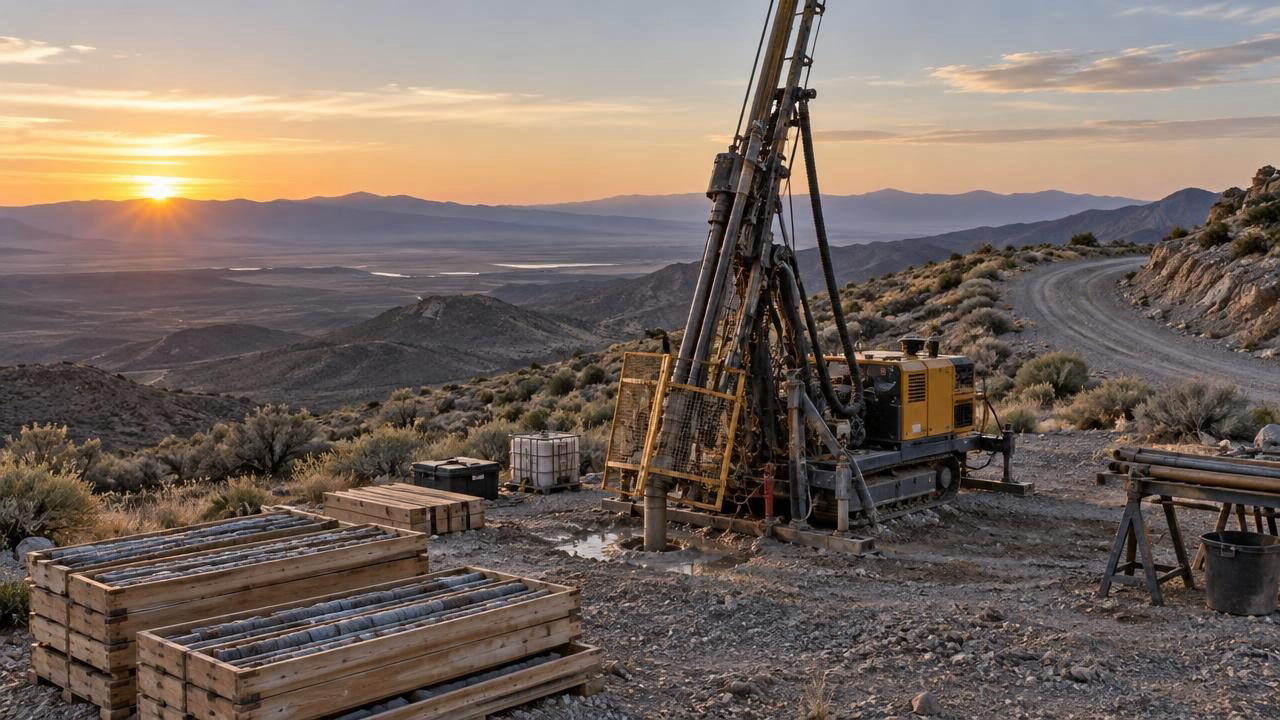 SponsoredMining & EnergyCopper One Begins Drilling Up to 10,000 Feet at Majuba Hill in NevadaOn October 23, 2026, Copper One Resources announced that diamond core drilling had begun on its expanded Phase 2 program of up to 10,000 feet (3,048 metres) at Majuba Hill in Pershing County, Nevada, the copper-silver-gold project it calls its flagship. One portable rig is planned to run around the clock at a past-producing mine with more than 90,000 feet of drilling behind it, in the state the Fraser Institute's 2025 survey ranked first in the world for mining investment. The company plans to report Phase 1 assays once validated and is working toward a maiden NI 43-101 resource.Daryl Frètu Von · October 26, 2026 · 7 min
 Mining & EnergyB.C. Conservatives Win a Majority Promising 120-Day Permits for Major ProjectsBritish Columbia elected a Conservative majority on October 24, 2026, by the projections of The Canadian Press and CTV News, with seat counts preliminary overnight. Premier-designate Lorne Doerkson has promised a 120 Day Permitting Act for major projects, red tape cut back to 2017 levels and the repeal of DRIPA. He inherits a record the outgoing government reports as five mines permitted and a mining backlog cut by half, along with a 2025 court ruling on DRIPA and mineral claims.Élise Galarneau · October 25, 2026 · 9 min
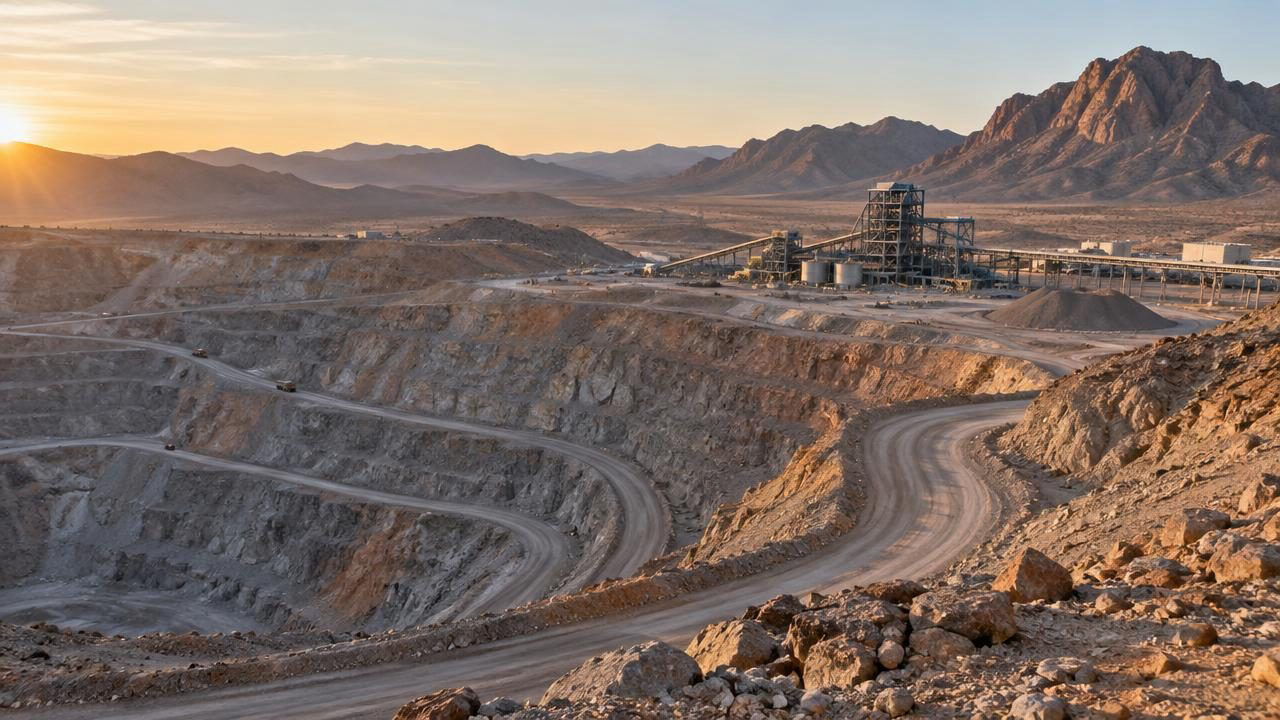 Mining & EnergyHudbay and Mitsubishi Approve a US$2.07 Billion Copper World Mine in ArizonaHudbay Minerals and Mitsubishi Corporation approved construction of the Copper World mine in Pima County, Arizona, in a release dated October 21, 2026. The definitive feasibility study puts initial growth capital at US$2.07 billion in 2026 dollars, output at 102,000 tonnes of copper a year over the first decade and first production in the second half of 2029. Mitsubishi's equity, a Wheaton stream deposit and project debt come first; Hudbay's own contribution is deferred to 2028. The capital figure is about 59 per cent above the 2023 study, on the desk's arithmetic, for a mine of changed scope.Priya Sandhu · October 22, 2026 · 10 min
Follow this story
Follow CEXY.CN, FDY.TO — the next Maple piece on these companies, plus the Maple Morning Debrief before the open.
Follow and ask
Get more of our Canadian market coverage in Google Top Stories.
Sources and references (9)
- IEA Global Critical Minerals Outlook 2026: Outlook
- Faraday May 2023 Copper Creek resource and PEA
- Faraday March 2026 financing closing
- Faraday San Manuel acquisition closing
- Copper One Phase 1 completion
- Copper One October 23 Phase 2 commencement
- Copper One September financing
- Copper One Redonda update
- Hudbay Arizona Sonoran acquisition completion
Cite this analysis
Please attribute The Maple Markets and link to the original page.
Daryl Frètu Von (October 27, 2026). Copper One’s Next Exploration Milestones: Lessons From Faraday’s Rise. The Maple Markets. https://themaplemarkets.ca/en/newsroom/copper-one-next-generation-what-faraday-rise-revealshttps://themaplemarkets.ca/en/newsroom/copper-one-next-generation-what-faraday-rise-reveals