
Dollarama's Same-Store Sales and the Trade-Down Effect
Discount retail benefits when household budgets tighten, which makes it an unusual defensive holding.
By Hannah Kuan3 min readTranslation: human
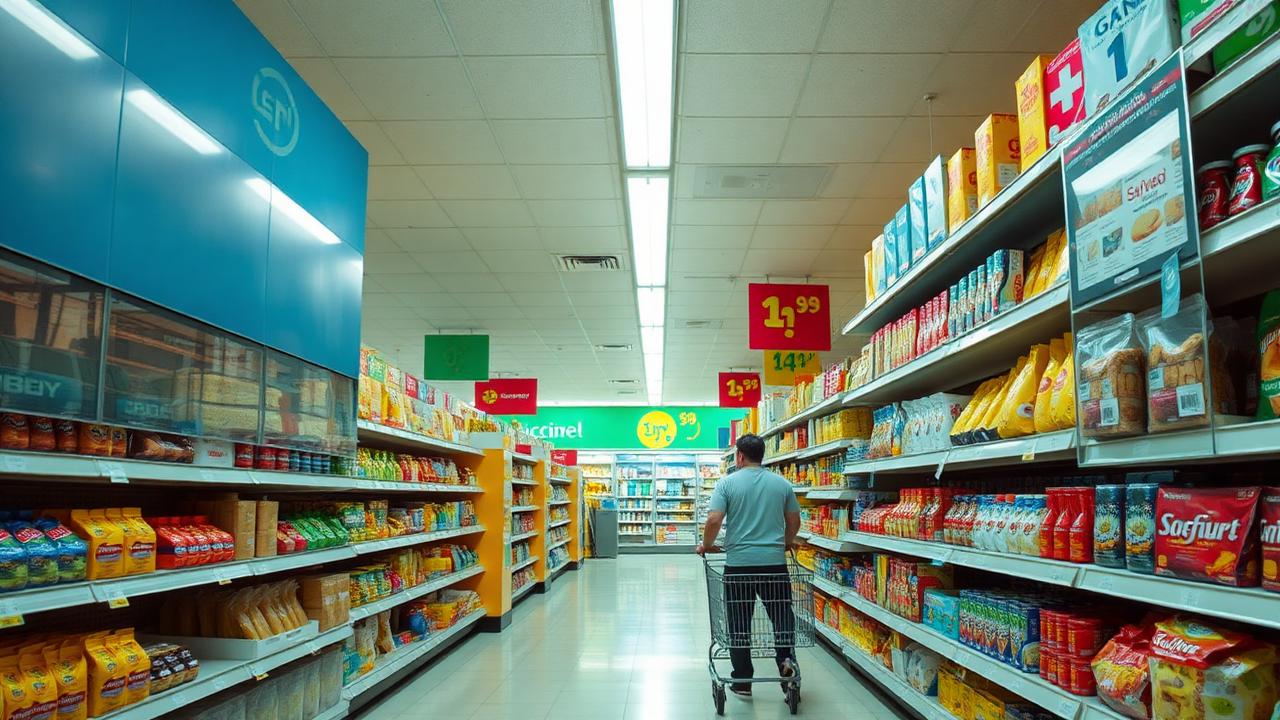
Growth driver
Trade-down
Transaction counts up
Margin risk
USD sourcing
Currency lag
Growth runway
Latin America
Canada nearing saturation
Dollarama's same-store sales growth has continued to outpace the broader Canadian retail sector, a pattern consistent with households trading down as discretionary budgets compress. The metric is the single most important number in the disclosure because it isolates performance at existing stores from the effect of simply opening more locations, and it is the clearest read on whether the trade-down thesis is actually playing out.
The counter-cyclical mechanic
When budgets tighten, consumers shift spending from mid-market retailers toward discount formats. Transaction counts rise even as average basket size stays flat or falls. That mix is visible in the disclosed metrics, which typically break same-store sales growth into a traffic component and a basket-size component. A retailer benefiting from genuine trade-down should show traffic as the dominant driver, since it reflects new or more frequent customers rather than existing customers simply spending more per visit. This is also why the format tends to hold up, or even improve, during periods when discretionary retailers are reporting weaker results — the same macro pressure that hurts higher-priced retailers pushes incremental customers toward the discount channel.
Margin structure
Direct sourcing and a limited assortment keep gross margins high for the format. Currency matters because a large share of merchandise is imported and priced in US dollars, so a weaker loonie compresses margin with a lag. The limited assortment strategy — carrying fewer SKUs than a conventional retailer but at high volume per SKU — gives the company outsized purchasing leverage with suppliers and simplifies inventory management, both of which support margins that are unusually strong for a discount retailer. Because merchandise is sourced well in advance of being sold, currency moves show up in cost of goods over several quarters rather than immediately, which means a period of loonie weakness can continue to pressure margins even after the exchange rate has stabilized or reversed.
Reading same-store sales through the cycle
The quality of same-store sales growth depends on where in the economic cycle it occurs. Growth achieved during a downturn, driven mainly by traffic, indicates the company is winning new, often more price-sensitive customers who may or may not remain loyal once conditions ease. Growth that persists into a recovery, by contrast, suggests the company has converted some of those customers permanently, which is the more valuable outcome for the long-term thesis. Investors should also watch how much of any margin change is coming from pricing actions versus sourcing efficiency versus currency, since only the first two are within management's control and durable.
The limits
Same-store growth from trade-down reverses when conditions improve. Store-count expansion in Canada is approaching saturation, which is why the Latin American investment matters more than its current contribution suggests. As the density of stores in existing Canadian markets increases, incremental new stores risk cannibalizing sales from nearby existing locations, which caps how much longer store-count growth alone can drive results domestically. That shifts the growth algorithm increasingly toward same-store sales performance and toward whatever contribution international operations can eventually provide, making the trajectory of the international segment an increasingly important part of the long-term growth story rather than a side note.
Why the trade-down thesis has limits as an investment case
Investors should be careful not to treat the trade-down effect as a permanent structural tailwind. It is fundamentally a cyclical phenomenon tied to consumer stress, and building a long-term valuation case around its persistence assumes household budgets remain under pressure indefinitely. A more durable framework separates the cyclical traffic benefit from the structural advantages of the business — sourcing scale, real estate discipline and margin control — which are the factors likely to persist once, or if, the cyclical tailwind fades.
What to watch
Track the split between traffic and basket size within reported same-store sales growth, and monitor gross margin trends alongside management commentary on currency hedging and sourcing costs. Watch the pace of new store openings in Canada relative to signs of market saturation, and follow disclosures on the Latin American operations' store count, sales contribution and profitability as an indicator of the next leg of growth.
Read next
 BusinessCanadian Tire and the Loyalty Data AssetThe retail business is mature. The financial services arm and loyalty data are where the differentiation sits.Hannah Kuan · July 29, 2026 · 4 min
 Businessgoeasy's Repair Is Working, but the Earnings Model Has Not Recoveredgoeasy's charge-offs and leverage improved sequentially in the second quarter. Originations fell 70% year over year and adjusted diluted EPS fell to $1.02 from $4.40. Repair is not reacceleration.Hannah Kuan · September 1, 2026 · 8 min
 BusinessCanadian Grocery Margins: Pricing Power Under Political ScrutinyCanadian grocers earn thin margins on food and better margins on everything else in the store. The public debate conflates the two, and so do a lot of investors.Hannah Kuan · August 31, 2026 · 7 min
Follow this story
Follow DOL — the next Maple piece on this company, plus the Maple Morning Debrief before the open.
Follow and ask
Get more of our Canadian market coverage in Google Top Stories.
Disclosure
Information only. Not investment advice. The Maple Markets does not hold positions in securities discussed. See the Financial Disclaimer.
Sources and references (2)
Cite this analysis
Please attribute The Maple Markets and link to the original page.
Hannah Kuan (June 17, 2026). Dollarama's Same-Store Sales and the Trade-Down Effect. The Maple Markets. https://themaplemarkets.ca/en/newsroom/dollarama-s-same-store-sales-and-the-trade-down-effecthttps://themaplemarkets.ca/en/newsroom/dollarama-s-same-store-sales-and-the-trade-down-effect