
Does a Draft EU Minerals Pact Change Anything for First Phosphate?
A joint statement being prepared for an EU and Canada summit in Montreal would put a European public bank behind Canadian critical-minerals projects, but the text is a draft and the Québec phosphate deposit it is being attached to has a resource and no reserve.
A draft joint statement circulating among EU member states before an October 2026 summit in Montreal would open European Investment Bank financing to Canadian critical-minerals projects, according to reporting on September 30, 2026. First Phosphate Corp. (CSE: PHOS, FSE: KD0) sits inside that perimeter. Its Bégin-Lamarche deposit in Saguenay grew to 204.7 million tonnes of measured and indicated resource this year, and it has no mineral reserve and no completed economic study.
By Priya Sandhu7 min read

Bégin-Lamarche resource
204.7 million tonnes at 6.05 per cent P2O5, measured and indicated
effective May 1, 2026; 12.38 million tonnes of contained P2O5; no mineral reserve has been declared
Resource growth
a 378 per cent increase in indicated tonnes
against the first estimate of September 9, 2024, per the company's resource update of August 2026
Last financing
C$17,698,290 closed July 10, 2026
7,238,070 flow-through shares and 1,611,075 units, all at C$2.00
Market value
about C$418 million at C$2.21
October 1, 2026, QuoteMedia 15-minute delayed data; secondary market data, not verified against SEDAR+ filings
German line
FSE: KD0, WKN A3DQCH, ISIN CA33611D1033
Frankfurt security record read October 1, 2026; the Nasdaq ADR also trades as PHOS
A draft joint statement is being passed between European Union member states ahead of a summit with Canada in Montreal this month. Reporting on September 30, 2026 describes it as opening European Investment Bank financing to Canadian critical-minerals projects. The text has not been published by the Council, by the European Commission or by the Government of Canada, and a draft circulated for comment is not policy.
That matters for a small group of Canadian issuers whose pitch rests on supply-chain politics, and First Phosphate Corp. is one of the clearest examples of the type. The company holds igneous phosphate ground in the Saguenay region of Québec and aims it at lithium iron phosphate battery cathodes, which is precisely the dependency Brussels says it wants to reduce.
A draft text is the weakest rung on a six-step ladder
Between a political intention and money changing hands there is a sequence, and almost every instrument in the Canada and EU minerals relationship sits near the bottom of it. Ranked by what each one actually obliges a party to do:
- A draft statement circulated for comment. Binds nobody. It can be rewritten or dropped before the summit it was written for.
- A summit statement or council conclusions. A political commitment by governments. No legal obligation on anyone, and no money.
- A framework or strategic partnership. The Framework for a Strategic Partnership on Raw Materials between Canada and the European Union, published by the European Commission, sits here. It is established inside the mandate of the existing trade agreement, "notably of the bilateral dialogue of raw materials (Art. 25.4)", and its listed actions are joint seminars, researcher exchanges and the development of at least one critical raw material project. It names no company.
- A letter of intent. On March 2, 2026, Canada's Minister of Energy and Natural Resources and the European Commission's Executive Vice-President issued a joint statement reaffirming that partnership and noting a Letter of Intent signed between the European Investment Bank and the Government of Canada. A letter of intent records a willingness to consider something.
- A signed financing agreement. Money, conditional on the conditions inside it being met.
- An offtake contract with price, volume and term. Revenue.
The Parliament in Strasbourg added its own weight on February 27, 2026, when its foreign affairs committee adopted a recommendation urging joint projects under the Canada raw materials partnership and welcoming the Canada-led G7 Critical Minerals Production Alliance. Such recommendations are explicitly non-binding.
Nothing on that list is a market for rock. Steps one to four describe who is allowed to be considered.
What First Phosphate has actually proved this year
The strongest thing this company did in 2026 is in its own technical disclosure, and it is substantial.
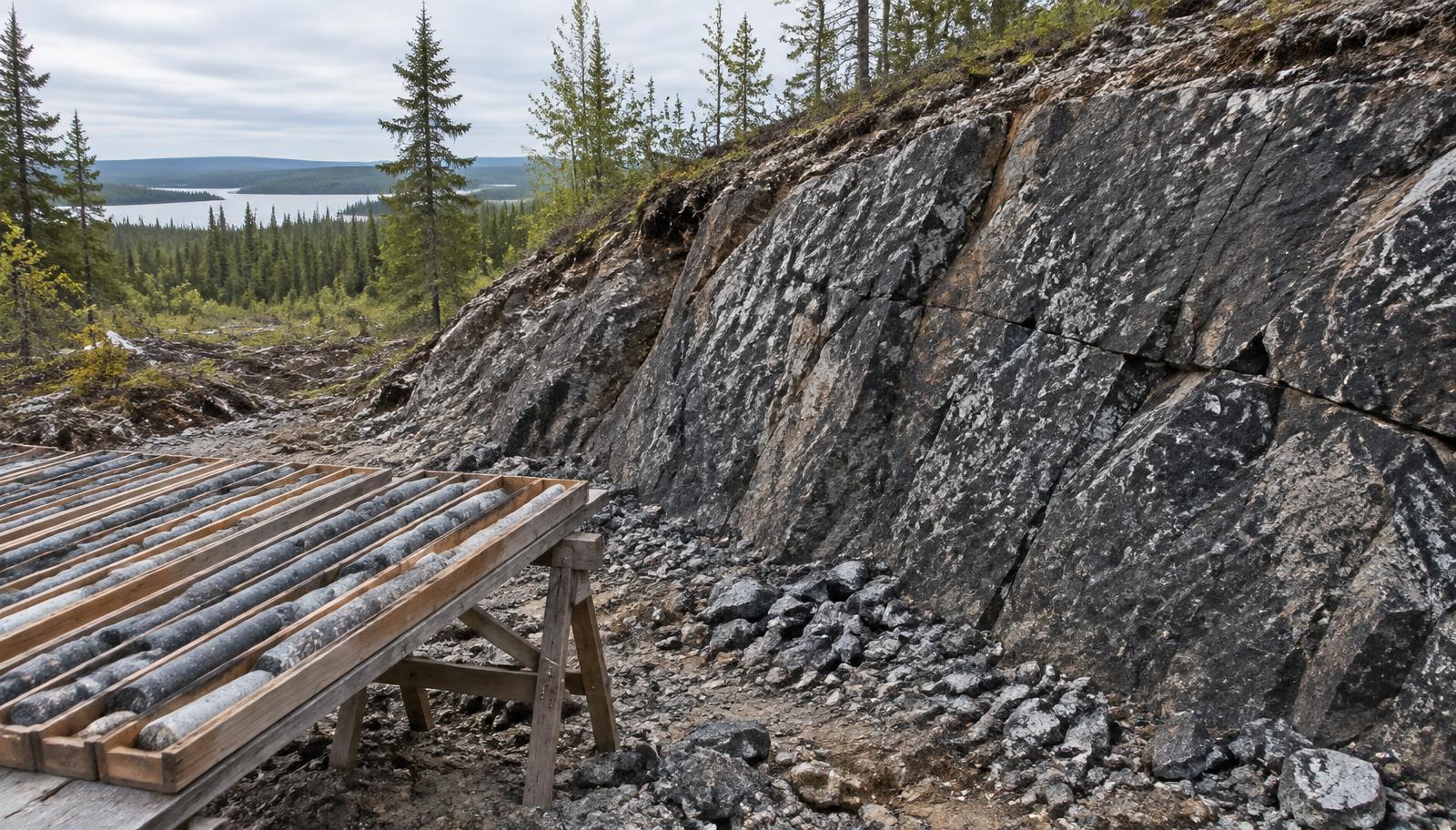
First Phosphate filed an updated mineral resource estimate for Bégin-Lamarche with an effective date of May 1, 2026, prepared on 276 drill holes totalling 68,345 metres. It reports 6.2 million tonnes of measured resource at 7.70 per cent phosphate pentoxide and 198.5 million tonnes of indicated resource at 6.00 per cent, for 204.7 million tonnes at an average 6.05 per cent, containing 12.38 million tonnes of phosphate pentoxide. A further 89.5 million tonnes sits in the inferred category at 6.16 per cent, which is the lowest confidence category and is excluded from economic studies. The cut-off is 2.5 per cent on a pit-constrained basis. The independent qualified person is Antoine Yassa, P.Geo., of P&E Mining Consultants; the company's own qualified person is its chief geologist, Steeve Lavoie, P.Geo.
The indicated figure is a 378 per cent increase on the company's first estimate of September 9, 2024. Drilling that converts inferred rock into indicated rock is the unglamorous work that makes a deposit financeable, and the company has done a great deal of it in under two years.
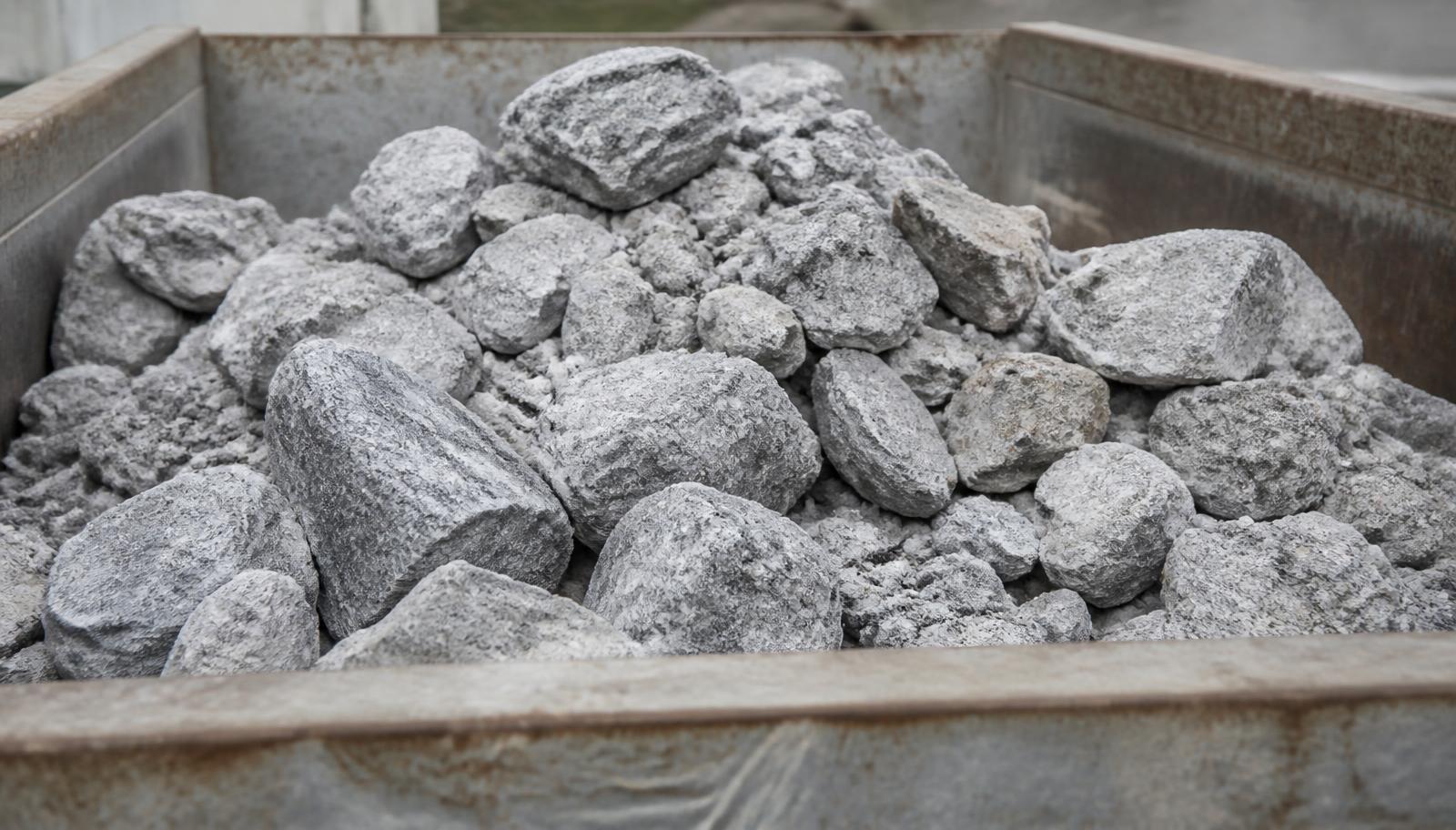
Phosphate pentoxide, written P2O5, is how the industry measures phosphate content: a grade of 6.05 per cent means roughly 60 kilogrammes of it in every tonne of rock. Igneous phosphate of this type is low in cadmium and uranium, which is why battery-grade purified phosphoric acid is a plausible end use rather than a slogan.
What the company does not have is a mineral reserve. The distinction is not bureaucratic. A resource is rock a qualified person believes is there in a stated quantity and grade. A reserve is the portion of it that an economic study has shown can be mined, processed and sold at a profit under stated assumptions. Converting one into the other requires a feasibility-level study, and First Phosphate describes a preliminary economic assessment for Bégin-Lamarche as under way rather than complete. Until that work is published, the tonnes above are geology, not a business case.
The money has come from Ottawa and from the share register, not from Brussels
First Phosphate reported in May 2026 that it remains debt-free and had received C$16.7 million from the federal government as a non-repayable contribution toward development. It closed C$17,698,290 of private placements on July 10, 2026, issuing 7,238,070 flow-through shares at C$2.00 and 1,611,075 units at the same price, each unit carrying a warrant. A flow-through share passes the company's Canadian exploration tax deduction to the buyer, who pays a premium for it; it has no equivalent outside Canada.
As of May 4, 2026 the company reported 179,947,950 common shares outstanding, with 2,625,000 warrants, 7,650,000 options and 1,975,000 restricted share units. Adding July's issuance takes the count to roughly 188.8 million. Market data for October 1, 2026 put the company at about C$418 million at C$2.21 a share, which divides out at about 189 million shares and is consistent with that. Those are QuoteMedia figures delayed by 15 minutes and are not verified against SEDAR+ filings.
The overseas financing that exists today is also a letter. The Maple Markets reported on September 18, 2026 that a Swiss export credit agency had put a US$212.5 million letter of support beside the project. A letter of support from an export credit agency is a statement that the agency would consider covering a loan, usually tied to procurement from its own country. It is rung four, like the EIB letter of intent, and it has the same character.
On where the security trades: the Canadian listing is CSE: PHOS, the Frankfurt line is FSE: KD0 under WKN A3DQCH and ISIN CA33611D1033, and since August 10, 2026 an American depositary receipt has traded on the Nasdaq Global Market under the symbol PHOS as well. The same four letters therefore identify two different instruments in two currencies, which is a practical trap when checking a price.
One more thing travelling with this name
Two items from the past fortnight belong in any honest file on First Phosphate. Its most recent release, dated September 28, 2026, was an agenda for a virtual investor conference, which is marketing rather than news. And The Maple Markets reported on September 23, 2026 that a research note circulating on the company had been paid for at a price of US$1,500. Neither fact changes the resource estimate. Both change how much weight a third-party summary of the company deserves.
Discussion of the company this week has been thin, and what little there was concerned trade policy rather than the deposit.
The perimeter and the project are two different questions
If the Montreal summit produces the statement described in the draft, First Phosphate will be inside a perimeter that a publicly owned lender in Luxembourg is allowed to look at. That is a genuine improvement on being outside it, and it costs the company nothing to obtain.
It is also a long way from the thing that decides this project, which is whether 204.7 million tonnes of six per cent rock in Saguenay can be turned into purified phosphoric acid at a cost somebody will pay. That answer is not in Brussels. It is in an economic study the company has not yet published.
Transparency note. This is an independent due-diligence analysis and editorial opinion piece produced by The Maple Markets editorial desk. It is not sponsored, promoted or commissioned, and no compensation of any kind has been received from First Phosphate Corp. (CSE: PHOS) or any party acting on their behalf. The analysis is based on public disclosure available as of the publish date; every figure is attributed to its primary source. The Maple Markets and its authors may hold positions in securities mentioned; nothing here is a recommendation to buy, sell or hold any security, and readers should not treat it as investment advice. Past disclosure does not guarantee future results. Policies: Editorial Standards · Financial Disclaimer.
Read next
Auch auf Deutsch: Ändert ein EU-Entwurf zu kritischen Rohstoffen etwas für First Phosphate?
 Mining and ResourcesFirst Phosphate Has Two Binding Offtakes and Ottawa's Money; the Economic Study Is NextFirst Phosphate Corp. (CSE: PHOS, FSE: KD0) has signed two definitive offtake agreements covering 200,000 tonnes a year of phosphate concentrate and 60,000 tonnes a year of phosphoric acid, both confirmed independently in a Government of Canada backgrounder, and has C$21.54 million of non-repayable federal funding under contract. The indicated resource at Bégin-Lamarche has grown nearly fivefold since 2024. What is still missing is the economic study that would price the mine, and neither buyer is named.Daniel Okoye · September 15, 2026 · 9 min
 Mining and ResourcesPeer-Reviewed Geology, No Reserves: What First Phosphate's Ore Geology Reviews Paper SettlesFirst Phosphate Corp. (CSE: PHOS) announced on 21 September 2026 that a study of its Bégin-Lamarche deposit has been published in Ore Geology Reviews, and the shares closed at C$2.38, up 6.3 per cent. The paper is the strongest independent evidence the company has produced: the phosphate is magmatic, continuous across three zones, and unusually low in the trace elements that spoil sedimentary rock. It is also seven months old, and two of the four conclusions in the release are not findings of the paper.Priya Sandhu · September 22, 2026 · 10 min
 Mining and ResourcesFirst Phosphate (FSE: KD0) Trades on Three Kinds of Numbers, and Only One Describes the DepositFirst Phosphate Corp. (CSE: PHOS, FSE: KD0) told shareholders on September 1, 2026 that holders of record had risen 861 per cent since the 2025 meeting, three weeks after its ADRs began trading on Nasdaq and a week after it filed an updated NI 43-101 resource of 198.5 Mt indicated at 6.00 per cent P2O5. A September 2 flash report that cut the discount rates in its model was paid for by the company at US$1,500. Of the numbers in circulation, only the resource is a filed statement about the rock, and construction financing for Bégin-Lamarche has not been announced.Daniel Okoye · September 8, 2026 · 8 min
Follow this story
Follow PHOS.CN — the next Maple piece on this company, plus the Maple Morning Debrief before the open.
Follow and ask
Get more of our Canadian market coverage in Google Top Stories.
Opinion
This article expresses the author's personal views, is separate from news reporting and is not investment advice.
Disclosure
Transparency note. This is an independent due-diligence analysis and editorial opinion piece produced by The Maple Markets editorial desk. It is not sponsored, promoted or commissioned, and no compensation of any kind has been received from First Phosphate Corp. (CSE: PHOS) or any party acting on their behalf. The analysis is based on public disclosure available as of the publish date; every figure is attributed to its primary source. The Maple Markets and its authors may hold positions in securities mentioned; nothing here is a recommendation to buy, sell or hold any security, and readers should not treat it as investment advice. Past disclosure does not guarantee future results. Policies: Editorial Standards · Financial Disclaimer. See the Financial Disclaimer.
Sources and references (7)
- First Phosphate Corp., updated Bégin-Lamarche mineral resource estimate, effective May 1, 2026
- First Phosphate Corp., warrant exercise and capitalisation update, May 4, 2026
- First Phosphate Corp., closing of private placement financing, July 10, 2026
- European Commission, Framework for a Strategic Partnership on Raw Materials between Canada and the European Union
- Government of Canada, Joint Statement by Minister Hodgson and Executive Vice-President Séjourné, March 2, 2026
- European Parliament, recommendation on enhanced EU-Canada cooperation, adopted in committee February 25, 2026
- Frankfurt Stock Exchange security record, ISIN CA33611D1033
Cite this analysis
Please attribute The Maple Markets and link to the original page.
Priya Sandhu (October 2, 2026). Does a Draft EU Minerals Pact Change Anything for First Phosphate?. The Maple Markets. https://themaplemarkets.ca/en/newsroom/first-phosphate-a-draft-council-conclusion-is-not-an-offtake-what-ahttps://themaplemarkets.ca/en/newsroom/first-phosphate-a-draft-council-conclusion-is-not-an-offtake-what-a