
Myriad Uranium (CSE: M, FSE: C3Q) Now Owns All of Copper Mountain. It Still Has No Current Resource
Full ownership of Copper Mountain, a filing cabinet of 2,000 historical holes paid for by a railway, and a lab test pending that could start turning archive into asset.
Myriad Uranium finished buying out its partner on August 21, 2026 and now owns 100 per cent of the Copper Mountain uranium project in Wyoming. The day before, it reported early readings from four new drill holes. The project sits on roughly 2,000 holes drilled by a railway company in the late 1970s, plus a 1979 estimate that is not a current resource and does not add up on its own numbers. This is a plain-English look at what is proven, what is not, and what would settle it.
By Daniel Okoye8 min read
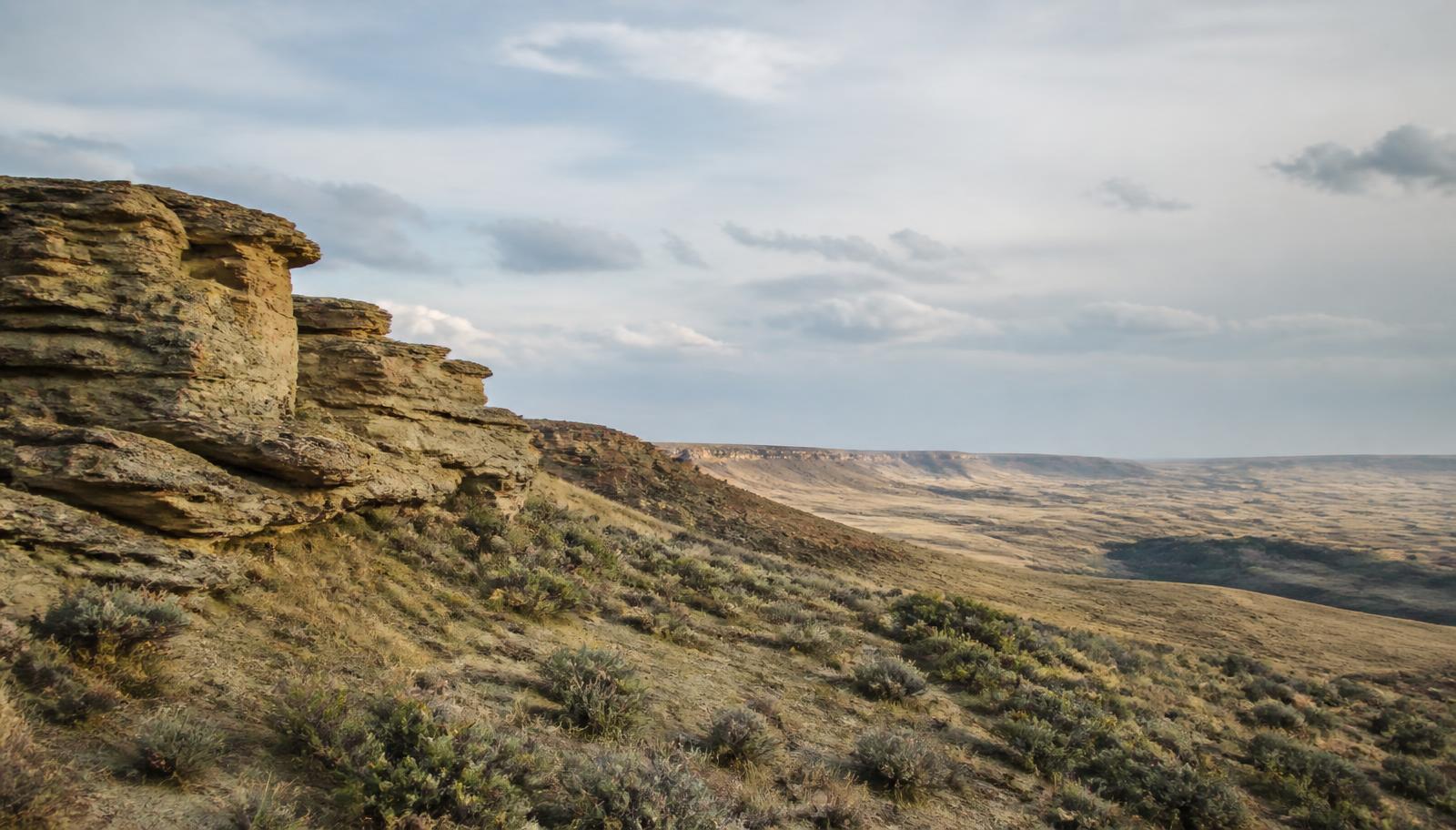
Ownership of Copper Mountain
100 per cent
consolidated on completion of the Rush Rare Metals arrangement, August 21, 2026, from 75 per cent previously (company releases dated April 20 and August 21, 2026).
Lucky Cliff Phase II screen
4 holes, 716.6 m, 50 intervals above 100 ppm eU3O8
best 19.96 m at 269 ppm from 18 m, peak 1,336 ppm, radiometric and not chemical assays (release dated August 20, 2026).
Historical estimate
26.63 Mlb eU3O8 stated in 48.95 Mt at 269 ppm
a 1979 Rocky Mountain Energy compilation, not a current mineral resource; the stated tonnage and grade multiply to about 29.0 Mlb (correction release dated August 24, 2026).
Current mineral resource
none
the NI 43-101 technical report effective March 31, 2026 contains no mineral resource estimate (release dated April 20, 2026).
Frankfurt listing
FSE C3Q, WKN A3D1E0, ISIN CA62857Y1097
quoted alongside CSE: M and OTCQB: MYRUF (Tradegate order book; company release identifiers).
Myriad Uranium Corp. (CSE: M, OTCQB: MYRUF, FSE: C3Q) announced on August 21, 2026 that it had finished buying Rush Rare Metals Corp., giving it 100 per cent of the Copper Mountain uranium project in Wyoming. It previously owned 75 per cent. The day before, on August 20, it reported early readings from the first four holes of its second drill programme at a target called Lucky Cliff.
Both are real events with filings behind them — and together they leave the company simpler and stronger than it was a month ago. But what makes Myriad genuinely interesting is something older: roughly 2,000 holes drilled at Copper Mountain by Union Pacific in the late 1970s, and whether owning that pile of old data is the head start it appears to be.
Two ways to read the same filing cabinet
The optimistic reading is popular among uranium investors, and it is easy to see why: a major railway company spent the equivalent of about C$117 million in today's dollars here, drilled some 2,000 holes and got as far as mine planning before 1980. Myriad now owns all of that work for a fraction of what it cost. On this view, the drilling Myriad is doing now is just confirming what is already known — a shortcut few juniors ever get.
The dismissive reading is one sentence: a company that explores forever and never mines anything does not make its shareholders money. It is a fair charge against much of the junior sector, and it stings most where the main asset was already drilled by somebody else.
Both readings come from the same documents. What separates them is not geology — it is proof, and Myriad's own filings are refreshingly clear about how much proof exists. And as we will see, the company's 2026 record reads like a deliberate effort to close that gap.
What Myriad owns, and since when
The company filed a technical report on Copper Mountain dated March 31, 2026, written by George van der Walt as the qualified person — the licensed geologist required to stand behind it. The April 20, 2026 release says the report covers exploration targets and work programmes. It contains no mineral resource estimate. In other words, no official tonnage exists yet — the keyword being "yet".
At that point Myriad held 75 per cent, with an agreement to buy the rest from Rush. The B.C. Supreme Court approved the deal on August 19, 2026, it closed on August 21, and an August 24 filing records that Myriad issued 24,983,671 of its own shares at a deemed price of C$0.42 for 46,223,258 Rush shares. Ownership of the flagship is no longer split, which genuinely simplifies things — one company, one project, one set of incentives.
Elsewhere in 2026 the company doubled its Copper Mountain land from 9,439 to 18,351 acres on March 10, sold its Red Basin project to Subatomic for US$2.5 million on May 19 while keeping a 10 per cent free carried interest, and picked up 23 uranium targets in the Arizona Strip on June 9. The second drill programme started July 2, 2026 with an initial 4,500 metres and the option to extend to between 7,000 and 10,000 metres.
For European readers, the shares trade in Frankfurt as C3Q, WKN A3D1E0, ISIN CA62857Y1097.
A radiation reading is not an assay — and the company says so first
The August 20, 2026 release reported four holes totalling 716.6 metres at Lucky Cliff, all four hitting uranium mineralisation, with 50 intervals above 100 parts per million equivalent uranium oxide. The longest was 19.96 metres at 269 ppm starting 18 metres down; the highest single reading was 1,336 ppm. All four holes hitting mineralisation is a clean start to a programme.
In the same release the company writes that "these estimates are not chemical assays and remain subject to laboratory verification."
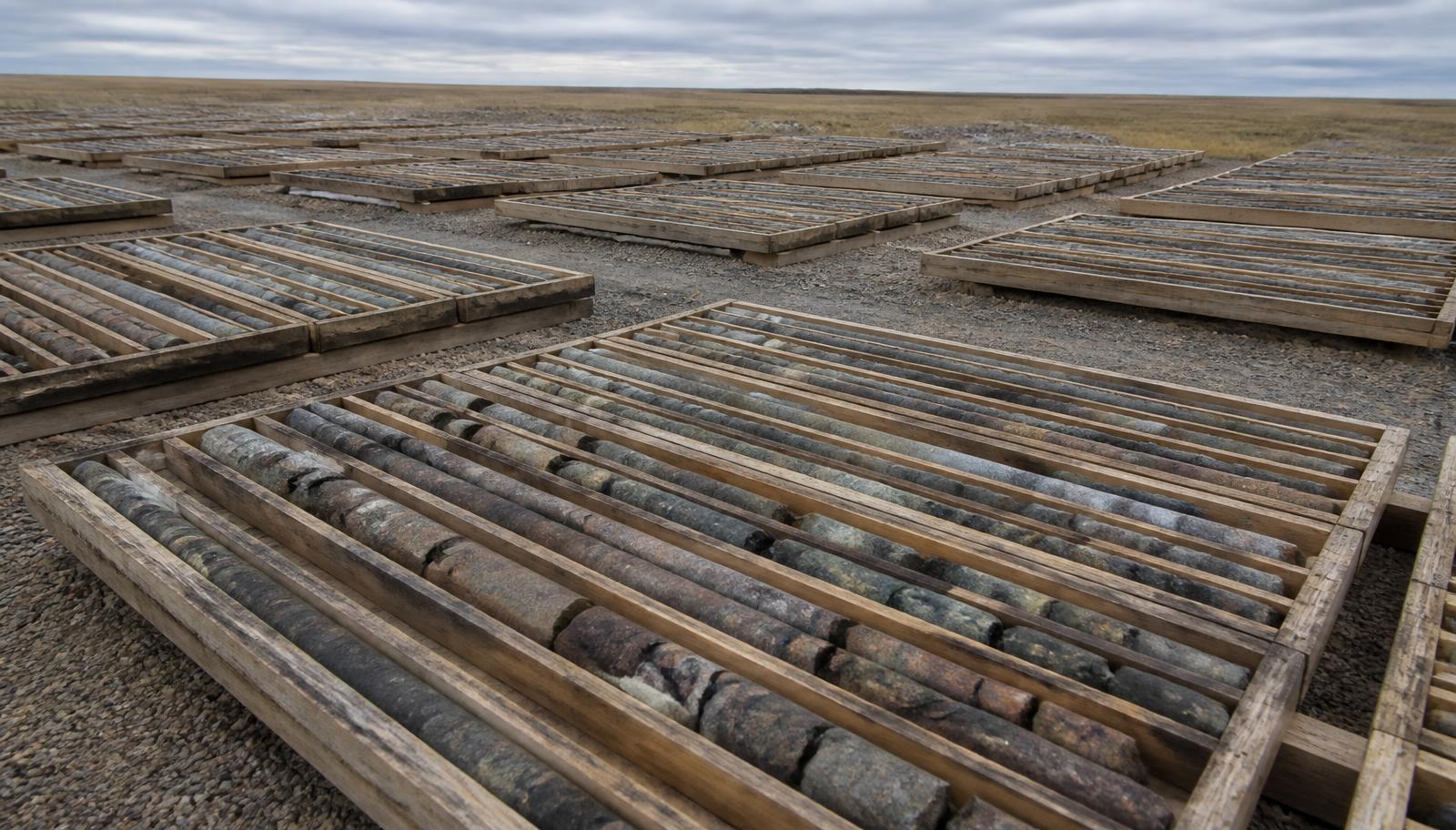
That deserves a plain sentence. The tool used here is a probe lowered down the hole that measures radiation and works backwards to a likely uranium grade. It is fast and cheap, and it is measuring something uranium produces rather than the uranium itself, so the estimate can land above or below the real grade. It is a screening tool. The actual measurement is a laboratory assay on the split core.
Myriad published a screening result and labelled it as one. The right response is to wait for the lab, not to treat 269 ppm as a grade.
The old estimate does not add up
On August 24, 2026 Myriad corrected its August 20 release. The original quoted a historical estimate of 26.63 million pounds of equivalent uranium oxide inside 44.1 million tonnes at 171 ppm. The correction says it "should have read 48.95 Mt at 269 ppm eU₃O₈", and traces it to internal Rocky Mountain Energy reports summarised in a 1979 study.
Take the corrected numbers and do the multiplication yourself. 48.95 million tonnes at 269 ppm works out to about 13,168 tonnes of uranium oxide, or roughly 29.0 million pounds. The release says 26.63 million. The two do not match, and the release does not explain why. The original figures were further apart still — 44.1 million tonnes at 171 ppm is about 16.6 million pounds, some 38 per cent below the stated total.
None of that suggests anything improper. Estimates pulled from 1970s internal company files routinely used different cut-offs and reporting bases, which is exactly why today's rules require them to be flagged. Myriad flags them properly: it states that no qualified person has done the work to call these current resources, that the company does not treat them as such, and that readers should not lean on them.
It is worth showing what happens when people ignore that flag. Market data from QuoteMedia showed 135.68 million shares and a market value of C$56.99 million at C$0.42, with cash of C$8.81 million and liabilities of C$365,783 — though the panel was last updated September 4, 2026 and it is unclear whether the share count includes August's new shares. Divide that market value by 26.63 million pounds and you get about C$2.14 per pound. The arithmetic is correct and the answer is meaningless, because the bottom half of the sum is a 1979 number nobody has verified and that does not agree with its own tonnage and grade. Audited financial statements were filed on August 28, 2026 but were not retrieved for this piece, so the balance-sheet figures above are panel figures rather than verified filings.
Four things people say online, checked
| Claim in circulation | Status against primary documents |
|---|---|
| Myriad owns 100 per cent of Copper Mountain | Verified. Acquisition of Rush completed August 21, 2026; previously 75 per cent |
| Roughly 2,000 historical boreholes drilled by Union Pacific in the late 1970s | Verified in the April 20, 2026 release announcing the technical report |
| All four Lucky Cliff holes returned encouraging preliminary radiometric results | Verified in the August 20, 2026 release, expressly not as assays |
| Seven historical deposits and a shelved six-pit mine plan, with Anaconda attribution | Not verified. Releases reviewed refer to multiple historical deposits and past-producing mines including the Arrowhead Mine, and to advanced Union Pacific mine planning before 1980; no company document reviewed states seven deposits, a six-pit plan or Anaconda involvement |
A fifth item is worth noting rather than repeating. The most shared Myriad item in the week to September 8, 2026 was a company social media post describing a further 14 drill targets. No matching news release appears in the 2026 archive and no filing was found. A programme announced only on social media is not official disclosure, so it is not treated as evidence here.
What would settle the argument
Laboratory assays on the four Lucky Cliff holes change the most. They turn August's radiation screen into a measured grade, and they are the first real test of whether the old readings hold up under modern analysis.
A first official resource estimate settles it outright. That is the document that would convert a 1979 filing cabinet into a current, verified tonnage — and it would answer the forever-explorer charge on its own terms.
Assays coming in well below the probe readings would hurt the case, and that is the specific risk with this style of deposit.
Extending the drill programme past 4,500 metres would suggest management likes what it is seeing, though a decision to keep drilling is not a result.
Another restatement of the old estimate changes very little. The August correction moved the tonnage and the grade without moving the pounds, and the pounds still do not add up.
The takeaway
The forever-explorer charge is unfair as an accusation, and it names the right risk — but the evidence is tilting the right way.
Unfair, because Myriad has spent 2026 doing the things that turn an archive into an asset: it took full ownership of its flagship, doubled its land, filed a technical report with a named geologist, sold a non-core project for US$2.5 million and put a drill rig on the ground. That is not a company sitting still. It is a company converting.
Right about the risk, because the conversion is not finished. Copper Mountain today has roughly 2,000 old holes, four new holes screened by probe, a technical report with no resource in it, and a 1979 estimate that does not multiply out. The archive is the asset, and it is still unconverted.
The good news is that this argument is resolvable, and soon. Assays are pending, and if the laboratory agrees with the probe, the path to a first modern resource estimate is far shorter for Myriad than for a company starting from scratch — the holes are already drilled, and the data is already paid for. Judge Myriad's next release on whether the laboratory agrees with the probe, and the one after it on whether a qualified person is willing to put a number in a resource table.
Transparency note
Transparency note. This is an independent due-diligence analysis and editorial opinion piece produced by The Maple Markets editorial desk. It is not sponsored, promoted or commissioned, and no compensation of any kind has been received from Myriad Uranium Corp. (CSE: M), Rush Rare Metals Corp. or any party acting on their behalf. The analysis is based on public disclosure available as of the publish date; every figure is attributed to its primary source. The Maple Markets and its authors may hold positions in securities mentioned; nothing here is a recommendation to buy, sell or hold any security, and readers should not treat it as investment advice. Past disclosure does not guarantee future results. Policies: Editorial Standards · Financial Disclaimer.
Read next
 Mining and ResourcesMyriad Uranium's First Three Holes at Gem Are Shallower and Thicker Than Anything at Lucky CliffMyriad Uranium Corp. (CSE: M, OTCQB: MYRUF, FSE: C3Q) reported three holes for 507 metres at the Gem deposit on its Copper Mountain project in Wyoming on September 10, 2026, with 21 radiometric intervals above 100 ppm equivalent uranium oxide. The longest runs 34.90 metres at 210 ppm from 10.65 metres downhole. Every figure is a downhole gamma estimate awaiting laboratory verification, and the company has not said when those assays are due.Daniel Okoye · September 11, 2026 · 8 min
 Mining and ResourcesTwo Years In, F4 Uranium Has 17 Projects and a Partner-Paid Drill Program, and Wales Lake Still Owes a GradeF4 Uranium was carved out of F3 Uranium by court-approved arrangement in August 2024. It now reports 17 Athabasca Basin projects, has had a 4,092 metre drill program at Murphy Lake paid for entirely by an option partner, and has raised C$1.0 million in flow-through money without a discounted common raise. The Wales Lake holes drilled to date have returned no better than 21 parts per million uranium, the 2025 core assays are unreported, and the September 2, 2026 survey mapped two conductor trends without dimensions. The company-building is real; the uranium is still to be shown.Priya Sandhu · September 12, 2026 · 11 min
 Mining and ResourcesApex Critical Metals (CSE: APXC, FSE: KL9) Drilled 197.5 Metres of 2.12 Per Cent Rare Earths. Here Is What That Does and Does Not MeanApex Critical Metals reported a drill hole at its Rift project in southeast Nebraska on September 8, 2026: 2.12 per cent rare earth oxides over 197.5 metres. It is a strong number, and the company says plainly that the 197.5 metres is the length of core, not the thickness of the rock. This is a plain-English walk through what the assay sheet actually shows, what the company has promised for early 2027, and which numbers floating around online are simply made up.Daniel Okoye · September 9, 2026 · 7 min
Follow this story
Follow M.CN — the next Maple piece on this company, plus the Maple Morning Debrief before the open.
Follow and ask
Get more of our Canadian market coverage in Google Top Stories.
Opinion
This article expresses the author's personal views, is separate from news reporting and is not investment advice.
Sources and references (5)
- Myriad Uranium, Announces Filing of Comprehensive Technical Report on Copper Mountain and Details of Planned Phase II Drill Program, April 20, 2026
- Myriad Uranium, Commences Phase II Drilling at Copper Mountain, July 2, 2026
- Myriad Uranium, news release archive
- Tradegate order book, Myriad Uranium Corp., ISIN CA62857Y1097, WKN A3D1E0, symbol C3Q
- SEDAR+ continuous disclosure record for Myriad Uranium Corp.
Cite this analysis
Please attribute The Maple Markets and link to the original page.
Daniel Okoye (September 9, 2026). Myriad Uranium (CSE: M, FSE: C3Q) Now Owns All of Copper Mountain. It Still Has No Current Resource. The Maple Markets. https://themaplemarkets.ca/en/newsroom/myriad-uranium-a-forever-explorer-or-a-data-advantage-testing-thehttps://themaplemarkets.ca/en/newsroom/myriad-uranium-a-forever-explorer-or-a-data-advantage-testing-the