
Pembina, Egress and the Case for Owning the Toll Road
Pembina's fee-based infrastructure network profits from Western Canadian egress constraints rather than commodity prices, a dynamic often compared to owning a toll road. This piece explains why the analogy holds, where it breaks down, and what contract quality actually protects against.
By Marc Belzile4 min readTranslation: human
Revenue base
Mostly fee-based
Take-or-pay
Variance source
Marketing segment
Commodity exposed
Structural edge
Constrained capacity
Pricing power
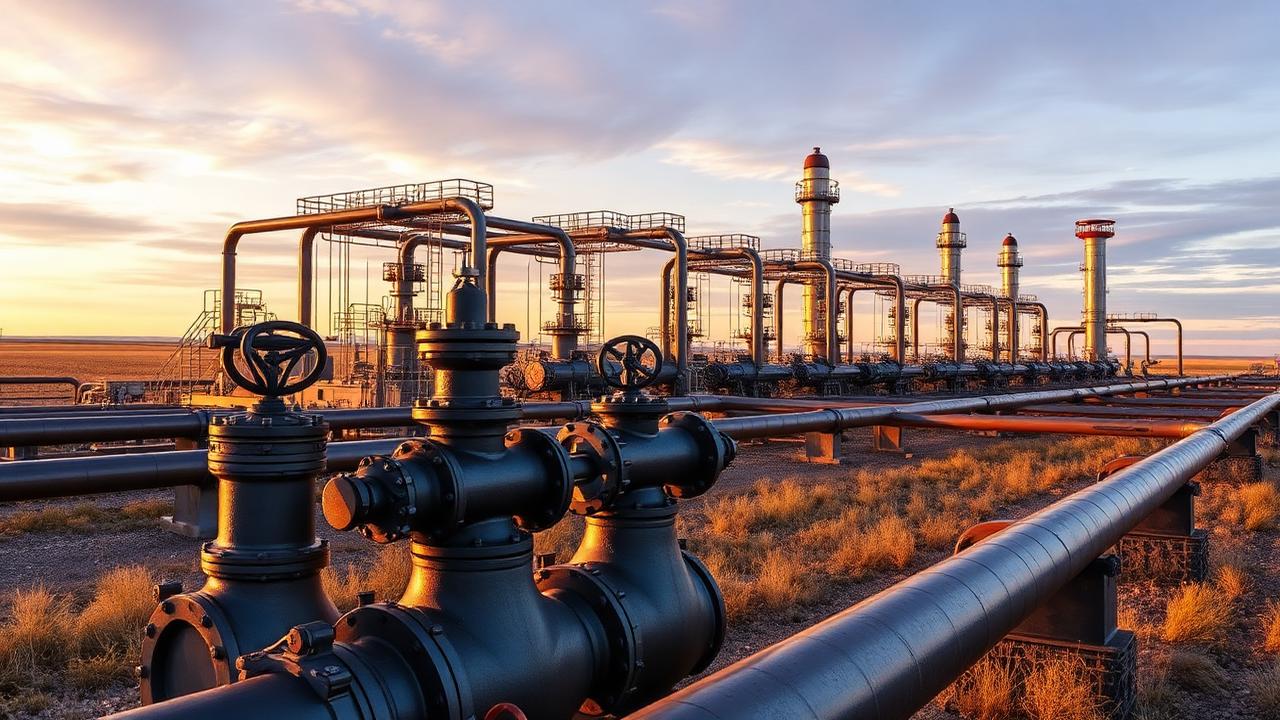
Pembina's gathering, processing and transport network earns fees based on the volumes moving through it, which decouples a large share of its earnings from the commodity price. That structural feature is why infrastructure companies in the energy value chain are frequently described as owning the toll road rather than the traffic, and it is worth working through what that framing actually protects an investor from, and what it does not.
Fee-based versus commodity-exposed
The majority of the business operates under fee-for-service or take-or-pay arrangements. A smaller marketing segment does carry direct commodity exposure and is the source of most quarter-to-quarter earnings variance. The distinction matters because fee-for-service and take-or-pay contracts pay based on capacity reserved or volume moved, largely independent of whether the underlying commodity price that day is high or low. That converts what would otherwise be a highly cyclical business into one whose core cash flows behave more like a utility. The marketing segment, by contrast, buys and sells physical volumes and is directly exposed to price spreads, which is why it is the more volatile piece of the earnings mix even though it is smaller.
Why egress ownership matters
Western Canadian production growth has repeatedly outpaced takeaway capacity. In that environment, the owner of the constrained asset captures economics that producers cannot. Expansion projects are effectively pre-sold before construction. This dynamic is the core of the toll-road argument: when the capacity to move a commodity out of a basin is the binding constraint, rather than the commodity's own supply-demand balance, the entity that owns that capacity has pricing power that the underlying producers do not, because producers ultimately need the transport regardless of what they are receiving for the product itself. Pre-selling expansion capacity through long-term contracts before construction begins is the clearest evidence that this dynamic is real rather than theoretical, since it means shippers are committing to pay for capacity years in advance based on their own expectation that the constraint will persist.
The limits of the toll-road analogy
The toll-road framing is useful but imperfect. A literal toll road has effectively permanent demand for the route it serves. A gathering and processing network's value is tied to the productive life of the wells and basins that feed it, and to producers continuing to develop those basins at a pace that requires the infrastructure. If Western Canadian drilling activity were to decline structurally rather than cyclically, volumes through the network would decline with it regardless of the fee-based contract structure, because take-or-pay commitments still eventually expire and get renegotiated based on the shipper's actual need for the capacity. The toll road only earns its economics for as long as there is enough traffic wanting to use it and willing to sign up for years of capacity in advance.
Contract structure and duration
Not all fee-based revenue carries the same risk profile. Take-or-pay contracts, where the shipper pays a minimum fee whether or not it uses the full contracted volume, are more defensive than fee-for-service arrangements where revenue tracks actual volume moved. The duration of these contracts also matters: a network with long-dated take-or-pay commitments has more visibility and is less exposed to near-term producer curtailment decisions than one reliant on shorter contracts or volumetric fees that reset more frequently. Assessing the quality of the fee-based revenue requires looking past the headline percentage that is described as fee-based, into the actual contract terms underlying it.
The risks
Counterparty credit quality among producer customers, regulatory approval timelines for expansion, and the long-run trajectory of Western Canadian production volumes. Counterparty credit quality matters because a take-or-pay contract is only as reliable as the shipper's ability to pay it; a producer in financial distress can seek to renegotiate or, in extreme cases, may not be able to meet its obligations at all. Regulatory approval timelines affect how quickly new egress capacity, whether built by this company or a competitor, can come online, which in turn affects how long the current capacity constraint persists. And the long-run trajectory of basin production is the ultimate determinant of whether today's contracted capacity remains fully utilized a decade from now, or becomes stranded as producers shift activity elsewhere.
What to watch
Track contract mix disclosures between take-or-pay, fee-for-service and marketing exposure, and any changes in that mix over time. Watch producer customer credit metrics and any news of counterparty financial distress. Monitor announced and under-construction egress capacity across the basin, both from this company and competitors, since new capacity additions directly affect the scarcity value the toll-road argument depends on. Follow Western Canadian drilling and production volume trends as the ultimate demand driver for the entire network.
Read next
 EnergyThe Pressure Event Is the Result: Reading QIMC's 30.0% Hydrogen Update at Bennett HillQuébec Innovative Materials Corp. (CSE: QIMC) reported a record 30.0% H2 field reading at 413 metres in DDH-26-05 — then reported free gas reaching surface under apparent pressure between 413 and 416 metres, triggering repeated hydrogen alarms and halting the hole. Evidence for a mobile hydrogen-bearing system has strengthened. Evidence for reservoir performance has not. Benchmarked against MAX Power's completed-interval flow test at Lawson.Daniel Okoye · September 1, 2026 · 11 min
 EnergyThe Number Is Not the Discovery: How to Read a Natural-Hydrogen ResultQIMC reported 27.8% hydrogen at Bennett Hill; MAX Power reported 28.6% at Lawson. The headline percentages look interchangeable. The measurements behind them are at different stages of proof.Marc Belzile · August 30, 2026 · 9 min
 EnergyQIMC Extends the Bennett Hill Hydrogen System: Reading DDH-26-05Québec Innovative Materials Corp. (CSE: QIMC) has reported a company-record 27.8% hydrogen measurement at approximately 374 metres in DDH-26-05 at Bennett Hill, Nova Scotia. The readings are preliminary field measurements. Concentration establishes presence; it does not establish pressure, flow or recoverable volume.Daniel Okoye · August 26, 2026 · 9 min
Follow this story
Follow PPL — the next Maple piece on this company, plus the Maple Morning Debrief before the open.
Follow and ask
Get more of our Canadian market coverage in Google Top Stories.
Disclosure
Information only. Not investment advice. The Maple Markets does not hold positions in securities discussed. See the Financial Disclaimer.
Sources and references (2)
Cite this analysis
Please attribute The Maple Markets and link to the original page.
Marc Belzile (July 8, 2026). Pembina, Egress and the Case for Owning the Toll Road. The Maple Markets. https://themaplemarkets.ca/en/newsroom/pembina-egress-and-the-case-for-owning-the-toll-roadhttps://themaplemarkets.ca/en/newsroom/pembina-egress-and-the-case-for-owning-the-toll-road