
The Maple Markets

Energy

Oil sands, natural gas, midstream and the energy transition.

Energy — latest

OpinionEnergy

The Pressure Event Is the Result: Reading QIMC's 30.0% Hydrogen Update at Bennett Hill

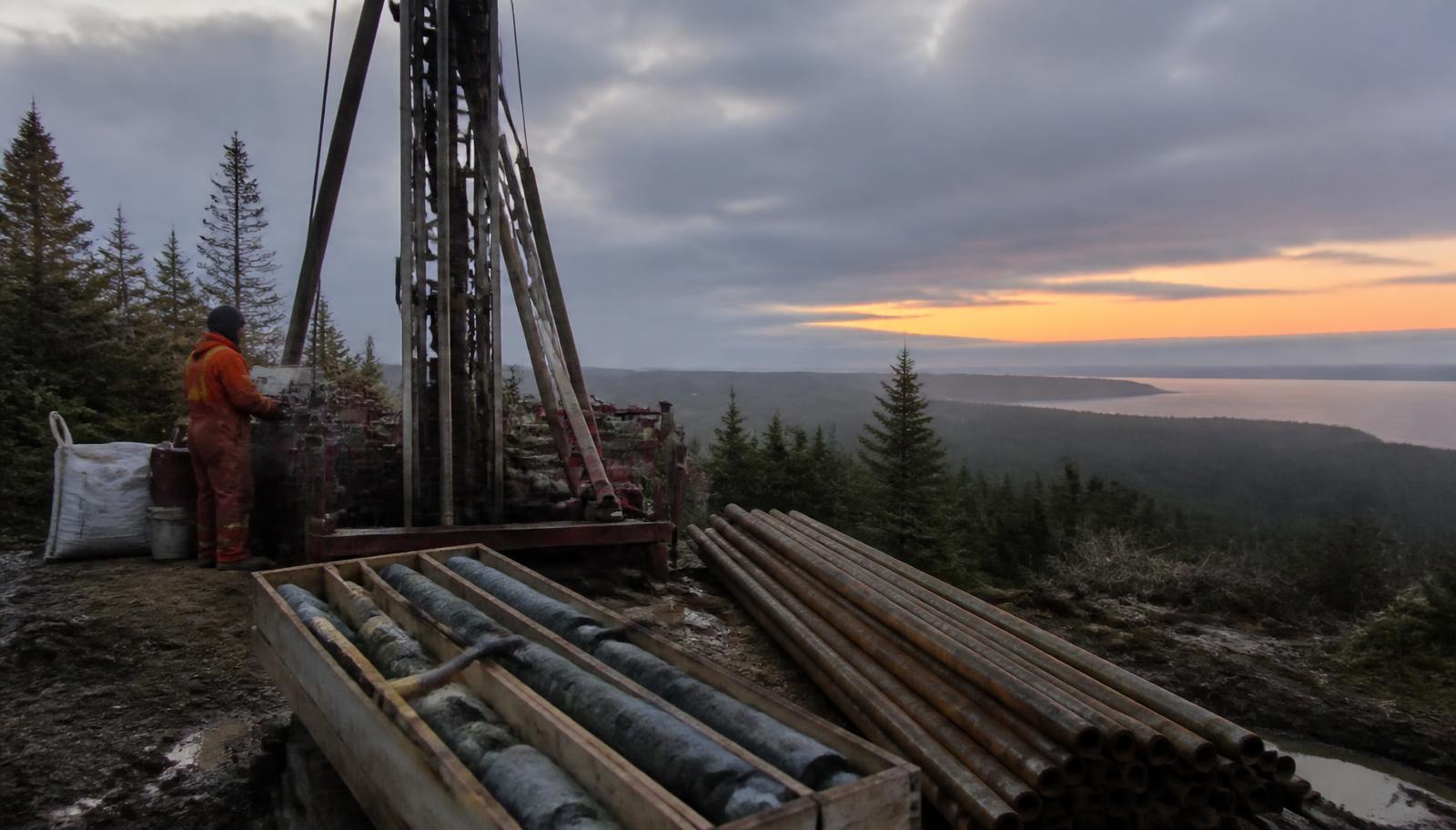
Québec Innovative Materials Corp. (CSE: QIMC) reported a record 30.0% H2 field reading at 413 metres in DDH-26-05 — then reported free gas reaching surface under apparent pressure between 413 and 416 metres, triggering repeated hydrogen alarms and halting the hole. Evidence for a mobile hydrogen-bearing system has strengthened. Evidence for reservoir performance has not. Benchmarked against MAX Power's completed-interval flow test at Lawson.

By Daniel Okoye9 min readQIMC.CNMAXX.CN

OpinionEnergy

QIMC Extends the Bennett Hill Hydrogen System: Reading DDH-26-05

Québec Innovative Materials Corp. (CSE: QIMC) has reported a company-record 27.8% hydrogen measurement at approximately 374 metres in DDH-26-05 at Bennett Hill, Nova Scotia. The readings are preliminary field measurements. Concentration establishes presence; it does not establish pressure, flow or recoverable volume.

By Daniel Okoye6 min readQIMC

EnergyUranium

NexGen Energy After Rook I Approval: What Comes Next?

NexGen trades as NXE on both the TSX and NYSE. It owns the Rook I property in Saskatchewan’s Athabasca Basin, including the Arrow uranium deposit. Rook I is a development-stage project with no operating revenue. On March 5, 2026, the Canadian Nuclear Safety Commission approved the project’s environmental assessment and Licence to Prepare Site and Construct. Q1 cash was approximately C$655 million, while reported current liabilities included significant convertible obligations.

By Marc Belzile2 min readNXE

EnergyUranium

Cameco Stock Analysis: A Full Nuclear-Fuel-Cycle Investment

Cameco trades as CCO on the TSX and CCJ on the NYSE. It produces uranium through McArthur River/Key Lake and Cigar Lake in Saskatchewan and holds an interest in Inkai in Kazakhstan. It also operates conversion and fuel-manufacturing businesses and owns 49% of Westinghouse. Q2 2026 adjusted EBITDA was C$391 million; cash and debt were approximately C$1.1 billion and C$1.0 billion, respectively.

By Marc Belzile2 min readCCO

EnergyMidstream

Pembina, Egress and the Case for Owning the Toll Road

Pembina's fee-based infrastructure network profits from Western Canadian egress constraints rather than commodity prices, a dynamic often compared to owning a toll road. This piece explains why the analogy holds, where it breaks down, and what contract quality actually protects against.

By Marc Belzile4 min readPPL

EnergyUranium

Cameco and Westinghouse: The Vertical Integration Bet

Cameco's Westinghouse stake turned a cyclical uranium miner into a fuel-cycle business with recurring services revenue. This piece unpacks what integration adds, what it costs in leverage and reporting complexity, and how to read the segments separately.

By Marc Belzile3 min readCCO

EnergyUranium

Uranium Term Contracting Picks Up as Utilities Extend Coverage

Uranium term-contracting volumes are rising as utilities extend coverage further out, a shift that matters more to producer revenue than the widely quoted spot price. The piece explains the term-versus-spot dynamic, the slow supply response, and how to read a producer's contracted position.

By Marc Belzile3 min readCCO

EnergyPricing

What the WCS Differential Actually Costs Canada

The discount on Western Canadian Select splits into a stable quality component and a volatile transport component driven by pipeline and rail capacity. Knowing which one is moving in a given quarter is key to reading heavy-oil producer earnings and forecasting when realizations might recover.

By Marc Belzile4 min read

EnergyIntegrated

Suncor's Refining Margins Are Carrying the Quarter

Suncor's latest results show the integrated producer model working as intended, with downstream margins offsetting a weaker upstream quarter. This piece explains the natural-hedge mechanism, why utilisation and turnaround timing determine whether it holds, and where the offset has real limits.

By Marc Belzile4 min readSU

We use necessary cookies to run the site and, only with your permission, analytics cookies to understand what readers use. Cookie policy