The Maple Markets
MB

Marc Belzile

Energy and Real Estate Correspondent · 15 years in energy finance

Sign in to follow

Marc follows oil sands producers, midstream operators and Canadian REITs, with an emphasis on cash flow and balance sheets.

Beats: Energy, Real Estate

Author standards

Published work

Opinionmarkets

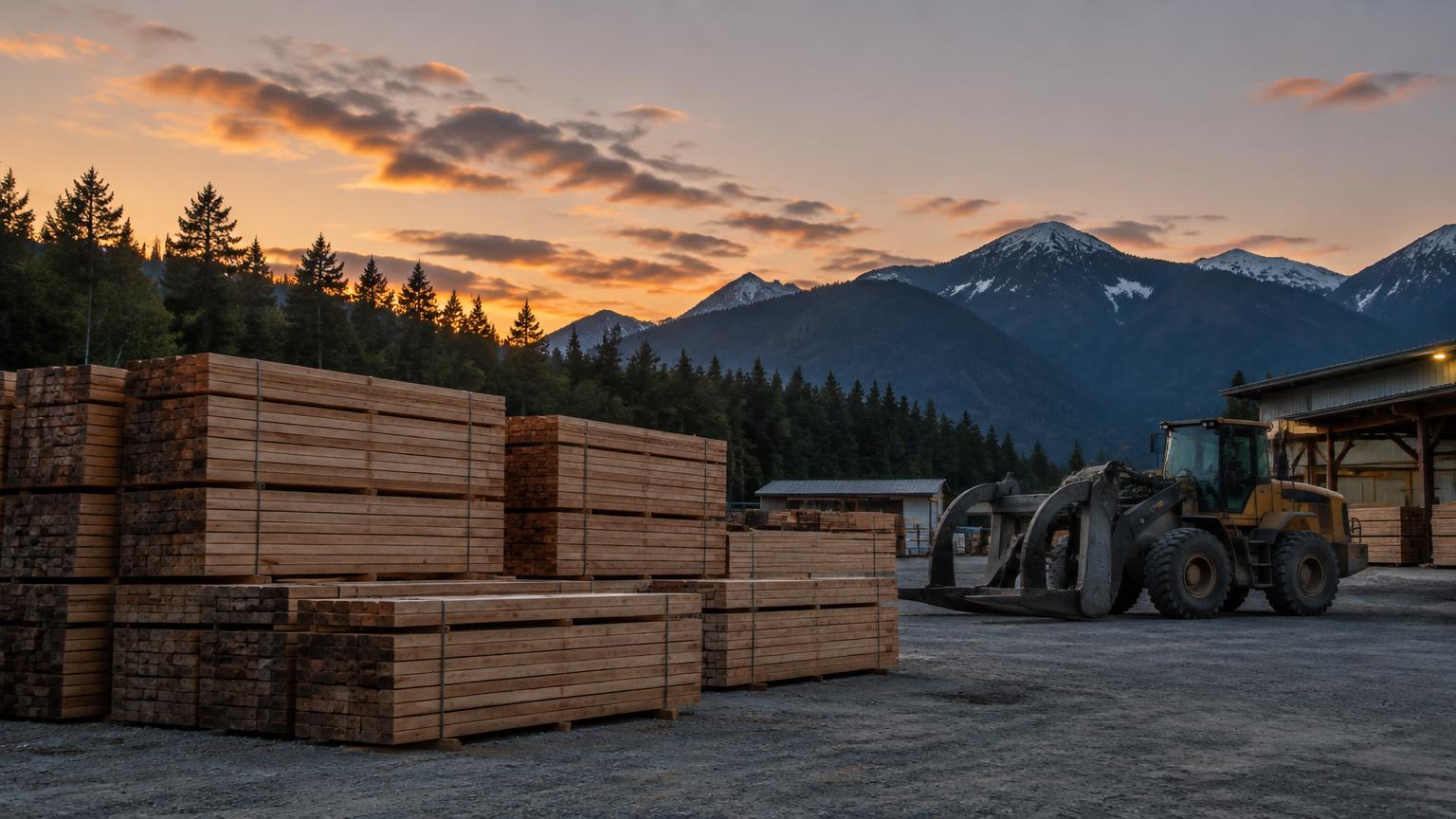
Conifex Has a Federal Loan of Up to C$30 Million and a Market Value of C$5.1 Million

Conifex Timber Inc. (TSX: CFF) said on 18 September 2026 that it had received a Large Enterprise Tariff Loan of up to C$30 million from the Government of Canada, on a seven-year term secured by substantially all of its property. The shares closed at C$0.125, up 38.9 per cent. At 30 June 2026 the company held C$1.3 million of unrestricted cash against C$101.8 million of debt and a going-concern warning.

By Marc Belzile7 min readCFF.TO

OpinionCanadian Markets

Planet Ventures Fell to Five Cents Two Days Before a Consolidation That Changes Nothing

Planet Ventures Inc. (CSE: PXI) fell 16.7 per cent on 16 September 2026, to C$0.05, on roughly 37 times average volume and with no announcement that day. Behind the move sit a rights offering that issued 152,244,604 shares at a penny on 1 September, a five-for-one consolidation effective 18 September, and a year of disclosed investments smaller than the disclosed investor-awareness budget.

By Marc Belzile8 min readPXI.CN

OpinionEconomy

Four of the Worst Falls on the Toronto Exchange This Week Were Funds, and Three Held One Stock

On September 9, 2026 four of the ten largest declines on the Toronto exchange were exchange-traded funds. Three of them hold nothing but Shopify, and they fell 27.83, 14.97 and 14.90 per cent respectively on the same day, against the same company. A fourth, a target-maturity bond fund, had printed a 38.59 per cent gain five sessions earlier on 2,000 units and gave all of it back. Here is what each of those numbers was actually measuring, and where the manager publishes the figure that is not a quote.

By Marc Belzile7 min readRUQO.TOSHPE.TO

Canadian Markets

What You Actually Own in a TSX Index Fund

A Canadian index fund is described as diversified exposure to the Canadian market. It is more precisely a concentrated bet on financials, energy and materials, governed by rules worth reading.

By Marc Belzile3 min readXICZCNVCN

Mining and ResourcesCopper

Teck Resources and Anglo Teck: Merger Upside Versus Execution Risk

Teck’s Class A and Class B shares trade on the TSX as TECK.A and TECK.B, with TECK also listed on the NYSE. Its portfolio includes Quebrada Blanca and Carmen de Andacollo in Chile, Highland Valley Copper in British Columbia, an interest in Antamina in Peru, Red Dog in Alaska, and the Trail metallurgical complex in British Columbia. Q2 2026 revenue was C$3.61 billion and adjusted EBITDA was C$2.19 billion. Teck held C$6.05 billion in cash against C$4.81 billion of debt.

By Marc Belzile2 min readTECK.B

EnergyUranium

NexGen Energy After Rook I Approval: What Comes Next?

NexGen trades as NXE on both the TSX and NYSE. It owns the Rook I property in Saskatchewan’s Athabasca Basin, including the Arrow uranium deposit. Rook I is a development-stage project with no operating revenue. On March 5, 2026, the Canadian Nuclear Safety Commission approved the project’s environmental assessment and Licence to Prepare Site and Construct. Q1 cash was approximately C$655 million, while reported current liabilities included significant convertible obligations.

By Marc Belzile2 min readNXE

EnergyUranium

Cameco Stock Analysis: A Full Nuclear-Fuel-Cycle Investment

Cameco trades as CCO on the TSX and CCJ on the NYSE. It produces uranium through McArthur River/Key Lake and Cigar Lake in Saskatchewan and holds an interest in Inkai in Kazakhstan. It also operates conversion and fuel-manufacturing businesses and owns 49% of Westinghouse. Q2 2026 adjusted EBITDA was C$391 million; cash and debt were approximately C$1.1 billion and C$1.0 billion, respectively.

By Marc Belzile2 min readCCO

EnergyMidstream

Pembina, Egress and the Case for Owning the Toll Road

Pembina's fee-based infrastructure network profits from Western Canadian egress constraints rather than commodity prices, a dynamic often compared to owning a toll road. This piece explains why the analogy holds, where it breaks down, and what contract quality actually protects against.

By Marc Belzile4 min readPPL

EnergyUranium

Cameco and Westinghouse: The Vertical Integration Bet

Cameco's Westinghouse stake turned a cyclical uranium miner into a fuel-cycle business with recurring services revenue. This piece unpacks what integration adds, what it costs in leverage and reporting complexity, and how to read the segments separately.

By Marc Belzile3 min readCCO

EnergyUranium

Uranium Term Contracting Picks Up as Utilities Extend Coverage

Uranium term-contracting volumes are rising as utilities extend coverage further out, a shift that matters more to producer revenue than the widely quoted spot price. The piece explains the term-versus-spot dynamic, the slow supply response, and how to read a producer's contracted position.

By Marc Belzile3 min readCCO

EnergyPricing

What the WCS Differential Actually Costs Canada

The discount on Western Canadian Select splits into a stable quality component and a volatile transport component driven by pipeline and rail capacity. Knowing which one is moving in a given quarter is key to reading heavy-oil producer earnings and forecasting when realizations might recover.

By Marc Belzile4 min read

Real EstateHousing

Canada's Housing Starts Data Is Telling Two Different Stories

A steady national housing-starts headline is masking a sharp split between resilient multi-unit construction and falling single-family building. This piece explains the financing mechanics behind the divergence and why materials investors should track the mix, not the total.

By Marc Belzile3 min read

EnergyIntegrated

Suncor's Refining Margins Are Carrying the Quarter

Suncor's latest results show the integrated producer model working as intended, with downstream margins offsetting a weaker upstream quarter. This piece explains the natural-hedge mechanism, why utilisation and turnaround timing determine whether it holds, and where the offset has real limits.

By Marc Belzile4 min readSU

We use necessary cookies to run the site and, only with your permission, analytics cookies to understand what readers use. Cookie policy