
Sigma Lithium: Production Recovery Versus Regulatory Risk
An operating lithium producer rather than a conventional developer
Sigma Lithium trades as SGML on the TSX Venture Exchange and Nasdaq and as S2GM34 in Brazil. It operates the Grota do Cirilo hard-rock lithium project in Minas Gerais. In Q1 2026, the company reported US$42 million of revenue, a 39% EBITDA margin and a 26% net margin. Quarter-end debt was US$134 million; cash was US$4 million at March 31 and US$28 million by May 15 following collection of receivables.
By Hannah Kuan2 min read
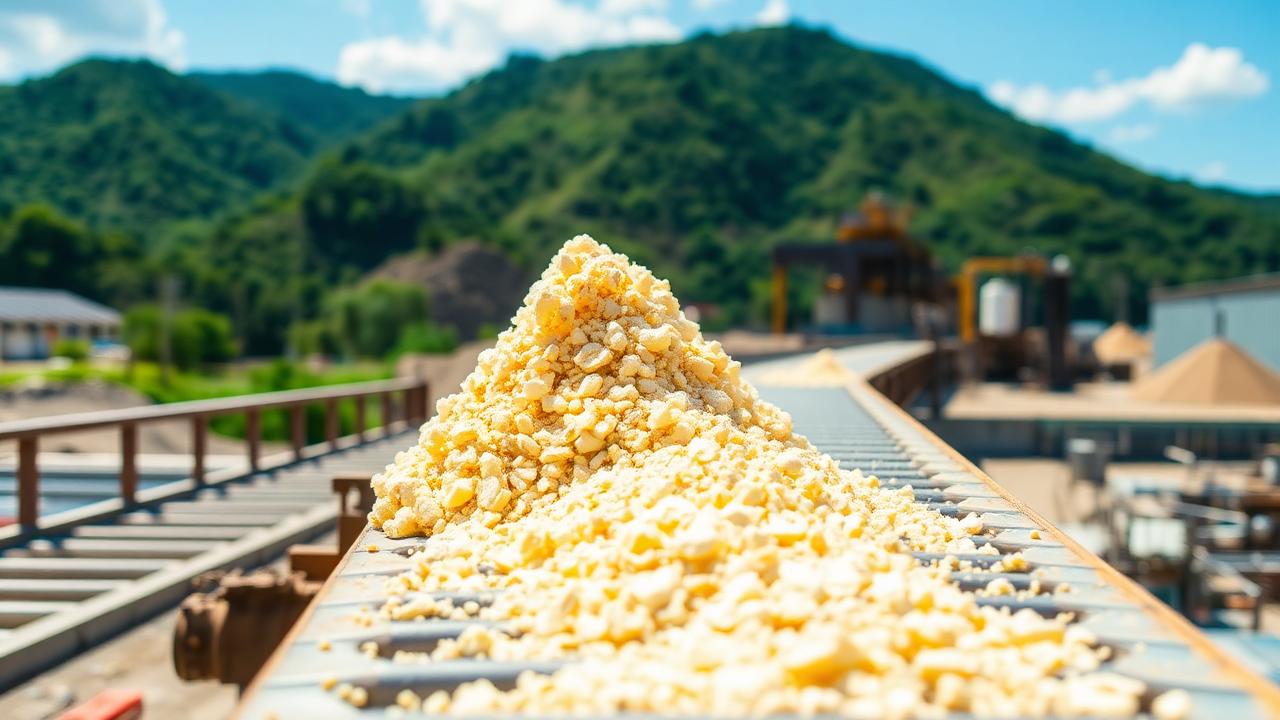
Sigma Lithium operates the Grota do Cirilo hard-rock lithium complex in Minas Gerais, Brazil. Unlike many Canadian-listed lithium companies, Sigma has reached commercial production and sells lithium concentrate into the global battery-materials market.
The company reported a substantial improvement in the first quarter of 2026. Revenue was approximately US$42 million from 23,000 tonnes of lithium-oxide concentrate equivalent, while the reported EBITDA margin reached 39% and the net margin reached 26%. These metrics benefited from higher realized prices and a production restart following a restructuring of mining operations.
Balance sheet and operating goals
Total debt was US$134 million at quarter-end, down 21% from a year earlier. Cash was only US$4 million on March 31, but the company reported US$28 million by May 15 after receivables were collected. Management’s near-term objective is to sustain an annualized production rate of approximately 240,000 tonnes and eventually expand capacity.
Bull case
Sigma’s operating status provides greater exposure to an improvement in lithium prices than a pre-construction developer. Higher-grade product, low strip ratios, production growth and stronger working-capital conversion could improve free cash flow. A late-July TSXV market capitalization of approximately C$1.51 billion remained far below that of diversified mining majors, but the stock is volatile.
Regulatory and ESG risks
Brazilian labour and mining authorities have scrutinized waste-storage and operating practices. In May 2026, Reuters reported enforcement actions involving use of a waste-rock area; Sigma disputed aspects of the allegations, while Brazil’s mining regulator subsequently said it did not see an imminent structural risk but did not override labour-authority restrictions. The distinction between company statements, regulator findings and unresolved proceedings should be preserved in any coverage.
Other risks include lithium-price volatility, debt service, customer concentration, production interruptions, Brazilian currency and tax exposure, water management and implementation of expansion plans. Claims about “green” or environmentally superior lithium should be attributed to the company unless independently audited.
Bottom line
Sigma offers real production and meaningful operating leverage, but the investment case requires close attention to cash conversion, debt and regulatory developments—not just headline EBITDA margins.
Comparable companies
Pilbara Minerals, Liontown Resources and Atlantic Lithium.
Read next
 Mining and ResourcesLithium Americas and Thacker Pass: Construction Risk ExplainedLithium Americas trades as LAC on the TSX and NYSE. Its principal asset is a 62% interest in the Thacker Pass lithium project in Nevada; General Motors owns the remaining 38%. Phase 1 is designed for approximately 40,000 tonnes per year of battery-quality lithium carbonate, with mechanical completion targeted for late 2027. Q1 2026 cash and restricted cash totalled US$1.21 billion and long-term liabilities were approximately US$1.07 billion.Hannah Kuan · August 22, 2026 · 3 min
 Mining and ResourcesA Forest Service Clock Started for Homeland Nickel, but Drill Approval Has Not ArrivedHomeland Nickel Inc. (TSXV: SHL) said on September 17, 2026 that the United States Forest Service had accepted its plan of operation for a sonic drill programme at Red Flat, Oregon, and that environmental and cultural review was well underway, including completed fieldwork. The company hopes to drill in October. The same release was reissued the same day because its paid-promotion disclosure described a video interview with another company's chief executive.Daniel Okoye · September 18, 2026 · 8 min
 Mining and ResourcesAya Gold and Silver Has Drilled 3,501 g/t Silver at Zgounder and Sold Nothing From It YetAya Gold & Silver Inc. (TSX: AYA) reported high-grade silver intercepts near the Zgounder pit and at depth on September 16, 2026, eight days after doubling the paper value of its Boumadine project and fifteen days after agreeing to buy a copper-silver land package. The shares closed at C$40.24 on 17 September. The company holds US$182.8 million of cash, and about 80 per cent of the metal in the Boumadine study is in the most speculative resource category there is.Élise Galarneau · September 18, 2026 · 8 min
Follow this story
Follow SGML — the next Maple piece on this company, plus the Maple Morning Debrief before the open.
Follow and ask
Get more of our Canadian market coverage in Google Top Stories.
Disclosure
As of the publication date, the author, editor, publisher, their immediate households and affiliated entities do not own positions in the securities discussed. The Maple Markets received no compensation from the company, its officers, investor-relations providers or financiers in connection with this article. The company was given an opportunity to identify factual errors and had no right to approve the analysis or conclusions. This article is informational only and is not investment, legal, accounting or tax advice. Mining securities are volatile and may result in a total loss of capital. See the Financial Disclaimer.
Sources and references (2)
Cite this analysis
Please attribute The Maple Markets and link to the original page.
Hannah Kuan (August 20, 2026). Sigma Lithium: Production Recovery Versus Regulatory Risk. The Maple Markets. https://themaplemarkets.ca/en/newsroom/sigma-lithium-production-recovery-versus-regulatory-riskhttps://themaplemarkets.ca/en/newsroom/sigma-lithium-production-recovery-versus-regulatory-risk