
Hydro-Québec's Export Capacity and the Northeast Power Market
Interties to the United States turn Québec's hydro surplus into export revenue, when transmission exists.
By Marc Belzile4 min readTranslation: human
Cet article n'est offert qu'en anglais pour le moment.
Price spread
Export above domestic
Regulated rate gap
Bottleneck
Transmission permits
Multi-jurisdiction
Competing demand
Domestic industry
Load rationing
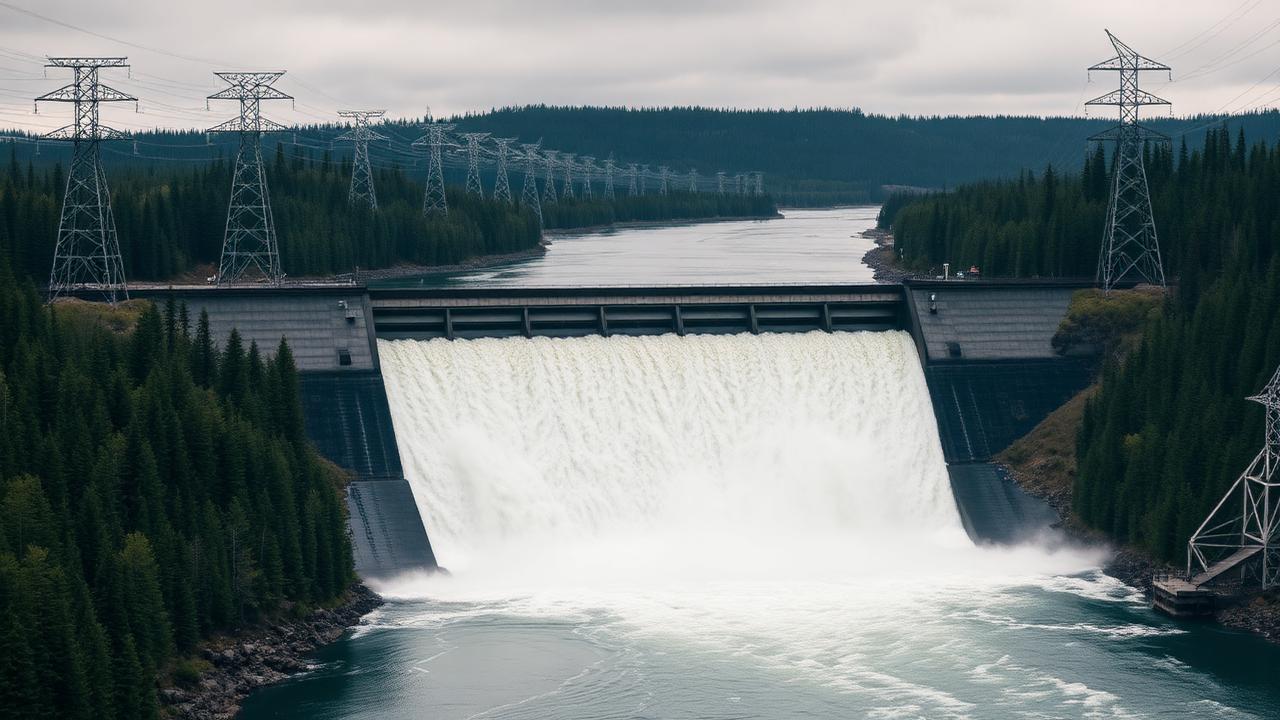
Québec's hydroelectric surplus has long been an export asset, but converting it into revenue depends entirely on transmission capacity into the constrained northeastern American market. The underlying resource — large-scale, low-carbon, dispatchable hydroelectric generation — is not in question. What determines how much of it actually becomes export revenue is a set of infrastructure and policy constraints that are easy to overlook when the conversation focuses only on generating capacity.
The economics
Northeastern states pay substantially more per megawatt-hour than Québec's regulated domestic rate, and increasingly require low-carbon supply to meet legislated targets. That spread is the export opportunity. Québec's domestic electricity rate is set through a regulated process designed around affordability and industrial competitiveness for its own residents and businesses, while northeastern American markets price electricity through wholesale mechanisms that reflect the marginal cost of generation, often set by natural gas plants at peak demand. Layered on top of that price spread is a policy dimension: several northeastern states have legislated clean-energy targets that make Québec's hydroelectric output specifically valuable, not just as a source of electrons but as a source of electrons that count toward decarbonization commitments. That combination — a persistent price differential plus a regulatory preference for the type of generation Québec can supply — is what makes export contracts economically attractive on both sides of the border, provided the electricity can physically get there.
Transmission is the bottleneck
New interties face permitting processes in multiple jurisdictions and litigation from competing generators. Projects have been delayed or cancelled after years of development, which is the primary risk to any export forecast. Building a new high-voltage transmission line crossing international and often multiple state or provincial jurisdictions requires approvals from each regulatory body along the route, and each approval process can be contested by parties with a competing interest, including regional generators who would rather see demand met by in-market supply than by imports. This is not a hypothetical risk; the history of northeastern transmission proposals includes projects that spent years in development and permitting before being cancelled or substantially redesigned. For investors and policymakers evaluating export revenue projections, the transmission approval pipeline is a more reliable indicator of near-term export capacity than the underlying generation surplus, because the surplus can exist for years without a physical path to market.
The domestic tension
Industrial electrification and data-centre demand within Québec compete for the same electrons. The province has begun rationing new large-load connections, which caps how much surplus is genuinely available for export. This creates a structural tension in how the province allocates its hydroelectric output: export contracts typically carry attractive pricing and support the case for further generation investment, but domestic industrial development, including energy-intensive sectors the province is actively trying to attract, competes directly for the same supply. When new large-load connections are rationed or delayed to preserve capacity, that decision implicitly reallocates supply between export and domestic uses, and the criteria used to make that allocation — economic development priorities, existing contractual commitments, or grid reliability considerations — shape how much surplus genuinely exists at any given time, independent of the province's total generating capacity.
How to evaluate export capacity claims
Because of this domestic tension, headline figures about Québec's hydroelectric surplus should be read alongside data on committed large-load connections and export contract volumes, rather than treated as an available balance simply waiting for transmission to be built. A surplus that looks substantial on a total-generation basis can be considerably smaller once existing domestic commitments and near-term industrial demand growth are subtracted, and it is this net figure, not the gross generating capacity, that ultimately determines the realistic scale of new export revenue.
The regional competitive picture
Québec is not the only source of low-carbon power competing for access to northeastern transmission capacity and clean-energy procurement contracts; offshore wind, other Canadian provinces, and in-region renewable development are also seeking the same limited transmission corridors and the same state-level procurement processes. This means transmission capacity, once built, does not automatically flow to Québec exports by default, and the competitive positioning of Québec's hydroelectric supply relative to these alternatives depends on price, reliability and the pace at which each competing source can actually deliver.
What to watch
The clearest indicators of whether export capacity will materialize are the status of specific intertie projects working through permitting and litigation, the pace at which Québec approves or rations new domestic large-load connections, and whether northeastern states continue to tighten clean-energy procurement requirements in ways that favour hydroelectric imports specifically. Any of these three factors could move faster or slower than currently expected, and each one independently determines how much of the underlying surplus actually becomes exportable revenue.
Divulgation
Information only. Not investment advice. The Maple Markets does not hold positions in securities discussed.
À lire ensuite
Aussi en anglais: Hydro-Québec's Export Capacity and the Northeast Power Market
 Mining & EnergyVault Strategic au Nevada : quatre mois de travaux sur une seule propriété de tungstèneLe 3 juillet 2026, Vault Strategic Mining a renoncé à deux autres options de tungstène pour se concentrer sur War Bond, une ancienne mine de tungstène des années 1950 dans l'ouest du Nevada. Depuis, elle a déclaré des résultats d'échantillonnage de surface, réalisé un levé magnétique de 73.6 kilomètres linéaires, clôturé un placement de C$1.5 million et lancé un premier rapport technique selon le Règlement 43-101. La société n'a pas encore daté ce rapport; ses états des six mois clos le 30 novembre 2026 constituent le prochain dépôt prévu.Daniel Okoye · 4 novembre 2026 · 9 min
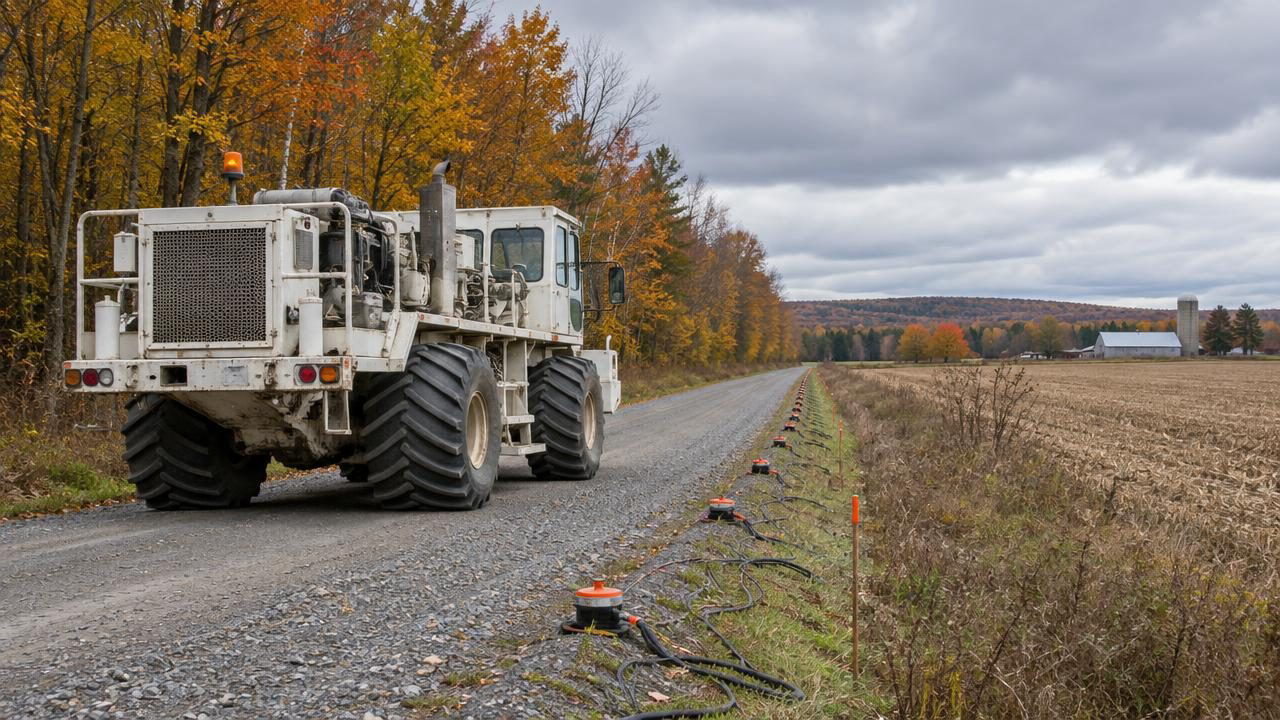 Mining & EnergyQIMC prévoit un programme sismique de 126.5 kilomètres dans trois provincesQuebec Innovative Materials a terminé l'acquisition de 63.7 kilomètres linéaires de sismique dans le comté de Cumberland, en Nouvelle-Écosse, où ses travaux de gaz des sols, d'hélium, de gravimétrie et de magnétisme ainsi que l'événement gazeux du sondage DDH-26-05 se trouvent sur une même grille, aujourd'hui en traitement à Calgary. Elle a prévu 36 kilomètres au Québec et 26.8 kilomètres en Ontario avec les mêmes sous-traitants, ce qui porte la couverture réalisée et prévue à environ 126.5 kilomètres linéaires, et détenait C$14.1 millions en trésorerie au 30 juin 2026.Priya Sandhu · 3 novembre 2026 · 9 min
 TechnologyHausse de 45 pour cent pour Reklaim après un troisième trimestre rentable d'affiléeReklaim Ltd. a annoncé le 3 novembre 2026 que ses produits du trimestre clos le 30 septembre avaient presque triplé sur un an, à C$3.16 millions, et qu'elle avait réalisé un bénéfice de C$1.27 million, son troisième trimestre rentable d'affilée. L'action a clôturé à C$0.40 à la Bourse de croissance TSX, en hausse de 45 pour cent sur 1.93 million d'actions. Le trimestre a aussi vu le rachat de 5.1 millions d'actions, et la veille la société a proposé de permettre aux porteurs de C$500,000 de débentures de convertir avant l'échéance au prix existant de C$0.105, sous réserve de l'approbation de la Bourse de croissance TSX.Marc Belzile · 3 novembre 2026 · 8 min
Recevoir le Maple Morning Debrief
La clôture de la veille, la nuit et ce qu'il faut surveiller avant l'ouverture — dans votre boîte de réception avant 6 h HE. Gratuit, désabonnement en un clic.
Follow and ask
Get more of our Canadian market coverage in Google Top Stories.
Sources et références (3)
Citer cette analyse
Please attribute The Maple Markets and link to the original page.
Marc Belzile (July 15, 2026). Hydro-Québec's Export Capacity and the Northeast Power Market. The Maple Markets. https://themaplemarkets.ca/fr/newsroom/hydro-quebec-s-export-capacity-and-the-northeast-power-markethttps://themaplemarkets.ca/fr/newsroom/hydro-quebec-s-export-capacity-and-the-northeast-power-market