
Cameco's Korean Nuclear Framework: An Intention, Not an Order
Washington and Seoul agreed to something non-binding about reactors Cameco does not build, and the route from that announcement to a Saskatchewan uranium sale is longer than the share price suggests.
The United States and the Republic of Korea announced a framework on 30 September 2026 under which Korea would invest US$120 billion toward building Westinghouse reactor technology in the United States. Cameco acknowledged it, owns 49 per cent of Westinghouse, and is not a party to it. The terms are non-binding. What Cameco sells is uranium under contracts already signed, and those are the numbers that decide the year.
By Élise Galarneau6 min read
Framework scale
US$120 billion of Korean investment, up to eight reactors
non-binding memorandum of understanding announced 30 September 2026; Cameco release, 30 September 2026
Westinghouse stake
49% held by Cameco, 51% by Brookfield
completed 7 November 2023; Cameco's own description of the business
Contracted deliveries
more than 28 million pounds of U3O8 a year on average
five-year average per the Q2 2026 results release, 31 July 2026
Uranium prices
spot US$82.63/lb, long-term US$83.00/lb
Cameco's published industry averages as at 30 September 2026
Share price and listings
C$132.37, up about 6% on 6 October 2026
Toronto close, 15-minute delayed market data read after the close; also Frankfurt, symbol CJ6, WKN 882017, ISIN CA13321L1085
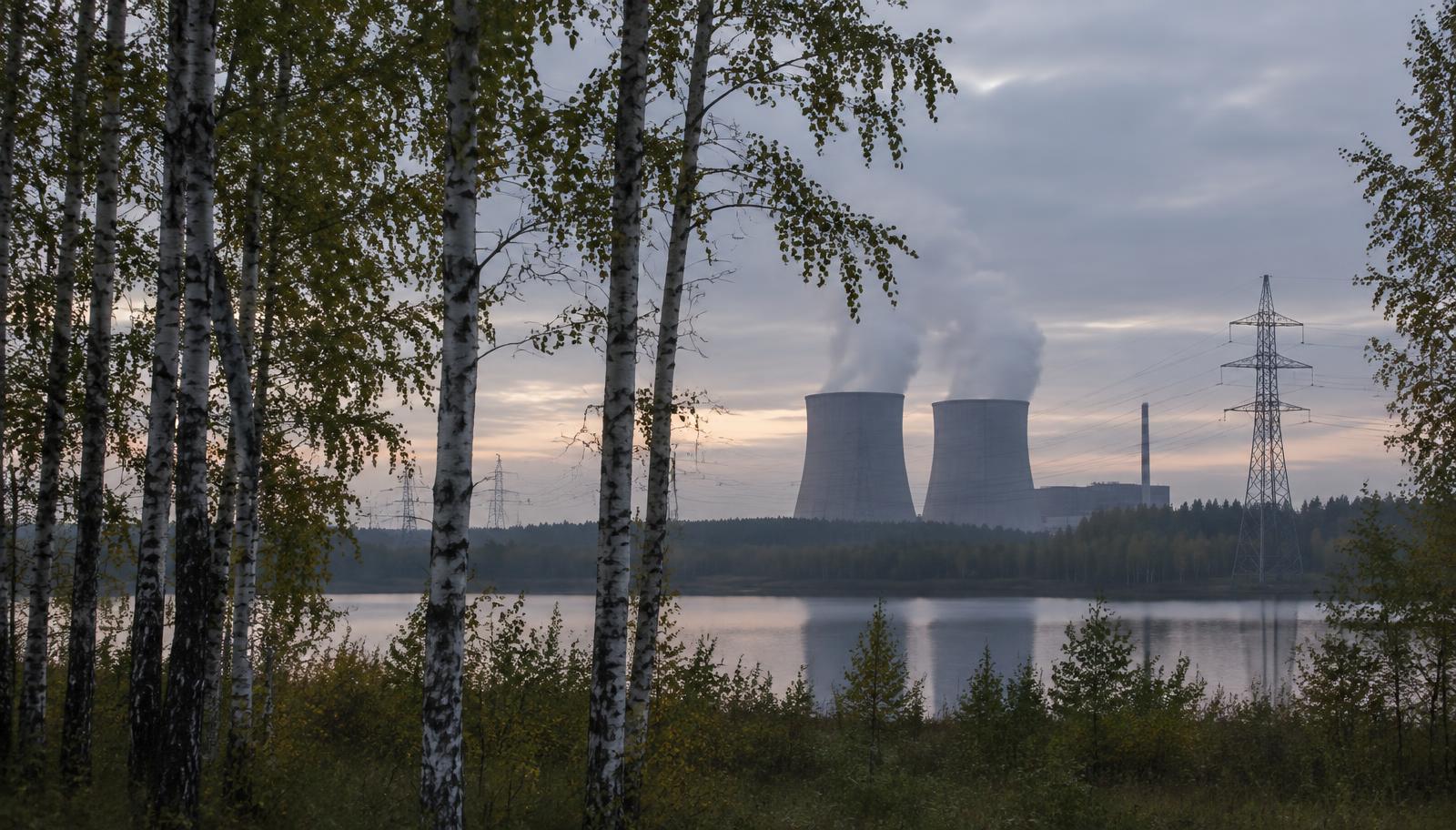
On 30 September 2026 the United States and the Republic of Korea announced a framework for building nuclear power stations in America. Cameco Corporation put out a short release the same day acknowledging it. The Saskatoon company is not a signatory, and nothing in the announcement obliges anyone to buy a pound of uranium from it.
That is not a reason to ignore the announcement. It is a reason to be exact about which part of Cameco it touches.
The announcement is an intention, written down
The two governments signed a memorandum of understanding. A memorandum of understanding is a written statement that two parties intend to do something together, on terms they still have to negotiate. It is not a purchase order and it does not bind either side to spend money.
What this one contemplates is large. Korea would invest US$120 billion to help finance the construction of Westinghouse reactor technology in the United States. The framework envisages up to eight large reactors: six Westinghouse AP1000 units and up to two Korean APR1400 units, which are themselves built on Westinghouse technology. They would go on federal sites chosen by the United States government, starting with two AP1000s.
Cameco's release states the terms are non-binding and subject to final negotiations. Completion would depend on definitive agreements, regulatory approvals, financing arrangements, site identification and the usual closing conditions, and the company lists material risks that could stop it. Tim Gitzel, Cameco's chief executive officer, said in the release that the company was pleased to see the United States government continuing on a path to expanding nuclear capacity.
So the sequence to a first pour of concrete runs: memorandum, definitive agreement, financing, site, licence, construction. Each of those is a separate decision by someone else.
It is worth separating the two things the framework does. According to the release of 30 September 2026, it names a technology, Westinghouse's AP1000, and it names a source of money, Korea. What it does not do, on Cameco's own account of it, is commit a buyer to a volume, a price or a date. Reactor projects of this size have taken a decade or more from announcement to first power in every recent Western example, and the framework does not shorten any of the licensing steps that make up most of that interval. The company reported none of those steps as complete.
Cameco's connection runs through a 49 per cent stake
Cameco's interest here is not as a supplier to the project. It is as a part-owner of the company whose designs the framework names. Cameco holds a 49 per cent interest in Westinghouse Electric Company and Brookfield holds 51 per cent, per Cameco's own description of the business, with the purchase completed on 7 November 2023.
The 30 September release adds one specific point that matters to that stake. Cameco says it does not expect any potential Korean equity participation to affect its ownership position. In plain terms, the company is telling holders that a Korean investor coming into the structure is not expected to shrink the 49 per cent.
How much that 49 per cent earns is a separate question, and the most recent answer is not flattering. In the second quarter of 2026 Cameco's share of Westinghouse was a loss of US$10 million, against earnings of US$126 million in the same quarter of 2025. Its share of Westinghouse adjusted EBITDA, a rough measure of operating cash generation before interest, tax and accounting charges, was US$163 million in the quarter. A reactor company's results move with the timing of large projects, which is why one quarter swings that far. It also means that a framework pointing at reactors a decade out does nothing to this line in the next few quarters.
The uranium business is the part with signed paper behind it
Cameco mines and sells uranium, and that part is contracted years ahead. The company reported on 31 July 2026 that over the next five years it has contracts in place for average annual deliveries of more than 28 million pounds of uranium oxide a year, with heavier commitments in 2026 to 2028 and lighter ones in 2029 and 2030. For 2026 it expects to produce 19.5 to 21.5 million pounds of uranium oxide on its own share. It delivered 7.1 million pounds in the second quarter.
Those three figures explain the shape of the business better than any announcement does. Cameco sells roughly what it digs, mostly under contracts agreed before the price of the day was known. The company reported in the same release that its commitments are front-loaded, which means the contracted volume it has already secured is heaviest in the years immediately ahead and thins out by the end of the decade. That is the window in which new reactors would start to need fuel, and it is also the window in which Cameco has the least sold forward.
The second-quarter results themselves were modest: net earnings of C$25 million, adjusted net earnings of C$77 million and adjusted EBITDA of C$391 million, with C$1.1 billion of cash and C$1.0 billion of total debt at 30 June 2026. The balance sheet is comfortable. The quarter was not a boom.
Contract prices held up better than the shares did
A claim circulating among uranium investors is that term prices have reached records while uranium equities fall. Half of that is straightforward to check and half is not.
Cameco publishes two monthly industry average prices, compiled from figures put out by the consultancies UxC and TradeTech. The spot price is what a pound changes hands for today. The long-term price, often called the term price, is the reference for contracts signed now for delivery years ahead, and it is the one that matters to a producer selling forward. At 30 September 2026 Cameco's published spot price was US$82.63 a pound of uranium oxide and the long-term price was US$83.00 a pound. The term price sitting above spot is the unusual part, and it is what a seller of long-dated pounds would want to see.
Whether US$83.00 is an all-time record is not something the published indicator states; Cameco posts the current month, not the history, so the record framing belongs to commentary rather than to the source. The gap with the shares is easier. Cameco closed at C$132.37 on the Toronto exchange on 6 October 2026, up C$7.56 or about 6 per cent on 1.05 million shares against a 30-day average of 953,653, per market data read after the close on a 15-minute delay. The day's range was C$127.24 to C$134.43 and the volume-weighted average price was C$131.78. That close is about 28 per cent below the 52-week high of C$182.72 and about 20 per cent above the 52-week low of C$109.89. Market value was about C$57.65 billion on 435.53 million shares.
The shares also trade in Germany. Cameco is listed in Frankfurt under the symbol CJ6, with WKN 882017 and ISIN CA13321L1085, per the Deutsche Börse listing record.
A 6 per cent day on roughly a tenth more volume than usual is a real move, but it is not a large one for a stock whose 52-week range spans C$73 a share. Reading it as the market pricing in the Korean framework requires assuming the market waited six days to do it.
What the framework changes today is the probability attached to a long list of future reactor decisions, and Cameco owns just under half of the company those decisions would flow through. What pays the dividend in the meantime is 28 million pounds a year of already-contracted uranium at a term price of US$83.00 a pound. Those are two different clocks, and only one of them is running.
Transparency note. This is an independent due-diligence analysis and editorial opinion piece produced by The Maple Markets editorial desk. It is not sponsored, promoted or commissioned, and no compensation of any kind has been received from Cameco Corporation (TSX: CCO), Westinghouse Electric Company, Brookfield Corporation or any party acting on their behalf. The analysis is based on public disclosure available as of the publish date; every figure is attributed to its primary source. The Maple Markets and its authors may hold positions in securities mentioned; nothing here is a recommendation to buy, sell or hold any security, and readers should not treat it as investment advice. Past disclosure does not guarantee future results. Policies: Editorial Standards · Financial Disclaimer.
Read next
Auch auf Deutsch: Camecos koreanisches Nuklear-Rahmenwerk: eine Absicht, kein Auftrag
 Mining and ResourcesCanAlaska Fell 12 Per Cent With Nothing Filed Since 8 September, and Half Its Value Is CashCanAlaska Uranium Ltd. (TSXV: CVV; FSE: DH7) fell about 12.3 per cent on 18 September 2026 on roughly 5.8 times its average volume, with no company release since 8 September. Three larger Athabasca Basin names fell the same day. The company holds about C$32.9 million against a market value of about C$66.9 million, and has published no mineral resource estimate for its main project.Priya Sandhu · September 21, 2026 · 7 min
 Mining and ResourcesTwo of the Three Cost Figures Circulating About Ivanhoe Mines Are Not in Its FilingsIvanhoe Mines issued no release this week, and the cost figures being traded around its shares come from memory of a conference call. One of the three checks out against the filings. The company reports C1 cash cost and does not report all-in sustaining cost at all, which makes most of the peer comparisons being drawn a comparison of two different measures. The gap between them can be priced from Ivanhoe's own capital guidance.Priya Sandhu · September 25, 2026 · 8 min
 Mining and ResourcesGlobal Atomic Priced C$50 Million of Stock at C$0.50, and the Shares Closed Below ItGlobal Atomic Corporation, the Toronto-listed developer of the Dasa uranium mine in Niger, priced 100 million units at C$0.50 on 23 September 2026 for C$50 million of gross proceeds. The shares fell 16.04 per cent to C$0.445, below the issue price, on 9.79 million shares on the Toronto exchange. The raise follows a 74 per cent increase in the project's direct cost estimate disclosed on 18 September and a conditional loan approval on 16 September that carries five unmet conditions.Daniel Okoye · September 24, 2026 · 9 min
Follow this story
Follow CCO.TO — the next Maple piece on this company, plus the Maple Morning Debrief before the open.
Follow and ask
Get more of our Canadian market coverage in Google Top Stories.
Opinion
This article expresses the author's personal views, is separate from news reporting and is not investment advice.
Disclosure
Transparency note. This is an independent due-diligence analysis and editorial opinion piece produced by The Maple Markets editorial desk. It is not sponsored, promoted or commissioned, and no compensation of any kind has been received from Cameco Corporation (TSX: CCO), Westinghouse Electric Company, Brookfield Corporation or any party acting on their behalf. The analysis is based on public disclosure available as of the publish date; every figure is attributed to its primary source. The Maple Markets and its authors may hold positions in securities mentioned; nothing here is a recommendation to buy, sell or hold any security, and readers should not treat it as investment advice. Past disclosure does not guarantee future results. Policies: Editorial Standards · Financial Disclaimer. See the Financial Disclaimer.
Sources and references (6)
- Cameco acknowledges United States and Republic of Korea announcement of Framework for the Deployment of Nuclear Power (30 September 2026)
- Cameco Reports 2026 Second Quarter Results (31 July 2026)
- Cameco 2026 Q2 News Release (PDF)
- Cameco uranium price indicators
- Cameco on its Westinghouse ownership
- Cameco Corp. listing record, Deutsche Börse
Cite this analysis
Please attribute The Maple Markets and link to the original page.
Élise Galarneau (October 7, 2026). Cameco's Korean Nuclear Framework: An Intention, Not an Order. The Maple Markets. https://themaplemarkets.ca/en/newsroom/cameco-a-deployment-framework-is-not-a-supply-contract-cameco-s-six-perhttps://themaplemarkets.ca/en/newsroom/cameco-a-deployment-framework-is-not-a-supply-contract-cameco-s-six-per