US Restart Loans Total About US$4.4 Billion, and Cameco Shares Slip Toward Their Low
Three idle American reactors now carry federal loans for their restarts, while Cameco's July results describe five years of contracted deliveries and an undrawn credit line.
The US Department of Energy has committed up to US$4.4 billion across three federal loan commitments to restart the Palisades, Crane and Duane Arnold reactors. Cameco, the Saskatoon uranium producer, has published nothing that ties it to those plants. Its July results show contracts averaging more than 28 million pounds a year for five years, C$1.1 billion in cash, and unchanged production guidance, while its shares closed at C$113.88 on October 19.
By Élise Galarneau7 min read
US$4.42 billion
combined federal support for the Palisades, Crane and Duane Arnold restarts
sum of three US Department of Energy commitments dated 2025 to September 8, 2026.
More than 28 million pounds
Cameco's average annual contracted deliveries over the next five years
Cameco second-quarter results, July 31, 2026.
19.5 to 21.5 million pounds
Cameco's unchanged 2026 production guidance, its own share
Cameco second-quarter results, July 31, 2026.
C$1.1 billion
cash and cash equivalents at June 30, 2026, against C$1.0 billion of total debt
Cameco second-quarter results, July 31, 2026.
C$113.88
closing price on October 19, 2026 on the Toronto exchange, down 1.23 per cent
end-of-day data read at 14:00 Pacific; Frankfurt symbol CJ6, WKN 882017, ISIN CA13321L1085 per Deutsche Börse.
Cameco has not named Palisades, Crane or Duane Arnold in any release this year. What it has published, in its second-quarter results on July 31, 2026, is a contract book that already runs five years out and a production plan it kept unchanged through a difficult spring.
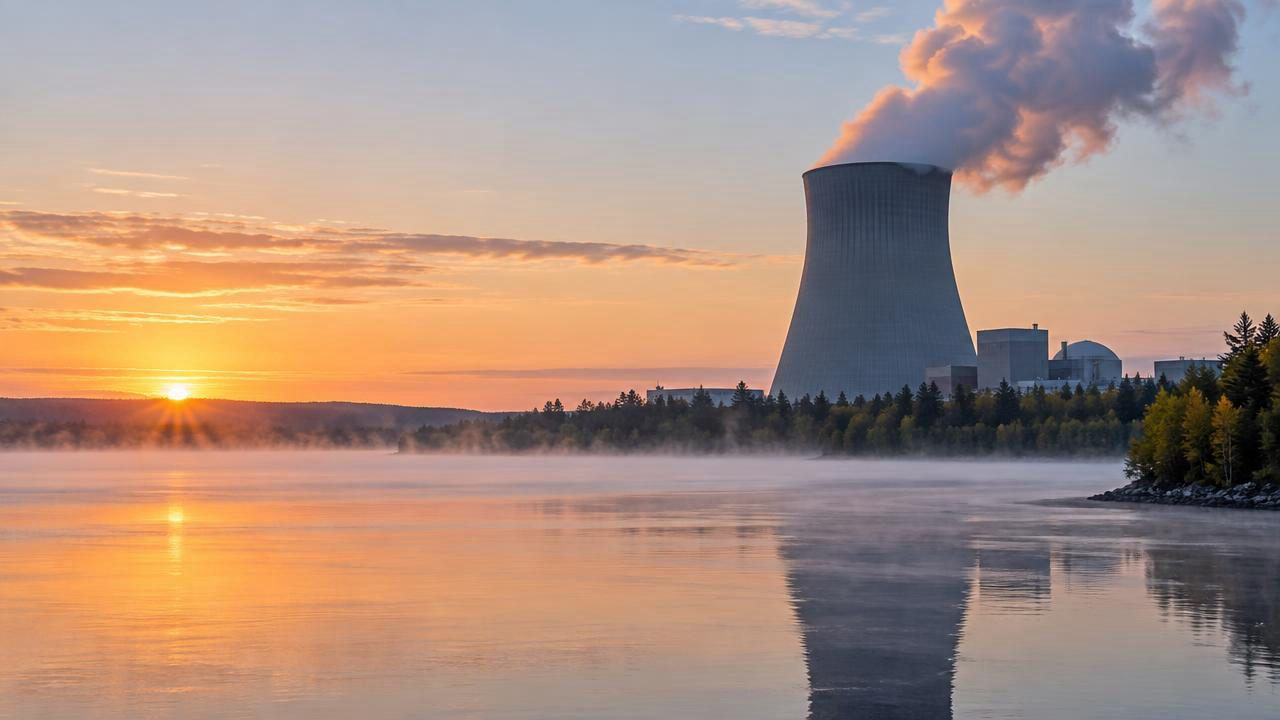
The three plants matter because they are the clearest sign so far that the United States wants its idle reactors back. Each has now drawn a federal loan, and together the loans come to about US$4.4 billion. A reactor that comes back needs uranium, which is what Cameco mines and sells. The link between those two facts sits in the market, in contracts that utilities negotiate privately.
Three loans, three dates, one sum
The US$4.4 billion figure circulating in the past week is a sum, not a single announcement. It adds three separate commitments made by the Department of Energy over two years.
The first is Palisades, a plant in Michigan owned by Holtec. The department describes its support as loan guarantees of up to US$1.52 billion. A loan guarantee means the government stands behind the debt and lends through its own financing arm, releasing money in instalments as work is done. By the department's notice of September 16, 2025, six instalments had been paid out, totalling about US$491 million.
The second is Crane, the former Three Mile Island Unit 1 in Pennsylvania, owned by Constellation Energy. On November 18, 2025 the department closed a US$1 billion loan toward restarting it. The reactor stopped in 2019 and, in the department's words, "was never fully decommissioned."
The third is Duane Arnold in Iowa, owned by NextEra Energy. On September 8, 2026 the department closed a loan of up to US$1.9 billion for its restart. It shut in 2020.
| Plant | Owner | Capacity | Federal support | Date of the department's notice |
|---|---|---|---|---|
| Palisades, Michigan | Holtec | 800 MW | up to US$1.52 billion (loan guarantees) | September 16, 2025 (sixth disbursement) |
| Crane, Pennsylvania | Constellation Energy | 835 MW | US$1.0 billion | November 18, 2025 |
| Duane Arnold, Iowa | NextEra Energy | 615 MW | up to US$1.9 billion | September 8, 2026 |
| Total | 2,250 MW | about US$4.42 billion |
Each release says the restart still waits on approvals from the Nuclear Regulatory Commission, the American safety regulator. None gives a restart date. None names a fuel supplier, Cameco or Westinghouse.
What a restarted reactor asks of the uranium market
A reactor burns enriched uranium fuel made in several steps from mined uranium oxide, the yellow powder Cameco sells by the pound. Utilities rarely buy that powder on the day they need it. They sign long-term contracts years ahead, which is why a restart shows up in the uranium market as contracting before it shows up as burning.
That is the part of the story Cameco's documents do speak to. The company reported on July 31 that its long-term contracts cover average deliveries of more than 28 million pounds a year over the next five years. It said its commitments sit above that average in 2026 to 2028 and below it in 2029 and 2030.
Chief executive Tim Gitzel framed the quarter around patience. "Our contracting discipline remains a key competitive advantage," he said in the results release. The release said second-quarter deliveries were consistent with lower planned 2026 sales deliveries, which it attributed to that same discipline, meaning it chose not to sell more pounds at prices it did not want.
Whether any of the 2,250 megawatts above has been contracted, and with whom, is not public. Holtec, Constellation and NextEra are not obliged to say where their fuel comes from, and the department's releases do not.
A business that kept its plan through a hard spring
Cameco's second quarter was not an easy one, and the company said so. McArthur River and Key Lake had temporary unplanned disruptions in the second quarter, which the company linked in its July 31 results release to challenging spring road conditions and flooding on its northern Saskatchewan supply routes. Cigar Lake suspended operations after the quarter ended, which the company tied in its July 1, 2026 release to challenges at Orano's McClean Lake mill, where Cigar Lake ore is processed, and it resumed production on July 14, 2026, according to the company's release of that date.
The company said the disruptions did not change its production guidance. Cameco kept its 2026 guidance for its own share of output at 19.5 million to 21.5 million pounds of uranium oxide. It delivered 7.1 million pounds to customers in the quarter.
Net earnings came to C$25 million for the three months to June 30, 2026, and adjusted net earnings, which strip out items the company treats as one-time or non-cash, were C$77 million. Adjusted EBITDA, a measure of operating cash generation before interest, tax and depreciation, was C$391 million for the quarter to June 30, 2026.
The balance sheet is the steadier part of the quarter. At June 30, 2026 the company held C$1.1 billion in cash and cash equivalents against C$1.0 billion of total debt, with a further C$1.0 billion undrawn on its revolving credit line. Those balances are the figures in the results release of July 31; the interim financial statements are filed on SEDAR+.
Westinghouse is the other half of Cameco's American exposure
Cameco owns Westinghouse Electric Company jointly with Brookfield Renewable Partners. Westinghouse designs reactors and makes fuel, so American nuclear policy reaches Cameco through two doors, the mine and the reactor builder.
Two Westinghouse developments have been published since July. On July 31, Cameco announced that Westinghouse had confidentially submitted a draft registration statement to the US Securities and Exchange Commission for a proposed initial public offering. The release said "the number of shares to be offered and the price range for the proposed offering have not yet been determined," and that any offering depends on market and other conditions.
On September 30, Cameco acknowledged a framework between the United States and South Korea for building Westinghouse reactor technology in the United States. Maple's report of October 7 on that framework set out its terms. The framework is a memorandum of understanding and does not bind either side to spend money, and Cameco is not a party to it. Nothing published since has changed those facts.
Where the shares sit
The share price has moved the other way from the policy news. Cameco closed at C$113.88 on October 19, 2026 on the Toronto exchange, down 1.23 per cent on the day, per end-of-day data read at 14:00 Pacific on October 19, 2026. Volume on the Toronto exchange was 992,758 shares. The 52-week low on the same data is C$109.89, about 3.5 per cent below the close.
On October 6 the shares closed at C$132.37. The October 19 close is about 14.0 per cent below that, worked out as one minus C$113.88 divided by C$132.37. At the close the company's market value was roughly C$49.6 billion on the same data.
The most recent loan, Duane Arnold, closed on September 8, and Cameco has issued no release since September 30. Neither the company nor the exchange has given a cause for the decline.
In Frankfurt, Cameco trades as CJ6 (WKN 882017, ISIN CA13321L1085), according to Deutsche Börse.
What the documents settle, and who sets the next dates
Three things are settled by documents. The loans exist, at the amounts and on the dates in the table. Cameco has five years of contracted deliveries at more than 28 million pounds a year on average. And at June 30, 2026 it held C$1.1 billion in cash against C$1.0 billion of debt.
The next facts each sit in someone else's filing. The Nuclear Regulatory Commission has not set restart dates for any of the three plants. Westinghouse has not set a share count or a price range for its offering. Cameco had not, as of October 19, issued a release giving the date of its third-quarter results, though the TMX Money quote page lists October 30 as a confirmed earnings date, citing Wall Street Horizon.
My own view is narrow. The loans are signed rather than promised, for plants that will need fuel if the Nuclear Regulatory Commission approves their restarts, and Cameco has contracted volume and an undrawn credit line in hand. How much of that demand ends up in Cameco's contract book is a figure no one has published.
Cameco enters the fourth quarter with five years of deliveries signed, its 2026 production plan intact, and a third-quarter report to come.
Disclosure
Transparency note. This is an independent due-diligence analysis and editorial opinion piece produced by The Maple Markets editorial desk. It is not sponsored, promoted or commissioned, and no compensation of any kind has been received from Cameco Corporation (TSX: CCO), Constellation Energy Corporation (NASDAQ: CEG), NextEra Energy, Inc. (NYSE: NEE), Brookfield Renewable Partners L.P. (TSX: BEP.UN), Holtec International, Westinghouse Electric Company or any party acting on their behalf. The analysis is based on public disclosure available as of the publish date; every figure is attributed to its primary source. The Maple Markets and its authors may hold positions in securities mentioned; nothing here is a recommendation to buy, sell or hold any security, and readers should not treat it as investment advice. Past disclosure does not guarantee future results. Policies: Editorial Standards · Financial Disclaimer.
Read next
Auch auf Deutsch: US-Kredite für Reaktor-Neustarts summieren sich auf rund US$4.4 Milliarden, Cameco-Aktie nähert sich dem Tief
 Mining & EnergyCameco's Korean Nuclear Framework: An Intention, Not an OrderThe United States and the Republic of Korea announced a framework on 30 September 2026 under which Korea would invest US$120 billion toward building Westinghouse reactor technology in the United States. Cameco acknowledged it, owns 49 per cent of Westinghouse, and is not a party to it. The terms are non-binding. What Cameco sells is uranium under contracts already signed, and those are the numbers that decide the year.Élise Galarneau · October 7, 2026 · 7 min
 Mining & EnergyHow Uranium One Built Its Uranium Position in One SpringUranium One Mining Corp. (CSE: UUU) began field work at its Nucleon property in the Athabasca Basin on April 14, 2026, completed the acquisition of Quark Uranium Ltd. on April 22, took its present name on April 27, closed a C$3,008,401 financing on May 27 and signed an agreement in June to acquire the Foghorn and Pasfield Lake properties for 27,060,000 shares. Its interim statements to June 30, 2026 show cash of C$2,868,144 against total liabilities of C$244,593. The shares closed at C$0.20 on October 16, 2026.Daniel Okoye · October 16, 2026 · 10 min
 Mining & EnergyNothing Changed Hands: Myriad Takes Back 24 Arizona Uranium PipesMyriad Uranium (CSE: M) said on 7 October 2026 that it has terminated the option agreement over its Arizona Breccia Pipe Project, executed on 9 June 2026, and re-assumed 100 per cent ownership of 24 breccia pipe prospects, with no consideration payable by either party. It has also acquired the State lease covering the Wate Pipe. Ownership is now complete and the geological case behind it sits several rungs below a resource.Daniel Okoye · October 8, 2026 · 6 min
Follow this story
Follow CCO.TO — the next Maple piece on this company, plus the Maple Morning Debrief before the open.
Follow and ask
Get more of our Canadian market coverage in Google Top Stories.
Sources and references (8)
- Cameco Reports 2026 Second Quarter Results (Cameco, July 31, 2026)
- Cameco Announces Westinghouse's Confidential Submission of Draft Registration Statement (Cameco, July 31, 2026)
- Cameco news releases archive (Cameco, read October 19, 2026)
- Energy Department Closes US$1.9 Billion Loan to Restart Duane Arnold Nuclear Plant (US Department of Energy, September 8, 2026)
- Energy Department Closes Loan to Restart Nuclear Power Plant in Pennsylvania (US Department of Energy, November 18, 2025)
- DOE Approves Sixth Loan Disbursement to Restart the Palisades Nuclear Plant (US Department of Energy, September 16, 2025)
- Cameco Corp listing, WKN 882017 (Deutsche Börse)
- Cameco's Korean Nuclear Framework (The Maple Markets, October 7, 2026)
Cite this analysis
Please attribute The Maple Markets and link to the original page.
Élise Galarneau (October 20, 2026). US Restart Loans Total About US$4.4 Billion, and Cameco Shares Slip Toward Their Low. The Maple Markets. https://themaplemarkets.ca/en/newsroom/cameco-closed-at-c-114-08-and-carries-the-exchange-s-own-near-52-weekhttps://themaplemarkets.ca/en/newsroom/cameco-closed-at-c-114-08-and-carries-the-exchange-s-own-near-52-week