
Three Canadian Financings in Four Days, and the Exchange Capped the Price of Only One
Barksdale sold units under a rulebook with a maximum discount and a four-month hold; Global Atomic and Largo sold shares under prospectus rules that impose neither.
Between September 22 and September 25, 2026, three Toronto-listed mining companies announced equity sales: a C$14.0 million private placement, a C$50 million public offering of units and a US$5.7 million registered direct offering. The headlines look interchangeable. Only the first is priced against a table in an exchange rulebook, only the first carries a four-month hold period, and only the first is closed to ordinary holders. Here is the machinery behind each, worked from the releases and the rules.
By Priya Sandhu8 min read

Maximum permitted placement discount, venture board
25 / 20 / 15 per cent
by closing-price band up to C$0.50, C$0.51 to C$2.00 and above C$2.00; TSX Venture Exchange Policy 1.1, as at March 31, 2026.
Barksdale private placement
C$0.18 per unit, up to 77,777,777 units
announced September 22, 2026; one share plus half a warrant at C$0.30 for two years, four-month hold, minimum C$12.6 million to close.
Global Atomic public offering
C$0.50 per unit, 100,000,000 units, C$50,000,000
announced September 23, 2026 under a base shelf prospectus dated March 31, 2026; no hold period, 15 per cent over-allotment for 30 days, closing on or about October 1, 2026.
Largo registered direct offering
US$0.56, 10,200,000 shares and 10,200,000 warrants
priced September 25, 2026; about C$0.79 at the Bank of Canada rate of 1.4145 on September 25, 2026; warrants at US$0.70 for five years.
Canadian mining equity raised
C$16 billion in 2025
TSX and TSX Venture issuers; 45 per cent of global mining financings over five years, on exchange figures as at December 31, 2025.
There is a table in the TSX Venture Exchange rulebook that decides how cheaply a company may sell its own shares. It has three rows, it has not changed in years, and most people who own venture-listed stock have never seen it.
Between September 22 and September 25, 2026, three companies listed in Toronto announced that they were selling equity. Barksdale Resources announced a C$14.0 million non-brokered private placement. Global Atomic announced a C$50 million public offering of units. Largo announced the pricing of a US$5.7 million registered direct offering. Each release used the word offering, each involved shares and warrants, and each will enlarge the number of shares outstanding. The rules governing the three are not the same rules, and the differences decide the price, the buyer and the resale date.
The reference price is a closing price nobody in the deal selects
On the venture board, a placement price is measured against a defined number. Policy 1.1 of the TSX Venture Exchange rulebook, as at March 31, 2026, defines Market Price as the last closing price of the issuer's listed shares before either the issuance of the news release or the filing of the Form 4A price reservation. Discounted Market Price is then that closing price less a maximum discount, and the maximum depends on where the closing price sits:
| Closing price | Maximum discount permitted |
|---|---|
| Up to C$0.50 | 25 per cent |
| C$0.51 to C$2.00 | 20 per cent |
| Above C$2.00 | 15 per cent |
Policy 4.1 then states that in a private placement of listed shares the purchase price must not be less than the Discounted Market Price. The exchange also sets a floor: it will not permit securities convertible, exercisable or exchangeable into listed shares to be issued at an effective price below C$0.05, per the Corporate Finance Manual effective May 21, 2026, with a narrow C$0.01 exception in defined circumstances.
Two things follow. A company cannot legally sell a placement as cheaply as it likes, and the reference price is fixed by the market on a specific day rather than negotiated. The discount is bounded from below by the last close and from above by the table.
Barksdale's C$0.18 narrows down the close it was priced off
Barksdale Resources announced on September 22, 2026 that it would sell up to approximately 77,777,777 units at C$0.18 per unit on a non-brokered private placement basis, with each unit comprising one common share and one-half of one common share purchase warrant. Each warrant entitles the holder to buy one share at C$0.30 for two years following closing. The release states that the financing requires all necessary approvals including that of the TSX Venture Exchange, that the securities carry a four-month hold period, and that closing is conditional on minimum gross proceeds of C$12.6 million. Proceeds are earmarked for a phased 16,000-metre diamond core drilling programme beginning with an initial 8,000 metres, and for a ZTEM survey.
Run the rule backwards. A price of C$0.18 can only satisfy a 25 per cent maximum discount if the reference close was C$0.24 or lower, because 75 per cent of C$0.24 is C$0.18. So the closing price the deal was priced against was no higher than C$0.24. Policy 4.1 separately requires that a warrant's exercise price not be less than the Market Price on the day the placement was priced, and the C$0.30 exercise price is consistent with that. The warrant count also sits inside its cap: half a warrant on 77,777,777 units is 38,888,888 warrant shares, and Policy 4.1 requires that the shares issuable on exercise not exceed the number of placement shares.
The four-month hold is the part of the structure that explains the discount. A buyer in an exempt financing cannot resell into the market for four months from closing, so the discount is compensation for accepting price risk over a period in which the holding cannot be sold. Remove the hold period and the justification for the discount weakens considerably. That is exactly what the next two deals demonstrate.
A prospectus offering has no discount table and no hold period
Global Atomic announced on September 23, 2026 a C$50,000,000 offering of 100,000,000 units at C$0.50 per unit, each unit comprising one common share and one-half of one common share purchase warrant exercisable at C$0.70 for 36 months after closing. Red Cloud Securities Inc. is sole underwriter and bookrunner. There is an over-allotment option for up to an additional 15 per cent of the units sold, exercisable for 30 days from closing, and the company expects to close on or about October 1, 2026. Proceeds are for advancement of the Dasa Project and general working capital.
The structural point is in the paperwork rather than the price. The release describes an overnight marketed offering made under a short form base shelf prospectus dated March 31, 2026, with a prospectus supplement to be filed in every Canadian province and territory except Quebec and available on SEDAR+. Because the securities are qualified by a prospectus, no exchange discount table applies to the price and no four-month legend attaches to the shares. They are freely tradeable from closing.
A marketed offering is also not a bought deal, and the distinction is about who carries the risk. In a bought deal the underwriter agrees to purchase the securities and then resells them, so the issuer's proceeds are committed before the book is built. In a marketed or best-efforts arrangement the underwriter undertakes to use its efforts to sell, and the issuer's proceeds depend on the book. The release describes the Global Atomic offering in the latter terms.
Maple reported on September 24, 2026 that the shares finished 16 per cent lower on 3.6 times average volume and closed below the C$0.50 unit price. That sequence is ordinary rather than surprising. A hundred million new shares priced at a fixed number are a fixed supply meeting an unfixed demand, and nothing in a prospectus offering holds the new stock off the market while the price settles.
Largo's deal was placed with one agent and priced in the wrong currency for a Toronto holder
Largo announced on September 25, 2026 the pricing of a registered direct offering of 10,200,000 common shares and 10,200,000 warrants at US$0.56, for gross proceeds of approximately US$5.7 million. The warrants are exercisable at US$0.70 for five years from issuance. H.C. Wainwright and Co. acted as exclusive placement agent, closing is expected on or about September 29, 2026, and the offering is subject to Toronto Stock Exchange approval for the listing of the shares and the warrant shares. Proceeds are for working capital purposes, including to pay trade creditors.
A registered direct offering is a registered sale made directly to selected institutional buyers without a public marketing process. It combines features of the other two: the securities are registered, so there is no hold period, but the book is a small list rather than a syndicate's retail and institutional distribution.
The currency is not a detail. The shares trade in Canadian dollars in Toronto and the offering is priced in US dollars. At the Bank of Canada daily exchange rate of 1.4145 Canadian dollars to the US dollar on September 25, 2026, US$0.56 is about C$0.79 and the US$0.70 warrant strike is about C$0.99. A Canadian holder's dilution is therefore denominated in a currency the Toronto line does not quote, and the Canadian-dollar equivalent of the strike price moves with the exchange rate for the full five years.
The warrant is a second issuance, not a sweetener
In all three deals the warrant exercise price sits above the price paid for the unit: C$0.30 against C$0.18, C$0.70 against C$0.50, US$0.70 against US$0.56. On the venture board that is a rule rather than a courtesy, since Policy 4.1 forbids a warrant struck below the Market Price at pricing.
What the warrants add, if fully exercised, is a second round of shares at a second price. Barksdale's 38,888,888 warrant shares at C$0.30 would raise up to about C$11.7 million. Global Atomic's 50,000,000 warrant shares at C$0.70 would raise C$35 million, before any over-allotment units and their warrants. Largo's 10,200,000 warrant shares at US$0.70 would raise about US$7.1 million. A half-warrant attached to a unit is not free: it is part of what the buyer paid the unit price for, and it is a claim on future share count that the existing holders grant today.
None of the three releases states the issuer's outstanding share count, so the percentage dilution in each case cannot be taken from the release. It has to be computed against the share figures in the interim financial statements filed on SEDAR+.
Who is allowed to buy is the asymmetry that matters
A prospectus offering is distributed to the public through the underwriting syndicate, so an ordinary holder with a brokerage account can ask to participate. A private placement is sold under prospectus exemptions, which means an ordinary holder generally cannot, and is diluted at a price set against a closing price they had no part in choosing and which the rulebook allows to be up to 25 per cent below the last trade.
That is the honest summary of the arrangement, and it is also the arrangement that funds Canadian exploration. Mining issuers listed on the Toronto Stock Exchange and the TSX Venture Exchange raised C$16 billion of mining equity capital in 2025, and accounted for 45 per cent of global mining financings and 32 per cent of global mining equity capital raised over the preceding five years, on the exchange's own figures as at December 31, 2025. Very little of that money arrives through the public market. Most of it arrives through the three structures above, priced by rules that are published, specific and almost never read.
A discount is the easy part to see. The four-month hold behind it is what the discount is there for.
Disclosure
Transparency note. This is an independent due-diligence analysis and editorial opinion piece produced by The Maple Markets editorial desk. It is not sponsored, promoted or commissioned, and no compensation of any kind has been received from any issuer, government body or organisation named in this article or any party acting on their behalf. The analysis is based on public disclosure available as of the publish date; every figure is attributed to its primary source. Neither The Maple Markets nor the author holds a position in the securities mentioned; nothing here is a recommendation to buy, sell or hold any security, and readers should not treat it as investment advice. Past disclosure does not guarantee future results. Policies: Editorial Standards · Financial Disclaimer.
Read next
Auch auf Deutsch: Drei kanadische Finanzierungen in vier Tagen, und die Börse begrenzte nur bei einer den Preis
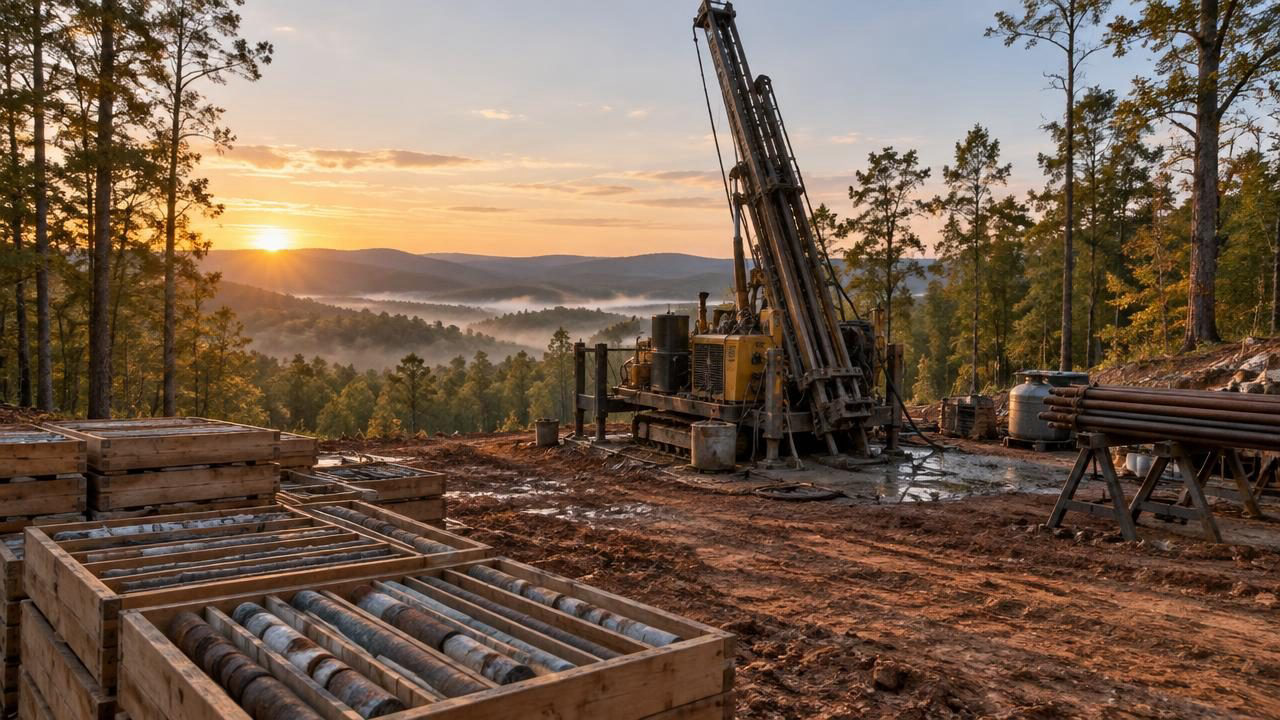 Mining & EnergyEric Sprott Exercises Metalsource Mining Warrants for C$1.38 MillionEric Sprott exercised 4,387,158 Metalsource Mining warrants for C$1,379,863.20, the company announced on November 18. The company plans to use the cash for exploration at Silver Hill and Byrd-Pilot in North Carolina and for working capital. Two rigs are working there, and 24 holes were awaiting assays in October.Priya Sandhu · November 19, 2026 · 7 min
 Mining & EnergyToroparu, Costed: Aris Mining Prices a Guyana Gold Mine at US$1 BillionAris Mining's prefeasibility study for Toroparu, released on 12 November 2026, sets out a 29-year gold mine in Guyana with an initial funding requirement of US$1,005 million, 5.9 million ounces of reserves and an after-tax value of US$2.8 billion at US$3,600 gold. A construction decision is targeted for early 2027, subject to the mining licence.Daniel Okoye · November 19, 2026 · 7 min
 Mining & EnergyFirst Phosphate Receives a UK Export Finance Letter for Up to C$220 MillionUK Export Finance issued a letter of interest on 18 November 2026 for an export credit loan of up to C$220 million for First Phosphate's Bégin-Lamarche igneous phosphate project in Quebec. The loan would come from a commercial bank with a UK government repayment guarantee and would pay for goods and services bought from British exporters. It joins letters from Danish, Swiss and Italian agencies, and the company's feasibility study is due in the first quarter of 2027.Élise Galarneau · November 19, 2026 · 7 min
Get the Maple Morning Debrief
Yesterday's close, overnight, and what to watch before the open — in your inbox by 6 a.m. ET. Free, and one click to unsubscribe.
Follow and ask
Get more of our Canadian market coverage in Google Top Stories.
Sources and references (10)
- TSX Venture Exchange Policy 1.1, Interpretation, as at March 31, 2026
- TSX Venture Exchange Policy 4.1, Private Placements
- TSX Venture Exchange Corporate Finance Manual, effective May 21, 2026
- Barksdale Resources, C$14.0 million private placement and board and management appointments, September 22, 2026
- Global Atomic, C$50 million public offering of units, September 23, 2026
- Largo, pricing of US$5.7 million registered direct offering, September 25, 2026
- Bank of Canada, daily exchange rates
- Toronto Stock Exchange, mining sector profile, data as at December 31, 2025
- SEDAR+, continuous disclosure filings
- The Maple Markets, Global Atomic Priced C$50 Million of Stock at C$0.50, and the Shares Closed Below It, September 24, 2026
Cite this analysis
Please attribute The Maple Markets and link to the original page.
Priya Sandhu (September 26, 2026). Three Canadian Financings in Four Days, and the Exchange Capped the Price of Only One. The Maple Markets. https://themaplemarkets.ca/en/newsroom/how-a-canadian-financing-gets-its-price-and-what-a-discount-meanshttps://themaplemarkets.ca/en/newsroom/how-a-canadian-financing-gets-its-price-and-what-a-discount-means