
Nutrien and the Potash Price Floor Nobody Can Agree On
Potash prices are set through negotiated annual contracts rather than a continuous market, which is why analysts disagree so sharply on where the price floor actually sits. This piece looks at Nutrien's low-cost and retail-diversified position within that unusually concentrated market structure.
By Daniel Okoye3 min readTranslation: human
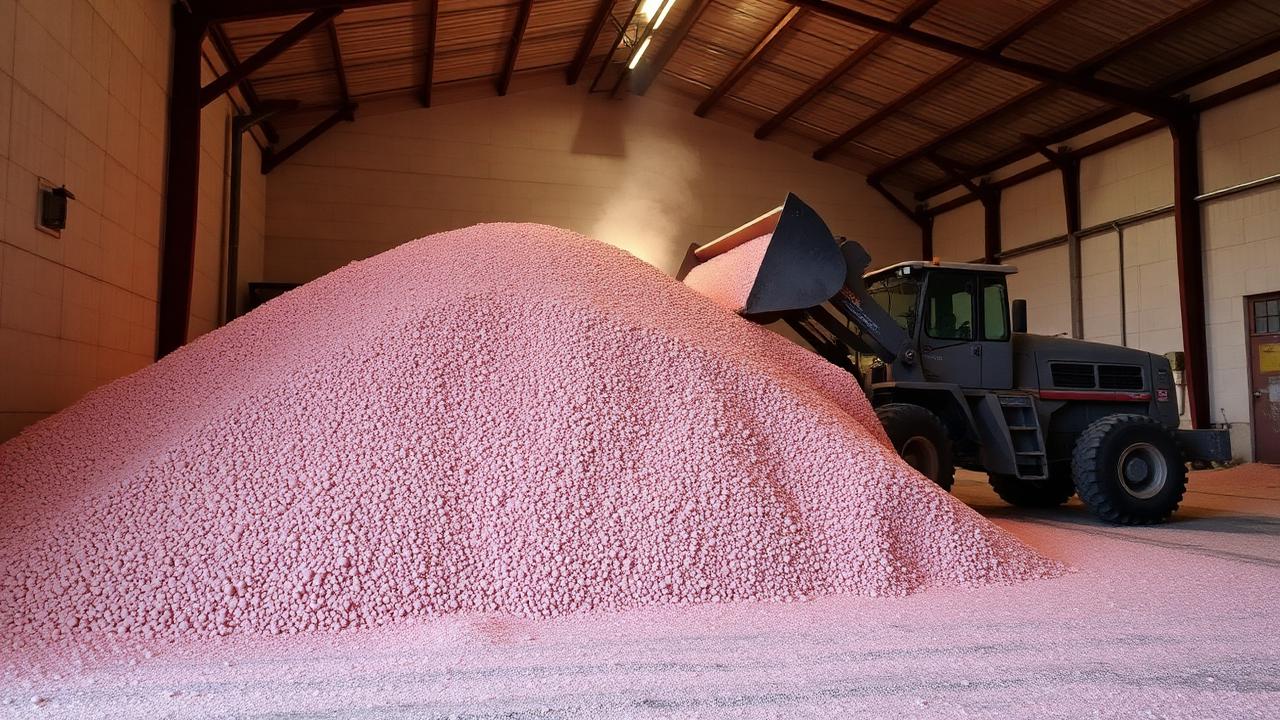
Market structure
Concentrated
Few producers, few buyers
Nutrien differentiator
Retail segment
Less commodity-correlated
Swing factor
Sanctioned supply
Route dependent
Annual potash contract negotiations with the largest importing buyers set a reference price that ripples through the entire global fertiliser complex, and this year's settlement again arrived later than the market expected. The delay itself is informative: it signals that neither side had an obvious incentive to move first, and it is a reminder that potash pricing is negotiated, not discovered in a continuous market the way most commodities are.
A concentrated market
Global potash supply is dominated by a small number of producers in Canada, Russia and Belarus. Demand is heavily influenced by two very large buyers. The result is a market where negotiated settlements matter more than marginal cost curves. This structure is unusual among bulk commodities. In most mined or agricultural commodities, price discovery happens through exchanges or a large number of bilateral spot transactions, and marginal cost of the highest-cost producer needed to meet demand sets a floor. Potash instead moves through periodic contract negotiations between a handful of producers and a handful of large state-linked or state-influenced buyers, which means price can be sticky in either direction for longer than a purely competitive market would allow, and can move in large discrete steps when a settlement is finally reached.
Why nobody agrees on the floor
Because price is set through negotiation rather than a continuous market, there is no single agreed marginal cost of production that acts as an obvious floor the way it might in oil or copper. Estimates of where the floor should sit differ depending on assumptions about Belarusian and Russian output reaching market despite sanctions-related friction, the willingness of Canadian producers to curtail volume rather than compete on price, and how much pricing power the largest buyers retain given how concentrated demand is. Each of these assumptions is legitimately contestable, which is why analyst views on the sustainable floor price vary so widely, and why the annual settlement is watched so closely as the actual revealed answer rather than a modelled one.
Nutrien's position
Low-cost Saskatchewan production and integrated retail distribution give Nutrien a different exposure than a pure producer. The retail segment provides earnings that are less correlated to the commodity price, though it carries its own working-capital cycle. The low-cost Saskatchewan resource base means Nutrien can remain profitable at potash prices that would pressure higher-cost producers, giving it more flexibility to hold or cede volume during periods of price weakness rather than being forced to sell into a weak market simply to cover costs. The retail arm, which sells crop inputs and services directly to growers, does not eliminate commodity exposure but it diversifies the earnings stream across a business with different seasonality and different competitive dynamics than the potash mining operation itself.
The Belarus and Russia variable
Sanctions on Belarusian potash exports, and the logistics constraints that come with rerouting volumes through different ports and rail networks, have been a persistent source of supply-side uncertainty. The pace at which that volume finds its way back to end markets, whether through alternative logistics or through demand from buyers less affected by sanctions regimes, is one of the largest single variables in any potash supply forecast. It is also one of the hardest to forecast precisely, because it depends on geopolitical decisions and enforcement patterns rather than on production economics.
Demand-side variables
Application rates in large consuming regions such as Brazil and Southeast Asia depend on grower economics, which in turn depend on crop prices, weather, and the availability of financing for input purchases. In a year of weak crop prices, growers can and do defer potash application without materially damaging soil in the short term, which makes potash demand more elastic in the near term than many other agricultural inputs. That elasticity is part of why the demand side of the price-floor debate is as contested as the supply side.
What to watch
Track the timing and level of the next annual contract settlements with major importing buyers, since these are the clearest revealed data point on where negotiated price actually lands. Watch disclosed shipment and logistics data on Belarusian and Russian export volumes for evidence of sanctions-related supply actually reaching market. Monitor Nutrien's realized potash price against its production cost guidance, and separately track retail segment margins and working capital, since that segment's performance is the clearest read on how much true diversification the integrated model provides.
Read next
 Mining and ResourcesCanadian Commodity Stocks in the Global CycleCanadian commodity producers are sensitive to the same global cycle. Here is how to read the signals and separate the quality operators from the price takers.Daniel Okoye · August 23, 2026 · 8 min
 Businessgoeasy's Repair Is Working, but the Earnings Model Has Not Recoveredgoeasy's charge-offs and leverage improved sequentially in the second quarter. Originations fell 70% year over year and adjusted diluted EPS fell to $1.02 from $4.40. Repair is not reacceleration.Hannah Kuan · September 1, 2026 · 8 min
 BusinessCanadian Grocery Margins: Pricing Power Under Political ScrutinyCanadian grocers earn thin margins on food and better margins on everything else in the store. The public debate conflates the two, and so do a lot of investors.Hannah Kuan · August 31, 2026 · 7 min
Follow this story
Follow NTR — the next Maple piece on this company, plus the Maple Morning Debrief before the open.
Follow and ask
Get more of our Canadian market coverage in Google Top Stories.
Disclosure
Information only. Not investment advice. The Maple Markets does not hold positions in securities discussed. See the Financial Disclaimer.
Sources and references (2)
Cite this analysis
Please attribute The Maple Markets and link to the original page.
Daniel Okoye (May 18, 2026). Nutrien and the Potash Price Floor Nobody Can Agree On. The Maple Markets. https://themaplemarkets.ca/en/newsroom/nutrien-and-the-potash-price-floor-nobody-can-agree-onhttps://themaplemarkets.ca/en/newsroom/nutrien-and-the-potash-price-floor-nobody-can-agree-on