
A Canadian Company Can Watch Its Shares Fall All Week and Owe the Market Nothing at All
Three of the small caps The Maple Markets wrote about this week moved hard on days when no document existed to explain them, which is a feature of the Canadian disclosure rules rather than a gap in them.
Canadian issuers must announce a material change immediately and file the report within 10 days. They are not required to publish every material fact, and they are not required to explain a share price. That single distinction explains most of the weeks when a Canadian small cap moves and SEDAR+ stays empty. Here is what the rules actually oblige, what the exchanges do when the price moves first, which filings arrive from someone other than the company, and the calendar that governs a quiet month.
By Élise Galarneau7 min read

the outside deadline for filing a Form 51-102F3 Material Change Report after the change occurs, with the news release due immediately
10 days
National Instrument 51-102 s. 7.1.
the deadline for a reporting insider to file a change in holdings on SEDI, and 10 days for an initial report
5 days
National Instrument 55-104 ss. 3.2 and 3.3.
the normal length of a TSX Venture halt, with trading resuming about an hour after the news is disseminated
Under two hours
TSXV Policy 3.3 s. 10.7, effective May 21, 2026.
the outside deadline for a CSE issuer's news release once a halt is requested during market hours
24 hours
CSE Policy 5 s. 5.12(5), read September 19, 2026.
the annual and interim financial statement deadlines for a Canadian venture issuer, against 90 and 45 for a non-venture issuer
120 and 60 days
National Instrument 51-102 Part 4.
Three times this week, a Canadian small cap moved hard on a day when no new document existed to explain it. Prospect Ridge moved without a release. CanAlaska Uranium fell with nothing filed since 8 September. Planet Ventures fell two days before a share consolidation that had already been announced.
None of those three companies did anything wrong. Canadian disclosure law asks for much less than most people assume, and the gap between what it asks for and what the market wants is where a silent week lives.
The duty is narrower than the word disclosure suggests
Canadian securities law obliges an issuer to announce a material change. It does not oblige an issuer to announce everything that matters.
A material change is a change in the business, operations or capital of the company that would reasonably be expected to have a significant effect on the price of its shares. A material fact is anything that would reasonably be expected to have that effect, whether or not the company changed. The second category is far larger than the first.
National Policy 51-201, the Canadian Securities Administrators' guidance on disclosure standards dated May 31, 2013, states it in one line at section 3.1(4): "a company does not have to disclose all material facts on a continuous basis." The same section adds that selectively telling one party a material fact, outside the necessary course of business, does breach the law.
So a drill programme going better than planned is a material fact. It becomes a material change when the company decides something because of it. Until then the company may say nothing, legally, while people who are watching the trucks come and go say plenty.
Immediately means the release, ten days means the paperwork
When a material change does happen, National Instrument 51-102 sets two clocks running at once, in section 7.1.
The first is immediate. According to section 7.1, the company must "immediately issue and file a news release authorized by an executive officer disclosing the nature and substance of the change".
The second is the paperwork. The company must file a Form 51-102F3 Material Change Report "as soon as practicable, and in any event within 10 days of the date on which the change occurs".
Ten days is a long time in a small cap. A change that happened on September 8, 2026 has until September 18, 2026 before its report is late. The news release should already be out; the formal document can arrive a week and a half later. A filing page that shows nothing new on September 15 therefore proves very little about September 8.
The exchanges add their own wording on top. TSX Venture Exchange Policy 3.3, effective May 21, 2026, requires disclosure "immediately after management of the Issuer becomes aware of the existence of Material Information", and section 7.6 says that first disclosure "must always be accomplished by the issuance of a news release". Canadian Securities Exchange Policy 5 uses the older word: section 5.5(1) asks for disclosure "forthwith upon the information becoming known to management".
Both exchanges also allow for slow news. TSXV Policy 3.3 section 3.5 asks for a status update within 30 days when documentation has not been received, and within 90 days when an announced transaction has not closed. A quarter of silence after a signed letter of intent is contemplated by the rulebook.
When the price moves first, someone asks the company a question
The rules do not leave an unexplained move alone. They just route it through the market regulator rather than through the company.
TSXV Policy 3.3 section 6.4 is direct: "When market activity indicates that trading is being unduly influenced by rumours, the Regulation Services Provider will require that a clarifying statement be made by the Issuer." CSE Policy 5 section 5.4(1) gives the Market Regulator the same power to request a clarifying statement, and to require immediate disclosure where the trading suggests someone has information the market does not.
National Policy 51-201 explains why at section 2.3(1): "Any unusual market activity may mean that news of the matter has been leaked and that certain persons are taking advantage of it." The policy also tells companies at section 6.13 to adopt a consistent "no comment" policy on market rumours, which is why a company that is asked about a move so often answers with nothing at all.
Those two instructions look contradictory and are not. Silence is the default; a clarifying statement is what the regulator extracts when the trading says something has leaked. A week with neither usually means nobody with the power to ask has seen a reason to.
A halt is a short event, and it is not a verdict
Halts carry more fear than they deserve. TSXV Policy 3.3 section 10.7 says a halt normally lasts less than two hours, with trading resuming within roughly an hour of the news being disseminated.
CSE Policy 5 section 5.12(5) sets the other end of the clock: when a halt is requested during market hours, the company must put out a news release "as soon as practicable and in any event within 24 hours". The halt is the pause; the release is the point of it.
The stock that fell without a halt, then, was not being protected from anything. The regulator watched ordinary trading in a name with no pending news, and did what the rulebook contemplates, which is nothing.
Some of the filings that move a price are not filed by the company
The other reason a share price moves on an empty news page is that the document that mattered was somebody else's.
Insider reports are the clearest case. As of its current consolidation, National Instrument 55-104 gives a reporting insider 10 days to file an initial report after becoming one, at section 3.2, and five days to report a change in holdings, at section 3.3. Those reports land on SEDI, the online insider filing system, not in the company's news feed. A director who sold on a Monday can appear on the public record the following Monday, with no company release anywhere near it. Nothing the company filed changed; a document filed by someone else did.
The calendar does the rest. Under National Instrument 51-102, a venture issuer has 120 days after its financial year end to file annual statements and 60 days after each interim period. A non-venture issuer has 90 days and 45 days. Work the arithmetic for a December 31 year end: the annual statements are due by April 30, and the statements for the quarter ended June 30 are due by August 29. A venture company can be entirely current, and entirely silent, for most of July and August.
| Document | Who files it | Deadline | Instrument |
|---|---|---|---|
| News release on a material change | The company | Immediately | NI 51-102 s. 7.1 |
| Material change report (Form 51-102F3) | The company | Within 10 days of the change | NI 51-102 s. 7.1 |
| Insider report of a change in holdings | The insider, on SEDI | Within 5 days | NI 55-104 s. 3.3 |
| Annual financial statements, venture issuer | The company | 120 days after year end | NI 51-102 Part 4 |
| Interim financial statements, venture issuer | The company | 60 days after the period | NI 51-102 Part 4 |
Five documents, five clocks, and only the first of them runs in real time.
Reading a silence honestly
A quiet filing page supports one conclusion and one only: no material change has been announced. It does not show that nothing happened. It does not show that nothing is being negotiated. It does not show that the people trading know something, and it does not show that they do not.
What it does give is a place to stand. The deadlines above are public and dated, so the question "is this company late?" has an answer, and it takes about two minutes to find on SEDAR+ and SEDI.
The three Canadian companies that moved this week on empty pages had each announced nothing and, per the deadlines above, owed nothing. That is the ordinary state of a venture market, where most of the information that moves a price on any given Tuesday has not yet become a change anyone is obliged to report.
## Transparency note Transparency note. This is an independent due-diligence analysis and editorial opinion piece produced by The Maple Markets editorial desk. It is not sponsored, promoted or commissioned, and no compensation of any kind has been received from any issuer, government body or organisation named in this article or any party acting on their behalf. The analysis is based on public disclosure available as of the publish date; every figure is attributed to its primary source. The Maple Markets and its authors may hold positions in securities mentioned; nothing here is a recommendation to buy, sell or hold any security, and readers should not treat it as investment advice. Past disclosure does not guarantee future results. Policies: Editorial Standards · Financial Disclaimer.
Read next
Auch auf Deutsch: Ein kanadisches Unternehmen kann seine Aktie eine Woche lang fallen sehen und dem Markt gar nichts schulden
 Mining and ResourcesA Forest Service Clock Started for Homeland Nickel, but Drill Approval Has Not ArrivedHomeland Nickel Inc. (TSXV: SHL) said on September 17, 2026 that the United States Forest Service had accepted its plan of operation for a sonic drill programme at Red Flat, Oregon, and that environmental and cultural review was well underway, including completed fieldwork. The company hopes to drill in October. The same release was reissued the same day because its paid-promotion disclosure described a video interview with another company's chief executive.Daniel Okoye · September 18, 2026 · 8 min
 EconomyFour Canadian-Listed Companies Announced Government Money This Week, and None of It Was CashBetween September 15 and September 18, 2026, Conifex Timber, Global Atomic, First Phosphate and Bitterroot Resources each announced that a government had put money behind them: up to C$30 million, US$414.2 million, US$212.5 million and up to US$5.22 million. Four announcements, four instruments, and not one of them is a transfer of cash. Here is what a loan agreement, a conditional approval, an export-credit letter of support and a cost-share award each oblige, and what has to be true before the money arrives.Marc Belzile · September 19, 2026 · 10 min
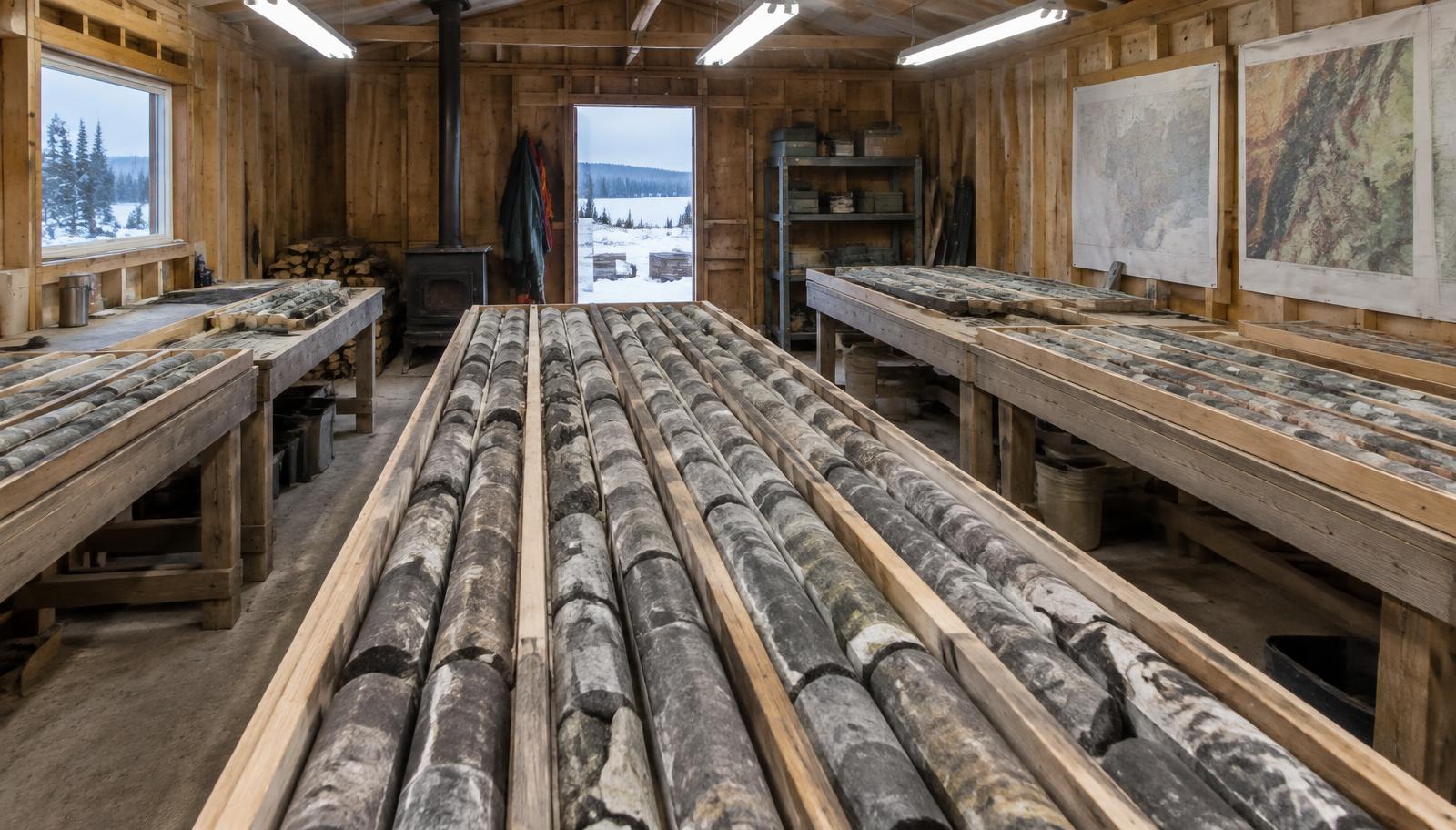 EconomyFour Things a Canadian Miner Can Say About a Hole in the Ground, and What Each Is WorthA Canadian explorer with no laboratory numbers rose 93.8 per cent on September 9, 2026. A company that published laboratory numbers fell 35 per cent the next day. Canadian mining disclosure runs on four separate stages of proof, and most of the confusion in a drill-results week comes from treating them as one.Priya Sandhu · September 13, 2026 · 9 min
Get the Maple Morning Debrief
Yesterday's close, overnight, and what to watch before the open — in your inbox by 6 a.m. ET. Free, and one click to unsubscribe.
Follow and ask
Get more of our Canadian market coverage in Google Top Stories.
Opinion
This article expresses the author's personal views, is separate from news reporting and is not investment advice.
Disclosure
## Transparency note **Transparency note.** This is an independent due-diligence analysis and editorial opinion piece produced by The Maple Markets editorial desk. It is not sponsored, promoted or commissioned, and no compensation of any kind has been received from any issuer, government body or organisation named in this article or any party acting on their behalf. The analysis is based on public disclosure available as of the publish date; every figure is attributed to its primary source. The Maple Markets and its authors may hold positions in securities mentioned; nothing here is a recommendation to buy, sell or hold any security, and readers should not treat it as investment advice. Past disclosure does not guarantee future results. Policies: [Editorial Standards](https://themaplemarkets.ca/en/policies/editorial-standards) · [Financial Disclaimer](https://themaplemarkets.ca/en/policies/financial-disclaimer). See the Financial Disclaimer.
Sources and references (8)
- National Instrument 51-102, Continuous Disclosure Obligations, Part 4 and section 7.1
- National Policy 51-201, Disclosure Standards, May 31, 2013
- TSX Venture Exchange Policy 3.3, Timely Disclosure, effective May 21, 2026
- TSX Venture Exchange Policy 2.9, Trading Halts, Suspensions and Delisting
- Canadian Securities Exchange Policy 5, Timely Disclosure, Trading Halts and Posting
- Toronto Stock Exchange, Guide to TSX Timely Disclosure Requirements
- National Instrument 55-104, Insider Reporting Requirements and Exemptions, unofficial consolidation
- SEDAR+, the Canadian filing system for continuous disclosure documents
Cite this analysis
Please attribute The Maple Markets and link to the original page.
Élise Galarneau (September 19, 2026). A Canadian Company Can Watch Its Shares Fall All Week and Owe the Market Nothing at All. The Maple Markets. https://themaplemarkets.ca/en/newsroom/when-a-canadian-stock-moves-and-nothing-has-been-filedhttps://themaplemarkets.ca/en/newsroom/when-a-canadian-stock-moves-and-nothing-has-been-filed