
How Canada Sells the Copper It Mines
The strike that began on October 24 at Highland Valley Copper, the mine behind about a quarter of Canada's estimated 2025 output, lands in a concentrate market so tight that Teck reported negative smelter processing charges in the second quarter.
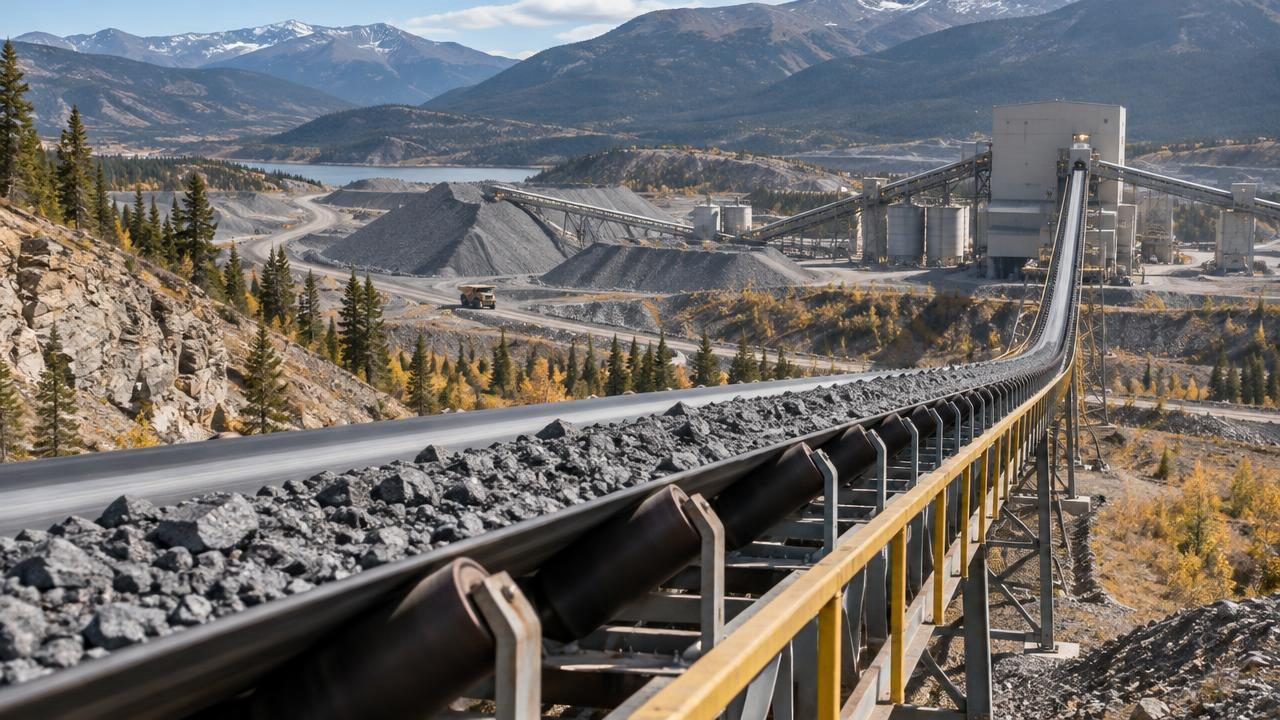
Steelworkers began strike action at Highland Valley Copper near Logan Lake on October 24, and Teck said the mine was running at reduced capacity. The mine produced 127,100 tonnes of copper in 2025, about a quarter of Canada's estimated output. Most Canadian copper leaves the country as concentrate, sold to smelters on terms that Teck says reached record lows this year, while refined Canadian copper goes almost entirely to the United States.
By Daniel Okoye8 min read
Highland Valley Copper, 2025 production
127,100 tonnes of copper
about a quarter of the USGS estimate of 500,000 tonnes for all Canadian mines in 2025 (Teck Q2 2026 report, July 22, 2026; USGS Mineral Commodity Summaries 2026)
Canadian mine production, 2024
514,582 tonnes
26.2 per cent below 2015; British Columbia 48.3 per cent of the total (NRCan Copper facts, updated January 5, 2026)
Copper ore and concentrate exports, 2024
C$4.0 billion
348,211 tonnes, mainly to China and Japan, against C$1.8 billion of refined copper exports, more than 99 per cent to the United States (NRCan)
LME copper, Q2 2026 average
US$6.05 per pound
40.0 per cent above Q2 2025, with smelter processing charges negative across Teck's operations in the quarter (Teck Q2 2026 report)
Teck copper receivables, June 30, 2026
270 million payable pounds
provisionally priced at US$6.07 per pound, about US$1.64 billion (Teck Q2 2026 report; Maple calculation)
Members of United Steelworkers Local 7619 began strike action at Highland Valley Copper near Logan Lake, British Columbia, on Saturday morning, October 24, 2026. Teck Resources, which owns the mine outright, said the same day that operations were continuing at reduced capacity and that the effect on production would depend on how long the action lasts.
Highland Valley is the country's largest copper mine, as Natural Resources Canada describes it. It produced 127,100 tonnes of copper in 2025, according to the production tables in Teck's second-quarter report. The U.S. Geological Survey estimates that all Canadian mines together produced about 500,000 tonnes that year. One mine carries about a quarter of the national total.
The strike matters beyond Teck because of how Canada sells its copper. Most of it leaves the country as concentrate, and the price a Canadian mine receives depends on two things it does not set: the exchange price of copper, and what a smelter charges to turn concentrate into metal. Both have moved a long way this year.
A quarter of Canadian output comes from one valley
Canadian copper is concentrated in British Columbia. Natural Resources Canada (NRCan) puts 2024 mine production at 514,582 tonnes and attributes 48.3 per cent of it to British Columbia. Quebec and Newfoundland and Labrador follow well behind, and NRCan groups the remaining provinces together without a breakdown.
The national figure has been falling for a decade. NRCan reports that output in 2024 was 26.2 per cent below the 697,322 tonnes mined in 2015, even after a rise from 2023. Canada ranked twelfth in the world in 2024, with about 2 per cent of mined supply. Chile, the largest producer, mined an estimated 5.3 million tonnes in 2025, according to the U.S. Geological Survey.
The Highland Valley share above compares two figures from the same year, 2025, but from different publishers: Teck's reported tonnage and the USGS estimate for Canada. NRCan has not yet published its national figure for 2025.
The contract at the mine expired on September 30, 2026. Teck said on October 21 that it had received strike notice and that the union could act from 8:00 a.m. Pacific on October 24. In its release on the day the strike began, Teck said its contingency plans give priority to safety and environmental management and that it is committed to a collective agreement that is fair and reasonable for employees and supports the operation's ongoing viability. The union's bargaining committee told local broadcaster CFJC that it had made every effort to avoid a dispute and was seeking competitive wages, stronger pensions and measures on staffing. No date for further talks has been published.
One production change was already in Teck's plans before any labour action. In July the company said it expected lower mill throughput and recoveries at Highland Valley late in the third quarter and through the fourth, as the plant processes less ore from the Lornex pit and more from the Bethlehem and Highmont pits. Recovery is the share of the copper in the ore that the plant captures.
Most of the copper leaves before it is metal
A concentrate is the product a mine ships: ore that has been ground fine and floated until the copper minerals make up a large share of it, with sulphur, iron and rock still mixed in. Turning it into copper cathode, the refined plates that trade on exchanges, takes a smelter and a refinery.
Canada has little of that capacity. NRCan lists one primary copper smelter and refinery in the country, in Quebec, and two other sites, in Ontario and Newfoundland and Labrador, that produce limited refined copper while processing other metals. The trade figures follow from that.
| Canadian copper trade, 2024 (NRCan, from Statistics Canada data) | Tonnes | Value | Main destinations |
|---|---|---|---|
| Copper ore and concentrate exports | 348,211 | C$4.0 billion | China and Japan |
| Refined copper exports | 140,639 | C$1.8 billion | United States, more than 99 per cent |
| All copper and copper-based product exports | n/a | C$10.7 billion | United States 56 per cent, China 19 per cent, Japan 9 per cent, South Korea 7 per cent |
| All copper and copper-based product imports | n/a | C$6.5 billion | United States 56 per cent, Chile 15 per cent, Sweden 7 per cent |
The concentrate exports were worth more than twice the refined ones, and they went across the Pacific. The refined metal went south. The U.S. Geological Survey lists Canada as the source of more than 99 per cent of American imports of copper ore and concentrate and 16 per cent of its imports of refined copper.
American demand for imported metal jumped in 2025. The USGS estimates that U.S. refined copper imports almost doubled from 2024, to 1.7 million tonnes, and links the higher New York price that year to uncertainty over the implementation of tariffs on U.S. imports of copper materials.
What a mine is paid for its concentrate
A copper mine does not sell copper at the screen price. It sells concentrate to a smelter or a trader, and the invoice is built in three steps. The buyer pays for the copper the concentrate contains, less a contractual share it keeps; that remainder is called payable copper. From that it deducts a treatment charge for smelting each tonne of concentrate and a refining charge for each pound of copper refined, together known as TC/RCs. The price itself is usually set provisionally on shipment and settled later, against the exchange average for an agreed period.
Teck's own balance sheet shows how much money sits inside that last step. At June 30, 2026, Teck reported outstanding copper receivables of 270 million payable pounds, valued at a provisional price of US$6.07 per pound. That is about US$1.64 billion of copper whose final price was still open at the end of the quarter. Each move of US$0.10 per pound in the settlement price changes the value of those pounds by about US$27 million, before the final adjustment Teck books when they settle.
The charges are the part of the invoice that has moved most this year.
Smelters ran short of concentrate
In its second-quarter report, Teck described the copper concentrate market as very tight, with spot treatment and refining charges falling to new record lows. The company gave two reasons. Global mine supply of concentrate was short of what smelters could process, leaving smelter utilisation below its average of the past decade. Smelters also had an economic incentive to maximise output to boost sales of sulphuric acid, a by-product of smelting, and were willing to accept lower treatment charges to secure raw material. Teck reported that copper smelter processing charges across its operations were negative in the second quarter of 2026, which means the deductions that normally come off a mine's invoice became, on balance, a credit.
The exchange price moved the same way. Teck reported that the London Metal Exchange copper price averaged US$6.05 per pound in the second quarter of 2026, 40.0 per cent above the same quarter a year earlier. The USGS puts the 2025 average LME cash price at US$4.40 per pound.
For a Canadian mine selling concentrate, both changes raise what it earns per pound of copper shipped. For Canada's one primary smelter, the same terms work in the opposite direction, because treatment and refining charges are what a smelter earns for its processing. The country sits mostly on the mining side of that negotiation. On Teck's description of the second quarter, that is the side the terms favoured.
A strike at Highland Valley takes concentrate out of a market that was already short of it. Teck has not put a number on the lost output.
Where the next Canadian-controlled copper is being built
Highland Valley's next phase is already under construction. In July 2025 Teck approved construction of the mine life extension, which it said would keep the operation running from 2028 through 2046 at an average of about 132,000 tonnes of copper a year. Teck's second-quarter report kept the capital estimate at C$2.1 billion to C$2.4 billion, with detailed engineering nearly finished.
The week's other copper decision was made in Arizona. On October 21, 2026, Hudbay Minerals and Mitsubishi Corporation approved construction of Copper World in Pima County, Arizona, which Maple covered on October 22 in Hudbay and Mitsubishi Approve a US$2.07 Billion Copper World Mine in Arizona. Hudbay put initial growth capital at US$2.07 billion and expects average output of 102,000 tonnes of copper a year over the first decade of its base case. First production is targeted for the second half of 2029. The base-case plant is a concentrator producing copper and molybdenum concentrates. Hudbay described a concentrate leach facility that would produce copper cathode in Arizona as a permitted future option, which it has not decided to build.
Hudbay's Canadian copper comes from its Snow Lake operations in Manitoba and the Copper Mountain mine in British Columbia. Set beside the national figures, the decision shows where some of the new copper controlled by Canadian companies is being built. Canadian mine output has fallen since 2015, and Copper World's concentrate will be produced in Arizona.
Thursday's report and the national count
Teck releases its third-quarter results before the TSX opens on Thursday, October 29, 2026, with a webcast at 8:00 a.m. Pacific, according to its October 6 release. The quarter ended on September 30, so none of its production figures will include the strike; the release is the first scheduled occasion for Teck to discuss the strike beside its 2026 copper guidance of 455,000 to 530,000 tonnes, which it left unchanged in July.
NRCan's next national production figure will show where 2025 actually landed against the USGS estimate. The fourth quarter will be settled at Highland Valley, by the length of the strike, and in the smelter contracts that decide what each pound of Canadian concentrate is worth.
Disclosure
Transparency note. This is an independent due-diligence analysis and editorial opinion piece produced by The Maple Markets editorial desk. It is not sponsored, promoted or commissioned, and no compensation of any kind has been received from any issuer, government body or organisation named in this article, or any party acting on their behalf. The analysis is based on public disclosure available as of the publish date; every figure is attributed to its primary source. The Maple Markets and its authors may hold positions in securities mentioned; nothing here is a recommendation to buy, sell or hold any security, and readers should not treat it as investment advice. Past disclosure does not guarantee future results. Policies: Editorial Standards · Financial Disclaimer.
Read next
Auch auf Deutsch: Wie Kanada das Kupfer verkauft, das seine Minen aus dem Boden holen
 Mining & EnergyB.C. Conservatives Win a Majority Promising 120-Day Permits for Major ProjectsBritish Columbia elected a Conservative majority on October 24, 2026, by the projections of The Canadian Press and CTV News, with seat counts preliminary overnight. Premier-designate Lorne Doerkson has promised a 120 Day Permitting Act for major projects, red tape cut back to 2017 levels and the repeal of DRIPA. He inherits a record the outgoing government reports as five mines permitted and a mining backlog cut by half, along with a 2025 court ruling on DRIPA and mineral claims.Élise Galarneau · October 25, 2026 · 9 min
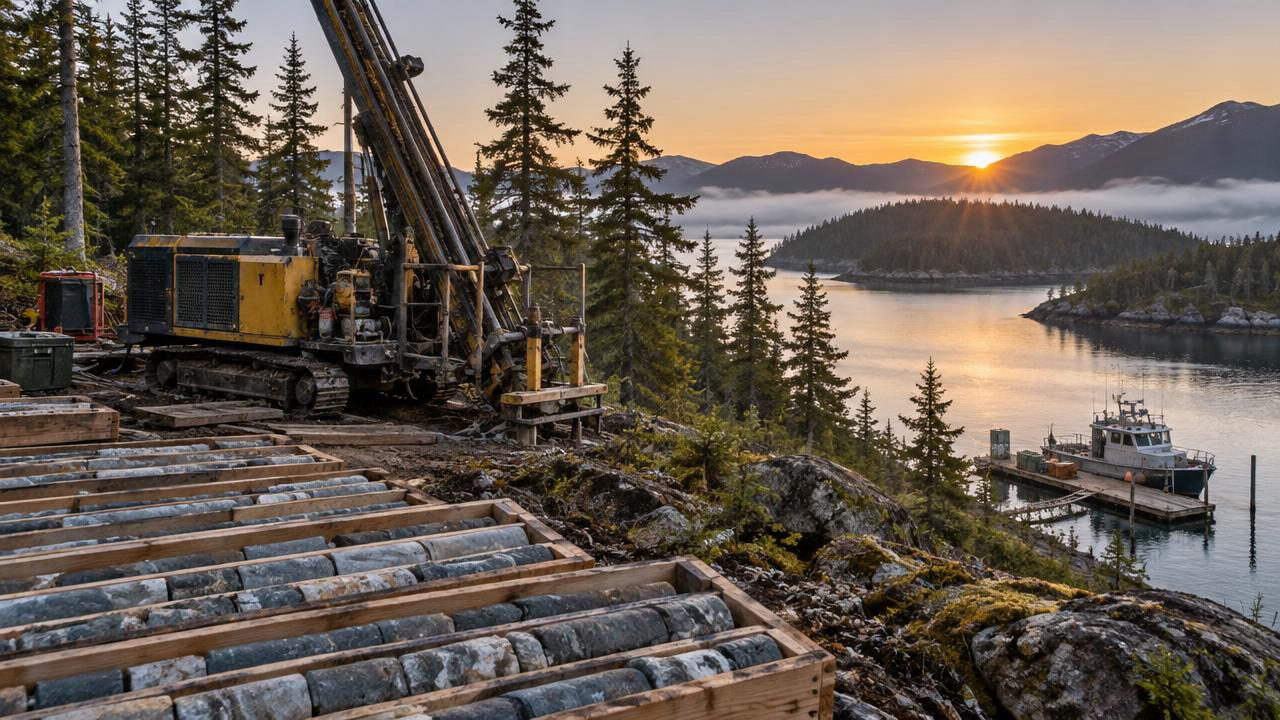 SponsoredMining & Energy600 Metres Out, Copper One Logs Copper Sulphides at RedondaCopper One Resources has observed copper sulphides in step-out hole RED-26-04, about 600 metres northeast of Redonda's main mineralized zone in British Columbia. The result gives the company another area to investigate; the observation is visual and laboratory assays are pending. Alongside the drilling, Copper One closed a C$7.96 million special warrant financing in September, added the Sport project in Utah and signed an agreement for the Sword & Gossan properties in Labrador.Daryl Frètu Von · October 20, 2026 · 8 min
 macroCanadian Miners Made More Metal Than They Sold Last QuarterMining and metals names took 26 of the 47 places on this week's Canadian mover lists, and two of the quarter's production releases carried the same quiet feature: more metal came out of the ground than went off the books. DPM Metals produced about 97,000 gold-equivalent ounces in the September quarter and sold about 77,000. Ivanhoe Mines finished the quarter holding roughly 43,000 tonnes of unsold copper, up from about 40,000. Neither gap is a demand problem, and only one of them closes on its own.Marc Belzile · October 10, 2026 · 9 min
Get the Maple Morning Debrief
Yesterday's close, overnight, and what to watch before the open — in your inbox by 6 a.m. ET. Free, and one click to unsubscribe.
Follow and ask
Get more of our Canadian market coverage in Google Top Stories.
Sources and references (10)
- Teck: Teck Provides Update on Highland Valley Copper Operations (October 24, 2026)
- Teck: Teck Receives Highland Valley Copper Operations Strike Notice (October 21, 2026)
- SEC EDGAR: Teck Form 6-K exhibit, news release and MD&A for the quarter ended June 30, 2026 (July 22, 2026)
- Natural Resources Canada: Copper facts (updated January 5, 2026)
- U.S. Geological Survey: Mineral Commodity Summaries 2026, Copper (January 2026)
- Teck: Teck Announces Construction of Highland Valley Copper Mine Life Extension to Proceed (July 23, 2025)
- SEC EDGAR: Hudbay Form 6-K exhibit, Hudbay and Mitsubishi Approve Copper World Project Construction (October 21, 2026)
- Teck: Teck to Release Third Quarter 2026 Results on October 29, 2026 (October 6, 2026)
- The Maple Markets: Hudbay and Mitsubishi Approve a US$2.07 Billion Copper World Mine in Arizona (October 22, 2026)
- CFJC Today: Highland Valley Copper mine workers begin strike action (October 24, 2026)
Cite this analysis
Please attribute The Maple Markets and link to the original page.
Daniel Okoye (October 25, 2026). How Canada Sells the Copper It Mines. The Maple Markets. https://themaplemarkets.ca/en/newsroom/canada-copper-highland-valley-strike-and-the-concentrate-markethttps://themaplemarkets.ca/en/newsroom/canada-copper-highland-valley-strike-and-the-concentrate-market