
Where Consent Fits in a Canadian Mine Approval
British Columbia's assessment law asks participating Indigenous nations to file their consent, or its absence, before a certificate is issued, and the private agreements that sit alongside that process can be ended at any time.
A week of Canadian mining news turned on documents that had nothing to do with rock: a terminated set of engagement agreements in British Columbia, a Quebec fast-track designation, a foreign drill permission. Canada runs four separate permissions between a deposit and a mine, each with its own clock and its own way of stopping. Here is what each one is, what the statutes actually require, and where the numbers come from.
By Élise Galarneau9 min read
value of Canadian mineral production, 2024
C$64.3 billion
over 60 minerals and metals, per Natural Resources Canada's minerals and metals facts page.
federal statutory limits added, Agency route
480 days
180 days under IAA s. 18 plus 300 days under s. 28(2); up to 180 further days of listed extensions.
proponent's own period to supply studies
3 years
IAA s. 19(1), which is why elapsed time exceeds the statutory clocks.
the engagement agreements terminated
2012 and 2021
identified in Spanish Mountain Gold's release of October 2, 2026, following the Xatśūll First Nation release of October 1, 2026.
Quebec's cap on processing a covered application
13 or 18 months
impact assessment regulation adopted March 23, 2018, per the Quebec environment ministry's procedure page.
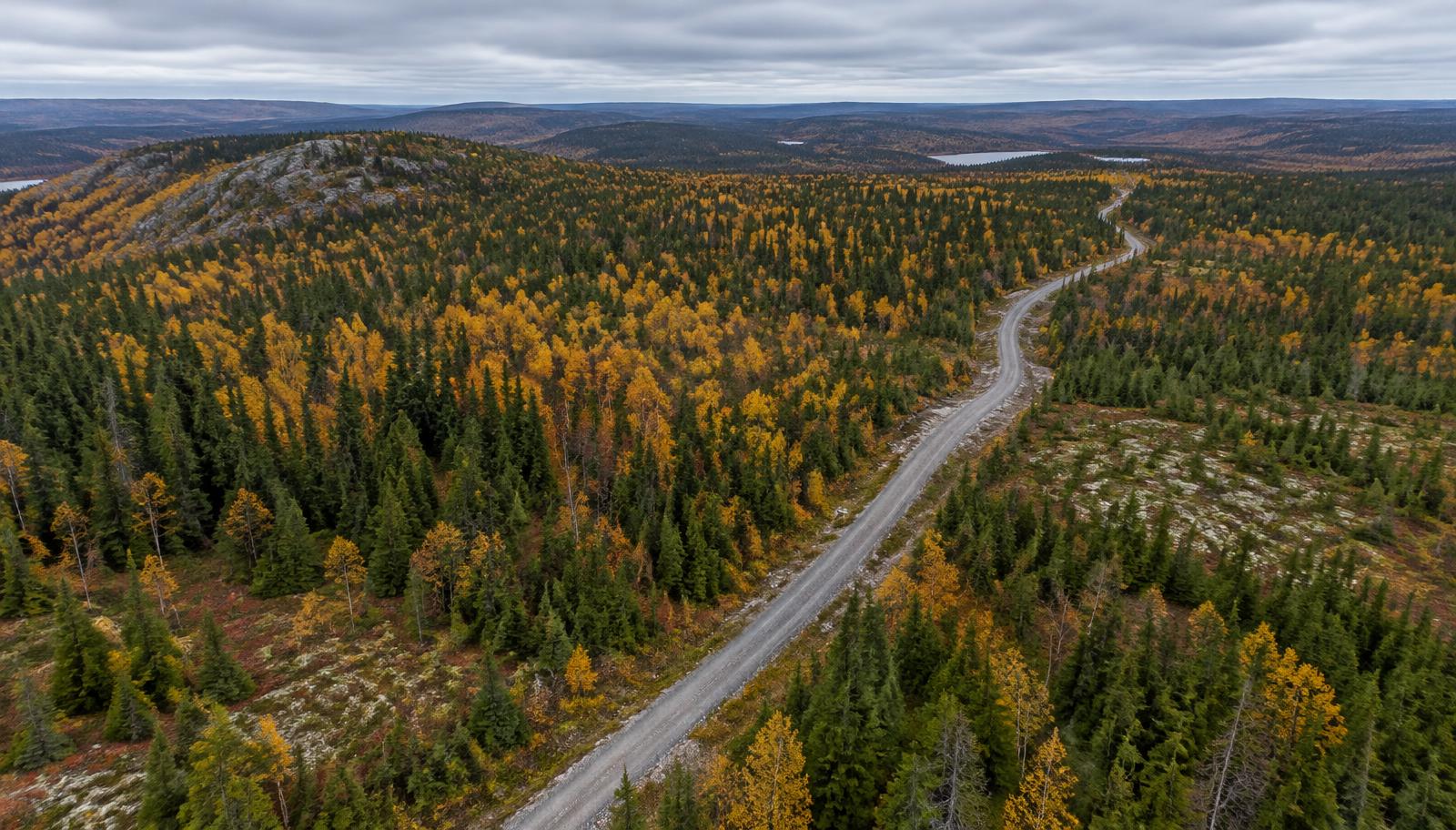
Spanish Mountain is a low hill of volcanic rock east of the Cariboo gold fields in British Columbia's interior. It has been drilled for more than fifteen years. The gold in it has not moved, and nothing measured underground changed during the first week of October. What changed was a set of letters.
On October 1, 2026 the Xatśūll First Nation issued a release announcing the termination of all of its agreements with Spanish Mountain Gold. The company responded the following day. Its own release of October 2, 2026 disclosed that the agreements in question were engagement agreements the parties signed in 2012 and in 2021, and stated that discussions with the Nation continue. The share price fell. Maple covered it on October 5, 2026 in Xatśūll First Nation Ends Its Agreements With Spanish Mountain Gold.
It was not the only piece that week where the news sat somewhere other than the orebody. On October 7, 2026 Maple published Quebec's New Government Inherits First Phosphate's Fast-Track Status, about a designation granted by a provincial ministry. Two days later came What Does Oceanic Iron Ore Have at Hopes Advance?, on a northern Quebec iron project whose obstacle is a buyer rather than a regulator. Mining and metals names accounted for 26 of the 47 Canadian top-mover rows recorded in the week to October 9, 2026, the last trading day in the period.
Natural Resources Canada reports that the country's minerals sector produced over 60 minerals and metals worth C$64.3 billion in 2024 and directly employed 438,000 people in that same year, on its minerals and metals facts page read on October 11, 2026. Indigenous Peoples made up 11 per cent of the mining industry's labour force in the 2021 census, on the same source. The industry is large, it is spread across the country, and almost none of it is permitted by a single decision.
A Canadian deposit passes through four separate permissions
There are four, and they are genuinely separate. A project can hold one and lose another without anything happening in the ground.
The first is federal. The Impact Assessment Act, in force since 2019, governs projects on a designated list. The second is provincial. Every province runs its own assessment statute, and a mine in British Columbia and a mine in Quebec travel through different machinery with different stage names.
The third is the Crown's duty to consult Indigenous peoples, which is constitutional rather than statutory and attaches to government conduct rather than to a form. Crown-Indigenous Relations and Northern Affairs Canada states that the duty applies when the government considers conduct that might adversely affect potential or established Aboriginal or treaty rights, and names the Supreme Court of Canada's Haida and Taku River decisions of 2004 and its Mikisew Cree decision of 2005 as the basis for the federal consultation guidelines.
The fourth is private, and it is the one that moved in the Spanish Mountain story. Companies negotiate agreements directly with Indigenous nations: engagement protocols, capacity funding arrangements, and later impact-benefit agreements. These are contracts between two parties. A terminated engagement agreement is not a revoked permit, and a signed one is not an approval.
The federal clock runs 480 days, and that is not the same as 480 days
The Impact Assessment Act sets its own limits, and they are readable. Section 18, as it reads on the Justice Laws website consulted on October 11, 2026, gives the Impact Assessment Agency 180 days from the day it posts a project description under subsection 10(2) to decide whether an assessment is required and to post a notice of commencement. Subsection 18(3) lets the Agency extend that by up to 90 days at a listed jurisdiction's request.
If the assessment proceeds through the Agency rather than a panel, subsection 28(2) requires the report to reach the Minister no later than 300 days after the notice under subsection 19(4) is posted. Subsection 28(6) allows the Minister to add up to 90 days, and subsection 28(7) allows the Governor in Council to add an unspecified further period. Add the two base limits and the Agency route has 480 days of regulator time. A referral to a review panel replaces the 300 with the 600-day combined limit in subsection 37(2), which the Agency itself may exceed where it considers more time necessary, giving 780 days on the same addition.
Those are the numbers in the statute. They are not elapsed time, for one reason that sits in the Act itself: subsection 19(1) gives the proponent three years after the notice is posted to supply the required information and studies, and that period is the proponent's, not the regulator's. The Agency may also suspend its clocks under subsections 18(5), 28(9) and 37(6) until a prescribed activity is complete. A project can therefore spend four or five calendar years inside a process whose statutory limits total 480 days without any limit being breached.
| Federal stage | Statute | Base limit | Extension available |
|---|---|---|---|
| Planning phase to notice of commencement | IAA s. 18 | 180 days | up to 90 days, s. 18(3) |
| Proponent supplies studies | IAA s. 19(1) | 3 years for the proponent | not a regulator limit |
| Agency impact assessment report | IAA s. 28(2) | 300 days | up to 90 days, s. 28(6) |
| Review panel route instead | IAA s. 37(2) | 600 days combined | up to 90 days, s. 37(3) |
Spanish Mountain Gold's own stated schedule shows how the two measures diverge. The company reported in its October 2, 2026 release that the British Columbia Environmental Assessment Office confirmed in August 2026 that its plan for resuming the assessment is acceptable, and that the office is not pursuing termination of that assessment. The next milestone it names is a Detailed Project Description in the first quarter of 2027, with a construction decision targeted for the first half of 2028. The company's own timetable therefore places the beginning of its next formal step roughly five months after the agreements were terminated, and a construction decision more than a year after that.
British Columbia put consent inside the decision, not beside it
British Columbia's government describes the process under its Environmental Assessment Act, 2018 as running seven stages: early engagement, an assessment readiness decision, process planning, application development and review, effects assessment and recommendation, the decision itself, and post-certificate compliance. The provincial process description does not attach day counts to those stages.
What it does attach is a formal role for consent. During the effects assessment and recommendation stage, participating Indigenous nations may give notice of their consent, or of their lack of consent, to the issuing of an environmental assessment certificate. The same notice is available at the readiness decision where a project is recommended for exemption or termination. If the ministers' decision does not align with a nation's notice, the province must provide reasons.
That is not a veto, and the province's own description does not call it one. It is a filed position that a minister must answer in writing. The distinction matters for reading a headline: a nation withdrawing from private engagement agreements, as happened at Spanish Mountain, is a different act from a participating nation filing a notice of non-consent inside a certificate decision. The first ends a contract. The second creates a document the Crown has to address.
British Columbia's Declaration on the Rights of Indigenous Peoples Act, passed in November 2019, sits above all of this. According to the province's own description of the Act, section 3 requires provincial laws to be brought into alignment with the UN Declaration, section 4 requires an action plan, and section 5 requires annual reporting to the legislature by June 30 each year. Sections 6 and 7 allow the province to enter agreements with Indigenous governments and to exercise statutory decision-making jointly.
The federal equivalent came two years later. The United Nations Declaration on the Rights of Indigenous Peoples Act, assented to in 2021, provides in section 5 that the Government of Canada take all measures necessary to ensure federal laws are consistent with the Declaration. Subsection 6(4) required an action plan within two years of that section coming into force, and subsection 7(1) requires an annual report within 90 days of each fiscal year end. Neither statute issues a permit. Both change the standard the permit-issuer is held to.
Quebec climbs the same ladder with different rungs
Quebec's procedure under the Environment Quality Act, as modernised by Bill 102 in March 2017 and the impact assessment regulation adopted in March 2018, moves through five phases. The proponent files a project notice and receives a ministerial directive setting out what the impact study must contain. The study is prepared and tested for admissibility. A 30-day public information period follows, during which a public hearing, a targeted consultation or mediation may be requested. The Bureau d'audiences publiques sur l'environnement runs that stage and reports to the minister, who must make the report public within 15 days of receiving it. The government then decides by decree.
The provincial clocks are shorter and more explicit than the federal ones. The environment ministry's procedure page, consulted on October 11, 2026, states that the regulation adopted on March 23, 2018 caps government processing of a covered application at 13 or 18 months depending on the project. A BAPE public hearing runs four months, a targeted consultation three, a mediation two.
First Phosphate's Filon designation, granted on July 27, 2026 by Quebec's Ministry of Natural Resources and Forests under the province's 2025 to 2031 critical and strategic minerals strategy, operates inside that structure rather than around it. The company's own release announced the status as one that facilitates discussions with the departments and agencies that issue mining authorisations. It names no authorisation granted, no requirement waived and no date advanced. Maple's October 7, 2026 piece reached the same place from the political side: a change of government is not a permit reset.
Ottawa has refused a British Columbia mine outright before
On February 26, 2014 the federal Minister of the Environment concluded that the New Prosperity gold-copper mine project in British Columbia was likely to cause significant adverse environmental effects that could not be mitigated, and the Governor in Council determined that those effects were not justified in the circumstances. The project could not proceed. The decision statement was issued under the Canadian Environmental Assessment Act, 2012, the predecessor to the current Act, and the minister at the time invited a further proposal addressing the government's concerns.
Nothing about that outcome depended on the deposit being smaller or poorer than claimed. The federal gate closed on its own terms. Twelve years later the four permissions are still independent of one another, and the newest two statutes have raised the standard a decision must meet rather than reduced the number of decisions.
So the open question at Spanish Mountain is not whether the gold is there. The company's Detailed Project Description is due in a quarter that has not begun, the Nation's agreements have been terminated and its talks reported as continuing, and no participating nation has filed a notice of consent or non-consent in a certificate decision that has not yet reached that stage. What the Crown will write in its reasons, if it ever has to write them, is the thing none of the public documents can answer today.
Transparency note. This article is a Maple Markets editorial due-diligence opinion piece. It is not sponsored, not commissioned, and not paid for by any party, and no compensation of any kind has been received from any issuer, government body or organisation named in this article, or from any party acting on their behalf. The analysis is based on public disclosure available as of the publish date; figures are attributed to their primary sources. The Maple Markets and its authors may hold positions in securities mentioned; nothing in this article is a recommendation to buy, sell or hold any security, and readers should not treat it as investment advice. Past disclosure does not guarantee future results. Policies: Editorial Standards · Financial Disclaimer.
Read next
Auch auf Deutsch: Wo die Zustimmung im kanadischen Genehmigungsverfahren für Bergwerke steht
 macroPermit, Contract, Treaty: Three Ways a Foreign State Reaches TorontoColombia moved a date. Panama attached a condition. Greece switched on a power line. Three foreign-state acts landed on Canadian-listed miners inside one week, through three different legal instruments, and each one settles something the other two cannot. Natural Resources Canada counts C$240.6 billion of Canadian mining assets outside the country; the instruments are how those assets are actually held.Priya Sandhu · October 3, 2026 · 8 min
 macroCanadian Miners Made More Metal Than They Sold Last QuarterMining and metals names took 26 of the 47 places on this week's Canadian mover lists, and two of the quarter's production releases carried the same quiet feature: more metal came out of the ground than went off the books. DPM Metals produced about 97,000 gold-equivalent ounces in the September quarter and sold about 77,000. Ivanhoe Mines finished the quarter holding roughly 43,000 tonnes of unsold copper, up from about 40,000. Neither gap is a demand problem, and only one of them closes on its own.Marc Belzile · October 10, 2026 · 9 min
 macroCanada's Miners Hold C$241 Billion of Assets Outside CanadaFive of the companies The Maple Markets covered this week dig in Niger, Japan, Morocco, the Congo and Oregon, and all of them raise money in Canada. Natural Resources Canada counts C$240,565 million of Canadian mining assets abroad at the end of 2024 against C$111,982 million at home. Where the money is listed and where the rock is have become two separate questions, and a falling loonie flattered the reported total by 4.6 percentage points.Marc Belzile · September 27, 2026 · 7 min
Get the Maple Morning Debrief
Yesterday's close, overnight, and what to watch before the open — in your inbox by 6 a.m. ET. Free, and one click to unsubscribe.
Follow and ask
Get more of our Canadian market coverage in Google Top Stories.
Opinion
This article expresses the author's personal views, is separate from news reporting and is not investment advice.
Disclosure
Transparency note. This article is a Maple Markets editorial due-diligence opinion piece. It is not sponsored, not commissioned, and not paid for by any party, and no compensation of any kind has been received from any issuer, government body or organisation named in this article, or from any party acting on their behalf. The analysis is based on public disclosure available as of the publish date; figures are attributed to their primary sources. The Maple Markets and its authors may hold positions in securities mentioned; nothing in this article is a recommendation to buy, sell or hold any security, and readers should not treat it as investment advice. Past disclosure does not guarantee future results. Policies: Editorial Standards · Financial Disclaimer. See the Financial Disclaimer.
Sources and references (12)
- Impact Assessment Act, s. 18 (planning phase time limit)
- Impact Assessment Act, s. 28 (Agency report time limit) and s. 19(1)
- Impact Assessment Act, s. 37 (review panel time limits)
- United Nations Declaration on the Rights of Indigenous Peoples Act, ss. 4 to 7
- Government of Canada decision on the New Prosperity Gold-Copper Mine Project, February 26, 2014
- Natural Resources Canada, minerals and metals facts
- Crown-Indigenous Relations and Northern Affairs Canada, consultation and accommodation
- British Columbia environmental assessment process, Environmental Assessment Act 2018
- British Columbia Declaration on the Rights of Indigenous Peoples Act
- Quebec environmental impact assessment and review procedure
- Spanish Mountain Gold release on environmental assessment status and First Nations engagement, October 2, 2026
- First Phosphate release on Filon fast-track status, July 27, 2026
Cite this analysis
Please attribute The Maple Markets and link to the original page.
Élise Galarneau (October 11, 2026). Where Consent Fits in a Canadian Mine Approval. The Maple Markets. https://themaplemarkets.ca/en/newsroom/consent-before-construction-the-canadian-approvals-between-a-deposithttps://themaplemarkets.ca/en/newsroom/consent-before-construction-the-canadian-approvals-between-a-deposit