
QIMC Extends the Bennett Hill Hydrogen System: Reading DDH-26-05
A new company-record 27.8% H2 reading at roughly 374 metres, and why the structural log matters more than the peak concentration
Québec Innovative Materials Corp. (CSE: QIMC) has reported a company-record 27.8% hydrogen measurement at approximately 374 metres in DDH-26-05 at Bennett Hill, Nova Scotia. The readings are preliminary field measurements. Concentration establishes presence; it does not establish pressure, flow or recoverable volume.
By Daniel Okoye6 min read
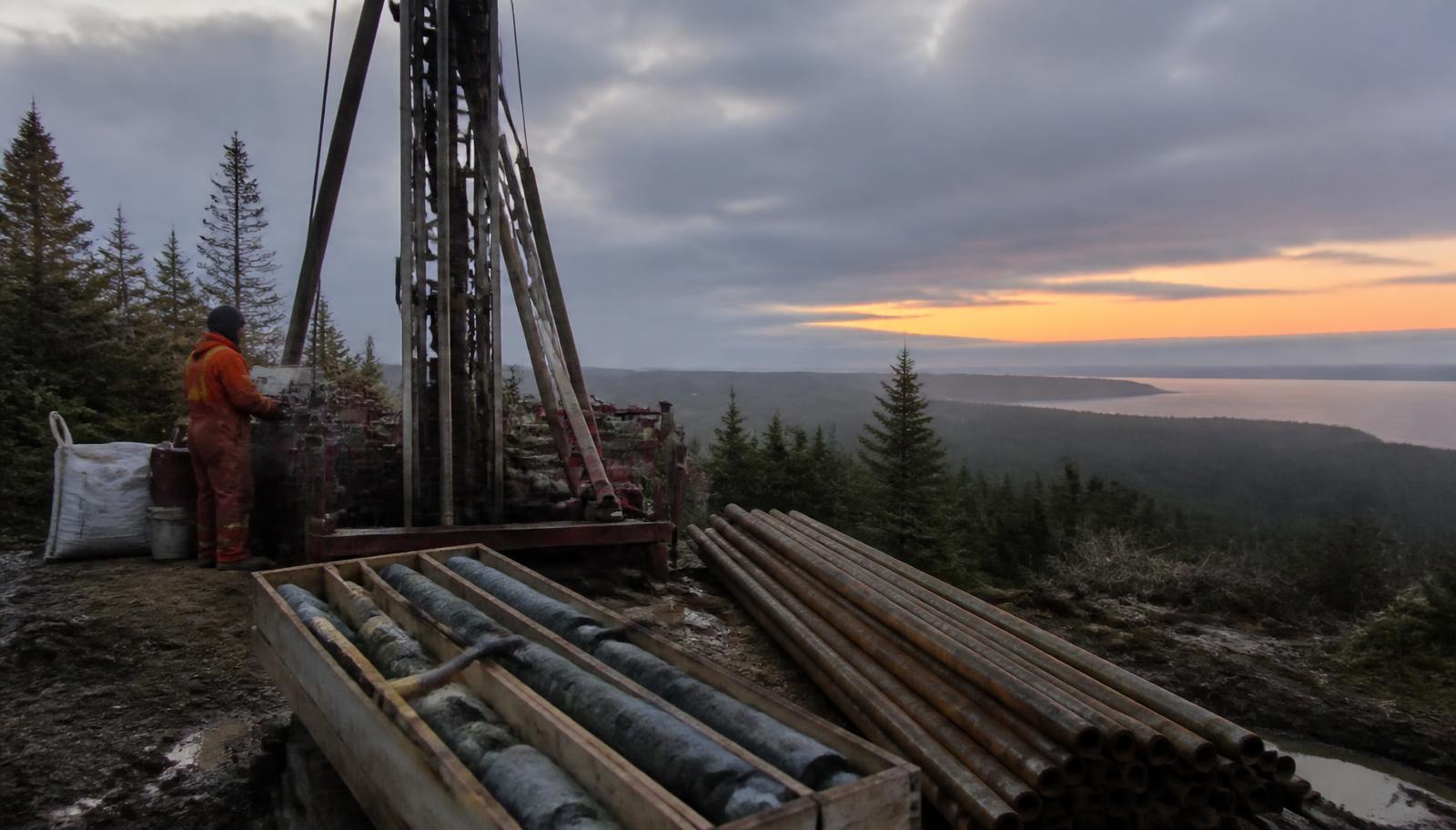
Natural hydrogen has no producing analogue in Canada, which makes the disclosure hard to benchmark and easy to misread. Québec Innovative Materials Corp. (CSE: QIMC) reported on August 25, 2026 a company-record measurement of 27.8% hydrogen at approximately 374 metres in drill hole DDH-26-05 at Bennett Hill, Nova Scotia. The number is the headline. The structural log underneath it is the part that changes the exploration thesis.
What was measured, and how
The reported values are preliminary field measurements taken from IsoJar headspace samples and read on an EAGLE II gas analyzer, with replicate measurements at several depths and the company's stated instrument-correction methodology applied. They remain subject to laboratory analysis and further technical interpretation. This is exploration-stage mud-gas geochemistry, not a cased-and-tested well.
That distinction sets the ceiling on what any single percentage can support. A concentration reading describes the gas fraction in a sample at a point in the hole. It carries no information about reservoir pressure, permeability at production scale, deliverability or recoverable volume.
The concentration profile in DDH-26-05
Read as a vertical profile rather than a list, the hole has three characteristics worth isolating.
The upper zone. Elevated hydrogen appears early: approximately 20.8% at around 158 metres and 23.5% at around 170 metres, the interval first disclosed on August 11, 2026. Between roughly 164 and 167 metres the company reported observations consistent with free gas and an open void.
The mid-hole interval. Concentrations moderate but do not disappear — single-digit to low-teen readings persist through the 182 to 263 metre range, including approximately 13.9% at around 263 metres.
The newly reported deeper zones. Within the 308 to 377 metre interval disclosed on August 25, QIMC reported two discrete high-concentration zones. The first, near 348 metres, returned replicate readings of 12.6%, 15.8% and 23.7%. The second, near 374 metres, returned 25.1% and 27.8% — the new company record. Between them, approximately 19.1% was recorded at around 368 metres. The deepest samples reported, at approximately 377 metres, still returned 10.4% and 12.1%.
Two inferences follow directly from the company's own data. The prior company record was 24.3% at approximately 707 metres in DDH-26-04; the new peak is higher and roughly 333 metres shallower. And because the deepest sampled interval remains in double digits, the system is open at depth on the evidence disclosed to date.
The structural log is the more material disclosure
QIMC reported intersecting a fault-breccia and shear package from approximately 326.55 metres, with drilling-water losses observed within that structural interval. The company interprets this as enhanced structural permeability — fractured rock capable of allowing hydrogen to migrate and, potentially, to accumulate.
The interpretation is coherent and it is testable, which is more than most early-stage geological narratives offer. It is also unproven. Lost circulation demonstrates open fractures at drilling pressures; it does not demonstrate sustained gas flow at production conditions. The same qualification applies to the reported free-phase gas entering the borehole near 164 metres, with open voids noted at approximately 167, 257 and 296 metres. Mobile gas is a migration indicator, not a flow test.
The reason this matters more than the 27.8% figure is that it converts the programme from a set of anomalies into a working model with falsifiable predictions: concentration peaks should correlate with structure, and that correlation should repeat in adjacent holes.
Geochemistry and district scale
QIMC reported methane at negligible levels across the newly disclosed 308 to 377 metre samples, consistent with the low-methane signature described earlier in the hole. A clean signature is relevant to eventual processing economics but says nothing about production cost, lifecycle emissions or recoverable reserves, none of which the company has established.
At programme level, QIMC describes five holes across two exploration centres — Eatonville and Bennett Hill, approximately 15 kilometres apart — all encountering hydrogen with a comparable signature, with the 2026 Nova Scotia programme expanded along a 43-kilometre corridor on the Cobequid-Chedabucto Fault Zone. The company attributes its targeting to the R2G2 framework developed with the Institut national de la recherche scientifique, and states the model predicted the fault-breccia architecture subsequently intersected.
The strategic question is whether that framework is repeatable. A single hydrogen occurrence is an asset. A targeting methodology that reliably generates them is a business. Nothing yet distinguishes the two.
Capital structure and the funding path
QIMC completed a C$17.25-million bought-deal financing earlier in 2026 — approximately 19.17 million units at C$0.90 — against a previously reported count near 123.7 million common shares. Capital-structure figures should be verified against the issuer's most recent SEDAR+ filings before use.
The relevant point for position sizing is sequencing. Characterization drilling, pressure and flow testing, and any pilot-scale work are materially more capital-intensive than the exploration drilling completed to date. Progress on the geology and dilution of the equity are, at this stage, the same event viewed from two sides.
Regulatory and social licence
Québec's Bill 17 established a framework under which natural-hydrogen pilot projects can advance, and QIMC states it appeared before the province's National Assembly during its development. Nova Scotia has developed legislation accommodating natural-hydrogen exploration. For a resource class with no permitting precedent, the existence of a pilot pathway is a prerequisite rather than an advantage — without it, technical success has no route to commercialization.
The company also reports a memorandum of understanding with the Témiscamingue First Nation, community engagement in West Advocate and a Community Liaison Committee. These reduce neither permitting nor community-relations risk to zero, but early engagement is the cheaper sequence.
The evidentiary position
Company-reported and on the record: hydrogen across multiple depths in a single hole; a new peak of 27.8% at approximately 374 metres; two discrete deeper high-concentration zones; an earlier shallow 23.5% zone; observations consistent with free gas; faulting, shearing and brecciation with associated water loss; and negligible methane across the newly reported samples.
Not established: sustained flow, reservoir pressure, recoverable volume, a resource or reserve estimate, production economics, or commercial well performance. These are ordinary milestones for any early-stage exploration programme, and none of them has been reached.
What would change the assessment
The disclosure to monitor, in order of informational value: results below approximately 377 metres, which test vertical persistence; correlation of concentration peaks with mapped structure across more than one hole; any pressure, sustained-flow or recoverable-volume work, which is the dividing line between geochemistry and a resource; replication at other Advocate-area targets, which tests whether R2G2 is predictive rather than retrospective; and treasury, warrant structure and financing activity alongside the technical news flow.
Bennett Hill has become a more informative programme than it was in early August — not because one measurement was higher, but because the number of correlated observations increased. It remains exploration. Junior exploration carries geological, technical, financing, dilution and regulatory risk up to and including total loss of capital, and nothing in the current disclosure alters that.
Transparency note
This is an independent due-diligence analysis produced by The Maple Markets editorial desk. It is not sponsored, promoted or commissioned, and no compensation of any kind has been received from Québec Innovative Materials Corp. or any party acting on its behalf. It reflects editorial interpretation of publicly disclosed information and is not investment advice, an offer to sell securities, or a solicitation to purchase securities. Certain statements are forward-looking; actual outcomes may differ materially. Readers should conduct their own due diligence and consult qualified professionals.
Read next
 EnergyThe Pressure Event Is the Result: Reading QIMC's 30.0% Hydrogen Update at Bennett HillQuébec Innovative Materials Corp. (CSE: QIMC) reported a record 30.0% H2 field reading at 413 metres in DDH-26-05 — then reported free gas reaching surface under apparent pressure between 413 and 416 metres, triggering repeated hydrogen alarms and halting the hole. Evidence for a mobile hydrogen-bearing system has strengthened. Evidence for reservoir performance has not. Benchmarked against MAX Power's completed-interval flow test at Lawson.Daniel Okoye · September 1, 2026 · 11 min
 EnergyThe Number Is Not the Discovery: How to Read a Natural-Hydrogen ResultQIMC reported 27.8% hydrogen at Bennett Hill; MAX Power reported 28.6% at Lawson. The headline percentages look interchangeable. The measurements behind them are at different stages of proof.Marc Belzile · August 30, 2026 · 9 min
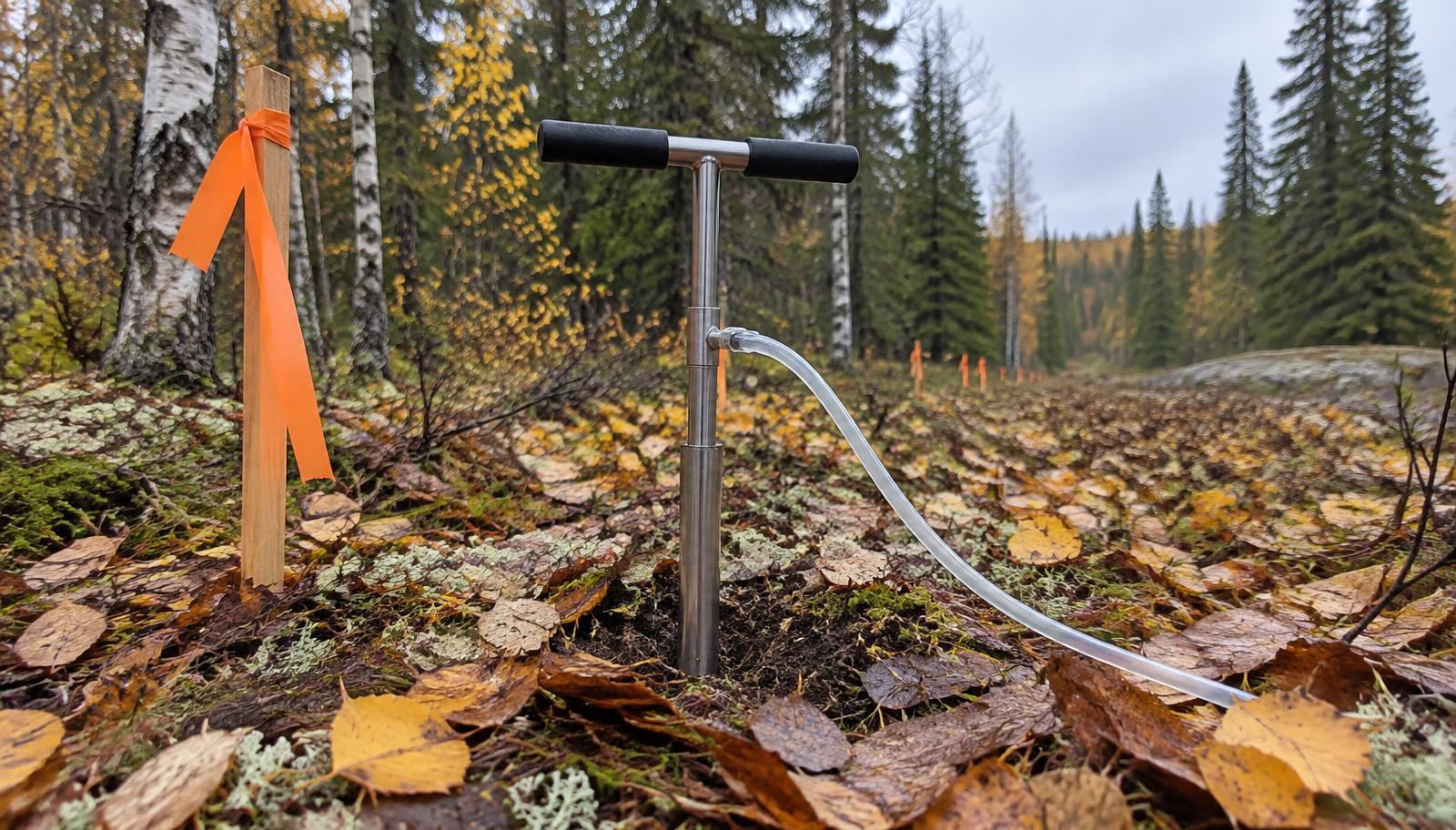 Mining and ResourcesQIMC Takes 823 New Soil-Gas Stations Into Ontario, the Fifth Step in a Method Built in PublicQuébec Innovative Materials Corp. (CSE: QIMC) launched an expanded 2026 natural hydrogen programme on the Ontario side of the Témiscamingue Graben on September 17, 2026: 823 new soil-gas stations at 100-metre spacing over about 80 line-kilometres, taking the Ontario database to roughly 1,733 stations, alongside more than 1,100 gravimetric stations and 78 line-kilometres of 2D seismic. The shares closed at C$0.59. The company's own disclosure says none of this measures flow.Priya Sandhu · September 17, 2026 · 7 min
Follow this story
Follow QIMC — the next Maple piece on this company, plus the Maple Morning Debrief before the open.
Follow and ask
Get more of our Canadian market coverage in Google Top Stories.
Opinion
This article expresses the author's personal views, is separate from news reporting and is not investment advice.
Sources and references (3)
- QIMC news release, August 25, 2026
- Canadian Securities Exchange listing data
- SEDAR+ continuous disclosure filings
Cite this analysis
Please attribute The Maple Markets and link to the original page.
Daniel Okoye (August 26, 2026). QIMC Extends the Bennett Hill Hydrogen System: Reading DDH-26-05. The Maple Markets. https://themaplemarkets.ca/en/newsroom/qimc-bennett-hill-natural-hydrogen-record-ddh-26-05https://themaplemarkets.ca/en/newsroom/qimc-bennett-hill-natural-hydrogen-record-ddh-26-05