
99% of QIMC's New Nova Scotia Soil Stations Show Wet Thermogenic Gas
September sampling on eight new lines inside the company's seismic grid returned a thermogenic signature at 145 of 147 stations and four helium readings above the project's anomaly threshold.
Quebec Innovative Materials reported on October 26, 2026 that 145 of 147 new soil-gas stations in Cumberland County, Nova Scotia carried a wet thermogenic gas signature, up from 86 per cent in the set it reported on October 6. A four-kilometre line stayed anomalous end to end and held seven of the ten highest helium readings. The new lines sit inside the 63.7 line-kilometre seismic survey now being processed in Calgary, and the company held C$14.1 million in cash at June 30, 2026.
By Priya Sandhu7 min read
Thermogenic signature
145 of 147 stations (99%)
new soil-gas set sampled September 2026, reported October 26, 2026; 86% in the set reported October 6, 2026
Peak helium
5.573 ppmv
station 6033-700, against an anomaly threshold of 5.48 ppmv and air at 5.240 ppmv; QIMC release, October 26, 2026
Seismic survey
63.7 line-kilometres
acquisition completed, processing by Earth Signal Processing Ltd.; QIMC release, October 14, 2026
Cash
C$14,127,210
at June 30, 2026, interim financial statements for the nine months ended June 30, 2026
Listings
CSE: QIMC; Frankfurt: 7FJ (WKN A3D2JV, ISIN CA7480331072)
company release and Börse Stuttgart listing page, read October 26, 2026
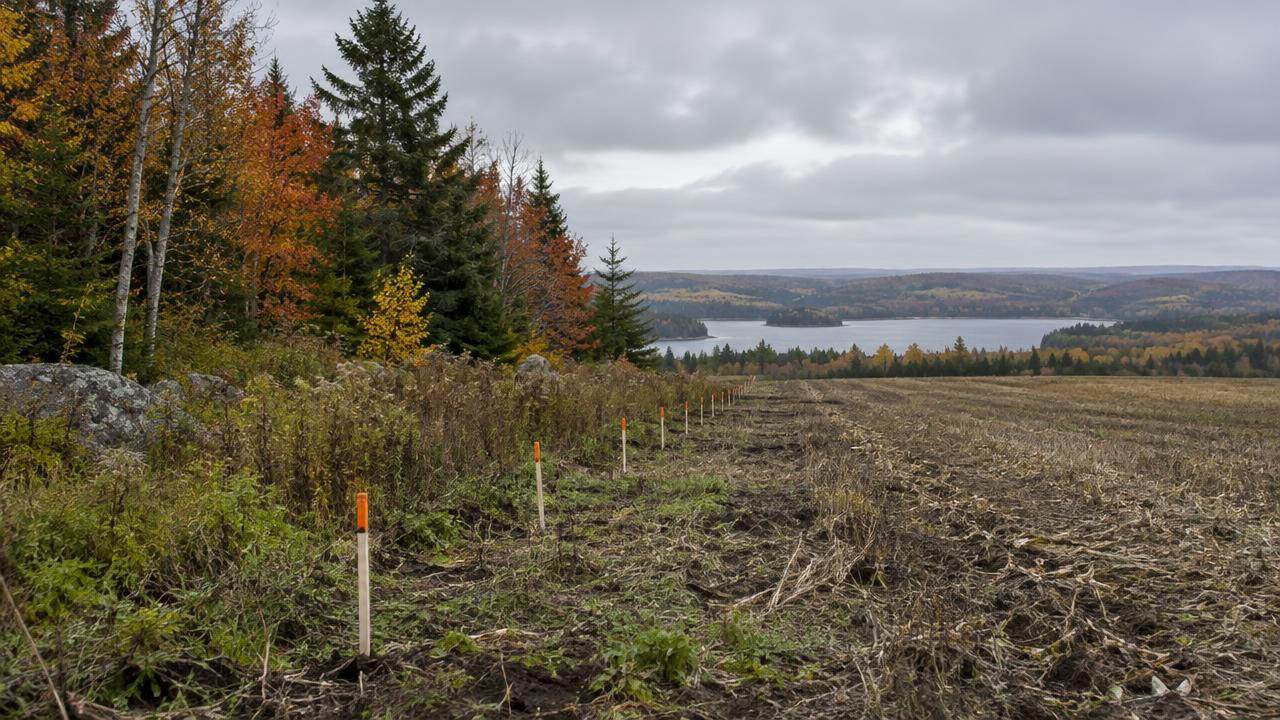
Nearly every soil station Quebec Innovative Materials sampled in September around New Salem and Apple River, Nova Scotia, carried the chemical fingerprint of gas formed deep underground, the company reported on October 26, 2026. The company said the strongest readings lie inside the area of the seismic survey it completed on October 14, which is now being processed.
The release is the third step in four weeks on the same ground. On October 6 the company reported a wet-gas signature in 86 per cent of an earlier soil-gas set, and on October 14 it finished a 63.7 line-kilometre seismic survey across the district.
The new set covers eight lines, 13.9 line-kilometres in all, sampled every 100 metres. All of it lies inside the seismic footprint. The thermogenic share rose to 99 per cent.
The company and the ground it is testing
QIMC, listed on the Canadian Securities Exchange, explores for natural hydrogen and critical minerals in eastern Canada and Minnesota, according to its own description. Natural hydrogen is hydrogen gas generated by rock-water reactions underground, as opposed to hydrogen manufactured from natural gas or by electrolysis.
The Nova Scotia work is in the Cumberland Basin, on a corridor running east from Apple River to Port Greville. At Bennett Hill the company drilled DDH-26-05, where on September 1 it reported a headspace hydrogen concentration of 30.0 per cent and free gas reaching surface during drilling. A headspace reading measures the gas collected in a sealed sample jar, so it gives a concentration and says nothing yet about how much gas a well could deliver. The company said at the time that those observations were not a flow, formation-pressure or reservoir test.
The strategy, in the words of the October 26 release, is that hydrogen, helium and natural gas in the district appear to share common structures, so one programme "advances a single pilot production pathway rather than three separate exploration efforts." The company also states that it does not use and does not contemplate hydraulic fracturing or reservoir stimulation.
The new set is wetter, and more uniform, than the last
Soil-gas sampling draws gas from a shallow probe and measures the light hydrocarbons in it. The ratio between them carries the signal. Methane forms both from microbes near the surface and from organic matter cooked at depth. The heavier gases, ethane up to butane, come mainly from the deep, heat-driven process geologists call thermogenic.
The release uses two standard measures. The wetness index is the share of the heavier gases in the total, expressed as a percentage. The Bernard ratio divides methane by ethane plus propane, and low values point to thermogenic gas. The new set has a median Bernard ratio of 14, and the release places every value within the thermogenic wet-gas field of that classification. The other figures are in the table.
| Measure (147 stations, September 2026) | Result |
|---|---|
| Stations with a wet thermogenic signature | 145 (99%) |
| Median wetness | 7.7% (middle half 6.6% to 8.9%) |
| Median Bernard ratio | 14 (middle half 12 to 17) |
| Stations above 2 ppmv methane | 124 (84%) |
| Stations above 5 ppmv methane | 51 (35%) |
| Peak methane, station 6033-700 | 1,287 ppmv |
Methane in ordinary air runs at about 1.7 to 2.0 parts per million by volume, the release notes, so most of these stations sit above that baseline. One stands far above it. One station on line 6033 read 1,287 ppmv, with its two neighbours well below.
The tighter spread matters as much as the higher share. In the company's words, the consistency "confirms that the system is continuous rather than localized." The company reads chemistry that repeats from line to line, in both its New Salem and Apple River sectors, as the signature of a connected source. It also lets the company rank targets inside the seismic grid by the strength of the signal.
Line 6000A ran anomalous for four kilometres
The longest new line is the one the company leads with. Line 6000A runs four kilometres, and two-thirds of its stations read above 5 ppmv methane. It also carried the programme's highest ethane.
Chief executive John Karagiannidis said in the release that the line "is anomalous for four straight kilometres." For an explorer, a continuous anomaly along a single traverse is useful because it can be laid over a seismic line and checked against the faults the seismic images.
Helium readings sit on the same lines
Helium in soil gas is measured against the air, which carries about 5.240 ppmv. On September 22 the company published a regional background of 5.40 ppmv and an anomaly threshold of 5.48 ppmv, and the new results are judged against them.
Four stations crossed the threshold, three of them on line 6000A. The highest, 5.573 ppmv, came from the station that carried the methane peak. Seven of the ten highest helium values in the dataset came from line 6000A.
Those are small differences in absolute terms, and they are the scale at which soil-gas helium is read. Helium is light and escapes upward along faults, so a reading a few hundredths of a part per million above background, repeated along one line, is the kind of surface signal explorers use to place faults that may connect to a deeper source. Line 6000A carrying both the strongest helium set and the highest ethane is the multi-gas pattern the company has described since October 6.
GeoFrontiers Corporation, an independent laboratory in Texas, ran the hydrocarbon analyses by gas chromatography and also reported the helium. A separate independent laboratory is running isotope analyses, which can distinguish thermogenic from microbial gas more directly than ratios can.
The seismic grid ties surface chemistry to structure
The October 14 release reported that Echo Seismic Ltd. had completed two-dimensional seismic across the district between Apple River and Port Greville. Two-dimensional seismic sends sound into the ground along a line and records the echoes, producing a cross-section of the rock layers and faults beneath it. The survey was planned at about 50 line-kilometres and lengthened after the company identified new targets.
Earth Signal Processing Ltd. of Calgary is processing the data. Every new soil-gas line falls inside the survey, so each new anomaly can be placed against a processed section as the sections arrive. The company says testing continues at DDH-26-05, which its October 14 release tied to the Bennett Hill seismic line.
Across the programme the company cites more than 10,000 soil-gas samples and over 3,500 metres of drill core, alongside gravity and magnetic surveys. For a junior explorer that is a large dataset to bring to one basin, and it describes the stage the work has reached, with surface chemistry and structure mapped and one drill hole that has returned gas.
C$14.1 million in cash at the last balance sheet
The interim statements for the nine months ended June 30, 2026, the latest the company has filed, show cash and cash equivalents of C$14,127,210 at June 30, 2026, against C$794,701 at September 30, 2025. The rise came mostly from a private placement of units at C$0.90 that closed on April 27, 2026 for gross proceeds of C$17,250,345, according to the share capital note of the same statements.
The same statements show 156,054,801 shares outstanding at June 30, 2026.
Note 1 of those statements says the company's circumstances indicate "a material uncertainty that may cast significant doubt" on its ability to continue as a going concern. Exploration and evaluation spending, C$2,045,251 for the nine months, is expensed as incurred. The autumn field work falls after that balance-sheet date and will appear in the annual statements for the year ended September 30, 2026.
The shares closed at C$0.38 on October 26, down C$0.04 or 9.52 per cent, on 1,043,678 shares traded on the CSE, per end-of-day data read at 13:58 Pacific on October 26, 2026.
The shares also trade in Frankfurt under the symbol 7FJ, WKN A3D2JV and ISIN CA7480331072, according to the company's release and Börse Stuttgart's listing page.
The district is wider, and the next proof is at depth
The new set widens the company's surface case in Nova Scotia. The thermogenic share rose from 86 to 99 per cent, and line 6000A carries helium and wet gas together along four kilometres, all inside a seismic survey already in processing.
| What the October 26 results establish | What they do not establish |
|---|---|
| A wet thermogenic signature at 145 of 147 stations | A reservoir, trap or seal |
| Four helium readings above the 5.48 ppmv threshold | A resource estimate |
| A continuous four-kilometre anomaly on line 6000A | A flow rate or formation pressure from any well |
The right-hand column is the release's own statement of its bounds. Interest in natural hydrogen as a resource has official backing beyond the company: the US Geological Survey published its first map of potential for geologic hydrogen in the lower 48 states on January 16, 2025, a national screen of US ground that does not cover Nova Scotia.
The company has not given dates for its next steps. They are the processed sections from Earth Signal Processing in Calgary, the isotope results and continued testing at DDH-26-05, and they now build on thermogenic gas and helium mapped across 147 new stations inside a completed seismic grid, beside a drill hole that has returned hydrogen.
Disclosure
Transparency note. This is an independent due-diligence analysis and editorial opinion piece produced by The Maple Markets editorial desk. It is not sponsored, promoted or commissioned, and no compensation of any kind has been received from Quebec Innovative Materials Corp. (CSE: QIMC) or any party acting on their behalf. The analysis is based on public disclosure available as of the publish date; every figure is attributed to its primary source. The Maple Markets and its authors may hold positions in securities mentioned; nothing here is a recommendation to buy, sell or hold any security, and readers should not treat it as investment advice. Past disclosure does not guarantee future results. Policies: Editorial Standards · Financial Disclaimer.
Read next
Auch auf Deutsch: 99% der neuen Bodengas-Stationen von QIMC in Nova Scotia zeigen nasses thermogenes Gas
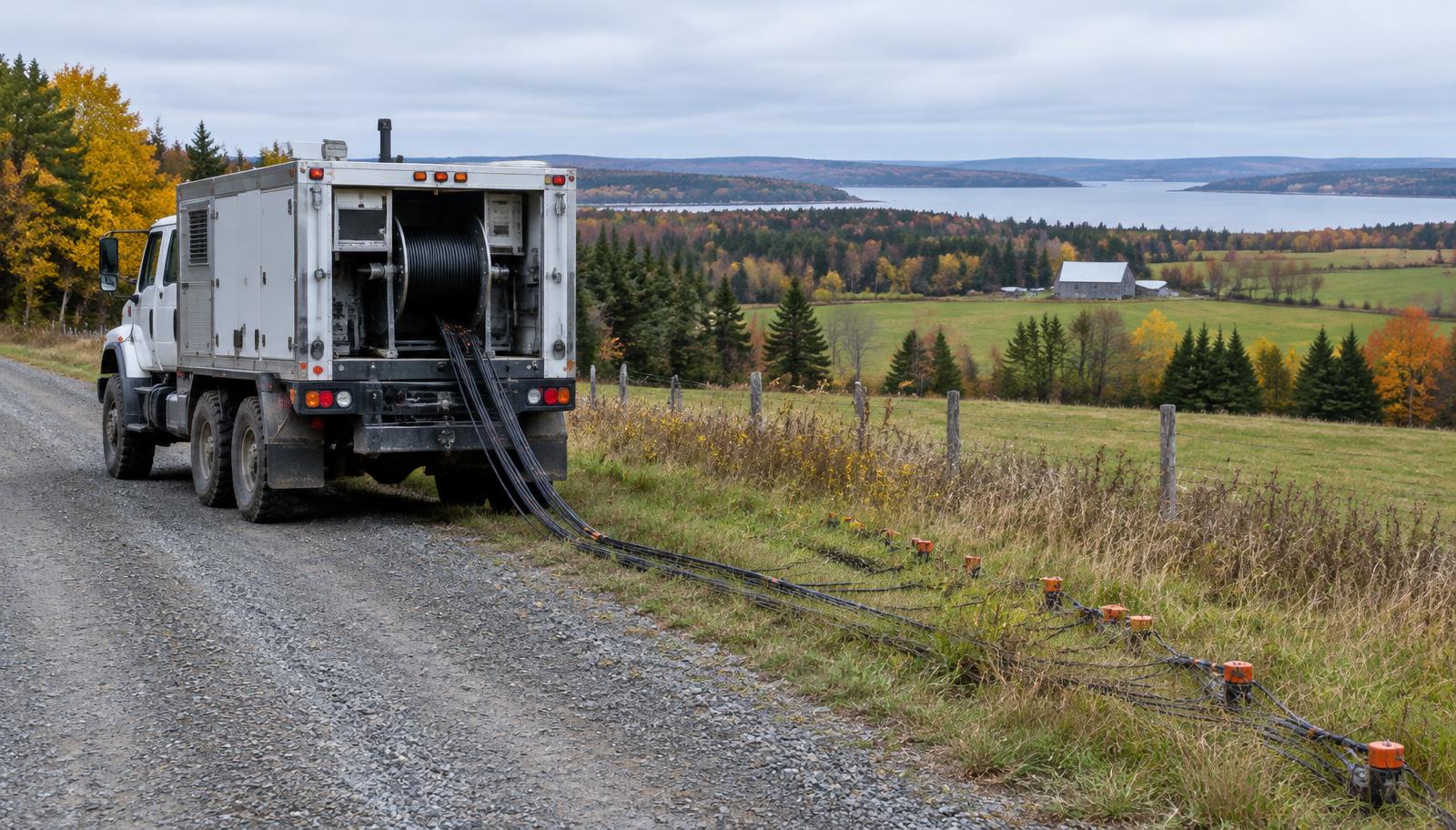 Mining and ResourcesQIMC Completes a 63.7-Kilometre Seismic Survey in Nova ScotiaQuebec Innovative Materials Corp. (CSE: QIMC) said on 14 October 2026 that it had finished acquiring 63.7 line-kilometres of 2D seismic across its Cumberland County ground in Nova Scotia, 13.7 kilometres more than planned, and the data is already with a Calgary processor. The programme was delivered ahead of plan on ground where free gas has already reached surface once, with a treasury of about C$14.84 million against liabilities of about C$1.92 million.Élise Galarneau · October 15, 2026 · 8 min
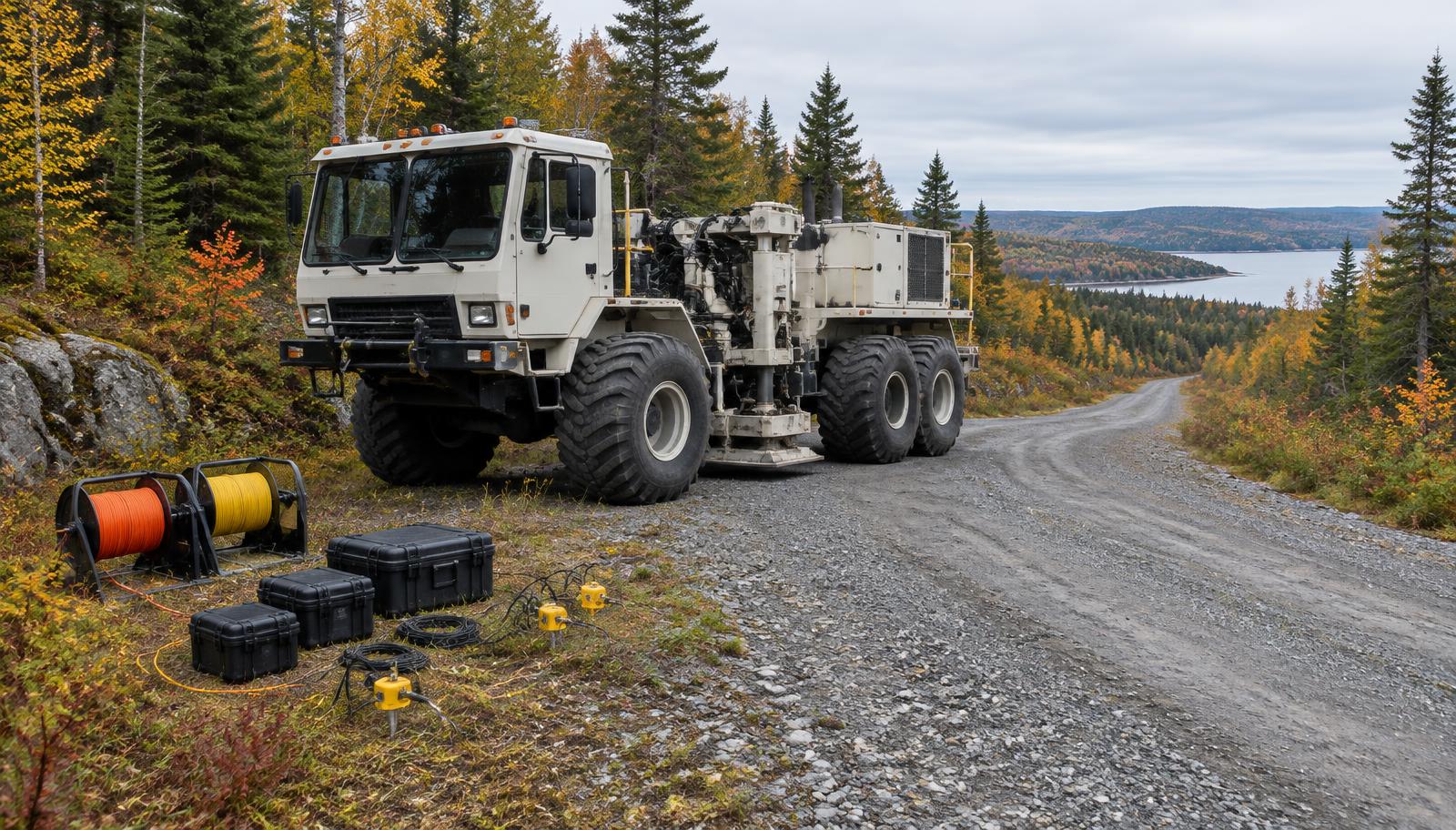 Mining and ResourcesQIMC Hires a Calgary Firm to Process 50 Kilometres of SeismicQuebec Innovative Materials Corp. (CSE: QIMC) engaged Calgary’s Earth Signal Processing Ltd. on October 1, 2026 to process about 50 line-kilometres of two-dimensional seismic from Apple River and Bennett Hill, Nova Scotia. The appointment adds experienced processing support to a better-defined hydrogen and helium exploration programme. The images can help focus drilling targets, while pressure and flow measurements remain later steps with no announced date.Daniel Okoye · October 2, 2026 · 7 min
 Mining & Energy26.8 Kilometres of New Seismic Take QIMC's Hydrogen Search Into OntarioQuebec Innovative Materials has added Line 5, a 26.8-kilometre seismic transect across the Ontario side of the Témiscamingue Graben, placed where its Ontario soil-gas hydrogen readings are highest. The company held C$14.13 million in cash at June 30, 2026, after an April placement, and testing continues at its Nova Scotia hole DDH-26-05.Élise Galarneau · October 21, 2026 · 7 min
Follow this story
Follow QIMC.CN — the next Maple piece on this company, plus the Maple Morning Debrief before the open.
Follow and ask
Get more of our Canadian market coverage in Google Top Stories.
Sources and references (8)
- QIMC: Further Derisks Nova Scotia Natural Hydrogen Multi-Gas System with New Thermogenic Gas and Helium Results (Newsfile, October 26, 2026)
- QIMC: Completes Expanded 63.7 km Seismic Program in Nova Scotia (Newsfile, October 14, 2026)
- QIMC: Thermogenic Wet-Gas Signature in 86% of Soil-Gas Samples at New Salem-Apple River (Newsfile, October 6, 2026)
- QIMC: DDH-26-05 update at Bennett Hill (Newsfile, September 1, 2026)
- QIMC interim financial statements, three and nine months ended June 30, 2026 (filed copy, OTC Markets)
- Börse Stuttgart: Quebec Innovative Materials listing page (WKN A3D2JV)
- US Geological Survey: first-ever map of potential for geologic hydrogen in the US (January 16, 2025)
- The Maple Markets: 26.8 Kilometres of New Seismic Take QIMC's Hydrogen Search Into Ontario (October 20, 2026)
Cite this analysis
Please attribute The Maple Markets and link to the original page.
Priya Sandhu (October 27, 2026). 99% of QIMC's New Nova Scotia Soil Stations Show Wet Thermogenic Gas. The Maple Markets. https://themaplemarkets.ca/en/newsroom/quebec-innovative-materials-reports-new-thermogenic-gas-and-heliumhttps://themaplemarkets.ca/en/newsroom/quebec-innovative-materials-reports-new-thermogenic-gas-and-helium